MSC Tracking
Please enter the MSC tracking number to check the latest shipping status.
About MSC
MSC is the carrier identity supplied for this tracking page. The supplied official website is MSC.com. Because carrier names can overlap across shipping systems, confirm that the booking, bill of lading, container reference, or shipment notice is associated with the MSC website before treating a result as an MSC shipment.
| Field | Verified page guidance |
|---|---|
| Official website | https://www.msc.com/ |
| Carrier role | Use the official site and shipment documents to distinguish the operating carrier from a freight forwarder, origin agent, port, customs authority, or destination delivery provider. |
| Primary tracking identifiers | The identifier supplied by the booking party or shown on the transport document should be used first; a marketplace order number is not automatically a carrier tracking number. |
Carrier Entity Relationships
| Entity | Relationship and tracking significance |
|---|---|
| MSC | MSC is the carrier identity that a user should match against the official website and the transport document before selecting a tracking result. |
| Origin agent or freight forwarder | An origin agent or forwarder may create the booking and provide a reference without being the physical carrier operating every transport stage. |
| Port, terminal, customs authority, or destination provider | These entities can generate operational events or control a shipment stage without becoming the issuer of the original booking reference. |
| 17TRACK | 17TRACK is an independent aggregation platform; it can display available carrier events but does not operate the shipment or decide claims, refunds, customs release, or delivery changes. |
Quick Answer
Enter the shipment reference supplied by the seller, booking party, or transport document into the official MSC tracking area, then compare the result with 17TRACK. If no result appears, first check whether you entered an order number instead of a shipment reference, remove spaces or punctuation, confirm the carrier selection, and allow time for the first operational scan.
How to Track MSC Packages
Use the official MSC website when you need the carrier's own record or a service-specific action. Use 17TRACK when you need a consolidated view across a shipment that may involve multiple logistics providers.
| Route | Steps and limitation |
|---|---|
| Official MSC route | Open the official MSC website, locate the applicable tracking or shipment-information function, enter the reference exactly as shown on the booking or transport document, and save the latest event. The available fields depend on the shipment type and user access. |
| 17TRACK route | Open 17TRACK, enter the shipment identifier, allow automatic carrier detection where available, and compare the latest scan with the original transport record. Aggregated results may appear later than the carrier's own system. |
| No number available | Ask the seller, booking party, freight forwarder, or shipper for the shipment reference. An order number, invoice number, customer reference, or delivery notice number may not retrieve carrier events. |
| No first scan | A created booking or electronic pre-advice does not prove that MSC or a downstream operator has physically received the goods. Recheck the identifier and ask the shipper to confirm handover. |
Tracking Number Formats and Examples
MSC shipment identifiers should not be inferred from a prefix alone. The identifier may be issued by the carrier, a booking agent, a freight forwarder, an origin postal operator, or a destination provider. Use only a redacted or clearly fictional example when publishing a reference.
Tracking Number Format
| Identifier family | Normalized pattern and use |
|---|---|
| Carrier or booking reference | Use the exact reference shown by the booking party, with a redacted pattern such as MSC-#######. The issuer, length, and query permissions must be confirmed from the shipment document or official MSC workflow. |
| Container identifier | A container identifier normally follows an international container-identification convention and is different from a parcel number. Do not treat every container code as a delivery tracking number. |
| Bill of lading or transport-document reference | A bill-of-lading or document reference identifies a transport record. It can be visible to the shipper, consignee, broker, or forwarder and may not expose the same events as a last-mile parcel number. |
| Partner or last-mile reference | A destination carrier may issue a separate local reference after handoff. The original MSC reference can remain valid while the local reference becomes more useful for final delivery. |
| Order, invoice, or marketplace ID | These identifiers are created by the seller or marketplace and are not automatically searchable in MSC systems or 17TRACK. |
Tracking Statuses and Meanings
A tracking event describes the latest recorded operational action, not necessarily the physical location at the exact moment a user checks. Responsibility can move between the booking party, terminal, customs authority, carrier, and last-mile provider.
Status Quick Lookup
| Status or stage | Meaning and next action |
|---|---|
| Booking or label created | Electronic data exists, but the event does not by itself prove physical acceptance. The shipper should confirm cargo handover if no later scan appears. |
| Received or accepted | The responsible operating party has recorded receipt. Check the timestamp, facility, and next planned movement. |
| In transit | The shipment is moving through a transport or processing network. Transit time is not the same as a guaranteed delivery date. |
| At terminal, port, or exchange facility | The shipment is awaiting processing, connection, release, or onward movement. A facility scan does not by itself mean customs clearance is complete. |
| Customs or documentation hold | A customs authority, broker, or carrier may need information, payment, inspection, or an amended document. The importer or shipper should follow the named authority's instructions. |
| Handed to destination provider | A partner may now control the next movement. Ask the shipper for any new local reference and use the destination provider's official tracker when appropriate. |
| Delivered or completed | The system recorded completion. If the goods are missing, check the delivery location, recipient records, proof of delivery, and the seller or shipper immediately. |
| Exception or returned | An operational, address, documentation, customs, capacity, or delivery problem interrupted the expected flow. The shipper should request the reason and next permissible action. |
Services and Delivery Times
Delivery timing depends on the shipment product, origin, destination, port rotation, terminal handling, customs, documentation, inland transport, and any destination handoff. A generic online estimate should not be treated as a service guarantee.
Service Comparison
| Shipment type | Tracking and suitability |
|---|---|
| Containerized ocean shipment | Use the carrier or booking reference and container or transport-document data supplied by the shipper. Timing depends on the booked service and routing. |
| Forwarder-managed shipment | The forwarder may be the best source for booking status, documentation, inland movement, and destination delivery arrangements. |
| Final-mile parcel | A local postal or parcel provider may control delivery after handoff. Use its local reference if one is issued. |
Delivery Time
| Timing field | How to interpret it |
|---|---|
| Estimated transit or arrival window | A planning estimate based on the booked route and operating assumptions; it can move when vessels, terminals, customs, or inland providers change. |
| Service standard | A product or route description is not automatically a money-back guarantee. Read the booking terms for any applicable commitment. |
| Destination-country timing | Country-specific delivery depends on the actual origin, destination port, import process, inland appointment, and last-mile arrangement; use the shipment-specific estimate rather than a generic country average. |
Common Tracking Problems and Solutions
| Problem or status | First checks and recommended action |
|---|---|
| Invalid number | Remove spaces and punctuation, compare the identifier with the original document, and ask the booking party whether it is a booking, container, bill-of-lading, order, or local delivery reference. |
| No tracking events | Electronic pre-advice may exist before physical receipt. Ask the shipper to confirm handover and check the official MSC workflow. |
| No update for several days | Check the last facility, planned connection, weekends, holidays, terminal congestion, customs, and documentation. Escalate through the shipper or forwarder when the booked milestone is missed. |
| Customs hold | Identify the authority or broker named in the event, prepare invoice and import information, and do not assume that arrival at a port means release. |
| Delivered but not received | Check the delivery address, receiving dock, warehouse, household, security desk, proof of delivery, and local provider. Ask the seller or shipper to open the appropriate inquiry. |
| Damaged or missing goods | Photograph the packaging and contents, preserve all transport documents, notify the seller or shipper promptly, and follow the applicable carrier or cargo-insurance claim procedure. |
| Returned or refused shipment | Ask why the shipment was returned, whether customs or address information caused the event, and whether the shipper must arrange a new booking. |
International Shipping, Customs and Carrier Handoffs
International tracking follows a chain of custody. A scan can show that data was received, while the goods remain with another physical party. Import customs release is a separate event from arrival at a destination port or exchange facility.
| Stage | Responsible party and customer action |
|---|---|
| Booking and origin acceptance | The booking party and origin facility create or receive the shipment record. The shipper should verify that the cargo has actually been handed over. |
| Export handling and line-haul | Origin facilities, terminals, carriers, and transport partners process the shipment. Tracking gaps can occur between physical scans. |
| Destination arrival | Arrival at a port, terminal, or exchange facility means the shipment reached that stage; it does not prove import clearance. |
| Import customs | The importer, broker, and customs authority handle declarations, taxes, inspections, and release requirements. The customer should follow the official notice or broker instruction. |
| Partner handoff and last mile | A destination provider may issue a local reference and control final delivery. The original MSC reference may remain visible, but the local provider may have the newest scan. |
Delivery Management and Post-shipment Options
Address changes, delivery appointments, holds, release instructions, and destination services are controlled by the responsible carrier, terminal, broker, forwarder, or last-mile provider. Contact the party named in the latest operational event rather than 17TRACK.
| Option | Who should request it and when |
|---|---|
| Address or delivery instruction change | The shipper, consignee, or authorized account holder should ask the responsible provider before final delivery or release; approval and fees depend on the booking terms. |
| Delivery appointment or pickup | The consignee or receiving facility should coordinate with the destination provider after the shipment is available and any customs or document requirements are complete. |
| Proof of delivery or transport record | The authorized shipper, consignee, forwarder, or account user should request the document from the party that performed or recorded the delivery milestone. |
Lost, Damaged, Claims, Insurance and Refunds
A tracking inquiry, a missing-shipment investigation, a cargo-insurance claim, a freight refund, and a marketplace refund are separate processes. The shipper or contracting party usually has the documents needed to start a transport claim.
| Process | Evidence and next step |
|---|---|
| Tracking inquiry | Provide the reference, booking details, last event, origin, destination, and contact information to the shipper, forwarder, or responsible carrier channel. |
| Loss or damage claim | Preserve packaging, photographs, invoices, value evidence, inspection records, transport documents, and correspondence. Filing eligibility and deadlines depend on the contract and applicable law. |
| Insurance claim | Follow the policy's insured-party, notice, evidence, and filing requirements. Do not assume that a carrier tracking inquiry opens an insurance claim. |
| Seller or marketplace refund | Contact the seller or marketplace under its purchase-protection rules. 17TRACK cannot authorize a refund or determine liability. |
Shipping Restrictions and Special Handling
Dangerous goods, batteries, liquids, perishables, controlled products, oversized cargo, and goods requiring special documentation can be restricted by the carrier, port, airline, customs authority, or destination country. Review the current MSC rules and booking terms before shipping.
| Category | Potential impact |
|---|---|
| Dangerous goods and batteries | Declaration, packaging, routing, equipment, and approval requirements can apply. Non-compliance can cause refusal, delay, inspection, or return. |
| Liquids, perishables, and temperature-sensitive goods | Packaging and service limitations may affect acceptance and transit risk. A tracking scan does not confirm temperature control. |
| Restricted or regulated goods | Import permits, licenses, sanctions, or destination-country rules can prevent release even when transport is complete. |
| Oversized or special cargo | Equipment, terminal, vessel, appointment, and inland-delivery conditions can change the route and timing. |
Customer Service
| Channel | Best use and preparation |
|---|---|
| Official MSC website | Open MSC.com for the applicable regional contact, tracking, service, or customer-support route. Regional availability and hours should be checked on the official page. |
| Shipper, booking party, or forwarder | Usually the fastest route for booking corrections, commercial documents, cargo value, claims, and contract-specific questions. Prepare the reference, ship date, origin, destination, and latest event. |
| Destination provider or broker | Use this route for import documents, taxes, customs requests, terminal release, appointments, and final delivery after handoff. |
Ecommerce and Business Tracking
Businesses should separate the customer-facing order ID from the carrier reference, container identifier, transport document, and destination-provider number. A normalized internal shipment record can connect those identifiers while preserving which party issued each one.
Developer/API Comparison
| Option | Provider | ||||||||
|---|---|---|---|---|---|---|---|---|---|
| Official carrier integration | MSC | ||||||||
| Multi-carrier aggregation | 17TRACK | ||||||||
View all details for business tracking integrations
| |||||||||
FAQ
Basic FAQs
Enter the shipment reference from the booking or transport document on the official MSC website, then compare available events with 17TRACK.
Look in the booking confirmation, transport document, seller message, forwarder notice, or carrier account; ask the shipper if you only have an order number.
MSC shipment identifiers can differ by document and workflow, so do not infer the service from a prefix alone; use the exact reference supplied by the booking party.
The first event appears after the relevant party records the booking, receipt, terminal movement, or another operational scan; electronic creation alone does not prove physical handover.
A gap can occur between facilities, during terminal or customs processing, or when a partner has control; check the last event and ask the shipper to investigate a missed milestone.
Timing depends on the booked route, origin, destination, port handling, customs, inland movement, and delivery arrangement, so use the shipment-specific estimate.
Read the exception reason, identify the party named in the latest event, and contact the shipper, forwarder, broker, or destination provider with the reference.
Check the receiving dock, warehouse, security desk, authorized recipient, proof of delivery, and destination provider, then ask the seller or shipper to open an inquiry.
Notify the contracting shipper or forwarder promptly, preserve packaging and documents, photograph the damage, and follow the applicable transport or insurance claim process.
Start with the regional contact or support route on the official MSC website and have the shipment reference, origin, destination, last event, and requested action ready.
Expert FAQs
No. A booking reference identifies a booking record, while a container number identifies equipment; one shipment can contain several linked identifiers.
No. Port or terminal arrival is a logistics milestone, while customs release requires the applicable declaration, inspection, payment, and authority decision.
A destination provider may issue a local delivery or appointment reference after handoff; the original MSC reference can remain linked but may not expose every local event.
No. Address changes and delivery instructions must be requested from the responsible carrier, terminal, broker, forwarder, or destination provider.
Businesses should verify the current official MSC integration options and compare them with 17TRACK's current API documentation before selecting authentication, batch, or notification features.
Tracking API
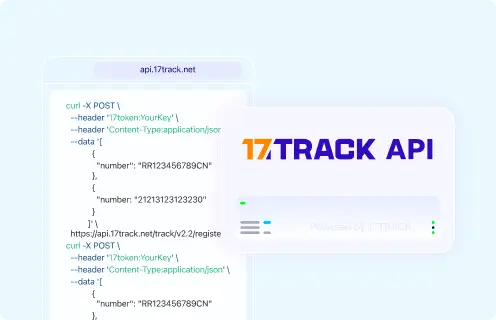
The official MSC tracking API endpoint and current public authentication requirements should be confirmed from MSC's developer or commercial integration channels. The example below shows the 17TRACK API reference supplied for this page. Replace the carrier placeholder only after confirming the current 17TRACK carrier code.
// 1. Current public official MSC tracking API:
 // Current public official tracking API not confirmed.

 // 2. 17TRACK API:
 POST https://api.17track.net/track/v2.4/register
 Headers:
   17token: YourKey
   Content-Type: application/json

 Body:
 [
   {
     "number": "TRACKING_NUMBER",
     "carrier": "CARRIER_CODE"
   }
 ]

 // Confirm the current MSC carrier code in 17TRACK documentation
 // before sending production requests.
Sources & References
- MSC.com — Official MSC website. MSC
- 17TRACK API Documentation. 17TRACK
17TRACK is an independent tracking platform and is not affiliated with MSC.
Track your package
Global express parcel tracking service