Intelligent Transportation System(Its)
What Is an Intelligent Transportation System (ITS)?
An intelligent transportation system (ITS) is an application of information, communication, sensing, and control technologies to the movement of people and goods. In logistics, ITS connects information about vehicles, roads, traffic, and transport operations to help operators monitor conditions and make transport decisions. Examples include traffic management systems, electronic toll collection, freight vehicle information services, and systems that communicate road hazards to drivers.
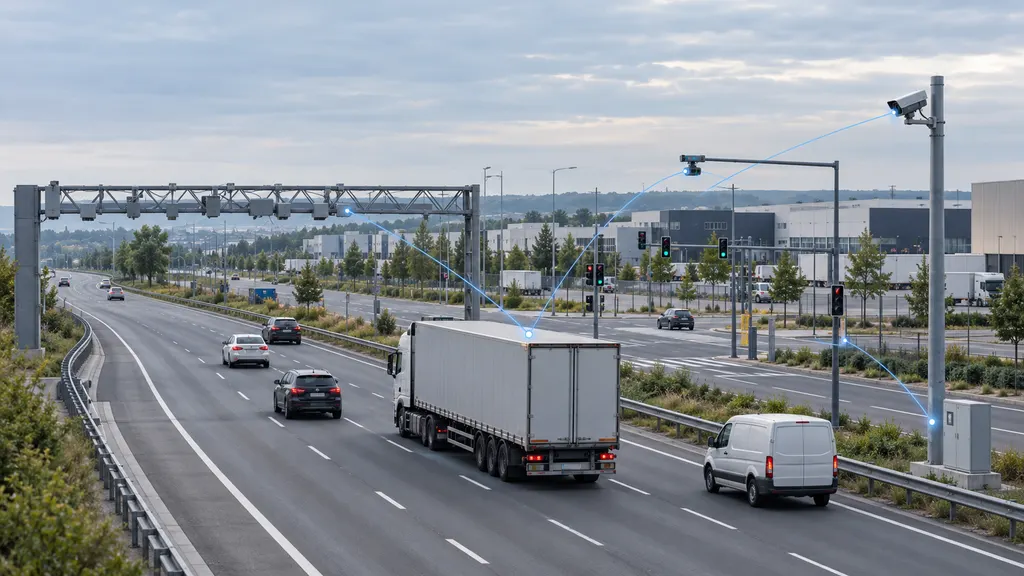
ITS is an umbrella term rather than a single product or technology. It can describe an individual application or a coordinated network of applications. The plural expression, intelligent transport systems, is also widely used. The European Union's ITS framework defines the concept around information and communication technologies applied to road transport, including infrastructure, vehicles, users, traffic management, mobility management, and interfaces with other transport modes.
For ecommerce and cross-border logistics, ITS is most relevant to the physical transport of shipments: movement between warehouses, road access to ports and terminals, long-distance trucking, and delivery routes. It does not, by itself, manage the entire order lifecycle or complete customs clearance.
How ITS Works
An ITS application turns observations about transport conditions into information or operational actions. Its exact design depends on the task, but a useful way to understand the process is to follow the information from collection to response.
- Collect observations. Roadside sensors, cameras, vehicle positioning devices, toll equipment, and operational systems provide information about vehicle movements or network conditions.
- Transmit information. Communications networks transfer relevant observations to vehicles, roadside equipment, traffic management centers, or transport operators.
- Process and interpret data. Software combines observations to identify conditions such as congestion, an incident, a travel-time change, or an approaching vehicle.
- Support or execute a response. The system may display a warning, update a travel-time estimate, recommend another route, or adjust traffic-control equipment.
- Monitor the result. Further observations help operators assess whether conditions have changed and whether another response is needed.
For example, a road authority may detect a collision and publish an incident message. A freight operator receiving that information may assess whether an alternative route is suitable for its truck and delivery commitments. The information service and the operator's dispatch decision are related, but they are not the same function.
Not every ITS application uses every step automatically. Some provide information for a human decision, while others control equipment within defined operating rules. Artificial intelligence can support particular applications, but it is not a requirement for a system to qualify as ITS.
Applications Relevant to Freight and Delivery
The following examples describe application areas, not a universal classification. A deployment may combine several functions, and the available services differ between transport networks and jurisdictions.
| Application area | What it does | Relevance to logistics |
|---|---|---|
| Traffic and incident information | Reports congestion, road closures, incidents, or changing travel times. | Helps dispatchers assess disruption to collection, line-haul, and delivery journeys. |
| Traffic management | Uses traffic information to support measures such as signal control or variable road messages. | Influences the road conditions through which freight vehicles travel. |
| Electronic toll collection | Uses electronic identification and transaction processing to support toll payment. | Supports vehicle passage and toll administration where the relevant infrastructure is available. |
| Commercial vehicle operations | Supports functions such as electronic screening and exchanges of vehicle or operating information. | Can assist authorized roadside checks and freight operations under applicable programs. |
| Truck parking information | Communicates information about parking locations or availability. | Can inform trip planning and drivers' decisions about suitable stopping locations. |
| Connected vehicle applications | Exchange messages between equipped vehicles, infrastructure, or other participants. | Can provide warnings or operational information relevant to road freight movements. |
These applications do not guarantee a particular delivery outcome. Their usefulness depends on factors such as information quality, geographic coverage, equipment compatibility, operating rules, and the availability of practical alternatives.
ITS in Ecommerce and Cross-Border Logistics
Warehouse-to-warehouse and line-haul transport
Between fulfillment centers, sorting facilities, and distribution hubs, ITS information can help operators understand road conditions affecting scheduled movements. A dispatcher may use an incident alert alongside a transport management system to decide whether to revise a vehicle's route or notify a receiving facility about a possible delay.
This information is only one part of planning. A route that appears faster for a passenger car may be unsuitable for a freight vehicle because of height restrictions, weight limits, access rules, or operational requirements. A useful freight decision therefore combines traffic information with vehicle and route constraints.
Last-mile delivery
For delivery operations, traffic information may inform route updates or revised arrival estimates. However, road travel time does not capture every part of a delivery stop. Building access, unloading space, recipient availability, and service time can also affect completion. ITS can support the road-movement component without providing a complete model of the delivery process.
Cross-border movements and terminal access
A cross-border road journey may pass through several transport information environments. Where available, information about access roads, traffic queues, or terminal approaches can help operators understand the journey. Interoperability becomes important when systems use different data formats, identifiers, communications arrangements, or operating procedures.
Transport information must be distinguished from customs information. A report that a truck has reached a border crossing does not establish that its goods have been released by customs. Likewise, a customs release does not establish that the truck has left the crossing or reached its destination. These are separate operational and regulatory events.
ITS and Related Systems
ITS overlaps with several technologies used in logistics, but the terms are not interchangeable. The distinction is primarily one of purpose and scope, rather than a requirement that each system operate separately.
| Related term | Primary focus | Relationship to ITS |
|---|---|---|
| Transport management system (TMS) | Planning and managing freight movements, including activities such as load planning, carrier selection, and execution. | May use ITS-derived traffic or travel-time information when supporting transport decisions. |
| Fleet telematics | Collecting and transmitting information about vehicles, their location, condition, or operation. | Can provide inputs to ITS applications or receive information from them. |
| Satellite navigation | Determining position and supporting navigation. | Can be a component of an ITS application, but position information alone does not describe the full transport environment. |
| Shipment tracking | Reporting shipment events, status, or location to relevant users. | May incorporate transport information, but a traffic observation is not necessarily a shipment milestone. |
| Connected and automated vehicles | Exchanging vehicle-related information or automating driving functions. | Can interact with ITS infrastructure; connectivity and driving automation are distinct capabilities. |
For instance, a truck's position may help estimate its arrival at a distribution center. It does not necessarily identify the status of every parcel carried inside it. Translating vehicle information into shipment information requires a reliable association between the vehicle, load, and individual shipments.
Data Quality, Interoperability, and Operating Limits
ITS depends on information being suitable for its intended use. A technically available data feed may still be inappropriate for a particular decision if it is delayed, incomplete, or insufficiently specific. Operators evaluating ITS information should consider the following questions:
- Coverage: Does the service cover the roads and facilities used by the operation, including relevant access routes?
- Timeliness: When was the condition observed, and how long did collection, processing, and transmission take?
- Meaning: Does a reported event describe an observed condition, a forecast, a restriction, or an advisory message?
- Vehicle suitability: Does the information account for commercial vehicle restrictions and relevant physical constraints?
- Interoperability: Can receiving systems interpret the data format, location references, units, and event definitions consistently?
- Fallback arrangements: What happens if communications fail, equipment becomes unavailable, or information conflicts?
- Governance: Who can access the information, how is it protected, and what rules govern its use?
These are evaluation considerations, not a single mandatory ITS certification checklist. The applicable requirements depend on the deployment and jurisdiction. Information security and privacy are particularly relevant when systems process identifiable vehicle or location information.
Potential benefits such as improved safety, more informed routing, and better use of transport infrastructure should be treated as objectives rather than automatic results. Demonstrating an improvement requires an appropriate evaluation, a defined baseline, and attention to other factors affecting the transport operation.
Common Misunderstandings
- ITS always means artificial intelligence. It does not. Sensors, communications, conventional software, and control equipment can form an ITS application without machine learning.
- ITS is another name for parcel tracking. Shipment tracking concerns the shipment; ITS concerns transport information and operations more broadly. The two may exchange information.
- A connected vehicle is necessarily autonomous. Exchanging messages does not mean that a vehicle performs driving tasks automatically.
- A road ETA is a guaranteed delivery time. An estimated arrival based on road conditions may exclude unloading, terminal handling, border procedures, and delivery-stop activities.
QA
What does ITS mean in logistics?
ITS means intelligent transportation system. In logistics, it refers to technologies that collect, communicate, and use transport information to support freight vehicle movements and related road operations.
Is GPS tracking an intelligent transportation system?
GPS-based positioning can be part of ITS. A location feed provides one input; an ITS application may combine it with traffic, infrastructure, or operational information to support a transport function.
Does ITS replace a transport management system?
No. ITS and a TMS have different scopes. ITS supports transport information and operations, while a TMS manages freight planning and execution. They can exchange information.
Can ITS complete customs clearance?
ITS does not itself confer customs release. Transport information may help coordinate a border journey, but customs clearance remains a separate regulatory process.
Sources
- European Union — Directive 2010/40/EU: Supports the formal road-transport definition of ITS, its interfaces with other transport modes, and the importance of interoperability, information quality, and data protection.
- U.S. Department of Transportation — Intelligent Transportation Systems Joint Program Office: Supports the technology scope of ITS, connected vehicle applications, automation distinctions, and deployment considerations.
- Federal Highway Administration — Freight Management and Operations: Supports the freight operations context, including freight technology, commercial vehicle operations, and truck parking information.