LZFBA Tracking
Please enter the LZFBA tracking number to check the latest shipping status.
About LZFBA
LZFBA is the displayed carrier name used for this tracking page. The official website identifies the operating company as Zhejiang Lezhong Logistics Technology Co., Ltd. 乐众物流, a China-based cross-border logistics provider focused on China–United States services, with additional Japan and Canada routes, overseas warehousing, customs support and end-to-end logistics coordination.
| Field | Verified information |
|---|---|
| Official name | Zhejiang Lezhong Logistics Technology Co., Ltd. / 浙江乐众物流科技有限公司 |
| Official website | https://www.lzfba.cn/ |
| Carrier type | Cross-border logistics provider, freight-forwarding and warehouse-coordination company. |
| Primary regions | China–United States, China–Japan and China–Canada logistics corridors. |
| Head office | 5th Floor, Building 2, No. 1568 Liuqing Road, Houzhai Street, Yiwu, Jinhua, Zhejiang, China. |
| Founded | The official company page describes 15 years of cross-border logistics experience; a specific incorporation date is not stated. |
Carrier Entity Relationships
| Entity | Relationship to LZFBA |
|---|---|
| Zhejiang Lezhong Logistics Technology Co., Ltd. | This is the company identified on the official company page as the operator behind LZFBA’s logistics services. |
| United States, Japan and Canada route products | LZFBA presents these as its principal cross-border service corridors. |
| MATSON, CMA, COSCO, EMC and ZIM | The official website describes long-term cooperation with these shipping companies for selected route products; their vessel scans should not automatically be interpreted as LZFBA acceptance scans. |
| Overseas warehouses | LZFBA states that it operates or cooperates in overseas warehouses in the United States and Japan; warehouse receipt and delivery events may therefore be distinct from ocean-carrier events. |
| 17TRACK | 17TRACK is an independent tracking platform that aggregates available events; it does not operate LZFBA transport or approve LZFBA claims. |
Quick Answer
Use the shipment or parcel identifier supplied by the LZFBA booking team, seller or shipping notice. Enter it on the official LZFBA website when an applicable tracking entry is provided, or submit it to 17TRACK for multi-carrier event aggregation. If no result appears, first check whether the number is an order number rather than a shipment number, whether the shipment has been physically handed over, and whether the seller supplied a replacement last-mile identifier.
How to Track LZFBA Packages
| Route | Steps and limitations |
|---|---|
| Official LZFBA route | Open the official website, use any tracking or customer-service entry provided for the booked route, and enter the shipment identifier exactly as supplied. The public evidence confirms LZFBA’s logistics website and contact channels, but it does not establish a universal public tracking-number format. |
| 17TRACK route | Open 17TRACK, enter the shipment identifier, review the detected carrier and event timeline, and compare the latest event with the seller’s shipping notice. |
| No number or invalid number | Ask the seller or LZFBA booking contact for the shipment number. Do not substitute an order number, invoice number, booking reference or warehouse reference unless the issuer explicitly says it is trackable. |
For a marketplace purchase, the buyer normally sees the identifier supplied by the seller. For a freight shipment, the relevant identifier may be issued by the freight-forwarding workflow, a vessel or terminal partner, a destination warehouse, or a last-mile carrier. One shipment can therefore have multiple references.
Tracking Number Formats and Examples
LZFBA’s public pages do not publish a single normalized tracking-number specification. The correct identifier depends on the booked service and the stage of the shipment. Use the original label or booking notice rather than inferring a service from a prefix alone.
Tracking Number Format
| Identifier family | Normalized pattern and use |
|---|---|
| LZFBA shipment or booking reference | Carrier-issued structure is route-specific and should be copied from the LZFBA booking notice. A masked example is LZ########; the example is illustrative only. |
| Ocean or line-haul reference | A vessel, booking, container or bill-of-lading reference may appear during international transport. It identifies a freight movement rather than necessarily an individual parcel. |
| Partner or last-mile identifier | A destination carrier or warehouse may issue a second identifier after handoff. It may be visible in seller records or a later tracking event. |
| Order or reference ID | A marketplace order number, invoice number or merchant reference identifies the commercial transaction and may not be trackable. |
Spaces and hyphens should be entered as shown first; if the system rejects the value, try the same identifier without spaces or punctuation. Do not assume that a number accepted by 17TRACK was issued by LZFBA.
Tracking Statuses and Meanings
| Status or stage | Meaning and next action |
|---|---|
| Shipment information created | A booking or electronic record exists. It does not by itself prove that LZFBA has received the physical cargo. The shipper should confirm handover. |
| Accepted or received | A facility or logistics participant has recorded receipt. Confirm which party generated the scan before treating it as LZFBA physical acceptance. |
| In transit | The shipment is moving through domestic pickup, consolidation, port, air or ocean line-haul operations. Scan gaps can occur between facilities. |
| Customs or port processing | The shipment is undergoing export, import, document, inspection or terminal processing. Arrival at a port does not alone prove customs release. |
| Warehouse received | An overseas warehouse may have recorded arrival. This is different from final delivery to the consignee. |
| Delivered or completed | The reporting system records completion. If the consignee cannot locate the goods, check the delivery address, warehouse receiving record and proof of delivery with the shipper. |
| Exception or return | An address, document, customs, capacity, damage or delivery issue requires intervention. The shipper should contact LZFBA or the booking party with the latest scan. |
Services and Delivery Times
LZFBA’s website describes route products and service capabilities but does not publish one universal delivery standard for every origin, destination, cargo type and transport channel. A route quotation and shipment-specific notice should control the expected date.
Service Comparison
| Service | Best-known use |
|---|---|
| United States dedicated route | Sea and air logistics options, including sea-to-delivery and truck-delivery arrangements described by LZFBA. |
| Japan dedicated route | Japan sea services, express-vessel and sea-truck arrangements, returns, relabeling, fulfillment and warehouse transfer. |
| Canada dedicated route | Canada sea and air services with door-to-door arrangements and delivery coverage including Vancouver, Calgary, Toronto and Ottawa. |
| Warehousing and fulfillment | Overseas warehousing, transfer, fulfillment and related cross-border e-commerce operations. |
Delivery Time
| Service stage | Published delivery standard |
|---|---|
| China pickup and consolidation | Route-specific; the official pages do not state a universal number of days. |
| Ocean or air international movement | Depends on origin, destination, vessel or flight allocation, port capacity, customs and selected service. |
| Overseas warehouse receipt | Depends on port release, appointment, inland movement and warehouse receiving operations. |
Destination Country Delivery Times
| Destination | Route-specific guidance |
|---|---|
| United States | LZFBA’s principal market; confirm the booked sea or air product, destination warehouse, customs arrangement and final delivery method with LZFBA. |
| Canada | LZFBA describes sea and air services with door-to-door coverage in Vancouver, Calgary, Toronto and Ottawa; shipment-specific timing is required. |
| Japan | LZFBA describes sea services, warehouse transfer and fulfillment; timing depends on the selected route and receiving service. |
Common Tracking Problems and Solutions
| Problem | First response |
|---|---|
| Invalid number | Confirm that the value is a shipment identifier rather than an order, invoice or booking reference; request the original notice from the seller. |
| No tracking events | Check whether cargo has been handed over and whether the selected transport partner has issued the first scan. |
| Long scan gap | Compare the last event with the expected port, customs or warehouse stage, then ask the shipper to request a route update. |
| Customs or port delay | Ask the shipper or customs contact whether documents, duties, inspection or cargo release action is required. |
| Delivered but not received | Check the stated delivery address, warehouse receiving desk, carrier proof of delivery and the seller’s fulfillment record before escalating. |
| Damage or loss | Photograph the packaging and contents, retain all packing materials, notify the seller or shipper promptly and ask which LZFBA protection or claim process applies. |
| Return or failed delivery | Confirm the address and reason for failure; the shipper normally must coordinate redelivery, correction or return instructions. |
International Shipping, Customs and Carrier Handoffs
| Stage | What the customer should understand |
|---|---|
| Origin pickup and consolidation | LZFBA or an origin partner collects, checks and consolidates cargo. A booking record is not necessarily a physical acceptance scan. |
| Export processing | Cargo is prepared for export, documentation and transport allocation. Delays may arise from inspection, documentation or capacity. |
| Ocean or air line-haul | The shipment moves with the selected transport arrangement. Vessel or flight events can be generated by a transport partner. |
| Import customs and port release | Destination authorities and terminal participants process the shipment. Port arrival is not the same as customs release. |
| Warehouse or last-mile handoff | An overseas warehouse, truck provider or final delivery participant may receive the goods and create a new reference or scan. |
| Final delivery or warehouse receipt | The completion event depends on whether the booked service ends at a warehouse, business address or residential destination. |
LZFBA states that it has customs and clearance teams and may complete pre-clearance preparation before arrival for relevant services. Import duties, taxes, documents and prohibited-goods rules remain destination- and shipment-specific.
Claims, Restrictions and Delivery Management
Claims and Refunds
| Process | Use and evidence |
|---|---|
| Tracking inquiry | Use for a scan explanation or route update. Prepare the shipment number, booking date, origin, destination and latest event. |
| Loss or damage request | The shipper or contracting customer should ask LZFBA which protection applies. Retain photographs, invoices, packing materials, contents description and value evidence. |
| Merchant refund | A seller or marketplace controls a customer refund; 17TRACK cannot approve or compel that refund. |
Shipping Restrictions
| Category | Required action |
|---|---|
| Dangerous goods | Declare goods accurately and obtain route-specific acceptance before shipping. LZFBA states that it works to prevent dangerous goods from entering its logistics flow. |
| Batteries, liquids and restricted products | Ask LZFBA for current route, packaging and documentation rules before tendering cargo. |
| Incorrect declaration | Misdeclaration can cause inspection, delay, rejection, return or additional handling. |
Delivery Management
Address changes, appointment requests, redelivery, warehouse receiving instructions and delivery holds must be requested through the contracting shipper or LZFBA service contact. Availability, fees and deadlines depend on the route and shipment stage.
Customer Service
| Channel | Verified contact |
|---|---|
| Website | LZFBA official website; use the relevant product or contact entry. |
| Main telephone | 400-688-6060, shown on the official company page. |
| Market contact | 18072699627, shown on the official contact page. |
| 1313134646@qq.com, shown on the official contact page. | |
| Head office | Yiwu, Jinhua, Zhejiang, China; the official contact page also lists branches in multiple Chinese cities. |
When contacting LZFBA, prepare the shipment or booking number, sender and recipient details, route, cargo description, booking date, latest scan, photographs and any invoice or value evidence. The official pages do not state service hours or a guaranteed response time.
Ecommerce and Business Tracking
LZFBA states that it uses integrated CRM, ERP and visual logistics systems and can synchronize shipment tracking for Amazon-related operations. Businesses should distinguish LZFBA’s operational systems, any carrier or partner interface, and 17TRACK’s independent multi-carrier API.
Developer/API Comparison
| Option | Provider |
|---|---|
| Operational logistics platform | LZFBA |
| Multi-carrier tracking API | 17TRACK |
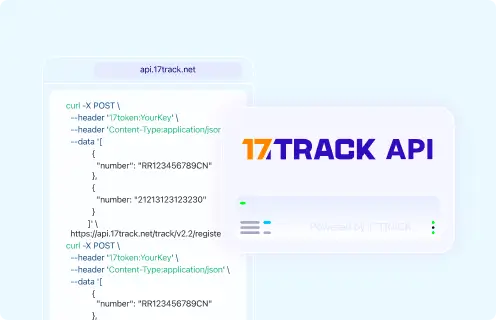
The supplied official LZFBA evidence does not publish a public developer endpoint, authentication scheme, webhook specification or migration notice. Businesses should request integration documentation directly from LZFBA. Current 17TRACK API documentation is available at api.17track.net.
FAQ
Basic FAQs
Use the shipment identifier supplied by the seller or LZFBA and check the official website or 17TRACK. If no event appears, confirm physical handover and identifier type.
Look in the seller’s dispatch notice, LZFBA booking message, freight documents or warehouse notice. An order number is not automatically a tracking number.
LZFBA’s public pages do not publish one universal format. Route, freight, warehouse and last-mile identifiers may use different structures.
The first event appears after the relevant booking, pickup, consolidation or partner scan is recorded. A created label does not prove physical acceptance.
International freight can have visibility gaps between pickup, port, customs, line-haul and warehouse events. Ask the shipper to confirm the latest operational status.
Timing depends on route, sea or air service, customs, port capacity, inland delivery and warehouse receiving. Use the shipment-specific quotation rather than a generic number.
Verify the address and contact the seller or LZFBA with the latest event so the contracting party can request correction, redelivery or return handling.
Check the delivery address, warehouse receiving desk, consignee staff and proof of delivery, then ask the seller or shipper to open an operational inquiry.
Notify the contracting shipper promptly, retain packaging and gather photographs, invoices and value evidence. The applicable protection depends on the booked service.
Use the official website, 400-688-6060, 18072699627 or 1313134646@qq.com, and include the shipment number and latest event.
Expert FAQs
No. A booking, container, bill-of-lading, warehouse or last-mile reference can represent different transport stages. Ask the issuer which identifier is intended for public tracking.
No. LZFBA identifies shipping-company cooperation for selected services, but a vessel or terminal event may be generated by a transport partner rather than by LZFBA’s receiving operation.
Cargo can pass through export documentation, line-haul, destination port, import customs, release, inland transport and warehouse or final-delivery handling.
No. Port arrival and customs release are separate events. The shipper or customs contact must confirm whether documents, duties or inspection action remains.
The supplied official pages describe CRM, ERP and visual tracking capabilities but do not publish a public endpoint or authentication specification. Request current integration documentation from LZFBA.
No. Address changes and delivery instructions must be handled by the seller, contracting shipper or LZFBA subject to route and shipment-stage rules.
The business should first compare the latest port, customs, inland and warehouse events, then contact the booking party or LZFBA with the freight reference and warehouse receiving details.
Tracking API
// LZFBA official public tracking API:
// Current public official tracking API not confirmed.
//
// 17TRACK API
// Documentation: https://api.17track.net/en/doc
POST https://api.17track.net/track/v2.4/register
Headers:
  17token: YourKey
  Content-Type: application/json

Body:
[
  {
    "number": "TRACKING_NUMBER",
    "carrier": "CARRIER_CODE"
  }
]

// CARRIER_CODE must be confirmed from current 17TRACK carrier documentation.
// Do not infer the code from the display name LZFBA.
Sources & References
- LZFBA official website — 乐众物流. Zhejiang Lezhong Logistics Technology Co., Ltd.
- Company Profile — 公司介绍. Zhejiang Lezhong Logistics Technology Co., Ltd.
- Contact — 联系我们. Zhejiang Lezhong Logistics Technology Co., Ltd.
- 17TRACK API Documentation. 17TRACK.
17TRACK is an independent tracking platform and is not affiliated with LZFBA.
Track your package
Global express parcel tracking service