International Multimodal Transport
What Is International Multimodal Transport?
International multimodal transport is the movement of goods between countries using at least two different modes of transport, such as road and sea, or rail and road. In its contractual sense, it involves one multimodal transport contract under which an operator takes responsibility for arranging the combined journey, even though different carriers may perform individual stages.
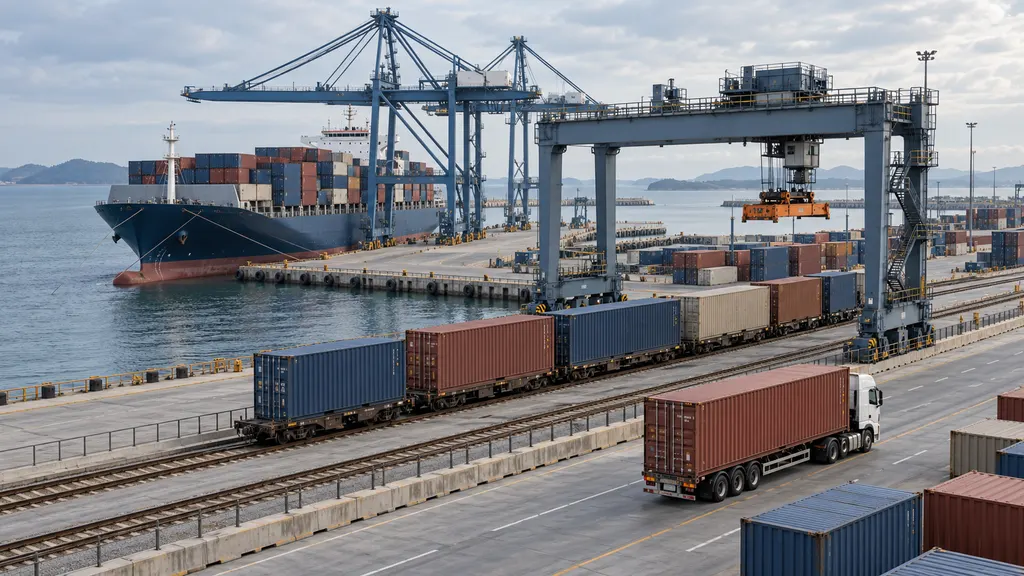
The term has both an operational and a legal meaning. Transport terminology may describe any movement using two or more transport modes as multimodal transport. The United Nations Convention on International Multimodal Transport of Goods uses a more specific definition: carriage by at least two modes under a multimodal transport contract, from a place where the operator takes the goods in charge in one country to a designated delivery place in another country. This distinction matters when interpreting a freight quotation, transport document, or service agreement.
For logistics and cross-border ecommerce, the concept connects separate transport stages into a coordinated international movement. It may support the delivery of inventory to an overseas warehouse, a commercial shipment to a buyer, or a consolidated movement containing multiple ecommerce orders.
Main Characteristics
- More than one transport mode: The journey combines modes such as road, rail, sea, inland waterway, or air. Using several trucks without changing mode does not, by itself, make a journey multimodal.
- An international movement: The agreed origin and destination are in different countries. A domestic road leg can still form part of the international journey.
- A defined contractual scope: Under a multimodal contract, the operator's undertaking covers the agreed combined carriage, rather than merely an isolated transport leg.
- Several operational participants: The operator may use road carriers, shipping lines, rail operators, terminals, and other service providers to perform the movement.
- Transfers between modes: Goods or their loading units pass through transfer points, such as ports, rail terminals, airports, or inland terminals.
These characteristics do not mean that every multimodal service includes collection, customs clearance, warehousing, insurance, and final delivery. The contract must identify which services and locations are included.
How International Multimodal Transport Works
1. Define the shipment and contractual endpoints
The shipper provides information about the goods, packaging, weight, dimensions, collection location, and delivery requirements. The parties establish where the operator takes the goods in charge and where the contractual delivery obligation ends. A warehouse-to-warehouse movement has a different scope from a terminal-to-terminal movement, even if both use the same main sea route.
2. Select the route and participating modes
The planned route combines suitable transport services. For example, goods may travel by truck to a port, by ship to another country, and by rail to an inland terminal. Route selection can depend on service availability, cargo characteristics, transfer arrangements, border requirements, and delivery constraints. Multimodal transport is not inherently the fastest or least expensive option; that assessment requires a comparison of actual routes and service conditions.
3. Establish the transport arrangements
Under the contractual model, a multimodal transport operator contracts with the shipper and arranges the required carriage. The operator may perform some stages itself or subcontract them. A freight forwarder may act as the contractual operator, but it may instead act only as an agent arranging contracts with other carriers. The company's label alone does not establish its legal role.
4. Move the goods through transfer points
At each transfer, the cargo or loading unit moves between services. A sealed container may transfer from a truck to a vessel without unpacking its contents. Other arrangements may require goods to be unloaded and repacked. Transfer procedures should preserve cargo identification and record relevant events, particularly shortages, visible damage, and changes in custody.
5. Complete border formalities and delivery
Customs and other border requirements remain applicable. Depending on the route and procedure, goods may be cleared at an entry point or move under customs transit before clearance elsewhere. The final carrier delivers to the agreed location, and delivery records help establish completion of the transport undertaking.
Multimodal Transport and Related Terms
Related expressions describe different aspects of a shipment. Some refer to physical handling, while others concern contractual responsibility. They should not be treated as universally interchangeable.
| Term | Main meaning | Important distinction |
|---|---|---|
| Multimodal transport | Carriage using at least two transport modes. | In contractual usage, it involves a multimodal contract and an operator responsible for the agreed combined carriage. |
| Intermodal transport | Movement using successive modes while goods remain in the same loading unit or road vehicle, without handling the goods themselves when changing modes. | It describes the transfer method; it does not by itself establish a single contract. |
| Combined transport | In UNECE terminology, intermodal transport with the major part of the European journey by rail, inland waterway, or sea, and road legs kept as short as possible. | It has a more specific regional meaning and should not automatically replace multimodal transport. |
| Unimodal transport | Carriage using one transport mode. | Several carriers can participate without creating a change of mode. |
| Transshipment | Transfer of goods or a loading unit from one transport service or vehicle to another. | A transfer between two vessels does not, by itself, make the journey multimodal. |
A journey can be both multimodal and intermodal. For example, a container transported by road, sea, and rail uses several modes and may retain the same loading unit throughout. Conversely, a movement can be multimodal without meeting the intermodal description if the goods themselves are handled when changing modes.
Contracts, Documents, and Liability
A multimodal transport document records the agreed carriage and the operator's receipt or taking in charge of the goods. Its wording, contractual conditions, and applicable law matter more than its commercial title alone. A document described as a through bill of lading or a combined transport document should be examined to determine the actual route, responsibility, and delivery scope it covers.
A single transport contract does not mean that only one vehicle, carrier, or operational document is involved. Subcontracted carriers may issue their own records for individual legs, while the shipper deals with the operator under the overarching agreement. Commercial invoices, packing lists, customs declarations, and any required permits remain separate from the transport contract.
Liability is not governed by one universally applicable multimodal rule. Relevant factors can include the contract, national law, mandatory rules for a particular transport mode, and whether the stage where loss or damage occurred can be identified. A contractual operator's responsibility should therefore not be confused with unlimited liability or automatic reimbursement of the full cargo value.
The United Nations Convention on International Multimodal Transport of Goods provides a formal definition and legal framework, but it has not entered into force. It should not be presented as a globally binding regime for ordinary shipments. Its definition is useful as a reference, while a particular shipment requires examination of the rules that actually apply.
Use in Cross-Border Ecommerce
International multimodal transport can connect a supplier or origin warehouse with an overseas fulfillment facility. After inventory reaches that facility, individual customer orders may be picked and dispatched under separate delivery arrangements. The inbound freight movement and the later parcel deliveries are related supply-chain activities, but they are not necessarily covered by the same transport contract.
For example, a retailer may arrange for cartons of inventory to travel by truck from a supplier to a seaport, by ship to the destination country, and by truck to a fulfillment warehouse. If an operator undertakes that combined movement under one contract, it illustrates the contractual meaning of international multimodal transport. If the retailer independently books each leg, the physical movement still uses multiple modes, but the retailer should not assume that one operator has accepted end-to-end contractual responsibility.
The same distinction matters for shipment visibility. A container reference, a carrier booking number, and an individual ecommerce order number may identify different objects. A freight milestone showing arrival at a destination port does not establish that inventory has reached a warehouse or that a customer order has been delivered.
Customs and Operational Checks
A multimodal contract does not remove customs obligations or determine who acts as importer, exporter, or customs declarant. Those roles depend on the applicable rules and commercial arrangements. Customs transit is also distinct from import clearance: it can permit goods to move under customs control subject to the conditions of the relevant procedure.
Before relying on a proposed multimodal arrangement, the shipper can check the following points:
- Contracting party: Is the provider acting as the carrier or multimodal operator, or only as an agent?
- Coverage: Which collection points, terminals, border crossings, and delivery locations fall within the contract?
- Transfer requirements: Will the goods remain in the same loading unit, or will unpacking, consolidation, or repacking occur?
- Border responsibilities: Who supplies the customs information, submits declarations, and handles any transit procedure?
- Cargo restrictions: Are the goods acceptable across every proposed mode and transfer point, including any dangerous-goods or temperature-control requirements?
- Charges and exclusions: Which handling, storage, clearance, and delivery services are included, and which may be billed separately?
- Claims and evidence: What conditions govern notification of loss or damage, supporting documents, and dispute handling?
These checks help distinguish an integrated transport undertaking from a collection of loosely connected bookings. They do not establish that one arrangement is always preferable; the appropriate structure depends on the shipment and the parties' requirements.
QA
Does international multimodal transport require a sea leg?
No. It requires at least two transport modes, not a particular mode. Road and rail or road and air can form a multimodal international journey.
Are multimodal and intermodal transport the same?
Not exactly. Multimodal refers to the use of multiple modes and, in contractual usage, an operator's undertaking for the combined carriage. Intermodal describes movement in the same loading unit or road vehicle without handling the goods themselves when modes change.
Does one contract mean one carrier performs the whole journey?
No. The contractual operator may engage separate carriers for different legs. The contract establishes its undertaking to the shipper, while subcontractors perform specified services.
Does multimodal transport include customs clearance and cargo insurance?
Not automatically. The service agreement must identify whether clearance or insurance is included or separately arranged. Carrier liability and cargo insurance are different forms of protection.
Sources
- UNECE, European Conference of Ministers of Transport, and European Commission: Terminology on Combined Transport — Definitions and distinctions concerning multimodal, intermodal, and combined transport.
- United Nations Treaty Collection: United Nations Convention on International Multimodal Transport of Goods — Convention text, contractual definition, operator framework, and entry-into-force status.
- World Customs Organization: Revised Kyoto Convention — Customs-procedure framework, including the distinction between clearance for home use and customs transit.