Carrier
Definition
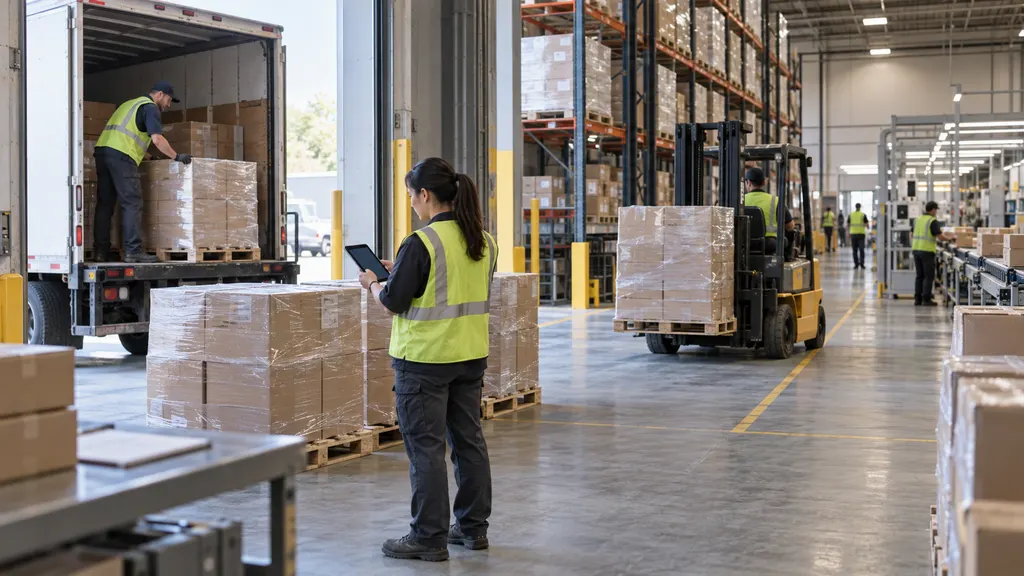
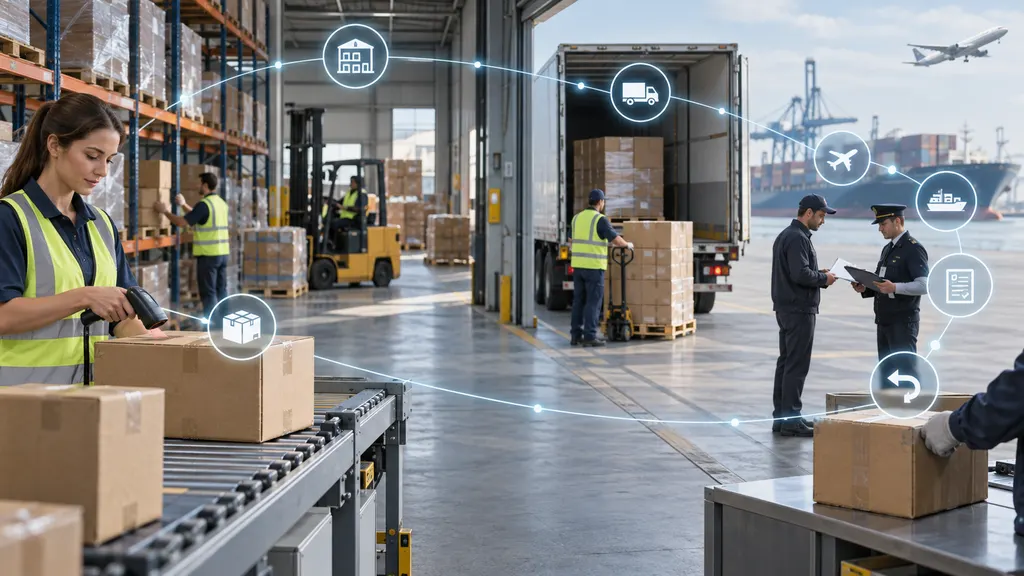
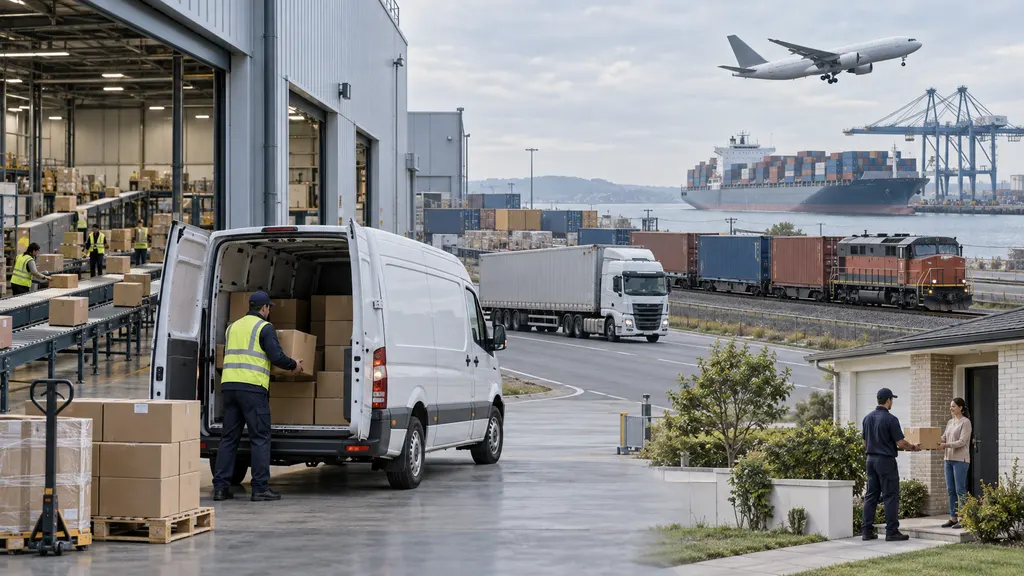
A carrier is a person or organization that transports goods from one location to another, either directly or through a contracted transport service. In logistics and ecommerce, the term usually refers to a transportation company responsible for moving a shipment by road, rail, air, sea, or a combination of these modes. A carrier may also provide shipment acceptance, transport documentation, tracking events, delivery, and, in some cases, returns transportation.
The word carrier can have different meanings in other fields. In telecommunications, for example, it can refer to a company that provides communications services. In this glossary, the primary meaning is the logistics and shipping meaning: the party that performs or arranges the physical movement of cargo, parcels, or other goods.
In Logistics
A carrier occupies the transport stage of the supply chain. A manufacturer, seller, warehouse, freight forwarder, or fulfillment provider may hand goods to a carrier for movement to another facility, a customs location, a business address, a residential address, or a return destination. The carrier does not necessarily own the goods. Its role is normally connected with transporting the shipment under agreed service conditions.
The exact responsibilities of a carrier depend on the transport contract, the shipping service, the transport mode, and the applicable legal framework. A carrier may accept a shipment, issue or process transport documentation, load or arrange loading, move the goods, provide status events, obtain delivery confirmation, and manage exceptions such as an address problem or an unsuccessful delivery attempt. These activities should not be assumed to be identical for every carrier or service.
A carrier is different from several other parties involved in logistics. A seller owns or sells the goods. A warehouse stores or handles inventory. A fulfillment provider may pick, pack, and dispatch an order. A freight forwarder arranges transportation and may combine services from different carriers, but it is not necessarily the party that physically transports every part of the journey. A customs broker assists with customs procedures, while a carrier transports the shipment, although a single company may offer more than one of these services.
Carrier and the Shipment Process
In a typical ecommerce shipment, the carrier becomes involved after an order has been prepared for transport. The process can include the following stages:
- Booking or service selection: The shipper or its logistics provider selects a carrier and a service according to factors such as destination, shipment characteristics, delivery requirements, and available transport options.
- Label and document preparation: A shipping label and other required transport or customs information are prepared. For international shipments, the information may include descriptions of the goods, quantities, values, origin details, and other data required by the relevant process.
- Acceptance: The carrier receives the shipment through a pickup, drop-off point, consolidation center, warehouse handover, or another agreed method. A label created by a seller does not by itself prove that the carrier has accepted the physical shipment.
- Movement and handling: The carrier transports the shipment through one or more facilities, vehicles, aircraft, vessels, or transfer points. A shipment can involve subcontractors, partner carriers, or multiple transport modes.
- Tracking updates: The carrier or a connected logistics system records operational events. These events may indicate acceptance, movement, an exception, arrival at a facility, an attempted delivery, or delivery.
- Final delivery or handover: The shipment is delivered to the named destination, a designated recipient, a collection point, another carrier, or an intermediary handling the next part of the journey.
This sequence is a general description rather than a universal operating procedure. The order and level of detail can vary by carrier, service, destination, and shipment type.
Types of Carriers
Carriers can be described using several different classification dimensions. These dimensions should not be treated as one official hierarchy. A carrier may fit more than one category at the same time.
| Classification basis | Type | Meaning | Typical use |
|---|---|---|---|
| Transport mode | Road carrier | Moves goods by trucks, vans, or other road vehicles. | Parcel delivery, regional distribution, and domestic freight. |
| Transport mode | Rail carrier | Moves goods by rail, often between terminals or distribution regions. | Bulk, containerized, or long-distance inland transportation. |
| Transport mode | Air carrier | Moves cargo by aircraft, either as dedicated cargo or through available air-freight capacity. | Time-sensitive or international shipments. |
| Transport mode | Ocean carrier | Transports cargo by sea, commonly in containers or other maritime equipment. | International containerized and bulk transportation. |
| Service model | Parcel carrier | Handles individual packages or smaller shipments within a parcel network. | Ecommerce orders, documents, and small-business shipments. |
| Service model | Freight carrier | Transports larger, heavier, or palletized consignments. | Business-to-business distribution and palletized freight. |
| Network role | Line-haul carrier | Moves shipments between major facilities or transport hubs. | Longer-distance movement within a distribution network. |
| Network role | Last-mile carrier | Performs the final transport segment to the recipient or delivery point. | Residential, commercial, or collection-point delivery. |
Terms such as parcel carrier, freight carrier, and last-mile carrier describe operational roles or service characteristics. They do not necessarily identify the legal status of a company in every country. A single carrier may operate several modes or offer both parcel and freight services.
Carrier in Ecommerce
In ecommerce, the carrier connects an order-management or fulfillment process with physical delivery. After an order is released for fulfillment, goods may be picked from inventory, packed, labeled, and handed to a selected carrier. The carrier then transports the resulting parcel or shipment. The order, the shipment, and the tracking record are related but are not the same object.
| Term | Meaning | Relationship to the carrier |
|---|---|---|
| Order | A customer request to purchase goods or services. | The carrier usually transports goods after an order has been prepared for dispatch. |
| Shipment | A consignment prepared for transport, which may contain one or more items. | The carrier receives and moves the shipment. |
| Parcel | A package handled as an individual unit in a parcel network. | A parcel carrier scans and transports the parcel through its network. |
| Tracking number | An identifier used to associate a shipment with tracking information. | The carrier may assign, recognize, or update the identifier in its tracking system. |
| Delivery | The completion of a transport stage at the intended destination or handover point. | The carrier may record a delivery event according to its procedures. |
A seller may choose a carrier directly, use a fulfillment provider that selects a carrier, or use a shipping platform that connects the order system with multiple carrier services. The commercial arrangement does not change the basic meaning of carrier: the carrier is the transport party associated with moving the shipment. In some arrangements, the company shown to a customer may be a brand, an intermediary, or a partner network rather than the entity operating every vehicle or facility involved.
Carrier Tracking
Carrier tracking is the process of using shipment identifiers and transport events to follow a shipment through the carrier's network. Common events can include label creation, acceptance, departure from a facility, arrival at a facility, customs-related processing, an exception, an attempted delivery, and delivery. The exact wording and sequence depend on the carrier and the service.
A tracking status is an operational record, not necessarily a complete physical history of the goods. A label may be created before the carrier receives the parcel, and an event may be uploaded after the underlying movement occurred. A tracking system can also display information from partner carriers when a shipment changes hands. For this reason, the carrier name, tracking number, event timestamp, event location, and status description should be considered together.
Tracking and tracing are related but can have different emphasis. Tracking commonly refers to current or recent shipment status. Tracing can refer more broadly to investigating the shipment's route, history, location, or cause of a delay. In everyday ecommerce communication, the two words are sometimes used interchangeably, so the surrounding context matters.
Carriers in Cross-Border Shipping
In cross-border ecommerce, a shipment may involve an origin carrier, an international transport provider, a destination carrier, or a postal and partner network. The carrier may transport the goods, but customs authorities make decisions under the applicable customs rules. A carrier does not automatically act as the importer, exporter, seller, or customs authority.
International shipping information normally needs to identify the goods sufficiently for transport and customs processes. Inaccurate or incomplete descriptions, values, addresses, or other required information can contribute to delays, additional inquiries, return-to-sender actions, or other exceptions. The precise requirements depend on the destination, origin, goods, transport method, and applicable rules; therefore, a carrier's shipping guidance and the relevant official customs authority should be consulted for a particular shipment.
Cross-border delivery can also involve a handover between networks. The tracking page used by the seller may combine events from more than one carrier. A change in the displayed carrier or tracking format does not necessarily mean that the shipment has been lost; it may indicate a normal transfer between transport parties. Conversely, a tracking status alone should not be treated as proof of customs clearance, delivery, or payment of every applicable charge unless the status and responsible party clearly establish that fact.
Carrier, Freight Forwarder, and Logistics Provider
| Term | Primary role | Important boundary |
|---|---|---|
| Carrier | Transports or performs the transport of a shipment. | May operate the transport service or participate as a transport party under a wider network. |
| Freight forwarder | Arranges transportation and related logistics services for a shipper. | May select or contract carriers and may not physically move every segment. |
| Logistics provider | Provides one or more logistics activities, such as transport, warehousing, fulfillment, or coordination. | Is a broad term and does not by itself specify whether the provider is the carrier. |
| Postal operator | Provides postal services, which can include acceptance, transport, sorting, and delivery. | May exchange or hand over items through domestic or international postal networks. |
These terms can overlap in commercial practice. A company may offer transportation and forwarding services, or a logistics provider may operate its own carrier network. The safest interpretation comes from the shipping contract, service description, transport documents, and the actual function performed in the shipment.
Common Misunderstandings
- A carrier is not always the seller. The seller supplies or sells the goods, while the carrier transports them.
- A tracking number is not proof of carrier acceptance. In many systems, an identifier can exist before the first physical scan.
- A carrier is not automatically a customs broker. Transport and customs representation are separate functions, although one organization may provide both.
- Delivery and shipment are not synonyms. A shipment is the item or consignment being transported; delivery is a transport event or completion stage.
- The carrier shown in tracking may not have handled every segment. International and multimodal shipments may move through partner networks or be handed to another carrier.
Examples
| Scenario | How the carrier role appears |
|---|---|
| Domestic online order | A parcel carrier collects a packed order from a fulfillment center and delivers it to the customer. |
| International marketplace order | An origin carrier transports the parcel to an export or consolidation point, after which another network may handle destination delivery. |
| Palletized business shipment | A freight carrier transports pallets from a supplier to a distribution center under a freight service. |
| Returned ecommerce item | A carrier transports the returned parcel from the customer to a seller, warehouse, or returns-processing location. |
| Multimodal movement | Different carriers or transport modes handle separate legs between the origin and final destination. |
QA
What is a carrier in logistics?
A carrier is the transport party that moves goods or a shipment from one location to another by road, rail, air, sea, or another transport method.
What does a carrier do in ecommerce?
A carrier accepts or receives prepared shipments, transports them through its network, provides relevant status events, and may complete delivery or a delivery handover.
Is a carrier the same as a logistics provider?
No. Carrier describes a transport role, while logistics provider is a broader term that can include transport, warehousing, fulfillment, coordination, or other logistics services.
Is the carrier responsible for customs clearance?
Not automatically. Customs responsibilities depend on the shipment arrangement and applicable rules. A carrier may provide customs-related services, but transport and customs authority functions should not be assumed to be identical.
Sources
- World Customs Organization, Glossary of International Customs Terms — customs and international trade terminology.
- International Maritime Organization, Facilitation of International Maritime Traffic — maritime transport and facilitation context.
- U.S. Electronic Code of Federal Regulations, 49 CFR 171.8 — an official regulatory example of transport terminology and carrier-related definitions in hazardous materials regulation.
- UPS Supply Chain Solutions, Transportation Carrier Glossary Entry — industry usage of the carrier concept in transportation.