Warehousing
Definition
Warehousing is the organized storage, handling, protection, and movement of goods within a facility or network of facilities. In logistics and ecommerce, it connects inbound supply with outbound fulfillment by receiving products, recording inventory, storing stock, preparing orders, and arranging the next movement of goods. A warehouse may support manufacturing, wholesale distribution, retail, ecommerce, international trade, or several of these activities at the same time.
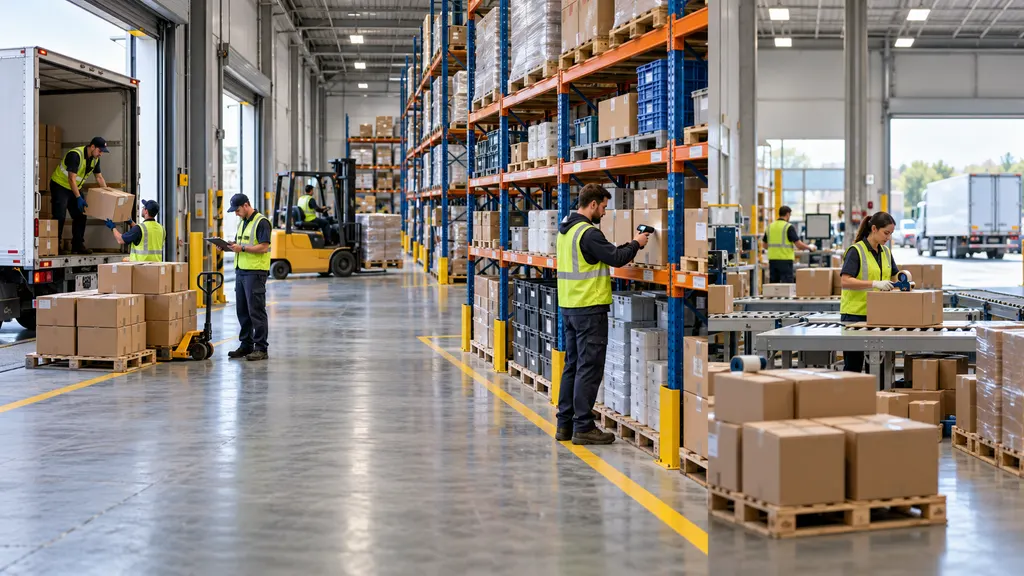
Warehousing is broader than simply keeping products in a building. It includes operational processes such as unloading, receiving, inspection, put-away, inventory control, picking, packing, staging, dispatch, and, where applicable, returns processing. The exact activities depend on the type of goods, the service model, the technology used, and the relationship between the warehouse and other supply-chain participants.
The term can describe both an activity and the facility in which that activity takes place. A warehouse is the physical site; warehousing is the set of processes used to manage goods in that site. In customs and international trade, special arrangements such as bonded warehousing may apply when imported goods are stored under customs control before a later customs action.
Role in Logistics
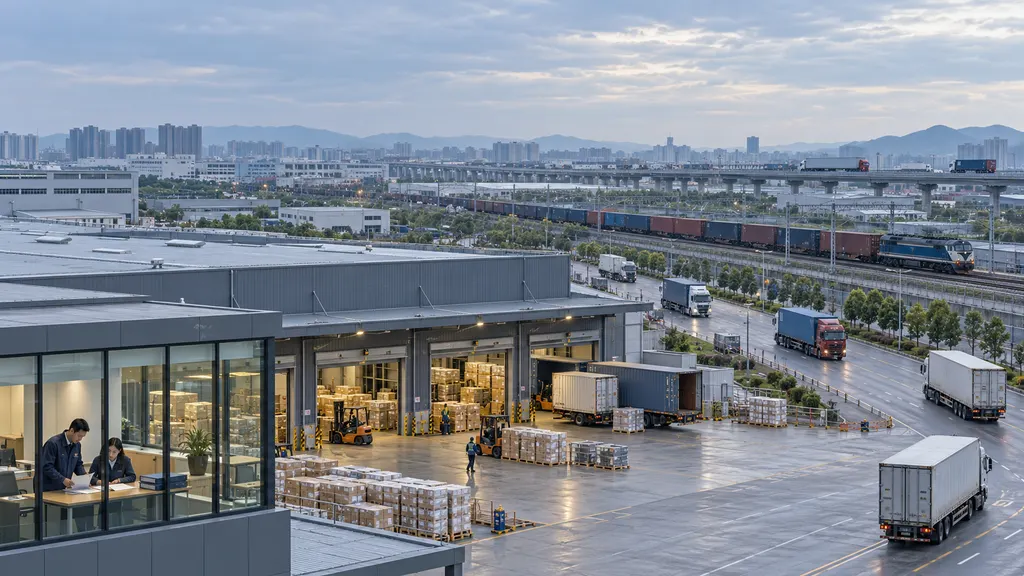
Warehousing provides a controlled point between different stages of the supply chain. Products may arrive from a manufacturer, supplier, port, airport, or another warehouse and later leave for a store, business customer, parcel carrier, freight carrier, or final consumer. By holding inventory at a suitable location, a business can separate the timing and volume of inbound supply from the timing and volume of customer demand.
A warehouse does not replace transportation. Transportation moves goods between locations, while warehousing manages goods while they are received, held, processed, and prepared for another movement. A shipment may pass through a warehouse without long-term storage, such as in a cross-docking operation, or it may remain for an extended period as reserve inventory.
| Activity | Purpose | Typical relationship to inventory | Example |
|---|---|---|---|
| Receiving | Accept goods and compare them with expected inbound information | Brings inventory into the facility record | A warehouse receives cartons from a supplier and checks quantities |
| Put-away | Place goods in an assigned storage location | Changes the recorded location of stock | Items are moved from a receiving area to a rack or bin |
| Storage | Hold goods until they are required | Maintains available, reserved, or restricted stock | Finished products remain in reserve inventory |
| Picking | Retrieve goods for an order or operational request | Reduces available stock or moves it into order processing | Workers collect several items for one ecommerce order |
| Packing and dispatch | Prepare goods for handover to the next carrier or recipient | Moves goods from warehouse inventory into an outbound shipment | A packed parcel is transferred to a parcel carrier |
How Warehousing Works
1. Inbound planning and receiving
Inbound work begins with information about an expected delivery, such as a purchase order, advance shipment notice, booking, or transfer instruction. When goods arrive, warehouse personnel may verify the identity, quantity, packaging condition, labeling, and required documentation. The level of inspection varies by product and operating model. Controlled products may require additional checks for temperature, safety, expiration, serial numbers, or regulatory status.
Receiving creates an important boundary between physical goods and inventory records. A product that has arrived at a loading dock may not yet be available for sale. It may be awaiting inspection, counting, labeling, quarantine review, or system confirmation. Treating received goods as available too early can create inventory inaccuracies and fulfillment errors.
2. Storage and inventory control
After receiving, goods are assigned to locations according to operational rules. These rules may consider product dimensions, weight, handling requirements, demand, compatibility, security, expiration dates, and the need for efficient picking. Storage can include pallet racks, shelving, bins, cages, temperature-controlled areas, or open floor locations.
Inventory control is the process of maintaining reliable information about what is held, how much is available, where it is located, and what restrictions apply. Warehouse records may distinguish on-hand inventory from available inventory, allocated inventory, damaged inventory, quarantined inventory, and returned inventory. A warehouse management system may support these records, but the system does not by itself guarantee accuracy; physical processes, scanning, counting, and exception handling remain important.
3. Order fulfillment
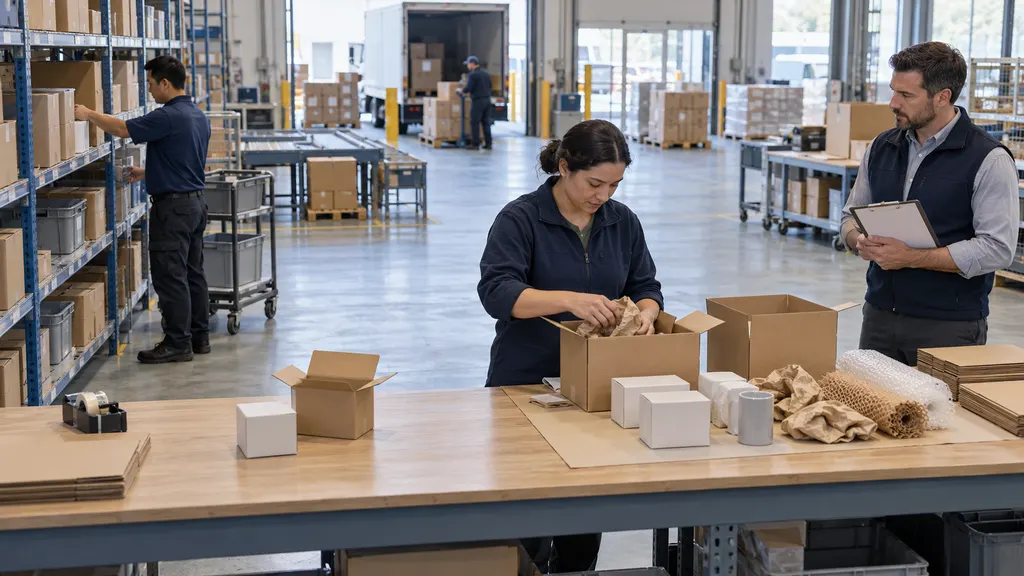
For ecommerce, fulfillment commonly starts when an order is released to a warehouse. The warehouse determines which stock should be used, creates a picking task, retrieves the products, checks the order, packs the items, and prepares shipping information. Picking can be organized by individual order, batch, zone, wave, or another operational method. The appropriate method depends on order volume, product variety, facility layout, and required service levels.
Warehousing and order management are related but different. An order is a request to buy or move goods. A warehouse processes the physical inventory needed to satisfy that request. The resulting parcel or freight shipment is a separate logistics object that may then receive a carrier label, tracking reference, and delivery status.
4. Outbound staging and dispatch
Completed orders are often placed in an outbound staging area before collection. Staging may organize goods by carrier, route, service level, destination, temperature requirement, or departure schedule. At handover, the carrier or transport operator assumes responsibility for the next transport leg according to the applicable commercial and contractual arrangements. A dispatch scan or shipment confirmation may update the ecommerce or warehouse system, but it does not necessarily mean that delivery has occurred.
5. Returns and reverse flows
Many ecommerce warehouses also process returned goods. A returned item may be received, identified, inspected, graded, and assigned a disposition such as resale, repair, refurbishment, recycling, quarantine, or disposal. A return is not the same as a refund: the return describes the movement or process involving the goods, while a refund describes the financial reversal or reimbursement. Some businesses use a dedicated returns facility rather than the same building used for outbound fulfillment.
Types of Warehousing
Warehouses can be described using several different classification dimensions. These dimensions should not be treated as one official hierarchy. For example, a facility may be privately operated, temperature-controlled, and used for ecommerce fulfillment at the same time.
| Classification basis | Type or description | What it indicates |
|---|---|---|
| Ownership or operation | Private warehouse | Operated for the owner’s or affiliated organization’s inventory and activities |
| Ownership or operation | Public or contract warehouse | Space and services are provided to other businesses under commercial arrangements |
| Service function | Distribution center | Designed for receiving, sorting, storing, and dispatching goods through a distribution network |
| Service function | Fulfillment center | Focused on processing orders, often including ecommerce picking, packing, and returns |
| Product requirement | Temperature-controlled facility | Uses procedures and equipment intended to maintain specified product conditions |
| Customs status | Bonded warehouse | Stores eligible imported goods under a customs regime subject to the relevant authority’s rules |
| Material flow | Cross-dock operation | Moves selected inbound goods toward outbound dispatch with limited or no conventional storage |
These labels are not interchangeable. A fulfillment center may be operated by a retailer, a third-party logistics provider, or another organization. A distribution center may hold inventory, while a cross-dock operation is characterized mainly by the flow of goods through the facility rather than by the length of storage.
Warehousing in Ecommerce
In ecommerce, warehousing is part of the fulfillment process that converts digital orders into physical shipments. The warehouse may receive inventory from a seller or manufacturer, store products by stock-keeping unit, allocate available units to orders, and prepare parcels for a parcel carrier or other transport provider. Information typically moves between an ecommerce platform, order-management system, warehouse-management system, inventory records, and carrier systems.
Location is an important operational consideration because it affects the transport leg between inventory and the customer. A business may use one facility, several regional facilities, a marketplace-operated fulfillment network, or a third-party logistics provider. The choice depends on factors such as product range, demand distribution, inventory policy, customs requirements, service commitments, and the cost and complexity of moving stock between locations. No single network design is appropriate for every business.
Cross-border ecommerce adds additional requirements. Imported inventory may need commercial documentation, customs declarations, product information, and controls related to duties, taxes, restricted goods, or local regulations. The warehouse may also need to distinguish domestic stock from goods under customs control. The exact requirements depend on the countries involved, the transaction structure, the goods, and the applicable customs regime.
Warehousing Technologies and Controls
Technology can improve visibility and coordination, but its function depends on the process it supports. Common tools include barcode scanners, radio-frequency identification systems, warehouse-management systems, conveyor and sorting equipment, automated storage and retrieval systems, dimensioning equipment, and electronic data interchange. These tools may help identify goods, assign locations, direct work, record movements, and share status information.
Important controls include location accuracy, stock counting, lot or batch tracking, serial-number control, access control, segregation of damaged or restricted goods, and documented exception handling. Cycle counting checks selected inventory on a recurring basis instead of relying only on a full physical count. The method and frequency should reflect the organization’s products, risks, and control requirements.
Warehouse performance can be assessed with measures such as inventory accuracy, order accuracy, receiving time, picking productivity, dock-to-stock time, order cycle time, space utilization, damage rates, and return-processing time. These measures describe particular aspects of an operation; they do not by themselves establish that one warehouse is better than another. A useful measure must be interpreted in relation to product characteristics, order complexity, safety requirements, and the service being provided.
Common Misunderstandings
- Warehousing is only storage. Storage is one warehousing activity, but receiving, inventory control, order preparation, dispatch, and returns may also be part of the operation.
- A warehouse is the same as a fulfillment center. A fulfillment center is a warehouse or related facility organized around order processing. Not every warehouse fulfills individual consumer orders.
- Received inventory is automatically available for sale. Goods may remain pending inspection, counting, system confirmation, customs processing, or quality review.
- Dispatch means delivery. Dispatch means that goods have left, or are being handed over from, the warehouse for the next transport stage. Delivery occurs later when the shipment reaches the intended recipient or destination under the applicable service arrangement.
- A bonded warehouse is simply a secure warehouse. Bonded warehousing refers to a customs status or procedure, not merely physical security. Its legal conditions are established by the relevant customs authority.
- Warehousing and inventory management are identical. Inventory management includes decisions and controls concerning stock levels, availability, replenishment, and allocation. Warehousing is the physical and operational handling of goods, although the two functions are closely connected.
Related Terms
| Term | Difference from warehousing |
|---|---|
| Inventory management | Planning and controlling stock quantities, locations, availability, and replenishment; it may cover inventory beyond one warehouse. |
| Fulfillment | The broader process of completing an order, including warehouse work, transportation handover, and sometimes customer communication. |
| Distribution center | A facility focused on distributing goods through a network; it may perform warehousing and other flow-management activities. |
| Third-party logistics | An arrangement in which an external provider performs logistics services for another organization, potentially including warehousing. |
| Freight forwarding | The organization of transportation and related documentation, which may include coordination with warehouses but is not the same as warehouse operations. |
| Cross-docking | A material-flow method that transfers selected goods from inbound to outbound handling with limited storage. |
QA
What is warehousing in logistics?
Warehousing is the storage and operational management of goods between inbound supply and outbound transportation. It can include receiving, put-away, inventory control, picking, packing, dispatch, and returns processing.
What is the difference between a warehouse and a fulfillment center?
A warehouse is a facility used to hold and handle goods. A fulfillment center is organized specifically to process orders, often including picking, packing, shipping handover, and ecommerce returns.
Does warehousing include transportation?
Warehousing and transportation are different logistics activities. Warehousing manages goods inside or around a facility, while transportation moves them between locations. They are commonly coordinated as part of one supply chain.
What is bonded warehousing?
Bonded warehousing is the storage of eligible imported goods under a customs regime and its associated conditions. It is not simply another name for ordinary storage.
Sources
- Encyclopaedia Britannica, “Warehouse” — general reference for the warehouse concept and its role in handling and storing goods.
- U.S. Census Bureau, NAICS 493110: General Warehousing and Storage — official industry classification context for warehousing and storage activities.
- U.S. Customs and Border Protection, Bonded Warehouses — customs context for bonded warehousing.
- U.S. Occupational Safety and Health Administration, Warehousing — official reference for warehouse operating conditions and workplace safety considerations.