International Airline Transport
What Is International Airline Transport?
International airline transport is the carriage of passengers, cargo, or mail by aircraft between countries. In logistics and cross-border ecommerce, the term usually refers to the international air movement of goods, whether carried on a dedicated cargo aircraft or in the cargo compartment of a passenger aircraft. It describes a transport activity, not necessarily a complete delivery service from the seller to the customer.
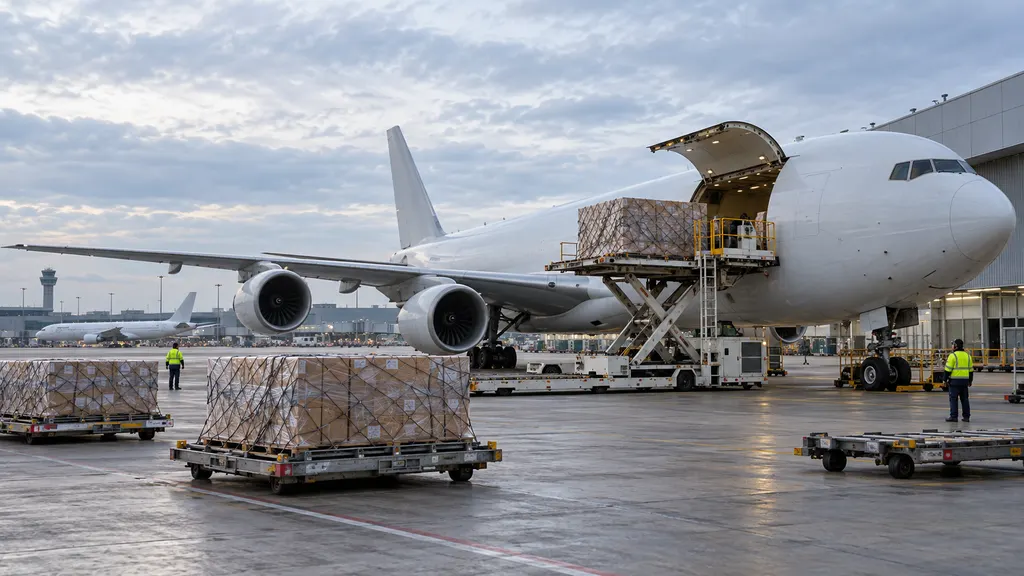
The expression is descriptive rather than the name of a single standardized logistics product. Its exact scope depends on the document or service in which it appears. A freight quotation may use it for the airport-to-airport movement, while a parcel tracking system may use similar wording for a broader stage involving airline handling and international transit. Neither usage should be assumed to include customs clearance or final delivery unless those services are expressly included.
Its Role in the Supply Chain
International airline transport connects the origin and destination sides of a cross-border supply chain. Goods must reach the departure airport, satisfy applicable acceptance and security requirements, move through the air transport network, and enter the destination handling and import processes. Road transport, warehousing, customs brokerage, and local delivery may surround the flight movement without being performed by the airline itself.
For an ecommerce retailer, the air movement might carry individual parcels, a consolidated shipment containing many customer orders, or inventory intended for an overseas fulfillment warehouse. These are different commercial arrangements, but each can contain an international airline transport leg. An order is a commercial transaction; the airline transports the physical shipment associated with that order or with several orders.
Several participants may be involved. The shipper supplies the goods and shipment information. A freight forwarder may arrange transport and consolidate cargo. The airline provides air carriage, while ground handling agents perform airport activities on behalf of airlines or other parties. Customs brokers and destination delivery providers may handle separate parts of the journey. One organization can perform several roles, but those roles should not automatically be treated as identical.
How International Air Cargo Moves
The following sequence describes a possible cargo journey. The precise order and allocation of responsibilities depend on the route, shipment, service agreement, and applicable requirements; it is not a universal operating procedure.
| Stage | Main activity | Important distinction |
|---|---|---|
| Booking and preparation | Transport is arranged, and shipment details, packaging, and documents are prepared. | A booking does not establish that cargo has been accepted or loaded. |
| Origin collection and acceptance | Goods reach the cargo facility and undergo applicable acceptance and security procedures. | Warehouse receipt and airline acceptance can be separate events. |
| Export processing | Required export declarations and other formalities are completed. | Export procedures are distinct from destination import clearance. |
| Air movement | Cargo travels on a direct flight or through one or more connecting airports. | A scheduled departure is not proof of actual departure. |
| Destination handling | Cargo is unloaded, processed, and made available for the next authorized step. | Airport arrival does not necessarily mean immediate cargo availability. |
| Import clearance and onward transport | Goods undergo applicable import procedures and move to a warehouse or delivery network. | Customs release and delivery to the recipient are separate milestones. |
A connecting itinerary may include handling and storage at an intermediate airport. Consequently, a shipment described as being in international air transport may not be airborne continuously. Assessing its progress requires the actual event history, rather than the stage label alone.
Aircraft, Routing, and Service Scope
Passenger aircraft and freighter aircraft
Air cargo can travel in the lower-deck cargo compartments of passenger aircraft or on dedicated freighter aircraft. These are aircraft operating arrangements, not delivery-speed guarantees. Whether a shipment can be carried depends on factors such as available capacity, dimensions, weight, loading constraints, and commodity restrictions.
Some goods require special handling because of their characteristics. Temperature-sensitive products may need specified handling conditions, while dangerous goods are subject to classification, packing, marking, labeling, and documentation requirements as applicable. A product being commercially available does not establish that it is acceptable for air transport in every quantity or configuration.
Direct and connecting routes
A direct routing and a connecting routing can involve different handling steps and scheduling dependencies. Route selection therefore involves more than the geographical distance between the seller and buyer. Available flights, cargo acceptance, transfer arrangements, and destination handling can all affect the practical itinerary.
Airport-to-airport and door-to-door services
An airport-to-airport arrangement focuses on movement between designated airports. Collection, clearance, storage, and delivery may require separate arrangements or charges. A door-to-door service combines additional activities under a broader service scope, although the precise inclusions remain contractual. The phrase international airline transport alone does not establish either arrangement.
Documents and Shipment Information
An air waybill is a central document in air cargo transport. It records shipment information and serves as evidence of the contract of carriage between the shipper and the carrier. Electronic air waybill arrangements allow participating parties to replace the paper air waybill within the applicable legal and operational framework. An air waybill should not be confused with a commercial invoice or an import declaration.
In consolidated freight, a forwarder may issue house air waybills for individual consignments, while a master air waybill relates to the consolidated movement with the airline. These document levels help explain why an ecommerce parcel identifier may not be the same as the airline shipment reference. A seller's order number, a parcel tracking number, and an air waybill number can identify different records.
Other information or documents may include a commercial invoice, packing list, customs declarations, permits, and commodity-specific documentation. Requirements depend on the goods, jurisdictions, and shipment arrangement. No single general checklist can establish compliance for every international air shipment.
Meaning in Parcel Tracking
In a tracking history, wording such as “international airline transport” may describe a stage associated with international air carriage. However, it is not a universally standardized event with one guaranteed operational meaning. The original carrier's event description, location, timestamp, and surrounding scans provide the necessary context.
For example, an event recording handover to an airline is different from an event confirming flight departure. Similarly, arrival at an airport is different from import release. A translated or summarized tracking label may not preserve all these distinctions. Without supporting events, the wording alone cannot reliably establish the aircraft's location, whether the parcel has crossed the border, or when delivery will occur.
A shipment may also move as part of a larger consolidated load. Individual parcel updates can therefore reflect information exchanged between logistics partners rather than a fresh physical scan of each parcel at every step. A gap in customer-facing tracking does not, by itself, establish either continuous movement or loss.
Related Terms and Important Boundaries
| Term | Relationship to international airline transport |
|---|---|
| Air freight | Commonly refers to goods transported by air or the service used to transport them. In logistics discussions, it substantially overlaps with international airline transport when the movement crosses borders. |
| Air cargo | Emphasizes the goods carried by aircraft. In commercial usage, air cargo and air freight often overlap rather than forming a strict universal distinction. |
| International express delivery | A service arrangement that may combine collection, transport, clearance support, tracking, and delivery. Airline transport can be one component. |
| Customs clearance | The procedures associated with meeting customs requirements. It is not the same activity as transporting goods by aircraft. |
| Last-mile delivery | The final delivery movement to the recipient. It occurs outside the international flight leg. |
| International Air Transport Association | An airline trade association commonly abbreviated as IATA, not a transport stage or a generic name for an international shipment. |
These boundaries matter when interpreting quotations and tracking messages. An airline's carriage obligation, a forwarder's service commitment, and a retailer's delivery promise can cover different activities. A reference to air transport should not be expanded into a claim about the entire customer delivery process.
Practical Checks for Cross-Border Shipments
For example, a retailer may arrange for cartons of apparel to fly to another country before a local provider separates them into customer parcels. The international air movement carries the consolidated shipment; the later parcel deliveries belong to another stage. Alternatively, a retailer may send replacement inventory by air to an overseas warehouse, with no immediate delivery to individual consumers.
When evaluating such a shipment, useful checks include:
- Service boundaries: Confirm whether the arrangement includes collection, airport handling, clearance, and destination delivery.
- Cargo acceptance: Check dimensions, weight, packaging, and any commodity-specific restrictions before dispatch.
- Documentation: Ensure that shipment descriptions and commercial information are consistent across the relevant records.
- Routing: Establish whether transfers are involved and distinguish planned flight information from confirmed movement events.
- Tracking references: Identify whether a reference belongs to an order, parcel, house air waybill, or master air waybill.
- Delivery estimates: Determine whether an estimate describes airport transit or the complete journey to the recipient.
These checks clarify what has been purchased and what the available evidence demonstrates. They do not replace shipment-specific instructions from the carrier, forwarder, or relevant authorities.
QA
Does international airline transport mean my parcel is on a plane?
Not necessarily. As a tracking label, it may refer to a broader air transport stage. A confirmed departure event provides stronger evidence of flight movement than a general stage description.
Does international airline transport include customs clearance?
Not automatically. Customs clearance is a separate process that may be included in a broader logistics service or arranged separately.
Is international airline transport the same as air freight?
In cargo logistics, the terms often overlap. International airline transport specifically emphasizes cross-border carriage by aircraft, while air freight can also describe domestic air carriage or the freight service itself.
Can delivery time be calculated from this tracking status alone?
No. A general status does not establish the remaining handling, customs, transfer, and delivery steps. A useful estimate requires shipment-specific information and a clearly defined service scope.
Sources
- International Civil Aviation Organization: Convention on International Civil Aviation — International aviation framework and the cross-border scope of international air services.
- International Air Transport Association: Cargo Operations — Air cargo handling processes, operational coordination, and shipment movement context.
- International Air Transport Association: Electronic Air Waybill — The air waybill's contractual role and the electronic air waybill framework.
- International Air Transport Association: Dangerous Goods Regulations — Dangerous goods requirements concerning classification, packing, marking, labeling, and documentation for air transport.