Goods
Definition
Goods are physical or tangible items that can be produced, bought, sold, owned, stored, transported, and used. In economics and commerce, the term usually refers to products traded in exchange for money or other value, in contrast to services, which are primarily activities or performances. In logistics and cross-border ecommerce, goods are the items represented by an order, recorded as inventory, prepared for shipment, declared for customs purposes, and delivered to a consignee.
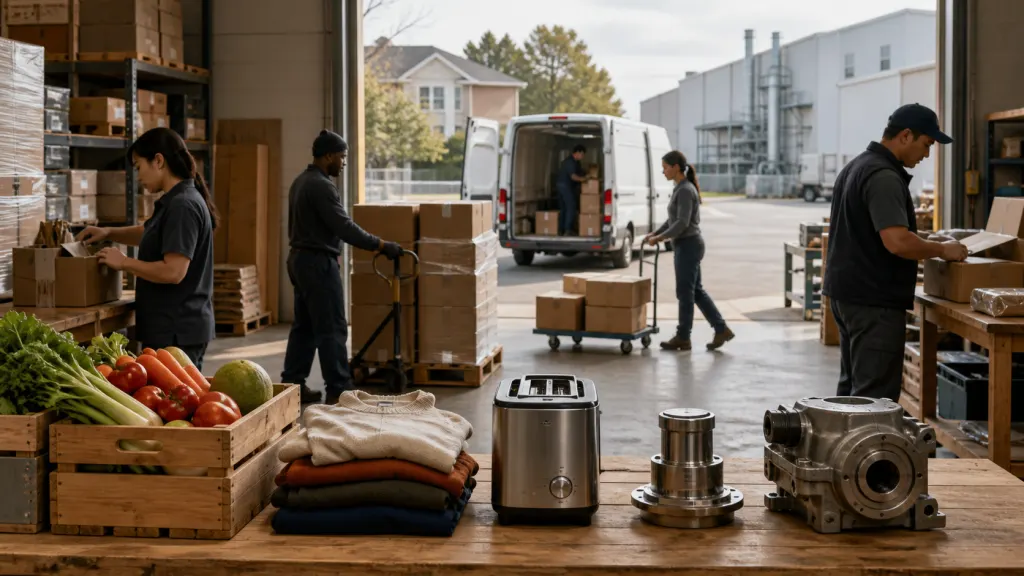
The meaning of goods can vary slightly by context. In economics, goods may be discussed in relation to consumption, production, scarcity, or ownership. In commerce and logistics, the term generally focuses on physical items moving through a supply chain or being offered for sale.
Goods in Logistics and Ecommerce
Goods occupy the physical side of a supply chain. A typical flow may include sourcing or production, inventory storage, order processing, picking and packing, transportation, customs procedures where applicable, delivery, and possible return handling.
In ecommerce, an order may contain one or more goods. After an order is confirmed, the goods become associated with inventory and fulfillment activities. Once they are handed to a carrier, they may also be described as part of a shipment. The same item can therefore be viewed from different operational perspectives: as a product in a catalog, inventory in a warehouse, and cargo or a parcel while in transit.
For international trade, goods may need a customs description, a declared value, an origin statement, and a classification under the applicable customs system. The World Customs Organization’s Harmonized System provides an internationally used framework for classifying traded products. The exact declaration requirements depend on the jurisdictions and transaction involved.
Characteristics of Goods
- Physical form: Goods are generally tangible items, although their condition, packaging, and presentation may change during handling.
- Transferability: Goods can commonly be transferred between sellers, buyers, owners, warehouses, or other parties.
- Storability: Many goods can be held as inventory, although perishable, hazardous, temperature-sensitive, or regulated goods may require special conditions.
- Transportability: Goods can usually be moved through one or more modes of transport, subject to their size, weight, value, safety requirements, and legal restrictions.
- Economic value: Goods may have a purchase price, production cost, declared customs value, or other form of economic value. These values are not necessarily identical.
Common Classifications
Goods can be classified in more than one way. These classifications use different criteria and should not be treated as a single hierarchy.
| Classification basis | Types | What the classification describes |
|---|---|---|
| Economic use | Consumer goods, capital goods, intermediate goods | Whether goods are used for final consumption, production assets, or further production. |
| Production stage | Raw materials, work-in-process goods, finished goods | Where goods are located in a manufacturing or supply process. |
| Expected use period | Durable goods, nondurable goods | Whether goods are designed to provide use over a longer period or are consumed or used relatively quickly. |
| Physical or handling characteristics | Perishable goods, hazardous goods, oversized goods, temperature-sensitive goods | Operational requirements for storage, packaging, transport, safety, or compliance. |
These categories may overlap. For example, a machine can be a capital good and a durable good, while food ingredients can be intermediate goods and perishable goods.
Goods Compared with Related Terms
| Term | Meaning | Relationship to goods |
|---|---|---|
| Product | An item or offering made, supplied, or sold to meet a need. | A product may be a good, a service, or a combination of both. In ecommerce, product often refers to the catalog listing, while goods refers to the physical items. |
| Merchandise | Goods offered for sale or resale in a commercial context. | Merchandise is a commercial use of the broader term goods. The terms may be interchangeable in retail, but merchandise emphasizes sale or resale. |
| Cargo | Goods being carried by a transport operation. | Goods become cargo when they are considered in relation to transportation. |
| Freight | Goods transported through a logistics service; the term can also refer to the charge for transporting them. | Freight emphasizes the transportation activity or charge, while goods emphasizes the items themselves. |
| Service | An activity, performance, or other non-tangible output supplied to a customer. | Services are commonly distinguished from goods, although many commercial offers combine physical goods and services. |
| Shipment | A quantity of goods dispatched from one location to another under a transport arrangement. | A shipment may contain one or more goods, parcels, or handling units. |
Examples in Cross-Border Commerce
- A retailer may purchase finished goods from an overseas supplier and store them in a fulfillment warehouse before selling them to customers.
- A customer order for clothing may contain several goods packed into one parcel.
- A replacement part sent internationally may be treated as goods for transport and customs purposes, even when it is supplied under a warranty arrangement.
- A manufacturer may import components as intermediate goods and later export a finished product.
These examples show why the surrounding context matters. The physical item is a good, but its operational description may change depending on whether the focus is inventory, transport, customs, retail, or production.
Common Misunderstandings
Goods are not always the same as products
In everyday business language, goods and products are often used interchangeably. However, product is sometimes broader because it can include services or bundled offerings, whereas goods normally refers to tangible items.
Goods are not the same as a shipment
Goods are the items being traded or handled. A shipment is the movement or dispatch of those items under a delivery or transport arrangement. One shipment can contain multiple goods, and one order can be divided into multiple shipments.
Goods are not limited to consumer items
Goods may be sold to consumers, used by businesses, incorporated into other products, or used as production equipment. Their classification depends on the relevant purpose and context.
QA
What are goods in logistics?
Goods are physical items that are stored, handled, transported, delivered, or returned within a supply chain.
What is the difference between goods and services?
Goods are generally tangible items that can be stored and transported. Services are activities or performances supplied to a customer.
Are goods and merchandise the same?
They can be interchangeable in retail contexts, but merchandise specifically emphasizes goods offered for sale or resale.
Are goods and cargo the same?
They may refer to the same physical items, but cargo describes goods in the context of transportation.
Sources
- World Trade Organization: Trade in Goods — used for the international trade context and the distinction between goods-related trade and other areas of trade.
- World Customs Organization: What is the Harmonized System? — used for the customs classification context of traded goods.