ESL Tracking
Please enter the ESL tracking number to check the latest shipping status.
About ESL
ESL(奕顺供应链 or YiShun Logistics) is a Shenzhen-based cross-border supply-chain and freight service provider. ESL focuses on South Asia, the Middle East and Southeast Asia, combining air and sea door-to-door services, freight booking, customs support and return logistics for business shipments and cross-border sellers.
| Fact | Confirmed information |
|---|---|
| Official name | ESL is the display name used for this tracking page. |
| Official website | ESL official website |
| Carrier type | Cross-border supply-chain provider, freight forwarder and logistics coordinator. |
| Primary region | China origin shipments serving Pakistan, Sri Lanka, Bangladesh, the United Arab Emirates, Saudi Arabia, the Philippines and Indonesia. |
| Tracking page | ESL tracking page; up to 10 waybill numbers can be queried together. |
| Founded | 2016. |
| Headquarters | Shenzhen, China. |
Carrier Entity Relationships
| Entity | Relationship to ESL | ||||||||||||
|---|---|---|---|---|---|---|---|---|---|---|---|---|---|
| ESL | ESL coordinates cross-border freight, customs processes and delivery arrangements across its published routes. | ||||||||||||
View all details for ESL services
| |||||||||||||
Quick Answer
Enter the ESL waybill number on the official ESL tracking page, or submit it to 17TRACK for an independent view of available events. If no result appears, first check that you entered the waybill rather than an order number, remove accidental spaces, and ask the sender whether the label has been handed to ESL.
How to Track ESL Packages
Use the ESL tracking page for ESL waybills and use 17TRACK when you want a consolidated view across transport stages. The sender, marketplace or ESL customer manager can provide the correct waybill when the order page shows only an order or reference number.
| Route | Action |
|---|---|
| Official ESL tracking | Open the ESL tracking page, enter one or more waybill numbers, and submit the query. |
| 17TRACK tracking | Open 17TRACK, paste the ESL waybill, allow carrier recognition, and review the latest event and route history. |
| Before asking for help | Keep the tracking number, order date, origin, destination, service type and latest scan ready. |
| No number | Contact the seller or shipper; an order number, invoice number or reference number cannot automatically replace the logistics waybill. |
| Batch query | The ESL tracking page states that up to 10 waybill numbers may be queried at one time. |
Tracking Number Formats and Examples
ESL’s help center describes its channel waybills as beginning with YS. The published examples are format illustrations, so users should treat the complete waybill—not a prefix alone—as the identifier to submit.
Tracking Number Format
| Identifier family | Normalized pattern and use |
|---|---|
| Sea freight | YS########## or YSO##########; used for international sea channels. Example: YS##########. |
| Air freight | YSA##########; used for international air channels. Example: YSA##########. |
| Land freight | YST##########; used for TIR land freight. Example: YST##########. |
| Express | YSE##########; used for international express channels. Example: YSE##########. |
| FBA first-leg freight | YSF##########; used for FBA first-leg air or sea arrangements. |
Tracking Statuses and Meanings
Tracking events describe the latest recorded logistics action, not necessarily the continuous physical position of the shipment. Cross-border shipments can have gaps between origin handling, line-haul, customs and destination delivery.
Status Quick Lookup
| Status | What it means |
|---|---|
| Label created / awaiting item | Shipping data exists, but physical acceptance may not yet be recorded. |
| Accepted / received | ESL or an origin handling point has recorded receipt for processing. |
| In transit | The shipment is moving through a sorting, transport or transfer stage. |
| Customs processing | Documents, inspection or import procedures are being handled; arrival at customs is not proof of release. |
| Out for delivery | A destination delivery route has been assigned for the current delivery attempt. |
| Delivered | A delivery scan has been recorded. Check the delivery location and delivery evidence if the parcel is missing. |
| Exception / delivery failed | A problem is blocking the expected movement or delivery attempt. |
| Returned to sender | The shipment is moving back because delivery, address, customs or acceptance conditions were not completed. |
Services and Delivery Times
ESL publishes route-specific service ranges. Air DDP is listed at 3–7 working days overall, while sea DDP is listed at 15–35 days overall; route pages provide narrower examples for particular destinations.
Service Comparison
| Service | Best for |
|---|---|
| Air DDP | Door-to-door cross-border cargo requiring faster air movement and destination customs support. |
| Sea DDP | FCL or LCL cargo where sea transport and destination delivery are required. |
| Freight booking | Customers arranging their own customs clearance or using a designated clearance party. |
| Return logistics | Air or sea shipments moving from the listed markets back to China. |
Delivery Time
| Service | Published delivery standard |
|---|---|
| Air DDP | 3–7 working days; the route page also lists 2–4 or 3–5 days for selected destinations. |
| Sea DDP | 15–35 days overall; route examples range from 8–15 to 20–30 days. |
| Air freight booking | 2–7 days, depending on route and direct or transfer flight selection. |
| Sea import to China | 15–30 days, including listed import handling stages. |
Destination Country Delivery Times
| Destination country or region | Published route range |
|---|---|
| Pakistan | Air 3–5 days; sea 20–30 days. |
| Sri Lanka | Air 3–5 days; sea 15–22 days. |
| Bangladesh | Air 3–5 days; sea 18–25 days. |
| United Arab Emirates | Air 2–4 days; sea 15–22 days. |
| Saudi Arabia | Air 3–5 days; sea 18–30 days. |
| Philippines | Air 2–4 days; sea 8–15 days. |
| Indonesia | Air 3–5 days; sea 12–20 days. |
The published ranges are operational estimates rather than universal delivery guarantees. Customs inspection, documentation, port congestion, flight or sailing schedules, peak periods, address quality and destination delivery can extend the actual time.
Common Tracking Problems and Solutions
Most tracking problems are resolved by confirming the complete waybill, identifying the last physical scan and separating seller order information from transport information.
Problem & Solution
| Problem or status shown | Immediate action |
|---|---|
| Invalid number | Recheck the YS prefix, digits, spaces and source document; ask the sender to confirm the waybill. |
| No tracking events | Allow time for acceptance and request the sender to confirm handover rather than label creation. |
| No update for more than 72 hours | Cross-border gaps can occur, but ESL’s help center directs customers to contact a customer manager after 72 hours without an update. |
| Customs hold | Ask the shipper or ESL which document, declaration, duty or inspection is pending. |
| Delivery exception or failed delivery | Confirm address and recipient availability, then request a delivery or return decision from ESL. |
| Delivered but not received | Check the delivery location, reception desk, household members and neighbours; then request delivery evidence and contact the sender. |
| Lost or damaged cargo | Preserve packaging, photographs, opening video and proof of delivery, then submit a written claim through the ESL support channel. |
| Returned to sender | Ask for the return reason, correct the address or customs information, and agree on re-dispatch or refund with the seller. |
International Shipping, Customs and Carrier Handoffs
An ESL cross-border shipment normally moves from origin pickup and export processing through international transport, destination customs and local delivery. A destination scan indicates arrival at a processing stage; it does not by itself prove customs release or final delivery.
| Stage | Typical event and next action |
|---|---|
| Origin handover | ESL or an origin logistics point receives the cargo; the sender should retain the receipt and commercial documents. |
| Export processing | Export declaration, consolidation and transport preparation occur; missing documents can delay departure. |
| International line-haul | Air or sea movement takes place; scans may be less frequent during the transport leg. |
| Destination customs | Import review, inspection, duty payment or document checks may occur; the consignee should respond to requests promptly. |
| Partner handoff | A destination agent or delivery party receives the shipment. Electronic pre-advice, physical handover and first receipt scan are separate events. |
| Last mile | Local delivery is arranged and a delivery attempt or exception is recorded; contact ESL with the complete waybill if the local event is unclear. |
Claims and Shipping Restrictions
ESL’s help center states that loss or damage claims should be submitted in writing within 7 days after receipt, with photographs, an opening video and delivery evidence. This is separate from a marketplace refund or a tracking inquiry.
| Process | Use when and filing window | ||||||
|---|---|---|---|---|---|---|---|
| Written loss or damage claim | Use for loss or damage; ESL’s help center states a 7-day period after receipt. | ||||||
View all details for ESL claims
| |||||||
Shipping Restrictions
| Category | Guidance |
|---|---|
| Prohibited goods | The help center lists explosives, toxic drugs, weapons and ammunition, obscene materials, live animals and alcohol among common prohibited categories. |
| Liquids and powders | Liquid and powder shipments require route-specific review before booking and may be refused or delayed. |
| Batteries | Battery shipments require special filing or approval according to the published help guidance. |
| Customs-sensitive goods | Accurate descriptions, classification and destination documents are important for export and import processing. |
Customer Service
For tracking support, begin with the ESL tracking page and then contact ESL with the complete waybill, shipment date, origin, destination, service type and latest scan. The official contact page lists a 24/7 service hotline.
Customer Service
| Channel | Verified contact or link |
|---|---|
| Tracking | ESL tracking page; use for waybill queries. |
| General hotline | 400-868-1688; the official contact information describes 24/7 service. |
| info@flashexp.com.cn for general consultation. | |
| Business email | air@flashexp.com.cn for air DDP, ocean@flashexp.com.cn for sea DDP, booking@flashexp.com.cn for booking, import@flashexp.com.cn for return logistics and customs@flashexp.com.cn for customs matters. |
| Complaint email | complaint@flashexp.com.cn for complaints and suggestions. |
| Head office | Fuyong Street, Bao'an District, Shenzhen, China; consult the official contact page for the current address details. |
Ecommerce and Business Tracking
ESL’s official site describes a self-developed logistics SaaS system and a tracking page that supports up to 10 waybills per query. Merchants can use the official page for operational checks and 17TRACK for multi-carrier visibility, while API access should be validated against current documentation before integration.
Developer/API Comparison
| Option | Provider | ||||||||||
|---|---|---|---|---|---|---|---|---|---|---|---|
| Official tracking page | ESL | ||||||||||
View all details for ESL official tracking
| |||||||||||
| Multi-carrier API | 17TRACK | ||||||||||
View all details for 17TRACK API
| |||||||||||
FAQ
Basic FAQs
Enter the waybill on the official ESL tracking page or submit it to 17TRACK to view available shipment events.
Look on the shipping receipt, dispatch notice or seller’s shipment email; ask the seller when only an order number is shown.
ESL’s help center gives YS, YSA, YST and YSE channel patterns, with YSF used for FBA first-leg freight.
The first event appears after the waybill is processed and a physical handover or acceptance scan is recorded.
Cross-border transfers can create scan gaps; ESL’s help center advises contacting a customer manager after more than 72 hours without an update.
Published ranges are 3–7 working days for air DDP and 15–35 days for sea DDP, with route-specific ranges differing by destination.
Check the address and recipient availability, then contact ESL or the seller to arrange the next delivery or return action.
Check the delivery location, reception desk, household members and neighbours, then request delivery evidence and contact the sender.
Preserve packaging and evidence and submit a written claim; ESL’s help center states a 7-day period after receipt for loss or damage claims.
Use the official tracking page, call 400-868-1688, or email info@flashexp.com.cn for general assistance.
Expert FAQs
No. The prefix maps to channel patterns published by ESL, but the complete waybill and ESL’s own query result should be used for verification.
ESL describes DDP as covering China export declaration, international transport, destination import clearance, duty payment and last-mile delivery.
No. Arrival indicates a customs-processing stage; release may still depend on documents, inspection or duty procedures.
It can remain the main customer reference, but a destination handling party may create an additional local reference; ask ESL to associate the identifiers.
Yes. ESL’s tracking page states that up to 10 waybill numbers can be queried at one time.
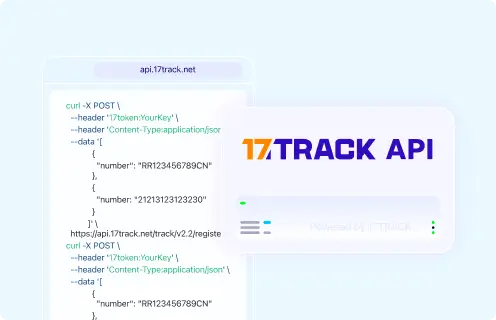
Use the current 17TRACK API documentation for multi-carrier integration; the supplied public ESL pages describe website tracking rather than a public developer endpoint.
Tracking API
// 1. ESL official tracking API
// Current public official tracking API not confirmed in the supplied ESL pages.
// Use the ESL tracking page for verified website queries.

// 2. 17TRACK API
// Confirm the current ESL carrier code in the 17TRACK documentation or account setup.
// Do not replace CARRIER_CODE with an unverified value.

POST https://api.17track.net/track/v2.4/register
Headers:
  17token: YourKey
  Content-Type: application/json

Body:
[
  {
    "number": "YS##########",
    "carrier": "CARRIER_CODE"
  }
]
Sources & References
- ESL About Us. ESL
- ESL Services. ESL
- ESL Waybill Tracking. ESL
- ESL Help Center. ESL
- ESL Contact. ESL
- 17TRACK API Documentation. 17TRACK
17TRACK is an independent tracking platform and is not affiliated with ESL.
Track your package
Global express parcel tracking service