Carriage of Goods under Charter
What Is Carriage of Goods under Charter?
Carriage of goods under charter is the transportation of cargo by sea using a vessel, or an agreed part of its carrying capacity, made available under a charterparty. A charterparty is a contract between a shipowner or another party entitled to provide the vessel and a charterer. It establishes the terms on which the vessel is employed, including the agreed service, payment, and allocation of responsibilities.
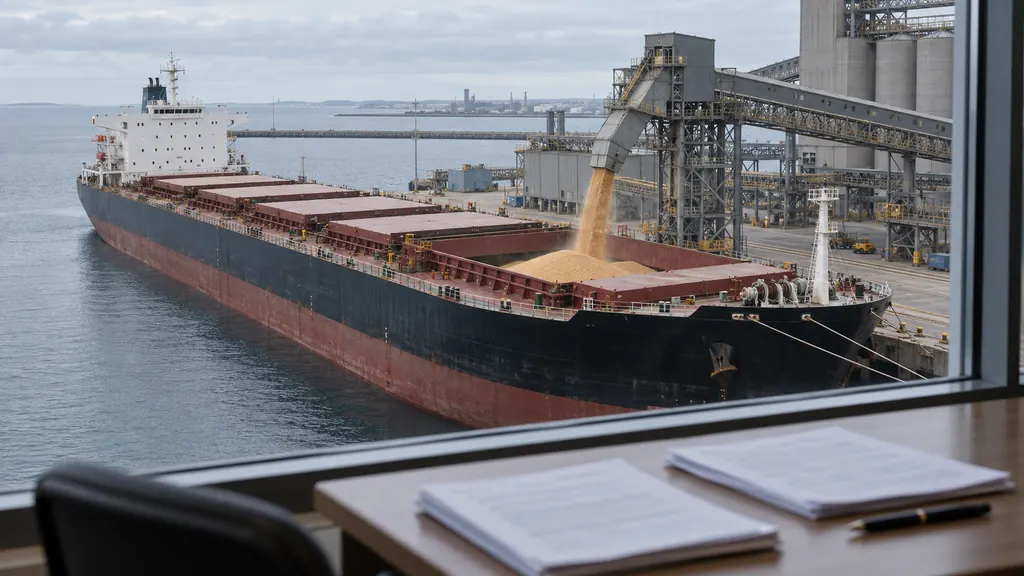
The expression belongs primarily to maritime transport and shipping law. It is especially relevant to shipments arranged around vessel capacity, a voyage, or a period of vessel employment rather than an ordinary booking for individual containers or packages. Its precise legal consequences depend on the charter type, the contractual documents, and the applicable law.
A charterparty may exist alongside bills of lading issued for the cargo. Those documents can govern different legal relationships, so identifying a shipment as carried under charter does not, by itself, establish who is responsible for every cargo obligation.
Commercial Context
Charter arrangements are used for cargo movements such as grain, coal, ores, petroleum, and project cargo. They allow the contracting parties to arrange vessel employment around a particular cargo, route, loading program, or trading requirement. The charterer may be a commodity trader, manufacturer, cargo owner, or shipping operator; the charterer is not necessarily the person who owns the goods.
In a supply chain, chartered carriage concerns the maritime transport stage. It does not automatically include inland collection, customs clearance, warehousing, or final delivery. Those activities require separate arrangements unless the relevant contract expressly includes them.
For ecommerce businesses, the connection is usually upstream rather than at the individual parcel level. For example, an importer may purchase inventory whose ocean movement forms part of a chartered shipment. That does not mean each subsequent consumer order is transported under the charterparty, or that the charter provides parcel-level tracking and delivery services.
Main Charter Arrangements
Voyage, time, and bareboat charters are established forms of vessel chartering. They differ principally in what is provided and how possession, operation, and commercial employment are allocated. Bareboat chartering requires particular care: it provides possession and control of a vessel rather than simply purchasing a transport service from its owner.
| Arrangement | Commercial basis | Operational distinction | Payment terminology |
|---|---|---|---|
| Voyage charter | A vessel undertakes an agreed voyage or series of voyages to carry specified cargo. | The owner generally retains possession, crewing, and navigation; cargo-handling responsibilities depend on the contract. | Freight, which may be calculated by cargo quantity or agreed as a lump sum. |
| Time charter | A vessel is made available for an agreed period within contractual trading limits. | The owner generally provides the crew and manages navigation, while the charterer directs permitted commercial employment. | Hire, commonly calculated by reference to time. |
| Bareboat or demise charter | The vessel is placed in the charterer's possession and control for an agreed period. | The charterer assumes operational responsibilities, including arranging crewing, subject to the agreement. | Hire under the charter agreement. |
These descriptions identify the main contractual structures, not an exhaustive allocation of costs. Fuel, port expenses, loading, discharge, insurance, and other obligations must be checked against the actual terms. A party described commercially as the shipowner may itself be operating a vessel obtained under another charter.
How a Chartered Cargo Movement Works
Agreeing the vessel and service
The parties establish the cargo description, quantity or quantity range, vessel requirements, ports or permitted trading areas, and relevant dates. The agreement also addresses payment and operational responsibilities. Standard forms may be used, but additional clauses and negotiated amendments can materially change the printed wording.
Vessel suitability is a practical issue as well as a contractual one. Cargo characteristics, hold or tank requirements, lifting equipment, draft restrictions, and port facilities can affect whether a proposed vessel can perform the intended movement. The necessary checks depend on the cargo and voyage rather than on the word charter alone.
Preparing and loading the cargo
The cargo interests and vessel interests coordinate loading according to the agreed allocation of duties. Relevant documents may include cargo specifications, shipping instructions, quantity records, and bills of lading. Under a voyage charter, contractual provisions concerning arrival, readiness, and permitted loading time can determine when time starts counting and whether additional payment becomes due.
Performing the voyage and delivery
The vessel carries the goods to the agreed destination or follows permitted employment orders under the charter. Delivery requires attention to both the operational instructions and the documents governing entitlement to the goods. A charterer's instruction is not necessarily sufficient to resolve obligations owed to a lawful bill of lading holder.
Reconciling payment and claims
After performance, the parties may need to reconcile freight or hire, cargo quantities, port expenses, and time-related charges. Cargo loss or damage creates a separate question: which party is liable under which contract or mandatory legal regime? Operational involvement alone does not answer that question.
Charterparties and Bills of Lading
A charterparty governs the vessel-employment relationship between its contracting parties. A bill of lading generally records receipt of cargo, evidences terms of carriage, and, depending on its form and applicable law, can function as a document of title. Both documents may relate to the same goods without having identical legal effects.
| Document | Principal function | Important qualification |
|---|---|---|
| Charterparty | Sets the terms for employing the vessel or agreed capacity. | Its allocation of responsibilities does not automatically bind every buyer, consignee, or bill holder. |
| Bill of lading | Records cargo receipt and may govern carriage rights involving its holder. | Its effect depends on its wording, the holder's position, and applicable law. |
| Charterparty incorporation clause | Seeks to bring identified charter terms into the bill of lading contract. | The effectiveness and scope of incorporation require legal analysis; not every charter provision necessarily transfers. |
For example, a trader may charter a vessel and sell the cargo while it is at sea. A buyer holding the bill of lading may then have rights against the contractual carrier without becoming a party to the entire charterparty. Determining those rights requires examining the bill, any incorporated terms, and the applicable legal framework.
Legal Framework and Cargo Liability
Charterparty terms and cargo-liability rules must be considered separately. The Hague-Visby Rules, reproduced in the schedule to the United Kingdom's Carriage of Goods by Sea Act 1971, state in Article V that they do not apply to charterparties. The same article requires bills of lading issued under charterparties to comply with the Rules. Their application to a particular shipment nevertheless depends on the relevant scope provisions and applicable national law.
The Hamburg Rules also distinguish the two relationships. Article 2 excludes charterparties but provides for application to a bill of lading issued pursuant to a charterparty when that bill governs the relationship between the carrier and a holder who is not the charterer. This is not a basis for assuming that the Hamburg Rules govern every international chartered shipment.
The practical lesson is that neither of two blanket statements is reliable: that all chartered cargo falls outside mandatory cargo rules, or that every charterparty is itself governed by the same rules as a bill of lading. The governing documents, relevant jurisdictions, and applicable legal regime must be identified first.
Carrier identity also requires care. Depending on the documents and arrangement, the contractual carrier may be the shipowner or another party. Vessel ownership, charterer status, and carrier status should not be treated as interchangeable labels.
Related Terms and Common Misunderstandings
- Freight and hire: Freight commonly describes payment for carriage under a voyage charter, while hire describes payment for vessel use under time or bareboat arrangements. These are contractual payment categories, not interchangeable names for every shipping expense.
- Laytime: The contractually allowed time for loading or discharge. Its calculation depends on the charter wording, including relevant notices, exceptions, and counting provisions.
- Demurrage: An agreed payment associated with exceeding permitted laytime. Charterparty demurrage should not be confused automatically with charges described as container demurrage in container logistics.
- Charterer and cargo owner: A charterer contracts for vessel employment but does not necessarily own the cargo. Trading and shipping arrangements can place these roles with different entities.
- Chartering and purchasing: Chartering a vessel does not ordinarily transfer ownership of it. Even a bareboat charter, which transfers possession and operational control, is distinct from a sale.
- Charter terms and sale terms: A cargo sale contract and a charterparty serve different purposes. A delivery term in the sale contract does not replace the charter's provisions on vessel employment or payment.
Practical Document Checks
When the expression appears in a shipping contract, cargo claim, or trade document, the following checks help establish what it means for that shipment:
- Identify the arrangement: Determine whether it is a voyage, time, or bareboat charter rather than relying on a general reference to chartered transport.
- Identify the parties: Distinguish the registered owner, contracting owner, charterer, shipper, consignee, and contractual carrier where relevant.
- Read the complete terms: Review the applicable charter form together with amendments and additional clauses.
- Check the cargo documents: Examine the bill of lading, its signature, carrier identification, and any incorporation wording.
- Separate the obligations: Establish who handles loading, discharge, cargo care, port expenses, and documentary instructions rather than assuming one party controls everything.
- Identify the legal framework: Check governing law, dispute-resolution provisions, and potentially mandatory carriage rules before drawing conclusions about liability or claim deadlines.
QA
Does carriage under charter always mean hiring an entire ship?
No. A charter arrangement may concern a vessel or an agreed part of its carrying capacity. Its scope must be established from the contract.
Can chartered cargo have a bill of lading?
Yes. Bills of lading can be issued for goods carried under a charterparty. The bill may govern a relationship with a holder who is not a party to the charter.
Is the charterer always the carrier?
No. Charterer and carrier are distinct roles. Identifying the contractual carrier requires examination of the contractual documents and applicable law.
Does chartered carriage include customs clearance and final delivery?
Not automatically. A charter concerns vessel employment and maritime carriage; additional logistics services must be included expressly or arranged separately.
Sources
- Encyclopaedia Britannica: Charter party — Reference background on charter agreements, principal charter forms, and related payment concepts.
- United Kingdom: Carriage of Goods by Sea Act 1971, Schedule — Hague-Visby provisions on contracts of carriage, bills of lading, and charterparties, including Articles I and V.
- UNCITRAL: United Nations Convention on the Carriage of Goods by Sea, 1978 (Hamburg Rules) — Official convention materials, including the Article 2 distinction between charterparties and bills of lading issued pursuant to them.