Liner Transport
What Is Liner Transport?
Liner transport is a maritime transport service in which ships carry cargo between specified ports on regularly scheduled routes. Also called liner shipping, it allows shippers to book cargo space on an established service rather than arrange a ship's entire voyage. In logistics and international trade, the term is especially associated with container shipping, although scheduled services can also carry other cargo types.
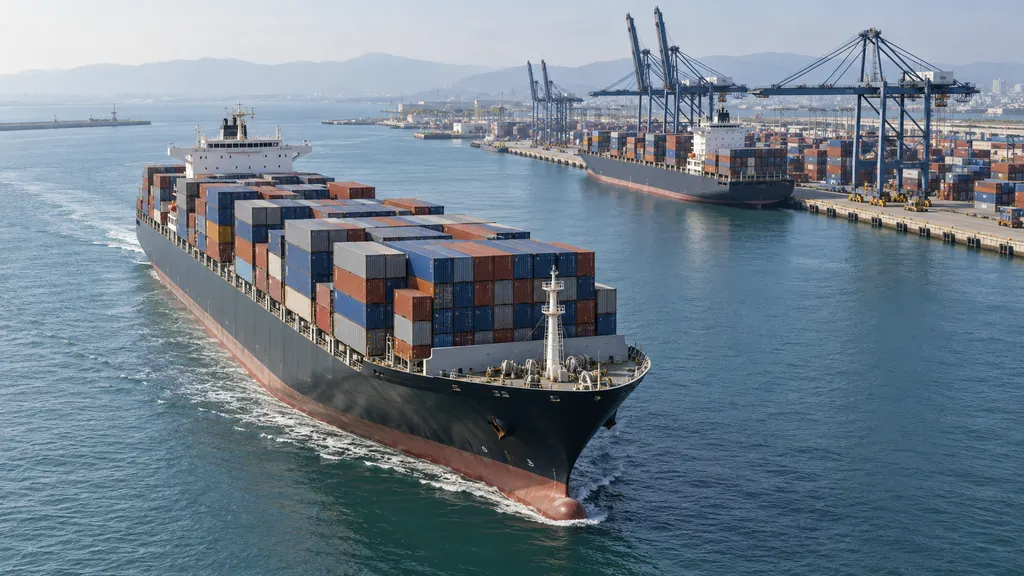
The defining feature is the organization of the service: a carrier offers repeated sailings along an established route or network. A liner service does not need to operate nonstop between the shipment's origin and destination, and its published schedule is not a guarantee that every departure or arrival will occur at the stated time.
Main Characteristics
- Scheduled sailings: Services are organized around planned departures, port calls, and sailing frequencies.
- Established routes: Ships follow a defined sequence of ports, often described as a port rotation. Carriers may revise that rotation as operating conditions change.
- Space sold to multiple customers: A ship can carry consignments booked by different shippers or freight forwarders on the same voyage.
- Standardized cargo handling: Container liner services use standardized containers that can move between ships, terminals, trucks, and trains.
- Network connections: A shipment may travel on more than one vessel, connecting through a transshipment port.
- Contractual carriage: Bookings and transport documents establish the applicable carriage terms. Service scope, charges, and responsibilities depend on the agreement.
Regular service distinguishes liner transport from shipping arranged primarily around the requirements of an individual cargo movement. It does not imply that vessels, prices, available capacity, or port calls remain unchanged indefinitely.
Liner Transport and Related Shipping Terms
The following terms describe different aspects of maritime transport. Some are alternatives, while others can apply to the same shipment.
| Term | Meaning | Relationship to Liner Transport |
|---|---|---|
| Liner transport | A scheduled shipping service operating between specified ports. | Describes how the transport service is organized. |
| Tramp shipping | Shipping in which vessel employment follows cargo demand rather than a regular published service. | Contrasts with the scheduled-service model. |
| Chartering | An arrangement to hire a vessel or its carrying capacity under a charter agreement. | Describes a contractual arrangement, not necessarily the service pattern. A liner operator can use chartered ships. |
| Container shipping | Transport of cargo in standardized freight containers. | Describes the loading unit. Container shipping and liner shipping overlap extensively but are not identical terms. |
| Feeder service | A shipping service connecting ports with a hub or mainline service. | Can form a scheduled leg within a liner network. |
| Freight forwarding | Arranging transport and related services for cargo owners. | A forwarder may book liner space without operating the vessel. |
The distinction between liner and tramp shipping should not be reduced to container ships versus bulk carriers. Cargo type helps explain common operating patterns, but the central distinction is whether the transport is offered as a scheduled service. Likewise, chartering is not the opposite of liner transport: vessel ownership and service organization are separate questions.
How a Liner Shipment Works
1. Service Selection and Booking
A shipper or freight forwarder identifies a suitable service using the cargo's origin, destination, readiness date, handling requirements, and desired delivery window. The booking request describes the shipment and requests space and equipment where applicable. Acceptance remains subject to the carrier's booking conditions, capacity, and cargo restrictions.
For containerized cargo, the arrangement may be a full container load, or FCL, or a less-than-container load, or LCL. With LCL, a consolidator combines separate consignments into a container. The underlying ocean movement can still use a liner service; LCL describes the consolidation arrangement rather than a different vessel operating model.
2. Cargo Preparation and Origin Handling
The cargo must be packed, documented, and made available in accordance with the booking requirements. Depending on the arrangement, this may involve collecting an empty container, loading it, completing export formalities, and delivering the loaded container to a terminal. Consolidated cargo may first pass through a freight station.
Several deadlines can apply, including documentation and terminal receiving cutoffs. These should not be treated as interchangeable with the vessel's departure time. Missing an applicable cutoff can prevent cargo from moving on the intended sailing.
3. Ocean Carriage and Connections
The cargo travels on the booked service, either on one vessel or through connections. In a transshipment movement, the container is unloaded at an intermediate port and transferred to another vessel. The container may remain sealed while being transferred, subject to operational and inspection requirements.
A vessel can call at intermediate ports without the cargo changing vessels. Conversely, a booking offered as one transport arrangement can include several vessel legs. Understanding this distinction helps explain why a quoted route and a vessel's individual itinerary are not always the same thing.
4. Destination Release and Onward Movement
After arrival, cargo must satisfy the applicable customs, terminal, and carrier release requirements before collection. The shipment may then move to a warehouse, fulfillment center, or other receiving location. Whether inland transport is included depends on the transport contract; booking a liner service does not automatically create a door-to-door delivery arrangement.
Role in Ecommerce and Cross-Border Supply Chains
Liner transport can provide the ocean freight leg for importing inventory into a destination market. For example, an online retailer may arrange for cartons of household goods to move from an overseas supplier to a regional fulfillment center. The cargo can travel in a dedicated container or as part of a consolidated shipment before entering the retailer's local distribution network.
In this example, the liner service moves inventory rather than individual consumer orders. Once the goods have been received into stock, separate fulfillment and parcel delivery operations serve customers. An ocean container's arrival therefore does not mean that every associated ecommerce order is ready for delivery.
Scheduled departures provide planning reference points for purchasing and replenishment. However, inventory planning must account for more than the sea passage. Supplier readiness, origin handling, connections, customs clearance, terminal release, and inland transport can all affect when goods become available for sale.
Users may encounter the term in freight quotations, carrier service descriptions, forwarding proposals, shipping schedules, transport contracts, and trade publications. In these settings, it identifies the shipping service model rather than a specific tracking technology or delivery promise.
Schedules, Transit Times, and Charges
Understanding Schedule Information
A published sailing schedule indicates planned operations. Weather, congestion, vessel availability, and other operational conditions can change departure dates, arrival dates, or port calls. A canceled scheduled sailing is often called a blank sailing. Cargo may also move on a later departure than originally expected.
When comparing transit times, check the measurement boundaries. A port-to-port estimate does not necessarily include collection from the supplier, time before loading, customs clearance, or final delivery. For a transshipment route, the connection between vessels also matters. Comparisons are meaningful only when the quoted routes and included stages are understood.
Understanding the Quoted Service Scope
A freight quotation may separate ocean freight from origin handling, destination handling, inland transport, documentation, and other charges. The exact structure depends on the service, route, and contract. The word liner alone does not establish which costs are included.
Similarly, the transport arrangement does not by itself determine how a seller and buyer divide their obligations under a sales contract. Applicable trade terms and the contract of carriage should be checked separately. A scheduled service should not be assumed to include customs clearance, cargo insurance, or final delivery unless the agreement provides for them.
Practical Checks Before Booking
The following checks help translate the general concept of liner transport into a usable shipment plan:
- Confirm the actual routing: Identify the loading port, discharge port, intermediate calls, and any vessel changes.
- Check the schedule basis: Establish the intended departure, expected arrival, and whether dates are estimates or subject to specific commitments.
- Identify all cutoffs: Confirm cargo receiving and documentation deadlines with the party handling the booking.
- Verify cargo acceptance: Check requirements for dangerous goods, temperature-controlled cargo, oversized cargo, or other special handling.
- Compare equivalent quotations: Review included transport legs and charges rather than comparing ocean freight figures alone.
- Clarify destination arrangements: Identify who will handle clearance, release, collection, and onward transport.
- Align inventory milestones: Distinguish vessel arrival from warehouse receipt and stock availability.
These checks do not constitute a separate classification of liner services. They are practical questions for assessing whether a particular service matches a shipment's requirements.
Common Misunderstandings
A scheduled service is not necessarily a guaranteed service. Regularity describes the operating model. A specific delivery commitment must be established through the applicable service terms.
Liner transport is not limited to containers. Container shipping is a major application, but scheduled maritime services can also carry other cargo, including vehicles and certain non-containerized goods.
A liner shipment is not automatically door to door. The ocean service may be only one part of the logistics arrangement. Collection, clearance, and delivery responsibilities require separate confirmation.
Transshipment does not change a service into tramp shipping. A shipment can use multiple scheduled vessels within a liner network. The relevant distinction is the organization of the service, not the number of ships involved.
QA
What is the difference between liner transport and tramp shipping?
Liner transport offers scheduled services between specified ports. Tramp shipping follows cargo demand without the same regular published service pattern.
Are liner transport and container shipping the same?
No. Liner transport describes the service model, while container shipping describes how cargo is carried. They overlap extensively, but scheduled services can also carry non-containerized cargo.
Can small shipments use liner transport?
Yes. A small shipment may be consolidated with other cargo under an LCL arrangement and carried on a container liner service.
Does a liner schedule guarantee an arrival date?
No. A schedule provides planned dates. Any specific service commitment depends on the applicable agreement, and actual operations can be affected by disruptions.
Sources
- World Shipping Council: Liner Shipping Explained — Industry explanation of scheduled liner services, cargo carriage, and their role in international trade.
- The Geography of Transport Systems: Maritime Transportation — Academic reference for maritime service organization, shipping networks, and the distinction between liner and tramp operations.
- UN Trade and Development: Review of Maritime Transport — Institutional reference for maritime transport, container shipping, ports, freight markets, and operational disruptions.