XYY

XYY Tracking

Please enter the XYY tracking number to check the latest shipping status.

TRACK

About XYY

XYY is presented here as a logistics carrier and cross-border shipping entity associated with the official website provided below. Publicly verifiable English-language operational details are limited, so this guide separates confirmed public facts from practical tracking guidance for parcels where XYY appears as the selected carrier, freight forwarder, first-mile handler, line-haul coordinator, or tracking data source.

XYY Core Profile

Field Verified information
Official nameXYY
Official websitehttp://www.xingyunyi.cn/
Carrier typePublic evidence supports treating XYY as a logistics carrier or freight-forwarding tracking entity; exact legal scope is not publicly confirmed in the available official source.
Primary regionChina-origin and cross-border ecommerce logistics use cases are the most likely tracking context, but exact service coverage is not publicly confirmed.
Tracking pageUse the official website if a tracking tool is available, or use 17TRACK to aggregate available XYY shipment events.
Parent organizationNot publicly confirmed.
FoundedNot publicly confirmed.
HeadquartersNot publicly confirmed.

Carrier Entity Relationships

Entity Relationship
XYYXYY is the canonical carrier name used on this page.
View all details for XYY
Entity typeCanonical carrier entity.
Why it matters to trackingUse XYY as the carrier name when a marketplace, shipper, or tracking page identifies the shipment as XYY.
Official evidenceThe official website provided for the carrier is associated with XYY.
XYY-operated servicesXYY may appear as the operating or coordinating logistics provider for ecommerce parcels.
View all details for XYY-operated services
Entity typeService entity.
Why it matters to trackingA tracking event can show XYY before a parcel is transferred to an airline, customs broker, postal operator, or last-mile carrier.
Official evidenceSpecific current service names are not publicly confirmed in the accessible official evidence, so service labels should be verified against the shipper record.
Tracking numberA number shown for XYY may be issued by XYY, a merchant system, an origin logistics partner, or a downstream delivery carrier.
View all details for XYY tracking numbers
Entity typeTracking identifier entity.
Why it matters to trackingBeing queryable under XYY does not prove that XYY issued the number or physically holds the parcel at every stage.
Official evidencePublic official documentation does not confirm a complete XYY tracking-number specification.
Customs and last-mile partnersInternational XYY parcels can involve export handling, import customs, and a destination delivery carrier.
View all details for XYY handoffs
Entity typeNetwork and partner entities.
Why it matters to trackingVisibility gaps often occur between electronic pre-advice, physical export departure, import clearance, and first last-mile scan.
Official evidenceSpecific named partners are shipment-dependent unless confirmed on the tracking result or by the seller.
17TRACK17TRACK aggregates available tracking events from XYY and other carriers when supported by carrier data.
View all details for 17TRACK and XYY
Entity typeIndependent multi-carrier tracking platform.
Why it matters to tracking17TRACK can help identify carrier events and normalize statuses, but 17TRACK does not transport parcels, change addresses, clear customs, or approve refunds.
Official evidence17TRACK API documentation describes multi-carrier tracking registration and query workflows.

Quick Answer

To track an XYY package, enter the tracking number from your seller, shipping label, dispatch email, or marketplace order page on the official XYY website when available, or use 17TRACK to check available XYY events and possible downstream carrier events. If the result is empty, first confirm that the number is not an order ID, remove spaces or hyphens, wait for the first physical acceptance scan, and verify that the parcel was actually handed to XYY.

Pro Tip: 17TRACK is an independent tracking platform. 17TRACK can display available tracking events, but 17TRACK cannot pick up the parcel, change the delivery address, speed up customs, issue refunds, or approve claims for XYY shipments.

How to Track XYY Packages

Use the identifier supplied by the seller or shipper, not the marketplace order number. XYY tracking usually starts after data is created and becomes more reliable after the parcel receives its first physical acceptance or processing scan.

  1. Find the tracking number in the shipment confirmation email, order detail page, waybill, label, or seller message.
  2. Copy the full identifier, including any letters at the beginning or end, and remove extra spaces or punctuation.
  3. Check the official XYY website if a tracking entry is available for your shipment.
  4. Use 17TRACK when you need multi-carrier recognition, possible partner handoff visibility, or standardized event interpretation.
  5. If the tracking result is still empty, ask the seller to confirm the carrier name, the shipped date, and whether the parcel has been physically handed over.

Identifier Types You May See

IdentifierUse it for XYY tracking?
Tracking numberYes. This is the main number used to query XYY or 17TRACK.
Order numberUsually no. It identifies the purchase, not the carrier shipment.
Reference numberOnly if the seller or XYY explicitly says it can be used for tracking.
Last-mile numberSometimes. Use it on 17TRACK or the destination carrier website if the XYY parcel has been handed over.

Tracking Number Formats and Examples

XYY does not publish a complete, independently confirmed tracking-number rule set in the available public evidence. Treat the examples below as normalized, masked format families for recognition and troubleshooting, not as proof that every similar number was issued by XYY.

Tracking Number Format

Identifier familyNormalized pattern
XYY carrier or platform numberLetters and digits, for example XYY #### #### ##
View all details for XYY carrier or platform number
Length/structureExact length is not publicly confirmed; normalize by removing spaces and hyphens while keeping all letters and digits.
Issued byMay be issued by XYY or by a shipper platform connected to XYY.
Typical service/useUsed for ecommerce parcels where XYY is named as the logistics carrier or forwarding provider.
Who sees it and whereMarketplace buyers may see it in the order page; merchants may see it in shipping-system records.
Tracking scopeUsually covers shipment creation, acceptance, processing, export, and handoff events when data is available.
Important caveatDo not infer service level or destination from the prefix alone unless the seller or XYY confirms the mapping.
Merchant reference or order-linked numberMixed digits and letters, seller-specific
View all details for merchant reference numbers
Length/structureVaries by marketplace, warehouse management system, or seller shipping software.
Issued byMerchant, marketplace, or warehouse system.
Typical service/useUsed internally to link a purchase order to a shipment.
Who sees it and whereBuyers may see it as an order ID; business users may see it in fulfillment exports.
Tracking scopeMay not return carrier events unless the reference is mapped to a real tracking number.
Important caveatAsk the seller for the carrier tracking number if only an order ID is shown.
UPU S10 postal handoff numberAA ######### CC
View all details for postal handoff numbers
Length/structureTwo letters, nine digits including a check digit, and a two-letter country code, such as LP ######### CN or RR ######### CN as masked examples.
Issued byUsually an origin postal operator or postal-connected logistics partner, not necessarily XYY.
Typical service/useInternational postal parcels, registered mail, or economy cross-border mail streams.
Who sees it and whereCross-border buyers may see this number after export or when the destination post takes over.
Tracking scopeCan show export, import, customs, and last-mile postal events where participating posts provide scans.
Important caveatIf XYY can display an S10 number, that does not mean XYY issued the S10 number.
Destination last-mile numberCarrier-specific digits or letters
View all details for destination last-mile numbers
Length/structureDepends on the destination delivery carrier and may be different from the original XYY-facing number.
Issued byDestination postal operator, courier, parcel network, or contracted local delivery provider.
Typical service/useFinal-mile delivery after import clearance or local injection.
Who sees it and whereShown in detailed tracking after handoff, by the seller, or by 17TRACK when carrier association is available.
Tracking scopeUsually covers local sorting, out-for-delivery, attempted delivery, pickup, and delivery confirmation.
Important caveatA tracking number change can create a temporary visibility gap until the two numbers are linked.

Tracking Statuses and Meanings

XYY tracking events should be read as a chain of custody. A data event means shipment information exists; an acceptance event means a carrier or facility has physically scanned the item; a handoff event means responsibility may be moving to another operator.

Status Quick Lookup

StatusWhat it means
Shipment information receivedA label or electronic record exists, but physical possession is not confirmed.
View all details for shipment information received
Lifecycle stagePre-shipment.
Current responsible partySeller, warehouse, or shipper until physical acceptance is scanned.
What happens nextThe parcel should be handed to XYY or a first-mile partner.
What you should doWait for the first acceptance scan; ask the seller if there is no movement after the promised dispatch window.
Accepted or receivedThe parcel has been physically scanned by XYY or a connected handling facility.
View all details for accepted or received
Lifecycle stageAccepted.
Current responsible partyXYY or the scanning logistics facility.
What happens nextSorting, consolidation, export preparation, or transfer to a line-haul partner.
What you should doMonitor for outbound processing; no action is usually needed.
In transitThe parcel is moving between facilities, gateways, or partner networks.
View all details for in transit
Lifecycle stageIn transit.
Current responsible partyXYY, a line-haul operator, airport cargo handler, or partner carrier depending on the latest scan.
What happens nextThe shipment should receive a new scan at the next hub, export gateway, import gateway, or destination facility.
What you should doAllow for normal scan gaps, especially during air transport and cross-border transfer.
Customs clearanceThe shipment is under export or import customs processing, inspection, or data review.
View all details for customs clearance
Lifecycle stageCustoms/Handover.
Current responsible partyCustoms authority, broker, postal operator, or import carrier depending on the country.
What happens nextRelease, tax request, documentation request, inspection, return, or seizure if rules are violated.
What you should doWatch for tax or document notices from the destination carrier; contact the seller if invoice data is wrong.
Out for deliveryThe destination delivery carrier has loaded the parcel for delivery today or in the current delivery cycle.
View all details for out for delivery
Lifecycle stageOut for delivery.
Current responsible partyDestination last-mile carrier or local delivery depot.
What happens nextDelivery, attempted delivery, pickup notice, or exception scan.
What you should doCheck access instructions, building entry, phone availability, and pickup notices.
DeliveredThe last-mile carrier recorded a delivery scan or pickup completion.
View all details for delivered
Lifecycle stageDelivered.
Current responsible partyRecipient location, pickup point, front desk, locker, or last-mile carrier record depending on proof details.
What happens nextNo further transport scans are expected unless a correction or return is opened.
What you should doCheck safe places, household members, building staff, neighbors, lockers, and proof of delivery before escalating.
Delivery exceptionDelivery cannot proceed normally because of address, access, customs, damage, refusal, or operational issues.
View all details for delivery exception
Lifecycle stageException.
Current responsible partyThe latest scanning carrier, customs office, delivery depot, or seller depending on the exception text.
What happens nextReattempt, pickup, address correction, return, customs request, or investigation.
What you should doAct quickly if the status asks for documents, tax payment, phone confirmation, or pickup.
Returned to senderThe parcel is being sent back because delivery, customs clearance, pickup, or address resolution failed.
View all details for returned to sender
Lifecycle stageReturn.
Current responsible partyLast-mile carrier, return carrier, XYY, or seller depending on return route.
What happens nextThe seller may receive the item and decide on reshipment or refund under the purchase policy.
What you should doContact the seller immediately; carriers often cannot reverse a return once export or return line-haul has started.

Services and Delivery Times

Public XYY sources do not confirm a complete current tariff, service catalog, weight table, or guaranteed delivery standard. The following tables therefore focus on practical service categories commonly seen in XYY tracking contexts and clearly mark unconfirmed or estimate-based information.

Service Comparison

ServiceBest for
Cross-border ecommerce parcelSmall online retail orders shipped from China-origin warehouses to overseas buyers.
View all details for cross-border ecommerce parcel
Service typeInternational parcel or forwarding service category.
CoverageDestination coverage is shipment-dependent and not publicly confirmed as a fixed country list.
Tracking levelMilestone tracking from creation through export and partner handoff when data is available.
Key size/weight conditionCheck seller shipping terms; public XYY weight and dimension limits are not confirmed.
Included protection/extra serviceNot publicly confirmed; claims usually begin with the seller or contracting shipper.
Main limitationVisibility can be limited during line-haul, customs, and last-mile handoff.
Economy postal-style routeLow-cost international shipments where delivery speed is less important than shipping cost.
View all details for economy postal-style route
Service typeEconomy cross-border or postal-connected transport category.
CoverageDepends on seller route, destination import rules, and local delivery arrangements.
Tracking levelMay show fewer scans than standard parcel routes, especially after export or before local delivery.
Key size/weight conditionTypically suited to lightweight ecommerce goods; exact limits must be confirmed by the shipper.
Included protection/extra serviceNot publicly confirmed.
Main limitationLonger transit ranges, customs holds, and reduced scan frequency.
Priority or commercial line-haul routeMerchant shipments needing faster export, better milestone visibility, or more predictable partner injection.
View all details for priority or commercial line-haul route
Service typeCommercial cross-border logistics category.
CoverageDepends on merchant contract and line-haul availability.
Tracking levelUsually stronger milestone visibility than economy routes when XYY and partners exchange data.
Key size/weight conditionMerchant contract terms apply; exact public limits are not confirmed.
Included protection/extra serviceNot publicly confirmed.
Main limitationStill subject to customs, flight capacity, address quality, and last-mile carrier performance.

Delivery Time

ServicePublished delivery standard
Cross-border ecommerce parcelNo current public XYY delivery standard confirmed.
View all details for cross-border ecommerce parcel timing
Business or calendar daysEstimate ranges should be interpreted as calendar-day transit ranges unless the seller states otherwise.
Guarantee statusNot confirmed as guaranteed.
Starts counting fromPhysical acceptance or first carrier processing scan, not order placement.
Main delay factorsSeller dispatch, export security, flight capacity, customs, tax payment, remote delivery, holidays, and missed scans.
Official source date/validityPublic XYY source does not confirm a current standard; verify with seller contract or current official service notice.
Economy postal-style routeNo current public XYY delivery standard confirmed.
View all details for economy postal-style timing
Business or calendar daysUse broad calendar-day planning estimates; postal-style routes often have longer scan gaps.
Guarantee statusNot confirmed as guaranteed.
Starts counting fromFirst physical acceptance or export processing scan.
Main delay factorsConsolidation, export queue, customs, destination postal processing, and remote-area delivery.
Official source date/validityPublic XYY source does not confirm a current standard; verify before promising customers.
Priority or commercial line-haul routeNo current public XYY delivery standard confirmed.
View all details for priority or commercial timing
Business or calendar daysSeller contract and destination lane determine the expected window.
Guarantee statusNot confirmed as guaranteed.
Starts counting fromAcceptance scan or contracted cut-off handover, not payment time.
Main delay factorsLine-haul capacity, customs release, destination partner injection, address issues, and local delivery workload.
Official source date/validityPublic XYY source does not confirm a current standard; use contractual SLA if available.

Destination Country Delivery Times

Destination Country / RegionEstimated Delivery Time Range
United States8–25 calendar days; average about 14–18 days.
View all details for United States
Primary Service TypeCross-border ecommerce parcel or economy postal-style route.
Average Delivery DaysAverage about 14–18 days.
Last-Mile Partner / Handoff CarrierTypically a postal or local parcel carrier selected by the route; confirm on the latest scan.
Customs & Clearance TipsImport scans can lag after flight arrival; check tax or address notices from the destination carrier.
Canada10–30 calendar days; average about 16–22 days.
View all details for Canada
Primary Service TypeCross-border ecommerce parcel.
Average Delivery DaysAverage about 16–22 days.
Last-Mile Partner / Handoff CarrierLocal postal or parcel carrier shown after import.
Customs & Clearance TipsRemote provinces and customs duty collection can extend final delivery.
Mexico12–35 calendar days; average about 20–26 days.
View all details for Mexico
Primary Service TypeEconomy or standard cross-border parcel.
Average Delivery DaysAverage about 20–26 days.
Last-Mile Partner / Handoff CarrierRoute-specific local carrier or postal operator.
Customs & Clearance TipsCustoms inspection and address normalization are common causes of additional time.
United Kingdom7–22 calendar days; average about 12–16 days.
View all details for United Kingdom
Primary Service TypeCross-border ecommerce parcel.
Average Delivery DaysAverage about 12–16 days.
Last-Mile Partner / Handoff CarrierLocal postal or parcel delivery carrier shown after UK injection.
Customs & Clearance TipsVAT and marketplace tax data should match the parcel declaration to avoid holds.
Germany8–24 calendar days; average about 13–18 days.
View all details for Germany
Primary Service TypeCross-border ecommerce parcel or postal-style route.
Average Delivery DaysAverage about 13–18 days.
Last-Mile Partner / Handoff CarrierDestination postal or parcel carrier depending on injection route.
Customs & Clearance TipsEU import VAT data and accurate product description reduce customs questions.
France8–25 calendar days; average about 14–19 days.
View all details for France
Primary Service TypeCross-border ecommerce parcel.
Average Delivery DaysAverage about 14–19 days.
Last-Mile Partner / Handoff CarrierLocal postal or commercial parcel delivery network.
Customs & Clearance TipsCheck for VAT collection or pickup-point messages if delivery stalls after import.
Spain9–28 calendar days; average about 15–21 days.
View all details for Spain
Primary Service TypeStandard ecommerce parcel.
Average Delivery DaysAverage about 15–21 days.
Last-Mile Partner / Handoff CarrierLocal postal or parcel carrier.
Customs & Clearance TipsIsland territories may require longer handling and additional import processing.
Italy10–30 calendar days; average about 16–22 days.
View all details for Italy
Primary Service TypeEconomy or standard ecommerce parcel.
Average Delivery DaysAverage about 16–22 days.
Last-Mile Partner / Handoff CarrierPostal or local parcel carrier after import.
Customs & Clearance TipsCustoms and regional sorting can create several-day scan gaps.
Netherlands8–22 calendar days; average about 12–17 days.
View all details for Netherlands
Primary Service TypeCross-border ecommerce parcel.
Average Delivery DaysAverage about 12–17 days.
Last-Mile Partner / Handoff CarrierLocal postal or parcel delivery network.
Customs & Clearance TipsEU customs data quality is important; local injection can be fast after release.
Poland9–26 calendar days; average about 15–20 days.
View all details for Poland
Primary Service TypeStandard ecommerce parcel.
Average Delivery DaysAverage about 15–20 days.
Last-Mile Partner / Handoff CarrierDestination postal or parcel partner.
Customs & Clearance TipsAddress format and phone number accuracy help local delivery.
Sweden10–28 calendar days; average about 16–22 days.
View all details for Sweden
Primary Service TypeStandard ecommerce parcel.
Average Delivery DaysAverage about 16–22 days.
Last-Mile Partner / Handoff CarrierLocal postal or parcel carrier.
Customs & Clearance TipsTax notification and pickup-point delivery are common last-mile steps.
Belgium8–24 calendar days; average about 13–18 days.
View all details for Belgium
Primary Service TypeCross-border ecommerce parcel.
Average Delivery DaysAverage about 13–18 days.
Last-Mile Partner / Handoff CarrierLocal postal or parcel network.
Customs & Clearance TipsEU VAT data and parcel description should be consistent.
Austria9–25 calendar days; average about 14–19 days.
View all details for Austria
Primary Service TypeStandard ecommerce parcel.
Average Delivery DaysAverage about 14–19 days.
Last-Mile Partner / Handoff CarrierLocal postal or parcel carrier.
Customs & Clearance TipsMountain and rural delivery areas may add time after local sorting.
Switzerland9–26 calendar days; average about 15–20 days.
View all details for Switzerland
Primary Service TypeStandard cross-border parcel.
Average Delivery DaysAverage about 15–20 days.
Last-Mile Partner / Handoff CarrierLocal postal or parcel carrier.
Customs & Clearance TipsNon-EU import assessment can add duty or tax notification steps.
Japan6–18 calendar days; average about 10–14 days.
View all details for Japan
Primary Service TypeCross-border ecommerce parcel.
Average Delivery DaysAverage about 10–14 days.
Last-Mile Partner / Handoff CarrierLocal postal or parcel carrier shown after import.
Customs & Clearance TipsPrecise postal code and recipient name format help avoid local delivery exceptions.
South Korea6–18 calendar days; average about 10–14 days.
View all details for South Korea
Primary Service TypeCross-border ecommerce parcel.
Average Delivery DaysAverage about 10–14 days.
Last-Mile Partner / Handoff CarrierLocal parcel or postal carrier.
Customs & Clearance TipsRecipient customs ID or phone validation may be required for some imports.
Australia8–25 calendar days; average about 13–18 days.
View all details for Australia
Primary Service TypeCross-border ecommerce parcel.
Average Delivery DaysAverage about 13–18 days.
Last-Mile Partner / Handoff CarrierDestination postal or parcel network.
Customs & Clearance TipsBiosecurity and remote-area routing may create additional delivery time.
New Zealand10–28 calendar days; average about 16–22 days.
View all details for New Zealand
Primary Service TypeStandard cross-border parcel.
Average Delivery DaysAverage about 16–22 days.
Last-Mile Partner / Handoff CarrierLocal postal or parcel carrier.
Customs & Clearance TipsBiosecurity screening can delay food, plant, wooden, or animal-origin goods.
Singapore5–16 calendar days; average about 8–12 days.
View all details for Singapore
Primary Service TypeCross-border ecommerce parcel.
Average Delivery DaysAverage about 8–12 days.
Last-Mile Partner / Handoff CarrierLocal postal or parcel carrier.
Customs & Clearance TipsDense urban last-mile networks usually move quickly after import release.
Malaysia7–22 calendar days; average about 12–16 days.
View all details for Malaysia
Primary Service TypeStandard ecommerce parcel.
Average Delivery DaysAverage about 12–16 days.
Last-Mile Partner / Handoff CarrierLocal parcel or postal network.
Customs & Clearance TipsTax collection and address phone validation can affect delivery.
Thailand7–24 calendar days; average about 12–17 days.
View all details for Thailand
Primary Service TypeCross-border ecommerce parcel.
Average Delivery DaysAverage about 12–17 days.
Last-Mile Partner / Handoff CarrierLocal postal or parcel delivery network.
Customs & Clearance TipsRecipient phone number accuracy is important for tax or delivery contact.
India12–35 calendar days; average about 20–27 days.
View all details for India
Primary Service TypeEconomy or standard cross-border parcel.
Average Delivery DaysAverage about 20–27 days.
Last-Mile Partner / Handoff CarrierRoute-specific postal or courier carrier.
Customs & Clearance TipsKYC, duty assessment, and local address quality can significantly affect delivery.
Philippines10–32 calendar days; average about 18–24 days.
View all details for Philippines
Primary Service TypeStandard ecommerce parcel.
Average Delivery DaysAverage about 18–24 days.
Last-Mile Partner / Handoff CarrierLocal postal or parcel carrier.
Customs & Clearance TipsIsland distribution and customs processing can extend final delivery.
Indonesia10–35 calendar days; average about 18–25 days.
View all details for Indonesia
Primary Service TypeEconomy or standard ecommerce parcel.
Average Delivery DaysAverage about 18–25 days.
Last-Mile Partner / Handoff CarrierLocal postal or parcel network.
Customs & Clearance TipsImport duty data, recipient phone number, and island routing are important delay factors.
Brazil18–60 calendar days; average about 30–42 days.
View all details for Brazil
Primary Service TypeEconomy or postal-style cross-border parcel.
Average Delivery DaysAverage about 30–42 days.
Last-Mile Partner / Handoff CarrierDestination postal or contracted parcel carrier.
Customs & Clearance TipsTax assessment and recipient identification requirements are major delay drivers.
Chile14–40 calendar days; average about 24–32 days.
View all details for Chile
Primary Service TypeEconomy or standard cross-border parcel.
Average Delivery DaysAverage about 24–32 days.
Last-Mile Partner / Handoff CarrierLocal postal or parcel carrier.
Customs & Clearance TipsCustoms release and regional line-haul from the import gateway may add time.
United Arab Emirates8–24 calendar days; average about 13–18 days.
View all details for United Arab Emirates
Primary Service TypeCross-border ecommerce parcel.
Average Delivery DaysAverage about 13–18 days.
Last-Mile Partner / Handoff CarrierLocal postal or parcel carrier.
Customs & Clearance TipsComplete phone number and delivery address are critical for final-mile contact.
Saudi Arabia10–30 calendar days; average about 17–23 days.
View all details for Saudi Arabia
Primary Service TypeStandard cross-border parcel.
Average Delivery DaysAverage about 17–23 days.
Last-Mile Partner / Handoff CarrierLocal postal or courier partner shown after import.
Customs & Clearance TipsLocal address standardization and mobile contact can affect delivery attempts.
South Africa18–55 calendar days; average about 30–40 days.
View all details for South Africa
Primary Service TypeEconomy or postal-style cross-border parcel.
Average Delivery DaysAverage about 30–40 days.
Last-Mile Partner / Handoff CarrierLocal postal or parcel carrier.
Customs & Clearance TipsImport processing and regional distribution can create long gaps between scans.

These country ranges are planning estimates based on common cross-border ecommerce routing behavior, not published XYY guarantees. Actual delivery can be shorter or longer because of seller dispatch time, customs, tax payment, line-haul capacity, weather, holidays, remote delivery, and partner scan coverage.

Common Tracking Problems and Solutions

Most XYY tracking problems come from pre-shipment data, carrier handoffs, customs, or last-mile delivery exceptions. Use the latest scan to decide who currently controls the next action.

Problem & Solution

Problem/status shownImmediate action
Invalid numberRecheck every character, remove spaces, and confirm you are not using an order number.
View all details for invalid number
Likely causeWrong identifier, typing error, unactivated label, or carrier mismatch.
Check firstShipment email, seller order page, and whether XYY is the selected carrier.
When to escalateAfter the seller’s stated dispatch window has passed without a usable tracking number.
Who to contactSeller or shipper first; XYY can help only if the number is recognized in its system.
No tracking updatesWait for physical acceptance or the next hub scan, then ask the seller to verify handover if no movement follows.
View all details for no tracking updates
Likely causeLabel created but not handed over, consolidation delay, line-haul gap, or missed scan.
Check firstLatest scan location, shipped date, and service route.
When to escalateWhen the parcel is beyond the seller’s delivery promise or far outside the normal lane estimate.
Who to contactSeller for dispatch proof; XYY or last-mile carrier only after a recognized carrier scan exists.
Stuck in customsLook for tax, document, or identity requests from the destination carrier or customs broker.
View all details for customs delay
Likely causeImport data review, duty assessment, inspection, restricted goods, or missing recipient data.
Check firstEmail, SMS, mailbox notices, destination carrier site, and marketplace tax information.
When to escalateWhen customs asks for documents or the status remains unchanged well beyond the destination’s typical import window.
Who to contactDestination carrier, customs broker, seller, or marketplace depending on who requested the information.
Delivery failedCheck the reason, correct access issues, and follow the local carrier’s redelivery or pickup instructions.
View all details for delivery failed
Likely causeRecipient unavailable, no access, incomplete address, unpaid charges, or pickup required.
Check firstDelivery notice, local carrier website, phone messages, and pickup-point details.
When to escalateImmediately if the status says return will start soon or if the address is wrong.
Who to contactDestination last-mile carrier for redelivery; seller if address correction requires shipper authorization.
Delivered but not receivedCheck safe places, household members, reception, neighbors, lockers, and proof of delivery before opening a case.
View all details for delivered but not received
Likely causeSafe-place delivery, front-desk receipt, wrong unit, premature scan, theft, or misdelivery.
Check firstDelivery photo, signature, GPS note if available, building mailroom, and local depot.
When to escalateEscalate quickly after checking the delivery location because local depot investigation is time-sensitive.
Who to contactLast-mile carrier for delivery trace; seller or marketplace for refund or replacement policy.
Lost or damagedKeep packaging, photos, invoice, and tracking screenshots; ask the seller or contracting shipper to start the carrier process.
View all details for lost or damaged shipment
Likely causeNetwork loss, damaged packaging, missing contents, customs seizure, or delivery dispute.
Check firstLast scan, delivery evidence, seller terms, and photos of outer and inner packaging.
When to escalateWhen the delivery window has passed, tracking confirms damage, or delivered evidence is disputed.
Who to contactSeller or shipper for claims; marketplace for buyer protection; carrier only where direct claims are allowed.

International Shipping, Customs and Carrier Handoffs

For international XYY shipments, tracking visibility usually depends on data exchange between the seller, XYY, export handlers, airline or line-haul operators, customs, and the destination delivery carrier. Arrival in a destination country does not mean customs has released the parcel.

International Flow

StageWhat is happening
Origin preparationThe seller creates shipping data and prepares the parcel for pickup or drop-off.
View all details for origin preparation
Physical custodian/responsible entitySeller or warehouse.
Typical tracking eventShipment information received or label created.
Can the tracking number change?Yes, if a carrier number is added after warehouse processing.
Normal visibility gapUntil the parcel receives a first physical scan.
What the customer should doConfirm dispatch date with the seller if the status does not move.
XYY acceptance and sortingThe parcel is scanned, sorted, consolidated, and prepared for export or partner transfer.
View all details for XYY acceptance and sorting
Physical custodian/responsible entityXYY or a connected origin handling facility.
Typical tracking eventAccepted, received, processed, departed facility.
Can the tracking number change?Usually no, but a downstream number can be associated later.
Normal visibility gapShort gaps between hub scans are common.
What the customer should doNo action unless the parcel stops far outside the seller’s expected handling time.
Export and line-haulThe shipment clears export processes and moves by air, truck, or consolidated cargo route.
View all details for export and line-haul
Physical custodian/responsible entityExport handler, airline, freight forwarder, or line-haul operator.
Typical tracking eventDeparted export facility, airline departure, in transit to destination.
Can the tracking number change?Possible if the shipment enters a postal or parcel partner network.
Normal visibility gapSeveral days can pass with no public scan while cargo is in transit.
What the customer should doWait for import or destination scan; do not treat flight arrival as delivery readiness.
Import customsThe destination country reviews declaration data, duties, taxes, and admissibility.
View all details for import customs
Physical custodian/responsible entityCustoms authority, broker, postal operator, or import carrier.
Typical tracking eventArrived at destination, customs clearance, released from customs, held by customs.
Can the tracking number change?Yes, a local delivery number may be created after release.
Normal visibility gapCountry-specific; no universal clearance time can be promised.
What the customer should doRespond to tax, identity, or invoice requests from the destination carrier or broker.
Last-mile deliveryA destination carrier handles local sorting, delivery attempt, pickup, or return.
View all details for last-mile delivery
Physical custodian/responsible entityDestination postal operator, courier, parcel depot, locker network, or contracted final-mile provider.
Typical tracking eventArrived at delivery facility, out for delivery, attempted delivery, delivered, available for pickup.
Can the tracking number change?Yes, and the local number may become the best number for delivery support.
Normal visibility gapUsually shorter than line-haul gaps, but weekends, remote areas, and failed attempts can delay scans.
What the customer should doUse the latest local carrier instructions for pickup, redelivery, access codes, or address clarification.

Delivery Management and Post-shipment Options

Public XYY sources do not confirm a universal consumer portal for address changes, delivery intercepts, or redelivery. After a parcel enters the destination network, the last-mile carrier usually controls delivery instructions and pickup options.

Delivery Management

OptionWho can request
Address correctionUsually the seller or shipper before handoff; recipient options depend on the last-mile carrier.
View all details for address correction
EligibilityPossible only if the parcel has not reached a stage where routing cannot be changed.
Deadline/available stageBefore local delivery or return processing; exact deadline not publicly confirmed.
FeeNot publicly confirmed.
Guaranteed?No public guarantee confirmed.
Official action linkUse the official XYY website, seller support, or destination carrier instructions.
Redelivery or pickupRecipient, if the destination carrier provides a redelivery or pickup option.
View all details for redelivery or pickup
EligibilityAvailable after a failed delivery, pickup notice, locker assignment, or hold instruction from the last-mile carrier.
Deadline/available stageBefore the carrier’s local holding period expires; exact period depends on destination carrier.
FeeCarrier- and country-specific.
Guaranteed?No; redelivery depends on carrier policy and route capacity.
Official action linkUse the destination carrier website shown in the latest tracking details.
Proof of delivery requestRecipient, seller, or shipper depending on the last-mile carrier’s proof policy.
View all details for proof of delivery
EligibilityAvailable only if the delivery carrier captured proof such as signature, photo, delivery location, or pickup confirmation.
Deadline/available stageAfter delivered or pickup-completed scan.
FeeNot publicly confirmed for XYY; local carrier rules apply.
Guaranteed?No, because not every service includes detailed proof.
Official action linkRequest through the seller, XYY if supported, or the final-mile carrier.

Lost, Damaged, Claims, Insurance and Refunds

A tracking inquiry, lost-parcel investigation, insurance claim, postage refund, and marketplace buyer refund are different processes. For many XYY ecommerce shipments, the seller or contracting shipper must start carrier-side action because the recipient may not be the freight-paying account holder.

Claims and Refunds

ProcessUse when
Tracking inquiryUse when the parcel has no updates, confusing scans, or a handoff gap.
View all details for tracking inquiry
Who filesRecipient, seller, or shipper can ask for status clarification.
Earliest/latest filing timeNo public XYY universal deadline confirmed; follow seller and carrier instructions.
Required evidenceTracking number, order number, ship date, recipient address, and latest scan.
Possible outcomeStatus explanation, request to wait, carrier trace, or referral to last-mile carrier.
Official linkUse the official XYY website or seller support.
Loss or damage claimUse when tracking or delivery evidence indicates loss, damage, or missing contents.
View all details for loss or damage claim
Who filesUsually the seller or contracting shipper; recipient may provide evidence.
Earliest/latest filing timeNo public XYY claim window confirmed; preserve evidence immediately and follow seller policy.
Required evidencePhotos of packaging and item, invoice or value proof, tracking record, weight if available, and delivery evidence.
Possible outcomeCarrier investigation, compensation to account holder, seller replacement, refund, denial, or request for more evidence.
Official linkUse seller support, marketplace resolution center, or official XYY contact if available.
Marketplace refund or replacementUse when the seller is responsible under the purchase protection or store policy.
View all details for marketplace refund or replacement
Who filesBuyer opens a case with the seller or marketplace.
Earliest/latest filing timeDepends on marketplace and seller policy, not publicly controlled by XYY.
Required evidenceOrder ID, tracking screenshots, messages, delivery dispute details, and photos for damage.
Possible outcomeRefund, replacement, reshipment, partial refund, or denial under policy.
Official linkUse the marketplace or seller support page where the order was placed.

Shipping Restrictions and Special Handling

Public XYY sources do not confirm a complete current prohibited-items list. International shippers should still follow export rules, airline dangerous-goods rules, destination import rules, and the seller’s service restrictions.

Shipping Restrictions

CategoryPossible tracking/delivery impact
Dangerous goodsMay be rejected, held, returned, or delayed during security screening.
View all details for dangerous goods
Prohibited or restrictedGenerally restricted or prohibited depending on item and transport mode.
Typical examplesAerosols, flammable liquids, compressed gas, corrosives, explosives, and some chemicals.
Key condition/packagingRequires compliant classification, packaging, marking, and documentation where allowed.
Transport limitationAir transport restrictions can be strict.
Official rulesVerify current rules with XYY, airline rules, and destination regulations before shipping.
Batteries and electronicsMay require special declaration and can be delayed or refused if undeclared.
View all details for batteries and electronics
Prohibited or restrictedRestricted, especially lithium batteries shipped loose or in high quantities.
Typical examplesPower banks, battery cells, laptops, toys with batteries, and rechargeable devices.
Key condition/packagingProper packaging, insulation, and declaration may be required.
Transport limitationSome routes allow only installed batteries or limit battery type and watt-hour rating.
Official rulesConfirm with the seller, XYY, and current air-transport rules.
Food, liquids, cosmetics, and medicinesCustoms inspection, leakage risk, temperature sensitivity, or import permits can delay or block delivery.
View all details for regulated consumer goods
Prohibited or restrictedOften restricted by destination country.
Typical examplesSupplements, medicine, skincare liquids, perfume, food, seeds, and animal-origin products.
Key condition/packagingAccurate description, leak-proof packaging, and import documents may be required.
Transport limitationSome items may be barred from postal or air routes.
Official rulesCheck destination customs rules and XYY acceptance rules before shipping.

Customer Service

Use the official XYY website for current contact options. If the package was purchased online, the fastest support path is often seller or marketplace support because the seller controls the shipping contract and order refund policy.

Customer Service

ChannelVerified contact/link
Official websitehttp://www.xingyunyi.cn/
View all details for official website support
Best forChecking current XYY information, tracking entry, and any published contact method.
Region/languageLanguage and region support are not publicly confirmed.
Hours and time zoneNot publicly confirmed.
Information to prepareTracking number, seller name, order number, ship date, recipient address, latest scan, and item description.
Important limitationWebsite availability and contact options may change; do not rely on unverified third-party phone numbers.
Seller or marketplace supportUse the order page where the purchase was made.
View all details for seller or marketplace support
Best forWrong number, unshipped order, refund, replacement, address error before dispatch, and claim initiation.
Region/languageDepends on the marketplace or seller.
Hours and time zoneDepends on the marketplace or seller.
Information to prepareOrder ID, tracking number, payment date, promised delivery window, screenshots, and photos for damage.
Important limitationThe seller may need time to request investigation from XYY or the downstream carrier.
Destination last-mile carrierUse the local carrier shown in the latest tracking event when available.
View all details for destination last-mile carrier support
Best forOut-for-delivery, failed delivery, pickup, locker, local address access, or delivered-not-received disputes.
Region/languageDestination country language and carrier policy apply.
Hours and time zoneDestination carrier hours apply.
Information to prepareTracking number, local tracking number if different, recipient name, address, phone, and delivery notice.
Important limitationThe last-mile carrier may require the shipper to authorize address changes or claims.

Ecommerce and Business Tracking

For merchants, XYY tracking should be managed together with order data, buyer notifications, exception monitoring, and downstream carrier handoffs. 17TRACK can help businesses standardize multi-carrier tracking, while any official XYY API should be used only if current documentation and account access are confirmed directly by XYY.

Developer/API Comparison

OptionProvider
Consumer trackingXYY or 17TRACK
View all details for consumer tracking
Carrier coverageXYY and available downstream carriers depending on data exchange.
Primary useSingle-shipment lookup and customer troubleshooting.
AuthenticationNo public API authentication needed for ordinary web lookup.
Tracking/batch/webhook capabilityManual lookup only unless using a business API.
Current developer documentationNot applicable for manual tracking.
Migration/deprecation noteNot applicable.
Official XYY tracking APIXYY
View all details for official XYY tracking API
Carrier coverageXYY shipments only if an official API exists for customer accounts.
Primary useDirect carrier integration for account holders.
AuthenticationCurrent public method not confirmed.
Tracking/batch/webhook capabilityCurrent public capabilities not confirmed.
Current developer documentationNo current public official XYY tracking API documentation confirmed.
Migration/deprecation noteNo public migration or deprecation notice confirmed.
17TRACK Tracking API17TRACK
View all details for 17TRACK Tracking API
Carrier coverageMulti-carrier tracking, including XYY when supported by 17TRACK carrier data.
Primary useRegistering shipments, tracking at scale, normalizing events, and supporting ecommerce WISMO workflows.
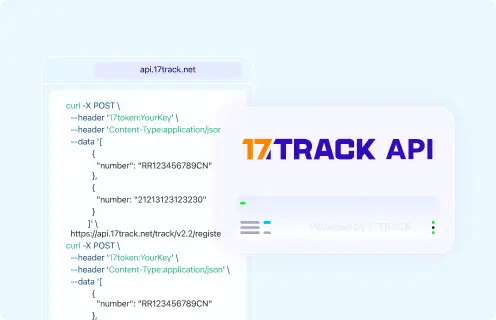
AuthenticationUses a 17TRACK API token in the 17token header.
Tracking/batch/webhook capabilityRegistration and tracking workflows are documented by 17TRACK; webhook capability depends on product setup.
Current developer documentationhttps://api.17track.net/en/doc
Migration/deprecation noteUse the current 17TRACK API documentation for endpoint versioning and request format.

FAQ

1. How do I track my XYY package?

Enter the tracking number on the official XYY website if a tracking entry is available, or use 17TRACK to view available XYY and partner-carrier events.

2. Where can I find my XYY tracking number?

Look in the shipping confirmation email, marketplace order page, seller message, waybill, or label. If you only see an order number, ask the seller for the carrier tracking number.

3. What does an XYY tracking number look like?

XYY does not publicly confirm one universal tracking-number format, so use the full identifier exactly as provided and do not infer the service from the prefix alone.

4. When will the first XYY tracking update appear?

The first meaningful update usually appears after physical acceptance or facility processing, not necessarily when the seller creates the label.

5. Why is my XYY tracking not updating?

XYY tracking may pause during seller handover, consolidation, line-haul transport, customs, or last-mile carrier transfer. Check the latest responsible party before escalating.

6. How long does XYY delivery take?

XYY does not publicly confirm a universal delivery standard; delivery time depends on origin, destination, route type, customs, and the destination carrier.

7. What should I do if XYY delivery failed?

Follow the latest local carrier instruction for redelivery, pickup, address access, or tax payment, and contact the seller if the carrier requires shipper authorization.

8. What if XYY tracking says delivered but I did not receive it?

Check safe places, building reception, household members, neighbors, lockers, and proof of delivery, then contact the destination carrier and seller if the parcel is still missing.

9. Who handles a lost or damaged XYY package?

The seller or contracting shipper usually starts the carrier claim, while the recipient should preserve packaging, photos, value proof, and tracking evidence.

10. How do I contact XYY customer service?

Use the official XYY website for current contact options and contact the seller or marketplace first when the issue involves dispatch, refund, replacement, or account-holder claims.

11. Can XYY tracking show a partner handoff?

Yes, an XYY shipment may show handoff events when data is exchanged with export handlers, customs, postal operators, or destination delivery carriers.

12. Does an XYY tracking event mean XYY physically has the parcel?

Not always. A pre-shipment or electronic data event can mean only that shipment information was created, while an acceptance or facility scan better indicates physical handling.

13. Can an XYY tracking number change during international shipping?

Yes, a downstream postal or last-mile carrier may add a local tracking number after export, import clearance, or destination network injection.

14. What does customs clearance mean for an XYY package?

Customs clearance means the shipment is being reviewed for admissibility, duty, tax, and documentation; arrival in the destination country is not the same as customs release.

15. Can businesses track XYY shipments through an API?

A current public official XYY tracking API is not confirmed, but businesses can use the 17TRACK Tracking API for supported multi-carrier tracking workflows.

16. What carrier code should I use for XYY in the 17TRACK API?

Use the carrier code confirmed in your 17TRACK account or carrier list; if it is not confirmed, keep the carrier field as a placeholder or rely on automatic carrier detection where supported.

Tracking API

/*
  1. XYY official tracking API

  Current public official tracking API not confirmed.
  Do not build a production integration from unofficial endpoint examples.
  Request current endpoint, HTTP method, authentication, rate limits,
  and deprecation notices directly from XYY if you are an account holder.
*/

/*
  2. 17TRACK Tracking API

  Endpoint:
  POST https://api.17track.net/track/v2.4/register

  Headers:
  17token: YourKey
  Content-Type: application/json

  Note:
  The current 17TRACK carrier code for XYY was not independently confirmed
  for this page. Replace CARRIER_CODE with the carrier code confirmed in
  your 17TRACK account or carrier list.
*/

curl -X POST "https://api.17track.net/track/v2.4/register" \
  -H "17token: YourKey" \
  -H "Content-Type: application/json" \
  -d '[
    {
      "number": "TRACKING_NUMBER",
      "carrier": "CARRIER_CODE"
    }
  ]'

Sources & References

17TRACK is an independent tracking platform and is not affiliated with XYY.

A professional and stable global package tracking platform.

17TRACK
Loading