DSV Tracking
Please enter the DSV tracking number to check the latest shipping status.
About DSV
DSV is the supplied display name for the global transport and logistics business presented on the official DSV website. DSV provides freight and logistics solutions across air, road, sea and rail transport, parcel transport, contract logistics and value-added services. The available official material positions DSV primarily as a transport and logistics provider and freight-forwarding partner rather than a postal operator.
| Field | Verified information |
|---|---|
| Official name used on supplied website | DSV is the visible corporate brand on the official website; this page preserves the required display name DSV. |
| Official website | https://www.dsv.com/en |
| Carrier type | Multimodal transport and logistics provider, including freight-forwarding and supply-chain services. |
| Primary operating scope | Air freight, road transport, sea freight, rail freight, parcel, contract logistics and value-added logistics services. |
| Official tracking entry | The official site provides a “Book Track” area and directs users to myDSV for booking and tracking. |
| Parent organization | The supplied official pages identify the operating brand as DSV; a separate parent name is not required to use the tracking tools. |
Carrier Entity Relationships
| Entity | Relationship to DSV |
|---|---|
| DSV | DSV is the carrier and logistics entity whose transport and shipment services are described on the official website. |
| Air, road, sea and rail freight | These are transport modes offered through DSV transport solutions; the selected mode determines the shipment workflow and available events. |
| myDSV | myDSV is DSV’s digital booking and tracking solution, formerly presented as Schenker Connect. |
| DSV Visibility | DSV Visibility is an official value-added visibility solution for shipment information. |
| Local transport and logistics partners | A shipment may involve operational partners selected for a route or service; a partner scan does not by itself prove that DSV physically accepted the goods. |
| 17TRACK | 17TRACK is an independent tracking platform that aggregates available carrier events; it does not operate DSV transport. |
Quick Answer
Enter the shipment or consignment identifier supplied by the sender into the official myDSV booking and tracking page, or submit it to 17TRACK for aggregated events. If no result appears, check that you used a shipment identifier rather than an order or invoice number, remove spaces and punctuation, and ask the sender whether the shipment has been created or physically handed to DSV.
How to Track DSV Packages
The official route is myDSV; 17TRACK is useful when a shipment involves multiple carriers or when the recipient wants one consolidated timeline.
| Route | Steps |
|---|---|
| Official DSV route | Open myDSV, select tracking, enter the shipment identifier supplied by the shipper, and review the latest available event. |
| 17TRACK route | Open 17TRACK, enter the identifier, allow carrier recognition, and compare the event timeline with the merchant or DSV record. |
| Identifier location | Look in the dispatch email, freight document, booking confirmation, commercial shipment paperwork or sender’s tracking message. |
| Wrong number type | Order numbers, purchase references, invoice numbers and customer references may not be searchable shipment identifiers. Request the transport or consignment number from the sender. |
Tracking Number Formats and Examples
DSV’s public corporate pages supplied for this guide do not publish one universal consumer tracking-number grammar. Freight, parcel, forwarding and partner movements can use different identifiers, so a prefix alone should not be treated as proof of service or issuing carrier.
Tracking Number Format
| Identifier family | Normalized pattern / use |
|---|---|
| DSV shipment or consignment identifier | Use the exact alphanumeric identifier shown on DSV or shipper paperwork; a redacted example is DSV #### ####. Length and punctuation depend on the transport product. |
| Freight document reference | A booking, waybill or freight-document reference may identify a movement, but it is not necessarily the same as a parcel label number. |
| Partner-issued identifier | A local delivery or line-haul partner may issue a second number. DSV may show the partner event without having issued that partner number. |
| Merchant order/reference ID | An order, invoice or marketplace reference identifies the sale. It normally requires the merchant to map it to the transport identifier. |
| International shipment identifiers | International freight may involve master and house references or multiple linked transport documents. Confirm the searchable identifier with the shipper. |
Tracking Statuses and Meanings
| Status / stage | Meaning and next action |
|---|---|
| Shipment created / pre-advice | Electronic data or a booking exists; physical acceptance may not have occurred. The sender should confirm handover. |
| Accepted / collected | A DSV facility or contracted operator recorded receipt. Continue monitoring sorting and transport events. |
| In transit | The shipment is moving between transport points. Scan gaps can occur during line-haul. |
| Customs or border processing | Documents, security or import controls are being handled; arrival at customs is not proof of release. |
| Partner handoff | A partner event may indicate electronic pre-advice, physical transfer or first-mile acceptance; these are different milestones. |
| Out for delivery | The destination delivery operation has assigned the shipment for a delivery attempt. |
| Delivered / exception / returned | Check proof of delivery or the exception instruction. If returned, the sender normally controls the next remedy. |
Services and Delivery Times
DSV’s official service menu covers several transport modes and logistics products. The supplied pages do not establish a single public delivery standard for every origin, destination, cargo profile or service, so a quote or shipment-specific booking controls the applicable timing.
Service Comparison
| Service | Best-fit transport use |
|---|---|
| Air freight | Time-sensitive international freight where air transport is selected. |
| Road transport | Domestic or cross-border road movements and scheduled freight routes. |
| Sea freight | International ocean freight and larger consignments. |
| Rail freight | Rail-based freight movements where the selected lane supports rail transport. |
| Parcel | Parcel transport within DSV’s transport-solutions portfolio. |
Delivery Time
| Planning item | How to interpret it |
|---|---|
| Published delivery standard | Use the shipment quote, booking confirmation or service-specific DSV terms for the selected lane. |
| Counting point | The applicable start point depends on collection, booking acceptance, cutoff and transport mode. |
| Guarantee status | Do not treat a tracking estimate as a money-back guarantee; only the shipment contract can establish one. |
| Delay factors | Customs, weather, capacity, holidays, documents, address quality, partner transfer and missed scans can change the projection. |
Destination Country Delivery Times
| Destination group | Planning guidance |
|---|---|
| Europe | Select the lane, mode and service in the DSV quote or booking; country-level timing depends on origin, network and customs. |
| North America | Confirm the shipment-specific estimate and import documentation requirements before dispatch. |
| Asia-Pacific | Air, sea, road or rail selection materially changes the transit plan; use the booked service record. |
| Latin America, Middle East and Africa | Allow for route availability, border processing and destination delivery arrangements shown in the quote. |
Common Tracking Problems and Solutions
| Problem/status shown | Immediate action |
|---|---|
| Invalid number | Copy the shipment identifier exactly, remove spaces, and ask the sender to distinguish it from an order or invoice reference. |
| No events | Check whether the label or booking was created without physical handover; the sender should confirm collection. |
| No update in transit | Compare the last scan with the planned route, allow for line-haul or customs visibility gaps, then ask the shipper to open an inquiry. |
| Shipping partner handoff | Identify whether the event is pre-advice or physical acceptance; contact the party named in the latest event. |
| Delivery exception or address issue | Check the exception instruction immediately. The shipper should request correction or re-delivery where the service permits it. |
| Delivered but not received | Check the delivery address, reception desk, neighbors and safe location; request proof of delivery and contact the sender. |
| Returned, lost or damaged | Preserve packaging and documents. The contracting shipper should start the applicable DSV inquiry or claims process. |
International Shipping, Customs and Carrier Handoffs
| Stage | What it means and who acts |
|---|---|
| Origin booking and collection | The shipper books transport and provides cargo and customs data; booking creation is not the same as collection. |
| Export processing | Origin operations prepare the shipment for the selected mode and export requirements. |
| Line-haul | The shipment moves by the booked air, sea, road or rail route; event frequency can decrease during transport. |
| Customs and security | Authorities or appointed customs parties review documents and admissibility. Customs arrival does not equal release. |
| Partner handoff | A destination or local operator may receive electronic pre-advice, then the goods, and later create a first acceptance scan. |
| Destination delivery | The destination delivery operation performs the final movement and records delivery, exception or return events. |
Import duties, taxes, permits and documents depend on the destination and shipment terms. The importer or contracting shipper should follow the documents and instructions attached to the booking rather than assume that a destination scan means customs clearance.
Delivery Management and Post-shipment Options
| Option | Responsible requester and guidance |
|---|---|
| Shipment visibility | Customers with the relevant shipment access can use myDSV or DSV Visibility to review available information. |
| Address or delivery change | Ask the shipper or DSV contact before final delivery; eligibility, timing and charges depend on the booked service. |
| Proof of delivery | Request it from the shipper or the responsible DSV operation when the shipment record provides that document. |
| Claims self-service | DSV’s official site provides an eClaims service for submitting and tracking claims; the contracting party should use the shipment record. |
Lost, Damaged, Claims, Insurance and Refunds
| Process | Use and next step |
|---|---|
| Tracking inquiry | Use when an event is unclear or delayed; provide the shipment identifier and last scan to the shipper or DSV contact. |
| eClaims | Use for an eligible loss, damage or shortage claim through the official DSV eClaims service; preserve packaging, photos, value documents and transport records. |
| Insurance or liability review | Coverage and filing windows depend on the contract, service and applicable transport terms; the contracting shipper should verify them. |
| Postage or merchant refund | A merchant refund and a carrier claim are separate decisions. 17TRACK cannot approve either one. |
Shipping Restrictions and Special Handling
| Category | Operational implication |
|---|---|
| Dangerous goods | Acceptance depends on the selected mode, classification, documentation, packaging and route. |
| Batteries, liquids and perishables | Declare contents accurately and obtain service-specific acceptance guidance before booking. |
| Customs-controlled goods | Incomplete permits, invoices or commodity descriptions can delay export, import or delivery. |
| Prohibited or restricted goods | Country and mode rules apply; consult DSV’s current terms and the destination authorities before dispatch. |
Customer Service
| Channel | Verified contact or purpose |
|---|---|
| Contact us | Official DSV contact page for questions and regional routing. |
| Global Location Finder | Find a DSV location for local operational contact. |
| myDSV | Book and track with myDSV for digital shipment access. |
| eClaims | Use the official DSV claims self-service route when an eligible transport claim must be submitted or monitored. |
Prepare the shipment identifier, booking or consignment reference, collection date, origin and destination, service or mode, latest scan, cargo description, declared value and photographs where damage is involved. Start with the sender or contracting account holder, then use the regional DSV contact route if escalation is needed.
Ecommerce and Business Tracking
Business users should distinguish shipment visibility inside DSV’s digital tools from a multi-carrier API. myDSV supports booking and tracking workflows, while DSV Visibility is an official visibility solution. 17TRACK can aggregate supported carrier events for merchants managing multiple transport providers.
Developer/API Comparison
| Option | Provider |
|---|---|
| myDSV digital solution | DSV |
| DSV Visibility | DSV |
| 17TRACK API | 17TRACK |
The supplied official DSV evidence confirms digital booking, tracking and visibility products but does not confirm a current public DSV tracking endpoint, authentication scheme or webhook specification. Businesses should request current technical access through DSV. For multi-carrier tracking, consult the current 17TRACK API documentation.
FAQ
Basic FAQs
Enter the shipment identifier in myDSV or 17TRACK and compare the latest available event with the sender’s record.
Look in the dispatch message, booking confirmation, freight document or ask the sender for the shipment or consignment identifier.
DSV uses shipment identifiers across different transport products, so length and punctuation are not a single universal public format.
The booking may exist before physical collection; ask the sender to confirm handover and verify the identifier.
Line-haul, customs, partner transfer and missed scans can create gaps; the shipper should investigate using the last scan.
Timing depends on origin, destination, mode, service, cargo and customs; use the shipment quote or booking confirmation.
Read the exception instruction and contact the sender or responsible local DSV operation promptly about the available remedy.
Check reception areas, neighbors and safe locations, request proof of delivery, and ask the sender to open an inquiry.
The contracting shipper should use the applicable DSV inquiry or eClaims route and retain packaging, photos and value evidence.
Use the official DSV Contact us page or Global Location Finder and provide the shipment identifier and latest event.
Expert FAQs
DSV coordinates transport and logistics services, but a route can include customs parties, destination operators and other transport partners.
No; electronic pre-advice, physical handover and first acceptance scan are separate events.
myDSV is presented for booking and tracking, while DSV Visibility is presented as a value-added shipment-visibility solution.
No; arrival, document review, release and final delivery are different stages.
No; address changes must be requested from the sender or the responsible DSV operation and depend on service eligibility.
The supplied official material does not establish one universal format; use the shipment identifier shown in the relevant booking or transport document.
DSV confirms digital booking, tracking and visibility products, but a current public DSV tracking endpoint and authentication specification should be obtained directly from DSV.
No; 17TRACK only presents available tracking data, while DSV or the contracting carrier handles the applicable claim process.
Tracking API
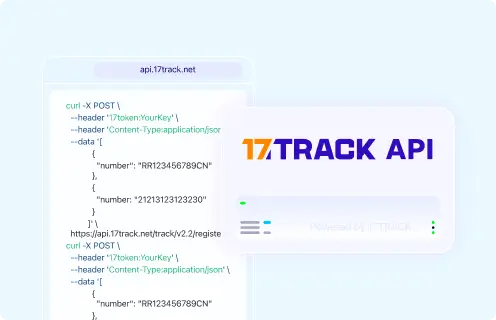
The supplied official DSV pages confirm myDSV, DSV Visibility and digital logistics tools, but do not confirm a current public DSV tracking API endpoint. The following is the 17TRACK reference endpoint; replace the carrier placeholder only after confirming the current 17TRACK carrier code in its documentation.
// 1. DSV official tracking API
// Current public official DSV tracking API not confirmed.

// 2. 17TRACK API
POST https://api.17track.net/track/v2.4/register
Headers:
  17token: YourKey
  Content-Type: application/json

Body:
[
  {
    "number": "TRACKING_NUMBER",
    "carrier": "CARRIER_CODE"
  }
]

// Confirm the current DSV carrier code in the 17TRACK documentation
// before sending production requests.
Sources & References
- Global Transport and Logistics | DSV. DSV
- Book and track with myDSV. DSV
- Visibility. DSV
- Contact us. DSV
- Global Location Finder. DSV
- 17TRACK API Documentation. 17TRACK
17TRACK is an independent tracking platform and is not affiliated with DSV.
Track your package
Global express parcel tracking service