Wismo vs Wismr: What'S the Difference & How to Handle each Type of Ticket
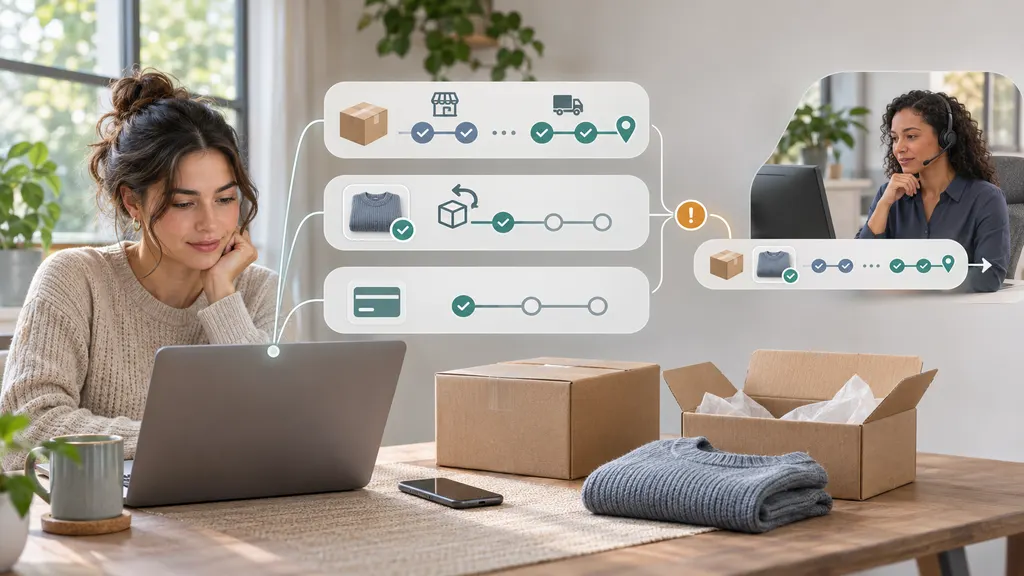
WISMO means “Where is my order?” WISMR usually means “Where is my refund?”, although some teams use it for “Where is my return?” For ecommerce support teams, the practical difference is the evidence needed to resolve the ticket: WISMO requires shipment and delivery information; WISMR requires return, refund, or payment information. Classify the customer’s actual question before choosing a workflow, and assign one person to own the answer through resolution.

A tracking update cannot prove that a refund was issued, and a refund confirmation cannot explain where a parcel is. Treating these inquiries as interchangeable creates unnecessary handoffs and replies that sound helpful without answering the question.
WISMO vs WISMR at a glance
These labels describe customer inquiries, not competing products or formal carrier statuses. Because WISMR is used inconsistently, define it in your help desk and separate return-location questions from refund-payment questions.
| Ticket type | Customer’s question | Evidence to check | Suggested owner |
|---|---|---|---|
| WISMO: order | Where is the purchase I am waiting for? | Fulfillment record, carrier acceptance, tracking events, delivery information | Customer support, coordinating with fulfillment or the carrier |
| WISMR: return | Where is the item I sent back? | Return authorization, drop-off evidence, reverse tracking, warehouse receipt | Customer support, coordinating with returns operations |
| WISMR: refund | Where is the money I am expecting? | Refund eligibility, approval, transaction record, payment-provider status | Customer support, coordinating with an authorized payments specialist |
Recommended routing rule: use three distinct reasons—order status, return status, and refund status—even if your reporting groups the last two under WISMR. This preserves the difference between moving an item and moving money.
Start with the outcome the customer wants
A message such as “I returned this last week and have heard nothing” could concern a missing parcel, an unacknowledged warehouse receipt, or an unpaid refund. Check the order and return records before asking the customer to explain everything again. If the intended outcome remains unclear, ask one focused question: “Are you checking whether your return arrived, or whether your refund has been issued?”
Keep related issues in one conversation where possible. A refund inquiry may require a return-tracking investigation, but the customer should not have to open a second ticket to connect those steps. Record the primary request, the current blocker, the next action, and the person responsible.
How to handle a WISMO ticket
1. Verify the order and the shipment
Use your normal identity-verification process before sharing order details. Check the order number, fulfillment status, shipping service, delivery estimate communicated at checkout, and any separate shipments. A partially delivered order may be a split shipment rather than a missing item.
Then confirm that the tracking number belongs to the relevant parcel. Distinguish label creation from carrier acceptance: a generated shipping label does not, by itself, establish that the carrier physically received the package.
2. Identify the last verified event
- Not yet handed over: ask fulfillment whether the parcel has been packed, dispatched, and accepted. Do not direct the customer to the carrier for a shipment still awaiting handover.
- Moving through the network: explain the latest meaningful event and its timestamp. Treat an estimated delivery date as an estimate, not a guarantee.
- No recent movement or an exception: check the carrier’s explanation and investigation process. A gap between scans alone does not prove loss.
- Marked delivered but not received: verify the delivery address, available delivery evidence, and any safe-place or reception details before selecting the next action.
For international shipments, identify any documented handoff to a local delivery carrier. Do not infer customs detention, loss, or a failed delivery merely because tracking is quiet.
3. Give an answer with an accountable next step
A useful reply includes the verified status, what it means, what your team is doing, and when the customer will hear from you again. Set that follow-up using your actual service process. Avoid inventing a delivery date just to make the response sound conclusive.
If an investigation, replacement, or refund may be appropriate, follow the applicable policy and consumer obligations. Carrier claim procedures and customer remedies are related but separate matters; do not assume the customer must wait for an internal claim to finish in every situation.
Example reply: “The latest carrier event shows your parcel at [location] on [date]. There is no confirmed delivery event yet. We have asked [team/carrier] to investigate and will update you by [agreed time], even if the investigation is still open.”
How to handle a return-status WISMR ticket
Reverse logistics introduces a second shipment and a warehouse reconciliation step. Keep those records separate from the original outbound delivery.
- Find the return authorization. Match the return to the correct order, items, and requested outcome, such as refund or exchange.
- Check whether the return was handed over. A created return label is not proof of drop-off. Use an acceptance scan or other relevant handover evidence where available.
- Check return tracking. Identify whether the parcel is moving, delayed, delivered, or subject to an exception.
- Reconcile delivery with warehouse receipt. A delivery scan at the return destination does not necessarily mean the items have been matched to the order or inspected.
- Identify the actual blocker. Examples include an unmatched parcel, missing order reference, pending inspection, or a decision awaiting authorization.
If the carrier reports delivery but the warehouse has no matched record, send returns operations the tracking number, delivery timestamp, return reference, and expected contents. Asking the customer to contact the carrier again may not resolve an internal receiving problem.
Explain which milestone triggers the next step under the applicable policy, while accounting for any legal requirements. Do not describe warehouse inspection as a universal prerequisite for every refund.
Example reply: “Your return tracking shows delivery to our returns address on [date]. We are checking its receipt against return [reference]. The refund has not yet been issued. [Owner/team] is reviewing the receiving record, and we will update you by [agreed time].”
How to handle a refund-status WISMR ticket
1. Separate approval from payment execution
“Approved,” “submitted,” and “visible in the customer’s account” describe different milestones. An internal note saying “refund approved” is not proof that a payment instruction was successfully submitted.
Check the original transaction, the amount and currency being refunded, whether the refund is partial or full, and the actual payment-system record. Confirm whether another agent already acted before submitting anything new.
2. Follow the branch supported by the record
- No refund created: establish whether an eligibility decision or authorized action is outstanding. Route it to someone who can make that decision.
- Refund pending: inspect the payment provider’s status and any stated reason. Do not relabel a pending transaction as completed.
- Refund submitted or successful in the payment system: explain the recorded status and use the provider’s applicable guidance for customer visibility.
- Refund failed or requires action: escalate to an authorized payments specialist to determine the permitted next step.
- Customer still cannot locate the funds: check whether a trace reference is available and appropriate to share, then follow the provider’s investigation procedure.
Payment-provider terminology matters. Stripe’s refund documentation, for example, distinguishes refund processing and failure scenarios. Use the documentation for the payment method and provider involved rather than turning another provider’s guidance into a universal promise.
3. Communicate what is confirmed
State the confirmed amount, currency, issue date, and destination description where appropriate. Any expected processing window should come from applicable provider guidance, not a generic support macro. Never request a full card number, password, or security code to investigate a refund.
Example reply: “Our payment record shows a refund of [amount and currency] submitted on [date] to your original payment method. Its current status is [verified status]. The applicable provider guidance is [verified guidance]. If it remains unaccounted for after that window, we will investigate using the available transaction reference.”
Build a workflow that keeps ownership clear
Customer support should generally retain ownership of the conversation while specialist teams investigate. This is an operating recommendation, not a requirement that every company use the same organizational structure.
A useful ticket record contains the order reference, inquiry type, outbound or return tracking number, last verified event, refund transaction status where relevant, blocker, internal owner, and next customer-update time. Keep financial and personal details limited to what the assigned team needs.
Make handoffs explicit. Fulfillment investigates a parcel that has not left the warehouse; returns operations reconciles a delivered return; an authorized payments specialist investigates a failed refund. “Sent to another department” is not a resolution unless someone has accepted the action.
Also define what resolved means. A status question may be answered without the parcel arriving that day, but a promised investigation should remain tracked. A refund request is not resolved merely because someone approved it internally.
Use tracking tools without confusing visibility with resolution
For WISMO, a package-tracking service such as 17TRACK can support the shipment-status check. The relevant question is what the latest tracking information establishes—not simply whether a tracking page exists.
Order-tracking pages, returns systems, and payment records serve different purposes. When assessing tools, test whether agents can connect the order, outbound shipment, return, and refund without confusing their statuses. If considering the 17TRACK Shopify app, 17RETURNS, or a tracking API, verify the specific workflow and integration you need before purchase or implementation.
Do not treat any tracking tool as proof of a bank credit. Likewise, a returns interface should not be assumed to confirm payment execution unless the relevant integration and transaction status have been verified.
Reduce repeat contacts by fixing missing milestones
For WISMO, review whether customers can distinguish order confirmation, dispatch, carrier acceptance, and delivery exceptions. For WISMR, review whether they can distinguish return authorization, return receipt, refund approval, and refund submission. Send milestone messages only when the underlying event is confirmed.
Measure contact rate by reason, repeat contacts, time to the next meaningful action, and resolution time. Use consistent denominators: order-status inquiries per shipped order are not directly comparable with refund inquiries per refund request. Review repeat tickets to find the missing event or unclear promise rather than assuming every contact is a failure of self-service.
FAQ
Does WISMR mean “Where is my return?” or “Where is my refund?”
It can mean either, depending on the team using it. Define the acronym internally and keep separate return-status and refund-status reasons. Customer-facing messages should use plain language rather than the acronym.
Should a delivered return trigger an automatic refund?
Not as a universal rule. The correct trigger depends on applicable consumer requirements, the return circumstances, and the merchant’s lawful policy. A delivery scan establishes a logistics event; it does not independently establish the refund decision or payment status.
When should an agent escalate a shipment with no tracking updates?
Use the shipping service, promised delivery terms, latest event, and carrier investigation guidance. Escalate when those conditions justify action rather than applying one arbitrary waiting period to every shipment.
Can one ticket include both WISMO and WISMR?
Yes. A customer may ask about an undelivered order and a requested refund in the same conversation. Keep one customer-facing owner, document both issues, and assign the relevant internal actions separately.
What if the refund is marked successful but the customer cannot see it?
Verify the amount, date, destination, and provider guidance. Use an available trace reference where supported and escalate through the payment provider’s process when appropriate. Do not automatically issue a second refund.
Sources
- Stripe: Refunds — provider-specific refund processing, status, and investigation guidance.
- Shopify Help Center: Refunding orders — platform-specific refund handling guidance.
- 17TRACK: Package tracking — shipment-tracking resource.
- 17TRACK Shopify app listing — product information for merchant evaluation.
- 17RETURNS official product page — returns-product information for workflow evaluation.
- 17TRACK Tracking API — tracking-integration information.