What Is Wismo? Meaning, Common Causes & Why It Costs Ecommerce Brands?
WISMO stands for “Where is my order?” In ecommerce, it describes customer inquiries about an order’s progress, shipping status, or delivery date. These questions can arise before dispatch, during transit, or after a package is marked delivered. For brands, WISMO creates support work and can lead to additional costs when uncertainty turns into repeated contacts, unnecessary replacements, or cancellations.

A WISMO inquiry does not necessarily mean a shipment is late or lost. Often, the customer simply cannot find a clear answer. The practical goal is therefore twofold: make routine order information easy to understand, and identify genuine fulfillment or delivery problems early enough to act.
What counts as a WISMO inquiry?
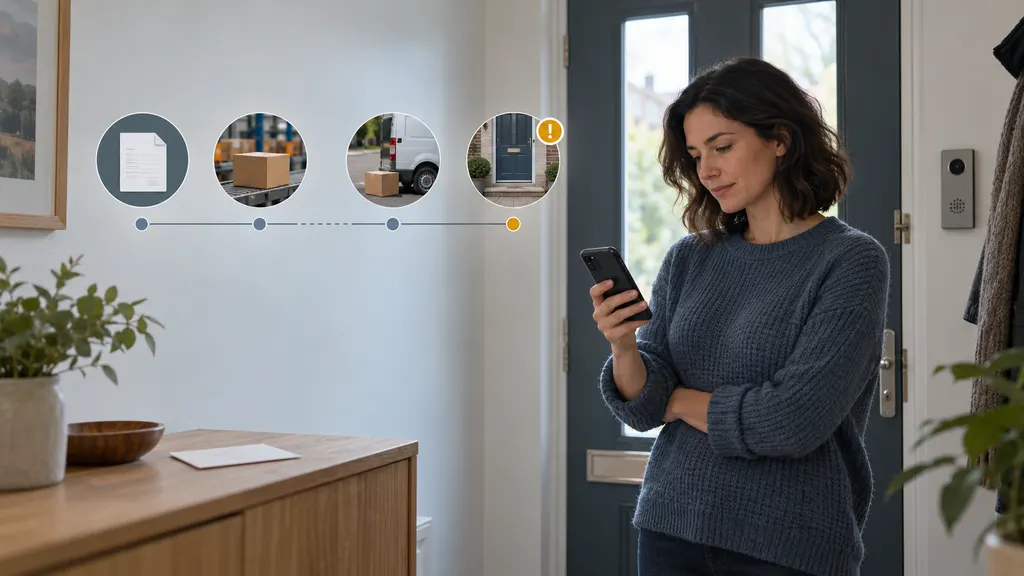
WISMO is a customer-service category, not a carrier tracking status. It includes questions such as “Has my order shipped?”, “Why hasn’t tracking updated?”, and “It says delivered, but where is it?” The common feature is that the customer wants to know where an order is or what happens next.
These inquiries can arrive through email, chat, phone, social media, or a marketplace messaging system. One unresolved order may generate several contacts across different channels, which makes counting tickets alone an incomplete measure of the problem.
- Before dispatch: The customer has an order confirmation but cannot tell when the order will leave the warehouse.
- After a shipping notification: A tracking number exists, but the carrier has not yet recorded possession of the parcel.
- During transit: Tracking appears unchanged, a delivery estimate has passed, or a delivery exception appears.
- After a delivery scan: The customer cannot locate the package or received only part of the order.
For reporting purposes, distinguish these requests from unrelated product questions, returns, and payment issues. A question about returning a delivered item is not WISMO, although a conversation may begin with a delivery question and later become a return request.
Why customers ask where their orders are
WISMO usually reflects one of three problems: an information gap, an expectation gap, or an actual operational exception. These require different responses. Sending another tracking link will not fix an order that has never left the warehouse.
The delivery promise is unclear
Customers may interpret a shipping-service estimate as the total time from checkout to arrival. If processing time is explained separately or only in a hard-to-find policy, a perfectly ordinary fulfillment interval can feel like a delay.
State processing time and transit time separately, then explain how they relate to the delivery estimate. Where relevant, clarify whether estimates use business days and how preorders or personalized items differ. Avoid presenting an estimate as a guarantee unless the underlying service and your own commitment support that promise.
A label exists, but the parcel has not entered the carrier network
Creating a shipping label and physically handing over a parcel are different events. UPS, for example, distinguishes “Label Created” from statuses indicating that a shipment is in its network. Customers who receive a shipping email at label creation may reasonably expect movement immediately.
When this causes inquiries, investigate the gap between label creation, warehouse dispatch, and the first carrier scan. The cause may be a fulfillment backlog, collection timing, or a missing acceptance scan. The tracking label alone does not establish which explanation applies.
Tracking is hard to find or difficult to interpret
A customer may overlook the shipping email, follow a broken link, or encounter terminology that does not explain what to do next. An order split into multiple parcels adds another complication: one tracking number cannot explain the location of every item.
Make tracking accessible from the order confirmation, shipping notification, and customer account where available. For split orders, show which items belong to each shipment. A useful tracking page connects shipment information to the purchase, rather than simply displaying a list of scans.
There is a gap between tracking events
Tracking is a record of reported events, not continuous location monitoring. A period without a new scan does not, by itself, prove that a parcel is stationary or lost. Cross-border shipments can also involve customs processing and handovers between logistics providers, making the journey harder for customers to interpret.
Explain the latest confirmed event without inventing a location or arrival date. Escalation should reflect the carrier’s guidance, service type, route, and delivery commitment—not a universal rule that every shipment becomes lost after the same number of days.
A real delivery problem needs attention
Address problems, unsuccessful delivery attempts, customs requirements, and other exceptions may require action rather than reassurance. A delivered-but-not-received report also deserves a separate workflow. The delivery scan is relevant evidence, but it does not explain why the customer cannot locate the parcel.
Ask targeted questions, review available delivery details, and follow the applicable carrier investigation process. Do not automatically classify these reports as either customer error or confirmed loss.
Why WISMO costs ecommerce brands money
The most direct cost is support labor. An agent must identify the order, check fulfillment and tracking records, interpret the situation, respond, and sometimes contact a warehouse or carrier. Repeat inquiries add work without representing additional orders.
Other costs depend on what happens next. Not every WISMO conversation causes a refund or lost customer, so those outcomes should be measured rather than assumed.
- Repeat handling: A vague response can prompt another message, a second channel contact, or an escalation.
- Operational investigation: Warehouse and logistics teams may spend time checking dispatch records, handovers, or delivery evidence.
- Recovery spending: Confirmed problems may require replacement goods, additional shipping, refunds, or goodwill credits.
- Premature remedies: Replacing a parcel before understanding its status can create duplicate-delivery costs.
- Customer relationship risk: Unresolved uncertainty can undermine confidence, although any effect on repeat purchasing needs brand-specific evidence.
A useful starting calculation is WISMO contacts × average handling minutes ÷ 60 × fully loaded hourly support cost. This estimates handling cost, not total business impact. Use the same reporting period for each input and include all relevant channels.
For illustration only, 600 contacts taking an average of six minutes represent 60 support hours. At an assumed fully loaded cost of $25 per hour, that equals $1,500 in handling cost. These are hypothetical inputs, not industry benchmarks. Add attributable investigation and recovery costs separately, and avoid counting the same expense twice.
How to measure WISMO without misleading yourself
A single “WISMO rate” can conceal different definitions. Decide whether you are measuring affected orders, customer contacts, or support workload before setting a target.
- Order-level WISMO rate: Orders with at least one WISMO inquiry divided by orders in the defined cohort.
- Contacts per order: Total WISMO contacts associated with that cohort divided by its order count.
- WISMO share of support: WISMO contacts divided by all support contacts in the reporting period.
- Repeat-contact rate: WISMO cases requiring additional customer contact divided by total WISMO cases, using a consistent case definition.
Allow an order cohort enough time to progress through delivery before comparing results. Dividing this week’s inquiries about older shipments by this week’s new orders can create a distorted rate.
Segment results by fulfillment location, carrier service, destination, and inquiry reason where volumes support meaningful comparisons. A high rate before the first carrier scan points toward a different investigation than a high rate after unsuccessful delivery attempts.
Also monitor resolution quality. A lower contact count is not an improvement if customers can no longer reach support or unresolved orders are accumulating.
A practical workflow for reducing WISMO
1. Identify the uncertainty that triggers contact
Review a representative sample of conversations and record the shipment state at first contact. Separate “tracking link missing,” “not dispatched,” “no recent scan,” “delivery estimate passed,” and “delivered but not received.” Assign each category an owner. Fulfillment should own dispatch problems; support should own customer communication; logistics should own carrier investigations.
2. Fix the promise and the information path
Check the journey from checkout to delivery on a mobile device. Can a buyer find the delivery estimate, reopen tracking, and identify separate shipments without contacting an agent? Make shipping notifications accurate about what has happened. If only a label has been created, do not imply that a carrier has already collected the parcel.
3. Use tracking tools to make information accessible
Tracking software can help customers find shipment information and help teams organize post-purchase communication. For Shopify merchants evaluating this approach, the 17TRACK Shopify app listing describes order tracking, branded tracking pages, and shipment notifications. These capabilities are relevant to information-driven WISMO, but they do not resolve warehouse delays or physically accelerate a shipment.
Before adopting a tool, test it against actual order scenarios: label created without collection, a split shipment, an exception, and a delivered-but-not-received report. Check whether the displayed status is understandable and whether customers can reach support when self-service is insufficient. Avoid sending repetitive notifications that provide no meaningful change.
4. Give every exception a next step
An effective response explains the latest confirmed status, the action being taken, and when the customer should expect another update. If the delivery date is uncertain, commit to a follow-up time rather than inventing an arrival promise.
Use carrier-specific investigation procedures. USPS, for example, provides a Missing Mail help process; other carriers have their own requirements. Separately, review your customer remedy obligations under applicable law and store terms. A carrier investigation and the customer’s entitlement to a remedy are related issues, but they are not interchangeable.
5. Check whether the change addressed the cause
Compare similar order cohorts before and after a change, accounting for differences in destination, shipping service, and seasonal conditions. Review contact frequency alongside late deliveries, unresolved cases, and recovery costs. If tracking becomes easier to find but pre-dispatch inquiries remain high, the next improvement may need to happen in fulfillment rather than messaging.
FAQ
Does a WISMO inquiry mean the order is late?
No. Customers may ask while an order is still within its expected delivery window because the estimate is unclear or tracking is difficult to find. Compare the inquiry with the communicated promise and confirmed shipment events before treating it as a delay.
What should a WISMO response include?
Include the latest confirmed status, a plain-language explanation, any action required from the customer, and the next follow-up point. Provide a working tracking link where relevant. Avoid merely repeating an ambiguous carrier status without explaining its practical meaning.
Can automated tracking eliminate WISMO?
No. It can address some information gaps, but customers will still need help with real exceptions, missing items, and unclear delivery outcomes. Automation should make routine answers accessible while preserving a clear route to human assistance.
What is a good WISMO rate?
There is no single target that fits every brand. Delivery distance, processing time, product type, and measurement definitions all affect the result. Establish a consistent internal baseline, then aim to reduce avoidable contacts without weakening resolution quality.
Should a brand immediately replace a package with stalled tracking?
Not solely because tracking has stopped updating. Review the delivery commitment, carrier guidance, shipment history, and customer circumstances. Investigate where appropriate, while meeting applicable legal obligations and avoiding indefinite requests for the customer to wait.
Sources
- UPS: Understanding Tracking Status — carrier explanations of label creation and shipment progress.
- USPS: Missing Mail and Lost Packages — official guidance for investigating missing mail.
- Shopify App Store: 17TRACK — product information about merchant-facing tracking and notification features.