Ecommerce Value Chain Explained: Key Stages, Examples and Post-Purchase Opportunities
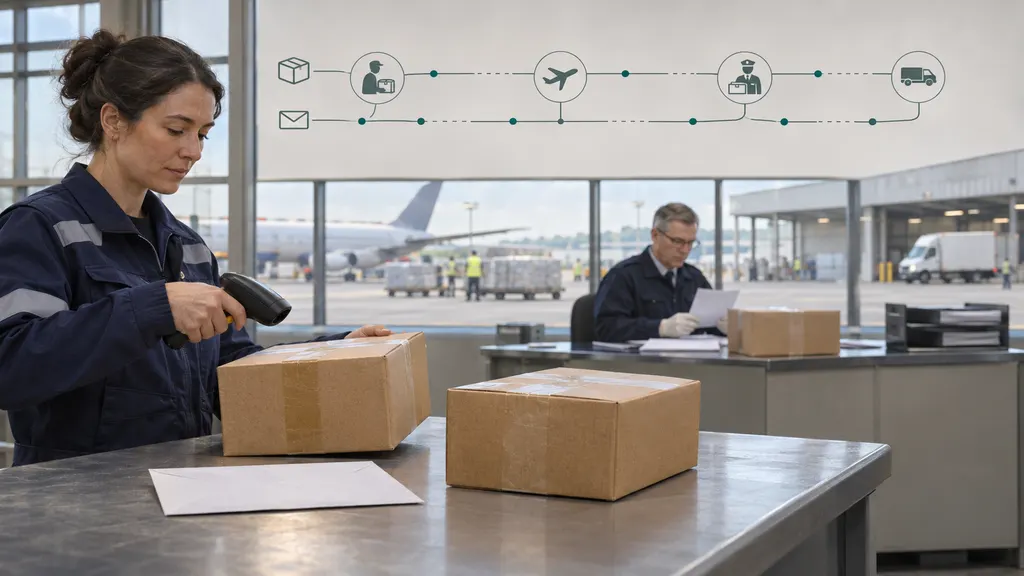
The ecommerce value chain is the connected set of activities that creates, sells, delivers, and supports a product purchased online. It includes product development, sourcing, inventory, marketing, checkout, fulfillment, delivery, and post-purchase service. For merchants and operations teams, its value is practical: mapping these activities reveals where customer expectations break down, costs accumulate, and improvements can protect both customer experience and margin.

The chain does not end when a parcel leaves the warehouse. Tracking, delivery issue resolution, returns, and refunds influence whether the customer receives the value promised at checkout. They also generate information that should feed back into purchasing, product descriptions, packaging, and carrier selection.
What makes an ecommerce value chain different from a supply chain?
A value chain examines how business activities create value for customers and contribute to competitive advantage. Harvard Business School’s Institute for Strategy and Competitiveness describes value-chain analysis as a way to understand strategically relevant activities and their links. Applied to ecommerce, the question is not simply whether an order moved successfully, but whether each activity helped deliver an attractive, reliable, economically sustainable offer.
A supply chain focuses on the organizations, resources, and processes involved in sourcing, transforming, and moving products, alongside the information and coordination those processes require. The Council of Supply Chain Management Professionals places logistics within the broader discipline of supply chain management.
These are overlapping perspectives, not competing definitions. Supply chain management can include collaboration across marketing, sales, finance, and other functions. The value-chain perspective emphasizes why those activities matter to the customer and the business.
- Supply chain question: Can we source, stock, and deliver this product reliably?
- Value chain question: Does the complete offer justify the customer’s purchase and leave a sustainable contribution after service and returns?
- Ecommerce operations question: Who owns the systems, decisions, and exceptions needed to make that happen every day?
The main stages of the ecommerce value chain
The stages below are a practical operating model, not a mandatory sequence. A made-to-order business, a subscription retailer, and a merchant using third-party fulfillment will organize the work differently. In every model, however, someone must own the promise made to the customer.
| Stage | Value created | Typical action owner |
|---|---|---|
| Product and sourcing | A useful product with dependable specifications and supply | Product and procurement teams |
| Inventory and inbound logistics | Stock available where demand can be served | Planning and inventory teams |
| Merchandising and acquisition | An accurate, understandable reason to buy | Marketing and merchandising teams |
| Checkout and order processing | A clear purchase commitment and usable order data | Commerce, payments, and operations teams |
| Fulfillment | The correct items, protected and dispatched accurately | Warehouse or fulfillment partner |
| Delivery and visibility | Physical receipt supported by understandable shipment information | Logistics and customer service teams |
| Service, returns, and learning | Issue resolution, product recovery, and better future decisions | Support, returns, finance, and product teams |
1. Product development and sourcing
Value starts with deciding what to sell and what standards the product must meet. Procurement should assess more than unit purchase cost: specifications, supplier consistency, replenishment constraints, packaging requirements, and the consequences of defects all matter.
For example, a less expensive glass container may be a poor sourcing choice if its packaging cannot protect it through the intended delivery process. Evaluate the product and packaging together rather than treating damage as exclusively a carrier problem.
2. Inventory planning and inbound logistics
Inventory decisions translate demand expectations into available stock. Teams must decide how much to hold, where to hold it, and when to replenish it. Receiving accuracy matters because stock that exists physically but is recorded incorrectly can lead to overselling or unnecessary purchasing.
Separate supplier lead time, receiving time, and the time required to make stock sellable. A shipment arriving at a warehouse does not necessarily mean the products are ready for customer orders.
3. Merchandising, marketing, and acquisition
Product pages and campaigns shape expectations about fit, quality, availability, and delivery. Accurate dimensions, material descriptions, compatibility details, and images help shoppers determine whether the product suits their needs.
Marketing performance should therefore be examined alongside downstream outcomes. A campaign that generates orders but attracts customers with expectations the product cannot meet may create more service work and returns. Conversion alone does not describe the value created.
4. Checkout and order management
Checkout turns interest into an operational commitment. Prices, shipping charges, delivery estimates, address details, and applicable return terms should be understandable before the customer places the order.
Order management then coordinates payment status, inventory allocation, routing, cancellations, and changes. Establish rules for orders that cannot proceed normally, such as an address requiring correction or an item that becomes unavailable. Without a named owner, these exceptions can sit between systems while the customer assumes work is progressing.
5. Ecommerce fulfillment
Ecommerce fulfillment covers the work required to prepare and dispatch an order, including picking, packing, labeling, and handover. Accuracy and speed must be considered together: shipping the wrong item quickly does not create a successful outcome.
Distinguish label creation from physical carrier acceptance. A tracking number may exist before the carrier receives the parcel. That distinction should be reflected in internal reporting and customer messages.
6. Delivery and shipment visibility
Delivery moves the parcel to its destination; visibility helps customers and staff understand that journey. The two are related but not interchangeable. A tracking tool can make reported shipment events easier to access, but it cannot by itself prevent delays or guarantee delivery.
For cross-border orders, operational planning should account for customs information, potential handovers, and destination delivery arrangements. Customer-facing estimates should reflect the actual service and route rather than a generic promise applied to every destination.
7. Post-purchase service and returns management
Post-purchase work starts after checkout, not only after delivery. It includes order updates, shipment questions, delivery exceptions, product support, returns, exchanges, and refunds.
Returns management also connects customer service to reverse logistics and finance. A returned item may need inspection, restocking, repair, or another disposition. Eligibility, refund timing, and handling requirements depend on the merchant’s terms and applicable law; operational workflows must reflect both.
Example: following one order through the chain
Consider a hypothetical online apparel retailer selling a jacket. This example illustrates the process; it is not a reported company case study.
- Product and sourcing: The retailer agrees on fabric, measurements, and inspection criteria with its supplier.
- Inventory: Receiving staff verify sizes and quantities before making stock available online.
- Merchandising: The product page explains garment measurements and fit rather than relying only on a size label.
- Checkout: The customer sees shipping charges, an estimated delivery window, and accessible return terms.
- Fulfillment: Warehouse staff select the correct size, confirm the order, and record dispatch.
- Delivery: Shipment information helps the customer follow progress, while an exception workflow identifies orders needing attention.
- Returns: If the customer requests a size exchange, the team checks eligibility and replacement stock, then handles the returned jacket under its inspection process.
The learning loop matters. If customers repeatedly report that the sleeves are shorter than expected, the first response should not automatically be a more restrictive return policy. The retailer should compare product measurements, supplier consistency, size guidance, and return reasons to locate the underlying mismatch.
Where post-purchase improvements create opportunities
Make status information useful, not merely available
Customers need to understand what a status means and whether they must act. Separate order confirmation, preparation, shipment, and delivery. If an order ships in multiple parcels, show the relationship between items and shipments so one delivered package is not mistaken for a completed order.
A multi-carrier tracking service such as 17TRACK can serve as a shipment lookup resource. Its role in this framework is visibility, not a replacement for warehouse controls, carrier operations, or the merchant’s responsibility to resolve customer issues. Validate the relevant carrier and shipment behavior before adopting any tracking workflow.
Assign ownership to delivery exceptions
A status alert is only useful if it triggers a decision. Define which events require review, who contacts the customer or carrier, and what information is needed. Avoid treating every tracking gap as proof that a parcel is lost; event timing and scan availability vary.
For a delivery dispute, support may need the shipment history, order address, available delivery evidence, and the customer’s account of what happened. A consistent investigation checklist is more useful than an automatic message that tells every customer to wait.
Connect returns to inventory and cash flow
A return request, an item in transit, an inspected item, and sellable stock are different states. Recording them separately helps prevent premature inventory availability and makes refund backlogs easier to identify.
Capture actionable return reasons. Categories such as wrong item, damage, inaccurate description, and fit issue lead to different owners and corrective actions. Keep the customer’s explanation available where a broad reason code would hide the problem.
Measure retention without assuming causation
Compare repeat purchasing and service outcomes across relevant customer groups, but do not assume that a tracking notification or easier return process caused every improvement. Product mix, promotions, customer tenure, and seasonality can influence results. Where practical, test a defined change against a comparable baseline.
How to prioritize improvements across the chain
Start with one recurring failure rather than a broad technology replacement. Map a sample of affected orders from purchase through resolution, using timestamps and costs wherever possible.
- Define the outcome: For example, reduce orders missing the delivery promise shown at checkout.
- Locate the delay: Separate order release, picking, carrier handover, transit, and exception resolution.
- Name an accountable owner: Other teams may contribute, but one role should coordinate the fix.
- Change the relevant process: A late warehouse handover requires a different response from an unrealistic storefront estimate.
- Track the trade-off: Check whether faster processing increases errors, shipping expense, or support work.
Use consistent definitions. Measure order accuracy against fulfilled orders, delivery-promise performance against a defined set of eligible shipments, and return rates against a stated order cohort and observation period. Track issue contacts per order alongside resolution time; fewer contacts are not necessarily positive if customers cannot reach support.
Evaluate economics at the order level as well as by department. A cheaper shipping service may not be cheaper overall once handling, replacement shipments, support, and returns are considered. Conversely, a premium service is not automatically justified for every product or destination. The right improvement addresses a documented constraint at an acceptable total cost.
FAQ
Does the value chain still matter if fulfillment is outsourced?
Yes. Outsourcing changes who performs the work, not whether the activity affects the customer. The merchant still needs agreed service definitions, reliable data exchange, exception ownership, and a process for resolving mistakes with its fulfillment partner.
Where should a small ecommerce business start?
Review recent late, incorrect, damaged, and returned orders. Identify the most frequent or costly recurring cause, assign an owner, and fix that handoff first. A simple order-level record can be more useful initially than a large dashboard with inconsistent definitions.
Is shipment tracking the same as order tracking?
No. Shipment tracking follows a parcel after shipment information is created and carrier events become available. Order tracking can cover the broader purchase lifecycle, including payment, preparation, split shipments, cancellations, and refunds. Confirm which lifecycle a system actually displays.
Can better tracking replace customer service?
No. Accessible tracking can help customers answer routine status questions, but disputes, missing items, damaged products, and refund decisions still require resolution processes. Visibility should support service rather than become a reason to deny assistance.
How do returns improve the rest of the value chain?
Returns provide signals about product quality, listing accuracy, picking errors, packaging, and customer expectations. Those signals become useful when teams review consistent reason data alongside inspection findings and make changes upstream.
Sources
- Harvard Business School, Institute for Strategy and Competitiveness: The Value Chain — conceptual foundation for analyzing activities and their contribution to competitive advantage.
- Council of Supply Chain Management Professionals: Supply Chain Management Definitions and Glossary — definitions of supply chain management and logistics management.
- 17TRACK official website — shipment tracking resource referenced in the post-purchase visibility discussion.