How to Improve Shipment Tracking for Cross-Border Orders
To improve shipment tracking for cross-border orders, build visibility across the entire delivery chain rather than relying on a single carrier page. Capture a valid tracking identifier early, connect events from every carrier involved, normalize inconsistent statuses, detect stalled shipments, and give customers clear updates when customs or handoffs interrupt the event flow.

For merchants, the main challenge is rarely the absence of tracking data. It is the fragmentation of that data across postal operators, commercial carriers, consolidators, customs processes, and last-mile partners. A practical improvement plan must address both the underlying logistics process and the way tracking information is presented to customers.
Why cross-border tracking is harder than domestic tracking
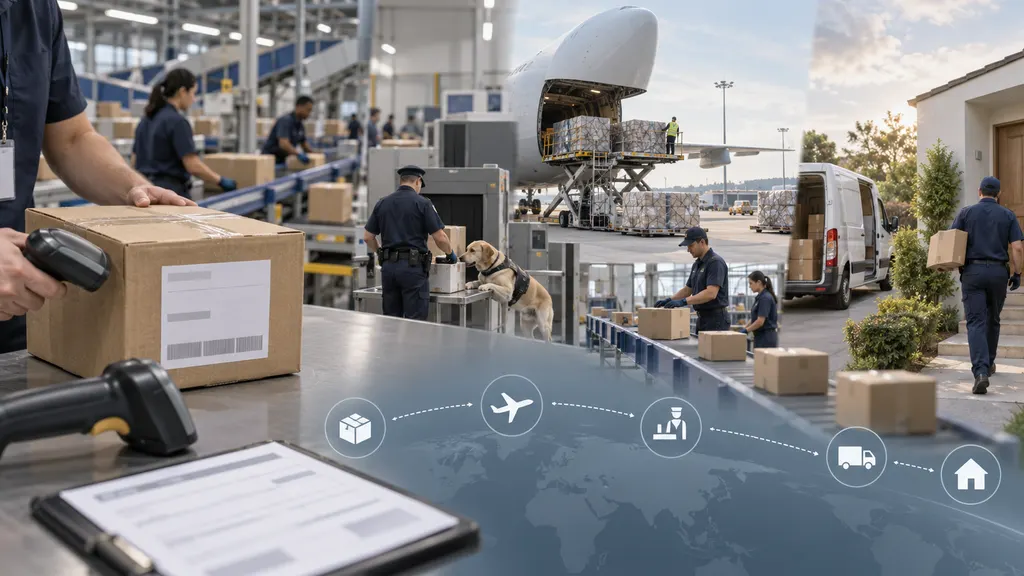
A domestic parcel often remains within one carrier network. An international order may pass through a seller, warehouse, freight consolidator, export carrier, customs authority, destination postal operator, and local delivery provider. Each participant may use different event names, reference numbers, scanning procedures, and data transmission schedules.
This creates several common visibility gaps:
- Pre-shipment gaps: A tracking number exists, but the carrier has not physically received or scanned the parcel.
- Carrier handoff gaps: The origin carrier stops publishing events before the destination carrier begins reporting them.
- Customs gaps: A parcel may remain in an import or export process without a new customer-facing scan.
- Identifier changes: A consolidator or last-mile carrier may assign another reference number.
- Status inconsistency: Similar events may appear as dispatched, departed, forwarded, line-haul departure, or handed to airline.
- Delayed data exchange: A physical movement may occur before the corresponding electronic event becomes visible.
Tracking is therefore not a continuous map of a parcel's location. Most systems display milestone events generated by labels, physical scans, operational systems, or electronic data exchanges. The absence of a recent event does not automatically mean the parcel is lost.
Start with reliable shipment data
Tracking quality depends on the information created before the parcel leaves the warehouse. If identifiers, carrier codes, addresses, or customs data are incomplete, later software cannot fully repair the problem.
Validate the tracking number and carrier
Store the tracking number as structured data rather than placing it only in a note, email, or shipping label image. Associate it with the order, shipment, selected carrier, service, ship date, origin, destination, and any known last-mile reference.
A carrier name should not be inferred solely from the visual appearance of a tracking number. Formats can overlap, while postal shipments may be handled by different designated operators at different stages. If a warehouse, marketplace, or fulfillment partner supplies the identifier, require it to provide the corresponding carrier or logistics provider whenever possible.
Separate order, shipment, and package records
One order is not always one shipment. A merchant may split an order because products are stored in different warehouses, subject to different transport restrictions, or available at different times. Each physical package should have its own tracking record.
A useful hierarchy is:
- Order: The customer's commercial purchase.
- Shipment: A fulfillment movement from a particular origin.
- Package: The physical parcel carrying its own tracking identifier.
This prevents a delivered package from incorrectly changing the entire order to delivered while another package is still moving.
Improve address and customs inputs
Address errors and incomplete customs information can produce delays that appear to be tracking failures. Validate required address fields for the destination, preserve local characters where systems support them, and collect a usable customer phone number or email when the carrier or destination process requires contact.
Customs data should accurately describe the goods and include the information required for the shipment and destination. Requirements vary by route, product, carrier, transport mode, and regulatory regime. Merchants should use current instructions from their carrier, broker, postal operator, and relevant customs authority rather than copying a generic declaration from another market.
Connect the complete carrier chain
Cross-border visibility improves when the tracking system follows both the origin network and the destination delivery network. The merchant should identify who owns each stage and how the associated events will enter its systems.
Record handoff relationships
For each shipping service, document the expected chain:
- Who collects the parcel?
- Who operates the international line haul?
- Who presents it for customs processing?
- Who performs destination sorting?
- Who completes last-mile delivery?
- Can the tracking identifier change during a handoff?
This route map does not need to predict every physical facility. Its purpose is to show which party should produce the next meaningful event. When a shipment stalls, support staff can investigate the correct operator instead of repeatedly contacting the origin carrier after responsibility has moved downstream.
Use multi-carrier tracking where it reduces fragmentation
Opening individual carrier websites can work for occasional personal shipments, but it does not scale well for merchants handling several services or destination countries. A multi-carrier tracking interface can consolidate events and reduce the need to determine manually which carrier currently holds a package.
17TRACK Tracking, for example, provides a consumer-facing interface for entering shipment identifiers and viewing tracking information. Businesses that need tracking data inside an order management system, support platform, or internal dashboard can also evaluate the documented capabilities of the 17TRACK Tracking API. Before implementation, confirm carrier compatibility, event availability, update behavior, technical requirements, and commercial terms for the routes actually used.
No aggregation service can create a physical scan that a carrier never performed or published. Its value is in collecting, associating, and presenting available carrier data more consistently.
Normalize events without hiding the original detail
Raw carrier messages are useful to logistics teams but often confusing to customers. A normalization layer translates different carrier descriptions into a smaller set of standard shipment stages.
A practical customer-facing status model might include:
- Shipment information received
- Accepted by carrier
- In transit
- Customs processing
- Arrived in destination country or region
- Out for delivery
- Delivered
- Delivery exception
- Available for pickup
- Returning to sender
Keep the original carrier event, timestamp, location, carrier, and source alongside the normalized status. Support and operations teams may need that detail to distinguish an export departure from a destination arrival or a customs release from a final-mile handoff.
Avoid translating every unfamiliar event into a delay. For example, an electronic manifest event is not necessarily proof that the parcel has been physically accepted. Likewise, customs processing is not itself evidence of a problem. Mark an event as an exception only when the carrier reports an exception or when a defined operational rule has been met.
Detect problems with route-specific exception rules
Customers generally do not need more notifications; they need earlier, more accurate notification when action is required. Exception management should focus attention on shipments that depart from the expected pattern.
Useful detection rules include:
- A label was created, but no carrier acceptance event appeared within the expected warehouse pickup window.
- No new event appeared after a normal handoff point.
- The carrier reported an address, payment, customs, damage, pickup, or delivery problem.
- A parcel was marked delivered, but the customer reported non-receipt.
- A shipment began returning to the sender.
- One package in a split order was delivered while another stopped updating.
Time thresholds should be specific to the service and route. A pause that is unusual for an express service may be normal for a postal economy service or during a customs process. Avoid applying one universal definition of a stalled shipment across every country and carrier.
| Observed condition | What it may mean | First check | Likely action owner |
|---|---|---|---|
| Label created with no acceptance scan | Electronic data exists, but physical receipt is not confirmed | Warehouse dispatch and carrier collection records | Merchant, warehouse, or pickup carrier |
| Events stop after export departure | The parcel may be in line haul, awaiting import processing, or pending a destination scan | Destination operator and expected route timing | Carrier, consolidator, broker, or destination operator |
| Customs exception reported | Information, documents, duties, or inspection may be involved | Exact carrier or broker message | Merchant, recipient, broker, carrier, or customs authority, depending on the request |
| Delivery attempt failed | Recipient action or address confirmation may be needed | Last-mile carrier instructions | Recipient and last-mile carrier |
Give customers useful information, not raw event volume
A good tracking experience explains what is known, what is not yet known, and whether the customer needs to act. The tracking page or message should show the package identifier, current normalized status, latest carrier event, event time, available location, carrier, and a route-appropriate delivery estimate when a reliable estimate is available.
Notifications should be triggered by meaningful changes. Typical examples include carrier acceptance, a material delay or exception, destination arrival, out-for-delivery status, failed delivery, pickup availability, delivery, and return initiation. Sending a message for every routine facility scan can obscure the updates customers actually need.
Use careful language around customs. A merchant can report that a carrier has shown the parcel in customs processing, but should not claim that customs has approved, rejected, or lost the shipment unless a reliable source explicitly states that outcome. If duties, documents, or recipient action may be required, direct the customer to the official carrier or broker instructions associated with that parcel.
Create a support playbook for tracking cases
Support agents need more than access to the same public tracking page the customer has already checked. Give them a concise route-specific workflow.
- Confirm the record: Verify the order, package, tracking identifier, carrier, service, destination, and dispatch date.
- Identify the latest physical milestone: Distinguish carrier acceptance and facility scans from electronic shipment information.
- Check the active operator: Determine whether the origin carrier, consolidator, customs broker, destination operator, or final-mile provider currently owns the next step.
- Check for required action: Look for address corrections, pickup instructions, documents, duties, or carrier contact requests.
- Apply the route rule: Compare the shipment with the merchant's expected event sequence and escalation threshold.
- Communicate the next step: Tell the customer what has happened, who is acting, what the customer must do, and when the merchant will review the case again.
- Record the resolution: Classify the cause so recurring problems can be traced to a route, carrier, warehouse, data field, or product category.
Do not promise a delivery date that the carrier or merchant cannot support. A specific follow-up commitment, such as reviewing the case after the next expected milestone, is more useful than an unsupported assurance that the parcel will arrive soon.
Measure tracking quality as an operational process
Delivery time alone does not show whether tracking is working well. Measure the completeness and usefulness of the event chain.
Relevant internal metrics include:
- Valid tracking rate: Packages with a usable tracking identifier divided by shipped packages.
- Acceptance visibility: Packages receiving a carrier acceptance event after fulfillment.
- Handoff visibility: Cross-border packages showing a destination-network event after leaving the origin network.
- Event latency: The time between an operational event and its appearance in the merchant's system, where both timestamps are available.
- Exception detection time: The interval between an actionable exception and the creation of an internal alert.
- Delivered-without-prior-visibility rate: Packages that appear delivered despite missing expected intermediate milestones.
- Tracking-related contact rate: Customer inquiries about shipment location relative to shipped orders.
Segment results by carrier, service, origin, destination, warehouse, and fulfillment partner. An overall average can conceal a specific route where identifiers are uploaded late or destination handoffs are consistently missing.
A practical implementation sequence
Merchants do not need to replace every logistics system at once. A staged approach usually produces clearer results:
- Audit recent cross-border shipments and identify where the event chain most often breaks.
- Define the order, shipment, package, carrier, and tracking fields that every system must preserve.
- Document the expected carrier chain for the highest-volume or highest-risk routes.
- Connect the required carrier sources directly or through a multi-carrier tracking service.
- Create a normalized status model while retaining raw carrier events.
- Set route-specific rules for missing acceptance, stalled handoffs, carrier exceptions, and returns.
- Design customer messages around action and uncertainty rather than excessive scan detail.
- Give support teams ownership rules and escalation paths.
- Review metrics by route and fix recurring data, carrier, or warehouse failures.
The strongest tracking operation is not the one that displays the largest number of events. It is the one that preserves reliable identifiers, connects each responsible operator, detects meaningful exceptions, and gives customers an accurate next step.
FAQ
Why does an international tracking number show no updates?
The label may have been created before the carrier received the parcel, the shipment may be moving between scan points, or a handoff event may not yet have been published. First confirm physical carrier acceptance. Then check whether a destination carrier or second tracking reference has been assigned.
Can customs processing be tracked in real time?
Usually not as a continuous process. Customer-facing tracking may show selected milestones or exceptions supplied by a carrier, postal operator, or broker. The level of detail varies. A period without updates during customs processing does not by itself establish that the shipment has been lost or rejected.
Should merchants show raw carrier statuses to customers?
Raw events should remain available for investigation, but customer-facing pages benefit from normalized stages and plain-language explanations. Preserve the original message, carrier, location, and timestamp so support teams can inspect the source detail.
How can a merchant track orders handled by several carriers?
Maintain a package-level record that can store the original identifier, carrier, later handoff identifiers, and destination operator. Carrier connections or a multi-carrier tracking service can then bring the available events into one workflow. Compatibility should be verified against the merchant's actual carriers and routes.
When should a shipment be treated as lost?
There is no universal elapsed-time rule. Use the carrier's investigation and claim procedures, the selected service, the latest physical event, the route, and any applicable merchant policy. A lack of recent scans should trigger investigation when it exceeds the expected route pattern, but it should not automatically be presented as confirmed loss.
What is the difference between shipment tracking and GPS tracking?
Most parcel tracking is milestone-based. It reports events generated when shipment data is created, a package is scanned, or an operational system sends an update. It generally does not provide a continuous live GPS location for an individual parcel.