EPS Tracking
Please enter the EPS tracking number to check the latest shipping status.
About EPS
EPS is the public-facing brand used by Shenzhen Yida Yousong E-commerce Co., Ltd. for cross-border logistics and warehousing services. The official website describes international air, ocean, express, small-parcel, FBA, overseas-warehouse, postal-parcel and dedicated-line solutions, with operating and information centres in Shenzhen, Hong Kong, Xiamen, Suzhou and Zhengzhou.
| Field | Verified information |
|---|---|
| Official name | Shenzhen Yida Yousong E-commerce Co., Ltd. |
| Brand | EPS |
| Official website | EPS official website |
| Carrier type | Cross-border logistics provider, freight-forwarding and warehousing service provider. |
| Primary region | China-origin international logistics serving European, American and global e-commerce routes. |
| Tracking page | EPS parcel tracking |
| Founded | The official About page states that the business began in 2015. |
| Headquarters | The official pages identify Shenzhen as the company location and list additional operating centres. |
Carrier Entity Relationships
| Entity | Relationship to EPS |
|---|---|
| Shenzhen Yida Yousong E-commerce Co., Ltd. | The company identified on the official website operates the EPS logistics platform. |
| Dedicated lines and postal parcels | These are logistics products offered through EPS for cross-border shipments. |
| FBA and overseas warehouses | EPS describes these as cross-border fulfilment and warehousing solutions rather than as a single postal network. |
| Origin and destination partners | A destination postal operator, courier or customs intermediary may perform later transport stages; the official pages do not identify a universal partner for every EPS product. |
| 17TRACK | 17TRACK is an independent tracking platform that may aggregate available EPS and partner events; it does not operate EPS transport. |
Quick Answer
Enter the EPS parcel number on the official EPS tracking page or in 17TRACK. Use the shipment or parcel number from the seller’s dispatch message, not the marketplace order number. If no result appears, first check spelling, remove spaces or punctuation, confirm that the seller has handed over the parcel, and try again after the first operational scan.
How to Track EPS Packages
| Route | Steps |
|---|---|
| Official EPS route | Open the EPS tracking page, choose the relevant special-line or parcel option when available, enter the shipment number, and review the returned events. |
| 17TRACK route | Open 17TRACK, paste the parcel number, allow carrier auto-detection or select EPS when available, then compare the latest event with the seller’s dispatch information. |
| Number source | Look in the seller’s shipping email, order fulfilment page, EPS label, warehouse dispatch record or shipping receipt. |
| Wrong identifier | An order number, merchant reference, freight quotation number or delivery notice is not necessarily the EPS tracking number. |
| No number | Ask the seller or shipper for the parcel identifier; the recipient generally cannot create a replacement tracking number. |
Tracking Number Formats
EPS’s public pages provide a tracking function but do not publish one universal number grammar. A number visible in EPS may be issued by EPS, an origin logistics partner, a postal operator or a destination last-mile carrier. Use the official tracker or 17TRACK auto-detection instead of assigning a service solely from a prefix.
Tracking Number Format
| Identifier family | Normalized pattern or example |
|---|---|
| EPS shipment number | Use the exact alphanumeric identifier shown by the shipper; a public universal length or prefix rule is not stated. |
| Partner-issued number | A postal, express or last-mile partner may issue the identifier used after handoff; the number can remain unchanged or be supplemented by another number. |
| Merchant order/reference | An order or reference such as ORDER-#### identifies a commercial transaction and may not return transport scans. |
| Postal S10-style number | A format resembling two letters, nine digits and a two-letter country code may be issued by an origin postal operator; resemblance does not prove EPS issued it. |
| Label or warehouse ID | A warehouse or label identifier can support internal processing without being publicly trackable throughout the journey. |
Tracking Statuses and Meanings
| Status | Meaning and next action |
|---|---|
| Label created / awaiting shipment | Shipment data exists but the physical parcel may not yet be in EPS custody. The shipper should confirm handover. |
| Accepted or received | A receiving scan indicates that the responsible logistics facility has recorded the parcel. Sorting or line-haul movement normally follows. |
| In transit | The parcel is moving between logistics facilities or transport legs. A gap between scans can occur during line-haul. |
| Customs or clearance | Documents, inspection, tax or import processing may be underway. Arrival at customs is not proof of release. |
| Handover to partner | A destination postal or courier partner may now control the next physical movement. The buyer should check both identifiers if supplied. |
| Out for delivery | The destination delivery operator has assigned the parcel to a delivery route. Keep the address and phone available. |
| Delivered | A delivery scan was recorded. If the parcel is missing, check the proof-of-delivery location, household, reception desk and local carrier before contacting the seller. |
| Exception or return | An address, customs, damage, refusal or delivery problem requires review. The shipper should contact EPS or the relevant partner promptly. |
Services and Delivery Times
The EPS website presents service categories rather than a single published transit promise. Delivery depends on origin, destination, selected channel, customs, handoff and final-mile capacity. The official pages do not publish a universal country-by-country delivery calendar.
Service Comparison
| Service | Best fit |
|---|---|
| Shipping lines | Cross-border freight requiring route selection and logistics coordination. |
| American special line | China-origin shipments routed toward the United States. |
| European special line | China-origin shipments routed toward European destinations. |
| FBA head-haul | E-commerce inventory moving toward fulfilment-by-marketplace warehouses. |
| Hong Kong transport | Shipments using Hong Kong-related transport arrangements. |
| Postal parcels | Small-parcel delivery using postal or postal-connected channels. |
Delivery Time
| Service | Published timing position |
|---|---|
| All EPS international categories | Timing varies by origin, destination, route, customs and selected service; the official public pages do not state a universal delivery standard or money-back guarantee. |
| Tracking visibility | Events depend on scans from EPS and participating partners; an ETA shown by a tracking platform is an estimate, not a guarantee. |
Destination Country Delivery Times
EPS’s public service pages do not provide verified destination-specific delivery ranges, average days or a fixed last-mile partner for each country. Country estimates should therefore be obtained from the shipment quotation or the latest EPS service confirmation rather than copied from a generic postal table.
Common Tracking Problems and Solutions
Problem & Solution
| Problem or status | Immediate solution |
|---|---|
| Invalid number | Copy the number again, remove accidental spaces, and ask the seller whether the identifier is an order reference rather than a parcel number. |
| No tracking events | Confirm that the parcel has been physically handed over; data entry can precede the first operational scan. |
| No update during transit | Allow for line-haul, customs and partner scan gaps, then ask the shipper to request an investigation through EPS. |
| Customs delay | Check whether duties, identity information, invoice data or importer instructions are required in the destination country. |
| Delivery exception | Review the address and contact details and ask the seller or destination carrier whether redelivery or collection is possible. |
| Delivered but missing | Check the delivery photo or location, household members, neighbours, reception desk and local delivery office; then contact the seller for a formal inquiry. |
| Returned to sender | The shipper should identify the return reason and arrange a new dispatch or refund with the merchant. |
| Lost or damaged | The shipper should preserve packaging, invoices and photographs and ask EPS about the applicable investigation or claim route. |
International Shipping and Handoffs
| Stage | What the customer should understand |
|---|---|
| Order and label | The shipper or EPS creates shipment data. A label event does not by itself prove physical acceptance. |
| Origin warehouse | EPS or an origin facility receives, consolidates and sorts the parcel for the selected route. |
| Export processing | Export documentation, security and customs procedures may occur before line-haul departure. |
| International transport | The parcel moves through the selected air, ocean, postal or dedicated-line network; scan frequency can decrease during this stage. |
| Import customs | The destination authority assesses import requirements. Arrival at a gateway does not equal customs release. |
| Partner handoff | A destination postal or courier operator may perform final-mile delivery. The original number may continue, or a second local number may appear. |
| Final delivery | The local delivery operator controls delivery attempts, collection, proof of delivery and local exceptions. |
Taxes, duties, prohibited goods and import documents are controlled by the destination country and the selected service. The shipper should provide accurate commercial descriptions and retain invoices and dispatch records.
Customer Service
| Channel | Verified contact and best use |
|---|---|
| Tracking page | EPS parcel tracking; use for available shipment events. |
| service@epsglobe.com; use for service questions and shipment escalation. | |
| 394383128 is displayed on the official website as a contact channel. | |
| Website support | The official website provides login, registration, calculation, tracking and contact functions; public hours and language-specific support hours are not stated on the cited pages. |
When escalating, prepare the tracking number, order reference, ship date, origin and destination, service or route, latest scan, item description, declared value, invoice and damage photographs. The shipper should normally lead loss, damage and transport investigations because the shipper purchased the logistics service.
FAQ
Enter the parcel number on the official EPS tracking page or use 17TRACK, then compare the latest event with the seller’s dispatch message.
Look in the shipping confirmation, seller order page, EPS label, warehouse record or shipping receipt.
EPS does not publish one universal public format, so use the exact identifier supplied by the shipper rather than relying on a prefix.
The number may be mistyped, may be an order reference, or may have been created before the first physical scan; confirm handover with the seller.
Line-haul, customs and partner handoffs can create visibility gaps; ask the shipper to escalate if the gap becomes inconsistent with the quoted service.
The public EPS pages describe service categories but do not publish one universal delivery standard for every country and route.
Check the address and local delivery instructions, then ask the seller or destination carrier whether another attempt or collection is possible.
Check the proof-of-delivery location, household members, neighbours, reception desk and local delivery office before requesting seller assistance.
The shipper should contact EPS because the shipper holds the transport transaction; retain packaging, invoices and photographs.
Use the official tracking page or email service@epsglobe.com and include the parcel number and shipment details.
No. Label or electronic data creation can occur before physical acceptance, so look for a receiving or operational scan.
It may work when EPS or a connected platform has access to that partner event, but the ability to display a number does not prove that EPS issued it.
No. Customs arrival and customs release are different events; duties, documents or inspection may still be required.
The original number may remain visible, but a destination partner can also provide a local identifier; ask the seller for linked numbers.
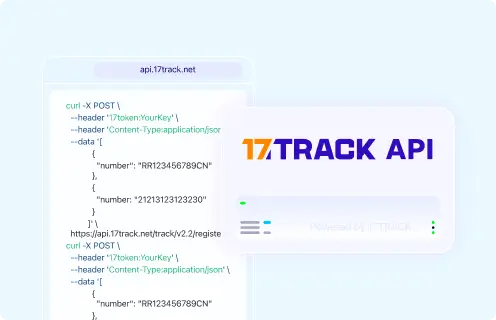
A current public EPS tracking API could not be established from the cited public pages, so businesses should request integration information directly from EPS or use a documented multi-carrier API.
EPS provides its own logistics tracking page, while 17TRACK independently aggregates available events from multiple carriers and partners.
Tracking API
// EPS current public official tracking API: no public endpoint confirmed.
// 17TRACK API: use the current documentation and a valid 17token.
// The EPS carrier code must be confirmed from current 17TRACK carrier data.
POST https://api.17track.net/track/v2.4/register
17token: YourKey
Content-Type: application/json

[
  {
    "number": "TRACKING_NUMBER",
    "carrier": "CARRIER_CODE"
  }
]
Sources & References
- EPS official website. Shenzhen Yida Yousong E-commerce Co., Ltd.
- About EPS. Shenzhen Yida Yousong E-commerce Co., Ltd.
- EPS parcel tracking. Shenzhen Yida Yousong E-commerce Co., Ltd.
- 17TRACK API documentation. 17TRACK.
17TRACK is an independent tracking platform and is not affiliated with EPS.
Track your package
Global express parcel tracking service