Logistics Network
Definition
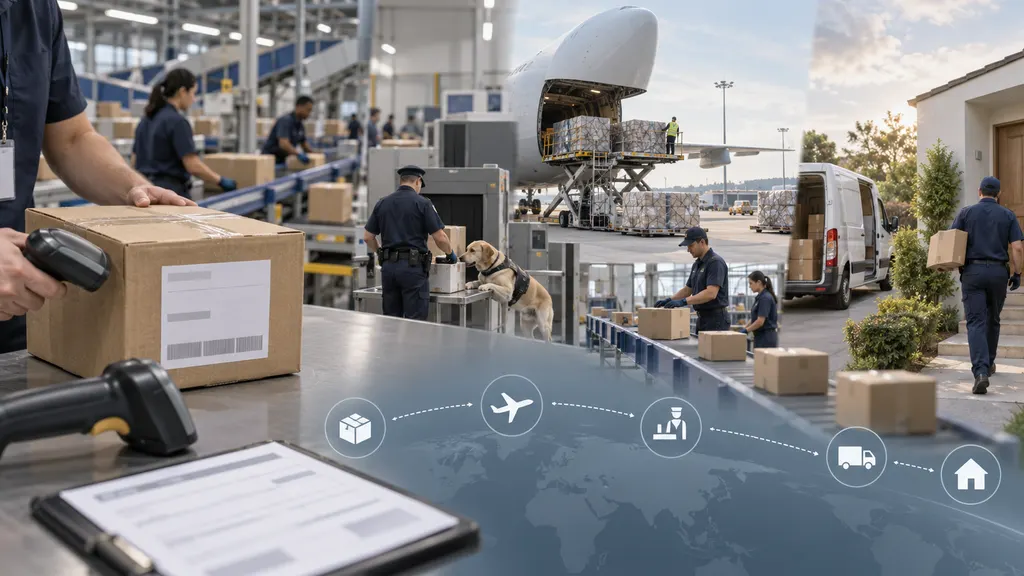
A logistics network is the connected system of facilities, inventory locations, transportation routes, information flows, and service partners used to move and manage goods from suppliers to customers. In logistics and supply chain management, the term describes how activities such as procurement, storage, order fulfillment, transportation, delivery, and returns are organized across multiple locations.
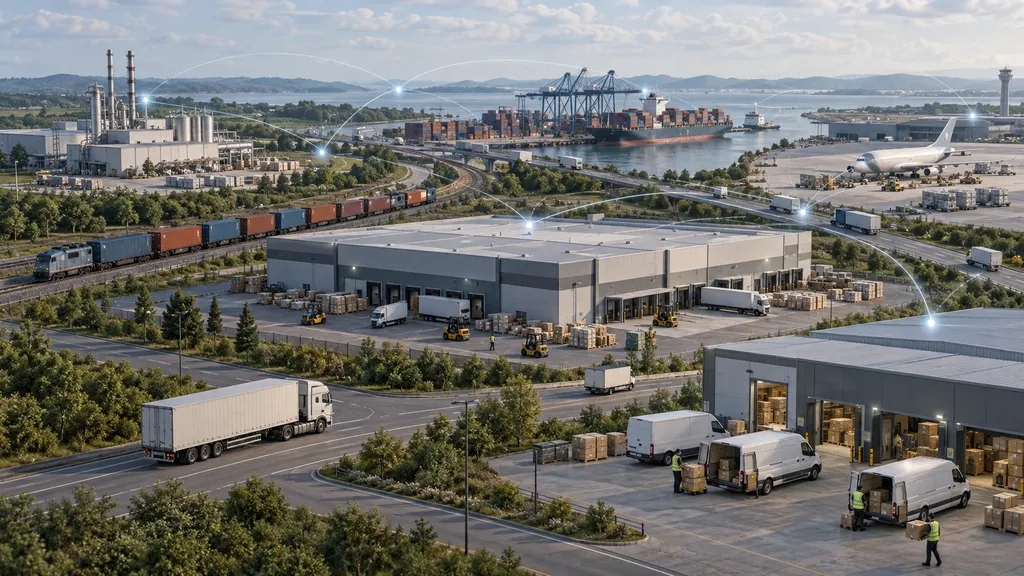
A logistics network may serve domestic or international operations. It can include suppliers, factories, distribution centers, fulfillment centers, warehouses, ports, airports, carriers, customs intermediaries, retail locations, and final delivery points. The network is supported by information systems that coordinate orders, inventory, transport movements, tracking events, and delivery instructions.
In Logistics
A logistics network is the physical and operational structure through which goods flow. Its position in the supply chain depends on the organization being examined. For a manufacturer, the network may begin with suppliers and production sites. For an ecommerce retailer, it may include inventory storage, order processing, parcel sortation, carrier handover, last-mile delivery, and returns processing.
The network does not consist only of roads, warehouses, or transport vehicles. It also includes decisions about where inventory is held, which facility fulfills an order, which carrier transports a shipment, and how information is exchanged between participants. These decisions affect service availability, delivery options, inventory positioning, and exposure to transport or customs delays.
Core Components
| Component | Role in the network | Example |
|---|---|---|
| Supply source | Provides raw materials, components, or finished goods. | A supplier ships components to a manufacturing site. |
| Production or processing site | Manufactures, assembles, packs, or otherwise prepares goods. | A factory produces finished consumer goods. |
| Warehouse or fulfillment center | Stores inventory and may pick, pack, and dispatch orders. | An ecommerce fulfillment center prepares a customer order. |
| Transport link | Moves goods between nodes in the network. | A truck, vessel, aircraft, or rail service carries a shipment. |
| Distribution or delivery point | Moves goods closer to or directly to the recipient. | A local delivery depot sends a parcel to a consignee. |
| Information system | Records and communicates orders, inventory, shipment, and delivery data. | An order management or warehouse management system exchanges status information with a carrier. |
| Returns channel | Receives, inspects, repairs, resells, recycles, or disposes of returned goods. | A return is sent to a designated processing facility. |
How a Logistics Network Works
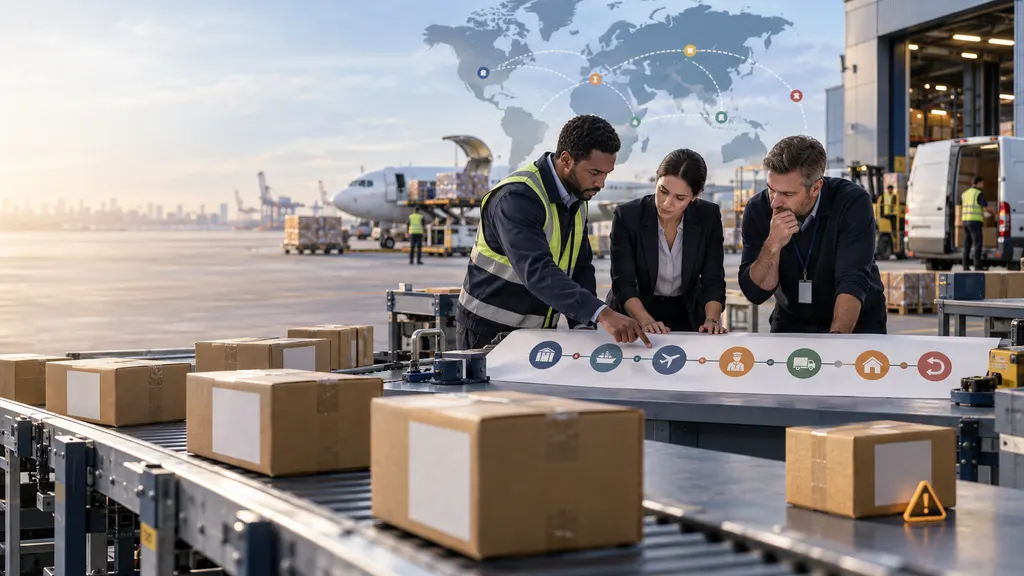
- Planning: The organization determines where goods should be sourced, stored, processed, and delivered. Network planning may consider demand, inventory, transportation, facility capacity, service requirements, and applicable trade or customs arrangements.
- Inventory positioning: Goods are placed at selected nodes so that orders can be fulfilled. Inventory may be held at a supplier, factory, regional distribution center, fulfillment center, store, or another authorized location.
- Order allocation: When an order is received, an order management or fulfillment process assigns the order to an appropriate inventory location and fulfillment route.
- Execution: The selected facility picks and packs the goods, and a carrier or transport provider moves them through one or more network links.
- Visibility and control: Information systems record events such as order confirmation, dispatch, arrival at a hub, customs processing, delivery attempt, and delivery completion. The exact events depend on the service and the systems involved.
- Exception and returns handling: Delays, address problems, damage, failed delivery, customs issues, and returns are directed through procedures designed for the relevant network node or service partner.
Logistics Networks in Ecommerce
In ecommerce, a logistics network connects digital orders with physical inventory and delivery services. A customer may place an order through an online storefront while the goods are stored in a fulfillment center operated by the retailer or a third-party logistics provider. The order is then allocated, packed, handed to a carrier, transported, and delivered to the specified address or collection point.
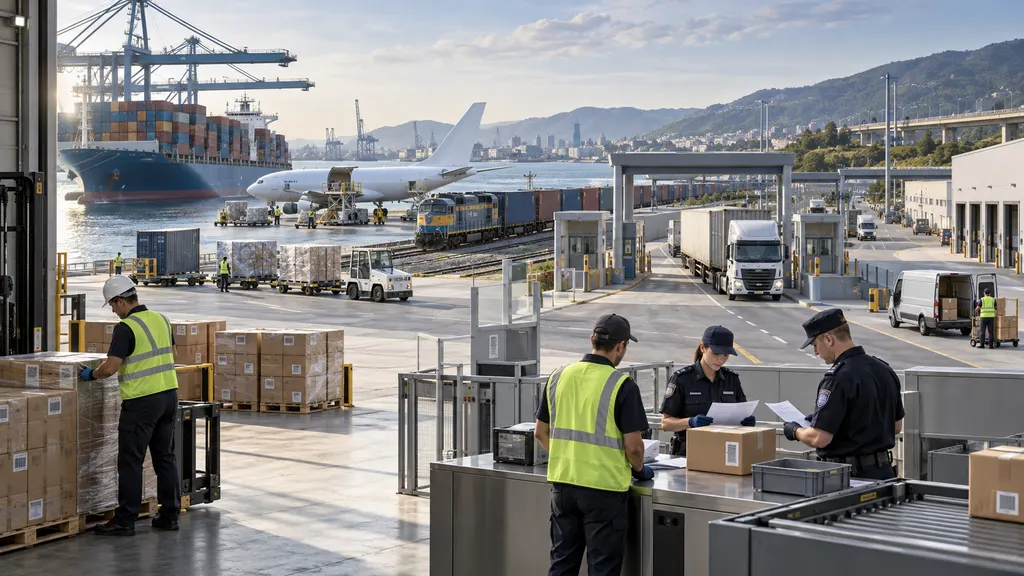
In cross-border ecommerce, the network may also include export procedures, international transport, import customs clearance, duties or taxes where applicable, local delivery partners, and a cross-border returns route. The commercial order, the physical shipment, and the customs declaration are related but are not necessarily the same record or process.
Illustrative ecommerce flow
| Stage | Possible network activity |
|---|---|
| Order capture | An online store records the customer order and delivery details. |
| Fulfillment assignment | Available inventory is assigned to a warehouse or fulfillment center. |
| Dispatch | The goods are picked, packed, labeled, and handed to a carrier. |
| Line-haul or international movement | The shipment moves between distribution nodes, hubs, ports, airports, or countries. |
| Customs and local delivery | Where relevant, the shipment undergoes customs procedures and is transferred to a delivery network. |
| Delivery or return | The goods reach the recipient, or they enter a return process after a failed delivery or customer return request. |
Common Descriptive Network Types
There is no single classification that applies to every logistics network. The following descriptions are practical ways to distinguish networks by their physical arrangement or operating model; they should not be treated as a universal formal classification.
| Description | Meaning | Typical use |
|---|---|---|
| Direct network | Goods move from a source to a destination with limited intermediate handling. | A supplier ships directly to a business customer. |
| Hub-and-spoke network | Several locations connect through central hubs that consolidate or redistribute flows. | Parcel and freight operations may route shipments through regional hubs. |
| Multi-echelon network | Inventory or goods move through multiple levels of facilities. | A product may move from a central distribution center to a regional center and then to a local facility. |
| Omnichannel network | Inventory and fulfillment resources support more than one sales or delivery channel. | Orders may be fulfilled from warehouses, stores, or dedicated ecommerce facilities. |
| Reverse logistics network | Goods move from customers or downstream locations back toward a seller, processor, or other recovery point. | Returned products are inspected, repaired, resold, recycled, or disposed of. |
Logistics Network and Related Terms
| Term | Difference |
|---|---|
| Supply chain | A broader system covering the organizations, activities, resources, information, and relationships involved in sourcing, producing, distributing, using, and sometimes returning goods. A logistics network is one operational part of that broader system. |
| Distribution network | Usually refers to the facilities and transport links used to distribute products toward customers or downstream locations. It can be treated as a part of, or a closely related concept to, a logistics network. |
| Transportation network | Focuses primarily on routes, modes, hubs, vehicles, and services used to move goods. A logistics network also includes facilities, inventory, fulfillment, information, and returns. |
| Fulfillment network | Focuses on the facilities and processes used to receive, store, pick, pack, and dispatch customer orders. It is commonly used in ecommerce and may form part of a wider logistics network. |
| Logistics provider | An organization that performs one or more logistics activities, such as warehousing, transportation, fulfillment, brokerage, or delivery. It is a participant in a network rather than the network itself. |
Common Misunderstandings
- A logistics network is not only a transport route. Routes are important, but the network also includes facilities, inventory locations, information flows, and operating relationships.
- A logistics network is not the same as a supply chain. Supply chain is generally the broader term, while a logistics network describes the connected operational nodes and links used to move and manage goods.
- A logistics network is not limited to one company. It may include suppliers, carriers, warehouses, customs intermediaries, delivery partners, technology providers, and return processors.
- A logistics network does not guarantee a particular delivery result. Actual delivery performance depends on the selected service, inventory availability, operating conditions, information quality, and other factors.
QA
What is a logistics network in ecommerce?
It is the connected set of fulfillment facilities, inventory locations, transport links, carriers, information systems, and return processes used to fulfill ecommerce orders.
What is the difference between a logistics network and a supply chain?
A supply chain is generally broader and includes the organizations and activities involved in sourcing, production, distribution, and related flows. A logistics network focuses on the connected facilities, routes, systems, and operating processes used to manage and move goods.
Can a logistics network include international shipping?
Yes. An international logistics network may include cross-border transportation, export and import processes, customs intermediaries, overseas facilities, local carriers, and delivery or returns operations.
Sources
- Council of Supply Chain Management Professionals, Glossary of Terms — reference for supply chain and logistics terminology.
- Encyclopaedia Britannica, Supply Chain Management — background for the relationship between logistics activities and the broader supply chain.
- World Customs Organization, Customs in the 21st Century — background for the role of customs processes in international goods movements.