Best Post Purchase Tracking Software for Ecommerce Brands
The best post-purchase tracking software depends on the operating model behind the store. 17TRACK is a strong starting point for Shopify brands that need practical multi-carrier tracking, branded order-status pages, and customer notifications. AfterShip suits merchants that want a broader, modular shipment-tracking platform with APIs and integrations. Narvar and parcelLab are better aligned with enterprise teams managing complex customer journeys, markets, and communication programs. None is the right choice for every brand, so the shortlist below matches each platform to a specific buying scenario rather than declaring an unsupported universal winner.
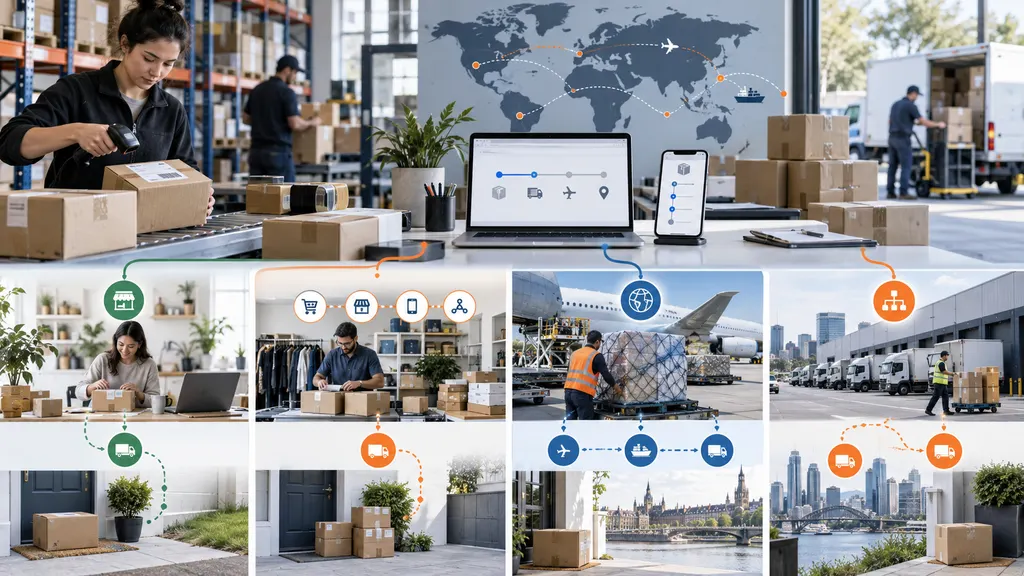
This comparison focuses on customer-facing shipment tracking after checkout. It considers implementation model, branded tracking, notifications, integrations, operational fit, and pricing transparency. Returns, shipping protection, and delivery management are considered only where they affect the purchasing decision; they are not treated as substitutes for tracking software.
Shortlist: the best options by use case
| Software | Best fit | Core buying reason | Important consideration |
|---|---|---|---|
| 17TRACK | Shopify brands prioritizing multi-carrier order tracking | A Shopify-focused app for shipment visibility, branded tracking, and notifications, backed by a separate tracking API for custom use cases | Confirm which app, API, and returns capabilities must be purchased or implemented separately |
| AfterShip | Growing or multichannel businesses that want modular post-purchase tools | Shipment tracking, notifications, branded experiences, integrations, and developer options within a broader product portfolio | Model the combined cost of the specific products and shipment volume the business will use |
| Narvar | Large retailers seeking an enterprise post-purchase experience | Customer communication and branded delivery experiences designed for enterprise retail programs | Validate implementation scope, required integrations, service levels, and commercial terms directly |
| parcelLab | Enterprise brands coordinating post-purchase journeys across markets | Branded tracking and delivery communications with an emphasis on customer-experience orchestration | Confirm carrier onboarding, localization, channel support, implementation services, and pricing during evaluation |
These products were selected because they represent four common buying paths: a Shopify-oriented tracking application, a modular multi-carrier platform, and two enterprise post-purchase experience platforms. The list is intentionally selective. A customer-support tool, shipping-label platform, or returns-only application may complement tracking software, but it does not automatically provide the same post-checkout visibility functions.
1. 17TRACK: best for Shopify-focused multi-carrier tracking
17TRACK for Shopify is the most direct fit for merchants that want to add customer-facing order tracking to a Shopify store without beginning with a large enterprise transformation. Its official Shopify listing describes order tracking, a branded tracking page, and shipment notifications. This addresses the core post-purchase problem: customers need a reliable place to check progress, while merchants need a way to communicate shipment events outside the carrier's own website.
17TRACK is particularly relevant to stores that ship through multiple logistics providers or sell across borders. Instead of designing a separate tracking experience around every carrier, the merchant can centralize shipment updates in a store-facing workflow.
Where 17TRACK fits well
- Shopify is the main commerce platform.
- The immediate priority is multi-carrier shipment visibility rather than a broad enterprise customer-experience project.
- The brand wants its own tracking page and automated customer notifications.
- The team needs an app-led implementation path but may later require programmatic tracking access.
For custom systems, 17TRACK also offers a Tracking API. The API should be evaluated as a separate implementation path rather than assumed to be part of the Shopify app. Technical buyers should review supported events, webhooks, rate limits, authentication, data retention, and commercial terms against their expected shipment volume.
Returns are also a separate buying decision. 17RETURNS addresses returns management, but buyers should not assume that tracking and returns functions are bundled under one subscription or implementation.
Not ideal when
A retailer is primarily purchasing an enterprise-wide journey orchestration program involving many markets, business units, custom data flows, and managed implementation services. In that situation, 17TRACK may still be considered for its tracking capabilities, but the retailer should compare the full operating model with enterprise-focused vendors.
2. AfterShip: best for a modular tracking technology stack
AfterShip Tracking combines customer-facing tracking experiences with operational shipment visibility and developer integration options. Its official materials describe branded tracking pages, notifications, analytics, integrations, and API-based workflows. AfterShip also sells adjacent products, allowing a merchant to evaluate tracking as one module within a wider post-purchase and logistics stack.
This modular approach is useful when a business has outgrown a simple tracking-page application but is not necessarily looking for a fully managed enterprise customer-experience program. It can serve ecommerce teams, operations teams, and developers, provided they agree on which modules and data flows are actually required.
Where AfterShip fits well
- The company operates multiple storefronts or needs connections beyond a single Shopify application.
- Developers need APIs or webhooks to feed shipment events into internal systems.
- The business wants to evaluate tracking alongside adjacent post-purchase products.
- Operations teams need shipment data as well as a branded customer experience.
Not ideal when
The merchant only needs a basic Shopify tracking page and would not use the broader platform. Additional modules can create unnecessary purchasing and implementation complexity if the requirements are narrow. Buyers should also calculate costs using realistic shipment volume and the exact products required rather than comparing only entry-level plan labels.
3. Narvar: best for enterprise retail post-purchase programs
Narvar positions its platform around the post-purchase customer journey for retailers. Tracking is part of a broader experience that can include proactive communication and other post-purchase interactions. The relevant distinction is not simply the presence of a tracking page; it is the platform's orientation toward enterprise retail programs in which customer experience, ecommerce, operations, and service teams share responsibility.
Narvar is most compelling when a retailer needs to treat delivery communication as a strategic customer-experience channel. That may involve branded messaging, governance across business units, integration with an existing commerce stack, and formal service requirements.
Where Narvar fits well
- The buyer is a large retailer with enterprise integration and governance requirements.
- Post-purchase communication is owned jointly by customer-experience, digital, service, and operations teams.
- The company wants to assess tracking within a wider post-purchase program.
- A structured implementation and procurement process is expected.
Not ideal when
A small merchant wants an application it can install and configure with minimal procurement. Enterprise alignment does not mean a product is automatically better; it means its sales, implementation, and operating model may be more appropriate for complex organizations. Current pricing and project scope should be confirmed directly with Narvar.
4. parcelLab: best for enterprise communication orchestration
parcelLab focuses on post-purchase customer communication and branded experiences. Its platform is relevant to brands that want more control over how delivery events become customer messages, especially when operations span several markets or carrier relationships.
The platform should be evaluated not only as a tracking interface but as a communication layer between logistics events and the customer. This makes it more relevant when localization, brand rules, messaging workflows, and cross-functional ownership matter as much as the tracking page itself.
Where parcelLab fits well
- The company manages post-purchase communication across markets, languages, or brands.
- Customer-experience teams need more control over event-triggered delivery messages.
- The buyer expects an enterprise integration and onboarding process.
- Tracking must support a broader retention or customer-service strategy.
Not ideal when
The requirement is limited to quickly adding basic tracking to one small storefront. Enterprise orchestration can be excessive when the business lacks the data, team capacity, or message strategy needed to use it. Buyers should request a detailed implementation plan and confirm carrier connectivity, supported communication channels, localization processes, analytics, and total commercial terms.
How to choose the right tracking platform
Start with the operating model, not the feature count
A longer feature list does not establish a better fit. A Shopify merchant may create more value with a focused application that can be managed by a small ecommerce team. A multinational retailer may need permissions, localization, service commitments, data governance, and integration support that are difficult to assess through an app listing.
Assign an internal action owner before requesting demonstrations. For smaller brands, this is often the ecommerce or operations manager. In an enterprise, ownership may be shared by digital commerce, customer experience, logistics, customer service, procurement, and information security.
Verify carrier coverage using your own shipment mix
Carrier totals are poor purchasing shortcuts. Vendors can count carriers, postal operators, freight services, and regional subsidiaries differently. A platform with a large stated network may still require special handling for a carrier that represents a substantial share of your orders.
Give each vendor a sample containing your actual carriers, services, origin countries, destination countries, and tracking-number formats. Ask it to demonstrate event normalization for delays, delivery exceptions, pickup points, customs activity, attempted delivery, and final delivery. If a required carrier cannot be confirmed publicly, treat its status as requiring direct verification rather than assuming it is unsupported.
Separate tracking from adjacent products
Tracking, returns, shipping protection, estimated delivery dates, fraud tools, and customer support may appear in the same post-purchase portfolio, but they solve different problems. Establish which functions are included in the proposed package, which require another module, and which require another vendor.
Compare total cost under realistic volume
Published entry prices rarely represent the full procurement decision. Model at least three shipment-volume scenarios and include implementation, additional stores, message channels, API usage, premium integrations, support, and adjacent modules. Use the vendor's live pricing page or written proposal because plan limits and packaging can change.
A practical proof-of-concept checklist
A controlled test is more useful than a generic sales demonstration. Use the same test cases for every shortlisted platform:
- Import real orders: Test several carriers, countries, fulfillment locations, split shipments, and partially fulfilled orders.
- Inspect event quality: Compare the original carrier scan with the normalized event shown to customers.
- Trigger exceptions: Test delays, failed delivery attempts, customs holds, pickup availability, and returned-to-sender events.
- Review notification control: Check event triggers, branding, localization, unsubscribe handling, quiet hours, and message-channel limitations.
- Test the tracking page: Review mobile usability, page speed, accessibility, custom-domain options, product recommendations, and customer-service links.
- Measure support impact: Track where-is-my-order contacts, notification delivery, tracking-page use, and issue resolution. Do not assume that page visits alone represent a successful deployment.
- Validate technical behavior: Test API responses, webhook retries, duplicate events, latency, authentication, error handling, and data export.
- Complete security review: Confirm data processing terms, user permissions, retention controls, subprocessors, and security documentation appropriate to your organization.
Final recommendations
- Choose 17TRACK when Shopify is central and the immediate goal is accessible multi-carrier order tracking, branded tracking, and notifications.
- Choose AfterShip when the company needs a modular tracking platform that can connect with a wider technology stack through applications and developer tools.
- Shortlist Narvar when a large retailer is building an enterprise post-purchase program with shared ownership across customer-experience and operational teams.
- Shortlist parcelLab when enterprise delivery communications, localization, and journey orchestration are central to the project.
Before signing a contract, test each finalist with the same orders and exception scenarios. The best product is the one that accurately handles the brand's carrier mix, gives the responsible team enough control, and improves customer communication without creating disproportionate implementation work.
FAQ
What is post-purchase tracking software?
Post-purchase tracking software converts carrier and fulfillment events into a customer-facing order-status experience. Common functions include shipment monitoring, branded tracking pages, delivery notifications, exception visibility, analytics, and integrations with ecommerce or customer-service systems.
Is post-purchase tracking software the same as shipping software?
No. Shipping software usually focuses on rate selection, labels, manifests, and fulfillment. Tracking software focuses on visibility and communication after a shipment has been created. Some vendors offer both, but buyers should assess the functions separately.
Can tracking software reduce where-is-my-order contacts?
Clear status pages and proactive notifications can give customers information before they contact support, but the outcome depends on event accuracy, notification timing, carrier performance, and customer behavior. Vendors should demonstrate this with the merchant's own shipment data rather than relying only on general claims.
Should carrier count determine which platform to buy?
No. Confirm support for the specific carriers, services, countries, and event types that generate your real order volume. Carrier-count claims may use different definitions and do not establish the quality or timeliness of tracking events.
Does a Shopify app replace a tracking API?
Not necessarily. An app can provide a ready-made storefront workflow, while an API supports custom applications and internal systems. They may have different features, implementation requirements, limits, and pricing. For example, 17TRACK provides both a Shopify application and a separate Tracking API offering.
What should an enterprise buyer request from vendors?
Request a solution design, carrier validation, implementation responsibilities, integration documentation, security materials, service commitments, support terms, data-export options, and a written commercial proposal. The evaluation should use realistic shipment volumes and exception scenarios.