Track My International Parcel: What each Shipping Status Means
To track an international parcel, enter the tracking number on the carrier’s official website or use a multi-carrier tracker such as 17TRACK. The status usually tells you which stage of the journey the parcel has reached, but it does not always provide a precise delivery date. International shipments can pass through several postal operators, customs authorities, airports, and sorting facilities, so the same event may appear under different wording.
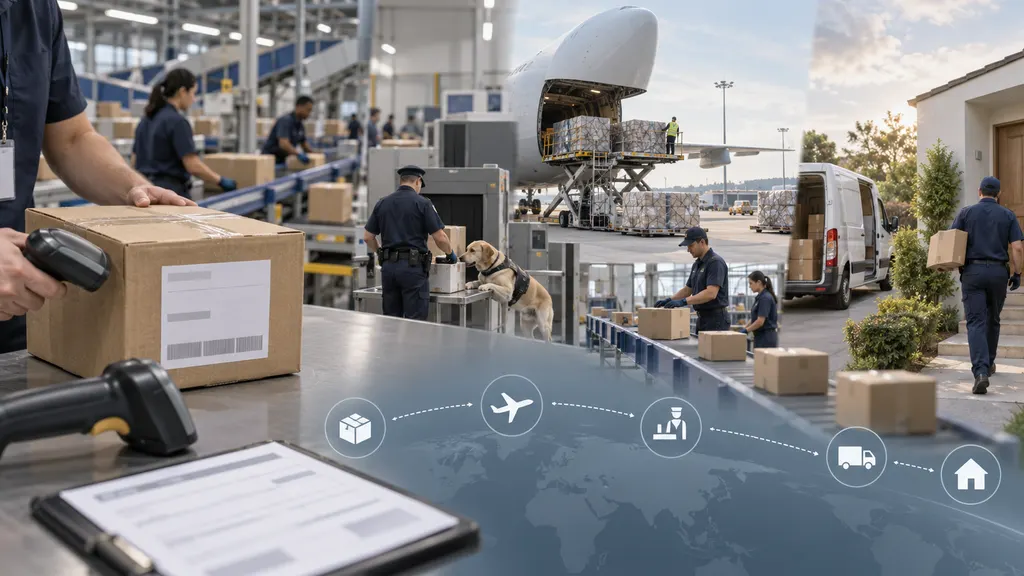
The most useful way to read a status is to combine three details: the latest event, its location, and the time since the event was recorded. A parcel marked “In transit” near the export country is at a different point in the journey from one marked “In transit” after customs clearance in the destination country.
How to track an international parcel
- Find the tracking number in the seller’s shipping confirmation, order page, or receipt. It may contain letters and numbers, and it is different from an order number.
- Check the number on the carrier named by the seller. This is the best place to see the carrier’s own terminology and any delivery instructions.
- If you do not know which carrier has the parcel, enter the number into a multi-carrier tracking service such as 17TRACK tracking. This can help identify the likely carrier and consolidate events from multiple logistics providers.
- Compare the latest scan with the parcel’s destination, expected delivery window, and any customs or payment request. Do not treat an old estimated date as a guaranteed delivery date.
A tracking number may not show an event immediately after it is created. In many shipping systems, the first scan appears only when the carrier receives or processes the parcel. “Label created” therefore does not necessarily mean the parcel has begun moving, and it does not by itself prove that the seller has failed to dispatch it.
Common international shipping statuses explained
Label created, shipment information received, or pre-advice
The carrier has received electronic shipment information, but a physical acceptance scan may not have been recorded. The parcel could still be with the seller, waiting for collection, or moving through a handover where scans are delayed. If this status remains unchanged beyond the seller’s stated handling time, contact the seller first. The seller is normally better placed to confirm whether the parcel was handed to the carrier.
Accepted, collected, or received by the carrier
The carrier has recorded possession of the parcel or accepted it at a post office, depot, warehouse, or collection point. This is stronger evidence of physical movement than a label-created event, although the parcel may still wait for consolidation or export processing before its next scan.
Departed origin facility or processed at origin sorting center
The shipment has been sorted in the country where it entered the network and may be moving toward an airport, export exchange office, or international gateway. This does not necessarily mean it has left the country. Postal and express networks can record several origin events before the actual international departure.
Export customs clearance, presented to export customs, or released from export customs
The parcel is undergoing, or has completed, export-side customs processing. “Released” generally indicates that the shipment can continue from the export authority’s perspective. It does not mean the parcel has cleared customs in the destination country. Customs terminology and the amount of visible detail vary by carrier and destination.
Departed from origin country, handed to airline, or in transit to destination
The parcel has entered the international transportation stage or has been handed to a transport partner. A gap after this event is common because tracking may not update while the parcel is between networks, awaiting transport, or moving through an airport. The status does not always identify the exact aircraft, route, or arrival time.
Arrived in destination country or arrived at destination gateway
The parcel has been recorded in the destination country or at an international gateway. It may still need unloading, sorting, security checks, customs presentation, and transfer to a local delivery operator. Arrival in the destination country is not the same as being out for delivery.
Customs clearance in progress
The shipment is being reviewed by the destination country’s customs authority or by a broker acting for the carrier. Customs may assess the declared contents, value, origin, duties, taxes, or required documentation. Tracking may remain unchanged while the review takes place.
If customs or the carrier requests an invoice, identification, product information, or payment, respond through an official channel. Verify the domain and shipment details before paying. A tracking page alone may not show every customs action, so the carrier or customs authority is the appropriate source for case-specific instructions.
Customs cleared, import clearance completed, or released by customs
The parcel has passed the recorded import-clearance stage and can normally move into the destination delivery network. Additional local processing may still be required. Customs clearance does not guarantee delivery on the next day, and the parcel may be transferred to a postal operator or another last-mile carrier.
Arrived at local facility or processed at delivery center
The parcel is being sorted within the destination country, often closer to the delivery address. The location shown may be a regional hub rather than the final delivery depot. If the address is incomplete or the parcel has been routed incorrectly, the carrier may ask for clarification.
Out for delivery
The parcel has been assigned to a delivery route or delivery vehicle. It may arrive that day, but the status is not an absolute guarantee. Route volume, address problems, weather, security restrictions, and unsuccessful delivery attempts can change the result. Make sure someone can receive the parcel if a signature is required.
Delivery attempted, recipient unavailable, or access problem
The carrier reports that delivery could not be completed. The reason may include an unavailable recipient, an inaccessible building, an incorrect address, unpaid charges, or a request for collection. Read the carrier’s instruction rather than arranging a second delivery through an unverified message. Some networks make another attempt; others redirect the parcel to a pickup point or return it after a holding period.
Delivered
The carrier has recorded the shipment as delivered. Check the delivery time, location, signature information, safe place, household members, building reception, and nearby addresses. For an international order, the seller may also have delivery evidence from the last-mile partner.
If the parcel is marked delivered but cannot be found, contact the carrier promptly and notify the seller. Keep screenshots of the tracking history, order details, and any delivery photograph. Do not assume that a delivered scan proves the parcel was received by the intended person; it proves that the carrier recorded a delivery event.
Held, delayed, exception, or information required
These statuses indicate that the normal process needs attention or has been interrupted. Possible causes include customs documentation, unpaid import charges, an address issue, transport disruption, restricted goods review, weather, security controls, or a failed delivery attempt. The status alone may not identify the responsible party. Open the detailed event on the official carrier page and follow the stated action.
Returned to sender or return in progress
The parcel is moving back toward the sender or has been scheduled for return. Common reasons include an incorrect address, an unclaimed parcel, refusal, unpaid charges, missing customs information, or a carrier rule affecting the shipment. Ask the carrier whether the return can be stopped, but contact the seller as soon as possible because the seller may need to arrange a replacement or refund.
Why an international tracking status may not change
A tracking history is an event record, not a continuous location signal. Updates may be delayed when the parcel is between carriers, traveling internationally, waiting for a consolidated transport movement, undergoing customs review, or moving through a network that provides limited public scans. Weekends, public holidays, local operating schedules, and time-zone differences can also affect the apparent gap.
A long gap is not automatically evidence that a parcel is lost. The appropriate response depends on the last confirmed event. A gap before the first carrier acceptance scan should usually be raised with the seller. A gap after export or during international transit may require checking both the origin carrier and the destination carrier. A customs-related message should be handled through the carrier or customs instructions, not guessed from the status wording.
When should you contact the seller or carrier?
| Situation | Best next action |
|---|---|
| No acceptance scan after the seller’s handling period | Ask the seller to confirm handover and investigate with the origin carrier. |
| Customs asks for documents or payment | Use the official carrier or customs channel and provide the requested information. |
| Address problem or delivery attempt | Follow the carrier’s redelivery or collection instructions immediately. |
| Delivered but missing | Check the delivery evidence, contact the carrier, and notify the seller. |
| No update for an unusually long period | Compare the last event with the carrier’s service guidance and ask the seller to open an inquiry if appropriate. |
There is no single universal number of days that proves an international parcel is lost. Delivery times depend on the service selected, origin and destination, customs processing, handovers, and disruptions. Use the promised delivery window and the carrier’s investigation rules rather than applying a fixed global deadline.
How to read tracking information more accurately
- Use the carrier’s official event details when a third-party tracker shows only a short label.
- Check whether the displayed time is shown in the origin, destination, or platform time zone.
- Look for a second tracking number after handover to a destination postal operator.
- Treat estimated delivery dates as estimates unless the carrier explicitly provides a guaranteed service.
- Keep the original tracking number, order number, seller contact, and customs documents together.
- Use a multi-carrier tracker when one parcel involves an international carrier and a separate last-mile operator, but confirm important actions on the responsible carrier’s official site.
For consumers tracking several parcels, 17TRACK’s tracking app can provide a consolidated view across supported carriers. It is useful for monitoring events, but carrier-specific delivery commitments, customs decisions, payment requests, and claims should still be confirmed with the relevant carrier or seller.
FAQ
Why does my international parcel say “in transit” for several days?
“In transit” can cover movement between facilities, international transport, consolidation, or a handover between carriers. The status does not identify the parcel’s exact location at every moment. Check the last scan location and use the carrier’s service guidance before treating the delay as a loss.
Does “arrived in destination country” mean the parcel has cleared customs?
No. Arrival and customs clearance are separate events. A parcel can be physically present in the destination country while waiting for customs presentation, review, payment, or release.
What should I do if tracking says customs clearance is needed?
Open the detailed notice on the official carrier or customs website and check what information is requested. Provide documents or payment only through a verified channel. If the shipment was purchased online, tell the seller as well because the seller may need to support the customs process.
Can a parcel be delivered without a new tracking update?
Yes. Some postal or last-mile networks provide fewer public scans, and a delivery event may appear late. If the promised delivery window has passed, ask the seller or carrier to investigate using the tracking number and shipping service.
Who should I contact when an international parcel is delayed?
Contact the seller first when there is no acceptance scan, when the shipping service was purchased by the seller, or when you need a refund or replacement. Contact the carrier directly for delivery instructions, customs requests, address corrections, or delivery evidence. In many cases, the sender is the party authorized to start a formal carrier investigation.