International Logistics
What Is International Logistics?
International logistics is the planning, coordination, movement, storage, and control of goods across national borders, from the point of origin to the destination country and, where applicable, through final delivery and returns. It connects suppliers, manufacturers, warehouses, carriers, customs authorities, sellers, buyers, and other supply-chain participants in an international transaction.
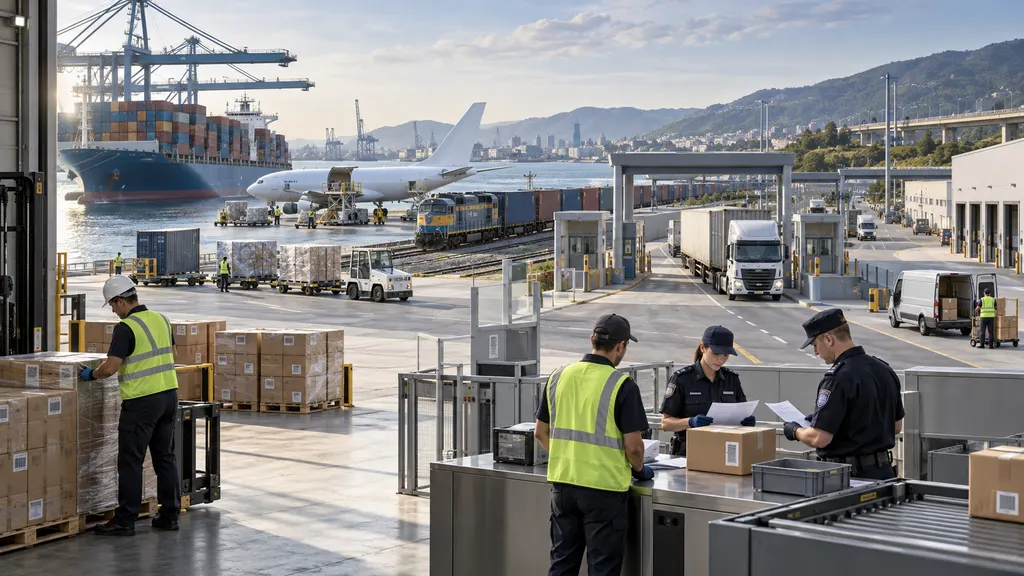
In logistics and cross-border ecommerce, the term covers more than international transportation. It may include order preparation, export documentation, freight selection, packaging, consolidation, customs procedures, import requirements, inventory positioning, delivery to the buyer, shipment tracking, and the handling of exceptions or returns. The exact activities involved depend on the product, countries, transport mode, contractual responsibilities, and applicable trade and customs rules.
International logistics should be distinguished from international trade. International trade concerns the commercial exchange of goods or services between countries, while international logistics concerns the operational processes used to move and manage goods in support of that exchange. The two are closely connected but are not interchangeable terms.
International Logistics in the Supply Chain
International logistics usually operates between the origin and destination sides of a supply chain. At the origin, goods may be manufactured, picked from inventory, packed, labeled, consolidated, and prepared for export. During transit, they may move through one or more carriers, transport modes, terminals, warehouses, and border-control points. At the destination, they may be cleared for import, transferred to a domestic delivery network, delivered to the consignee, or returned.
A single international shipment can therefore involve several separate records. An ecommerce order represents the buyer's purchase request. A shipment represents goods handed over for transportation. A parcel is usually a physical handling unit, although terminology varies by carrier and business process. A customs declaration provides information required by customs authorities. A tracking record reports selected events recorded by logistics participants. These records may be connected, but they do not describe exactly the same thing.
| Supply-chain element | Role in international logistics | Typical information |
|---|---|---|
| Order | Records the commercial request from a buyer or business customer. | Items, quantities, buyer details, and sales terms |
| Inventory | Provides the goods available for fulfillment at a particular location. | Stock level, location, lot, and product identifier |
| Shipment | Represents goods arranged or handed over for transport. | Origin, destination, weight, dimensions, and service details |
| Carrier | Performs or organizes transportation between points. | Transport events, handovers, and delivery attempts |
| Customs declaration | Provides information for border assessment and control. | Commodity description, value, origin, and classification information |
| Final delivery | Transfers the shipment to the consignee or another authorized recipient. | Delivery status, date, location, and proof where available |
Key Activities
Planning and Order Fulfillment
Planning begins with the characteristics of the order and the destination market. A logistics plan may consider product dimensions, weight, value, fragility, required delivery conditions, expected delivery time, inventory location, and available transport services. For ecommerce orders, the seller or fulfillment provider may decide whether to ship each order separately, consolidate multiple orders, or use inventory already positioned in the destination country.
Fulfillment includes picking the correct goods, checking quantities, preparing transport packaging, attaching labels, and generating the documents needed by the carrier or customs process. Product descriptions should be sufficiently clear for transport and border procedures. Inaccurate or incomplete information can create delays, additional requests, or incorrect processing.
Transportation and Handover
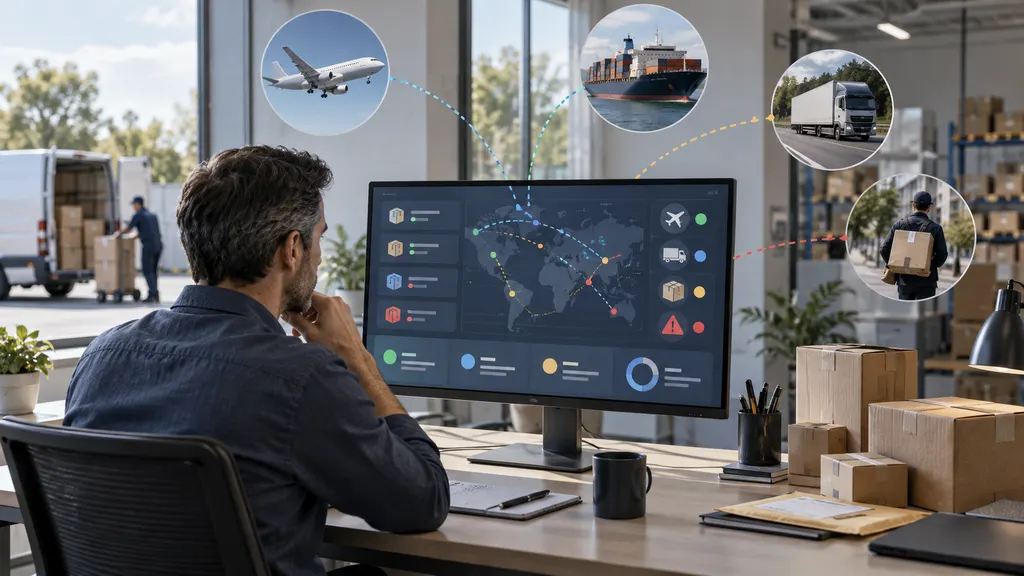
International shipments may use air, ocean, road, rail, or combinations of these modes. Multimodal transportation uses more than one mode during a journey. The choice depends on the shipment's physical characteristics, route, service availability, cost, and delivery requirements. A shipment may pass through several handovers, such as from a seller to a consolidator, from a consolidator to an international carrier, and from an inbound facility to a domestic delivery network.
Transportation and delivery are related but distinct. Transportation generally refers to the movement between locations, while delivery commonly refers to the process of bringing the shipment to the named recipient or delivery address. A shipment can be in transit without yet being out for final delivery.
Customs and Border Procedures
Customs authorities use declarations and related information to administer the movement of goods across borders. Depending on the jurisdiction and shipment, relevant information may include the goods description, quantity, declared value, country of origin, tariff classification, importer or consignee details, and supporting documents. Requirements vary by country, product, transaction, and shipment type.
International logistics does not itself determine whether a shipment is legally admissible. Import controls, restricted-goods rules, taxes, duties, permits, product regulations, and documentation requirements must be assessed for the specific trade lane and commodity. A logistics provider may assist with documentation or customs processing, but responsibility is determined by the applicable contract, trade terms, and local rules.
Tracking and Exception Management
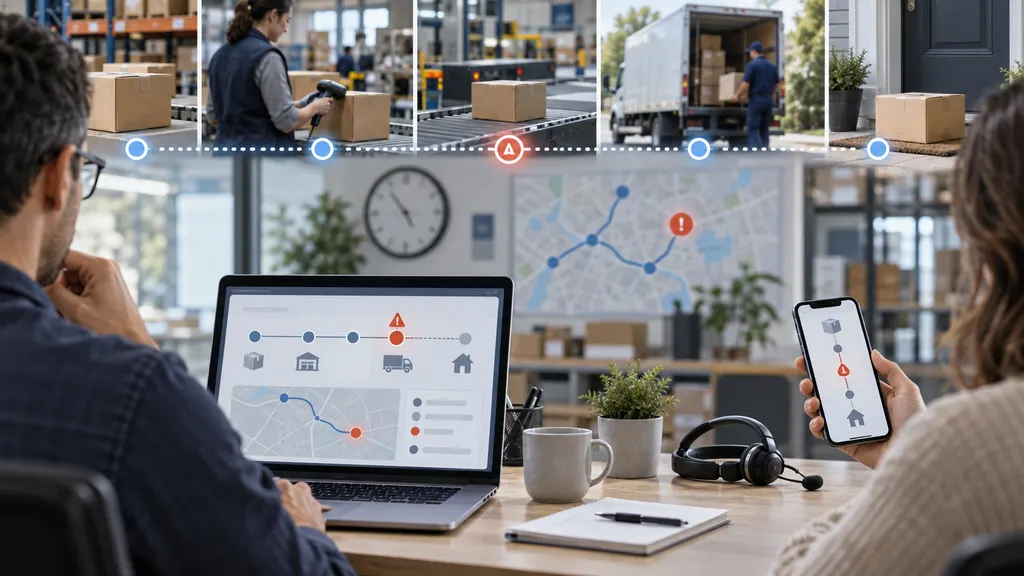
Tracking provides shipment-event information, such as acceptance, departure, arrival at a facility, customs-related events, out-for-delivery status, or delivery confirmation. Tracking data is usually event-based and may not show every physical movement. Tracing is a broader investigative process used to locate, explain, or resolve a shipment problem, such as a delayed, damaged, misrouted, or apparently lost shipment.
Exception management addresses events that prevent normal progress. Examples include an incomplete address, a failed delivery attempt, a customs information request, a transport disruption, damaged packaging, or a mismatch between shipment data and the physical goods. Effective handling normally requires identifying the responsible party, checking the latest reliable event, contacting the relevant carrier or authority, and communicating a practical next step to the seller or recipient.
Common Operating Models
International logistics can be organized through different operating models. These are practical descriptions rather than a single universal classification system.
| Operating model | Description | Possible use |
|---|---|---|
| Direct international shipment | Goods move from the seller or origin facility to the buyer or destination address through an international service. | A cross-border ecommerce order fulfilled after purchase |
| Consolidated shipment | Multiple consignments are grouped for part of the journey and separated later. | Small orders moving through a shared international transport network |
| Destination-country fulfillment | Inventory is stored in, or close to, the destination market before an order is placed or completed. | Faster domestic fulfillment after the sale |
| Third-party logistics model | An external provider performs selected activities such as warehousing, fulfillment, transportation coordination, or returns handling. | A seller outsourcing operational tasks while retaining commercial control |
| Multimodal movement | A shipment uses two or more transport modes in one planned movement. | Combining road transport with air, ocean, or rail transport |
These models can overlap. For example, a seller may use a third-party logistics provider, consolidate orders, and use multiple transport modes before the shipments enter a destination-country delivery network.
International Logistics in Cross-Border Ecommerce
In cross-border ecommerce, international logistics is part of the buyer's post-purchase experience. The customer may encounter logistics information at checkout, in an order confirmation, through tracking updates, when customs action is required, and during delivery or return handling. The seller must coordinate commercial promises with operational capabilities. A stated delivery estimate, for example, should account for the chosen service and the possibility that border or carrier processes may affect the journey.
Returns add another logistics flow. A return may move from the buyer back to a domestic return point, an international warehouse, the original seller, or another authorized facility. The physical return and the financial refund are different processes: a return concerns the movement or disposition of goods, while a refund concerns the reversal of money under the seller's policy and applicable law.
International sellers also need to decide how product information, shipment information, and customer-service information will be kept consistent. The product in the parcel should correspond to the order and declaration data. The address and recipient details should be usable by the delivery network. When an event changes, the seller may need to update the buyer without presenting an estimated status as a confirmed fact.
Important Distinctions
| Term pair | Distinction |
|---|---|
| International logistics and international trade | Trade describes cross-border commercial exchange; logistics describes the operational management of goods supporting that exchange. |
| Cargo and freight | Both can refer to goods transported commercially and are often used interchangeably. In some contexts, freight emphasizes the transportation service or charge, while cargo emphasizes the goods themselves. |
| Shipment and parcel | A shipment is a transport movement or consignment; a parcel is commonly a physical package or handling unit. A shipment may contain one or more parcels. |
| Shipping and delivery | Shipping generally covers dispatch and transportation arrangements; delivery focuses on handing the goods to the recipient or delivery location. |
| Tracking and tracing | Tracking reports recorded shipment events; tracing involves investigating a location, delay, loss, or other exception. |
| Return and refund | A return concerns goods moving back or being made available to the seller; a refund concerns money returned to the customer. |
Business documents and carrier systems do not always use these terms in exactly the same way. Their meaning should therefore be interpreted in the context of the contract, platform, carrier, or customs procedure where the term appears.
Examples
For example, a retailer may receive an order for a garment from a customer in another country. The retailer or fulfillment provider picks the garment, checks the order data, packs it, prepares shipment information, and hands the parcel to a carrier. The parcel may then move through an export facility, international transport, an import process, and a local delivery network. If customs or the carrier requests additional information, the shipment may enter an exception process before delivery.
As another example, a business may purchase components from an overseas supplier. The shipment may be transported in a consolidated load, transferred between modes, cleared at the destination, and delivered to the buyer's warehouse. In this case, the logistics process supports business inventory rather than a single consumer order.
Common Misunderstandings
- International logistics is only transportation. Transportation is an important part, but the term can also include fulfillment, documentation, customs coordination, warehousing, tracking, delivery, and returns.
- A tracking update proves the goods are at every location shown. A tracking event records information received from a logistics participant. It may not describe every physical movement or provide continuous location data.
- Customs clearance is the same as delivery. Clearance concerns border processing. After clearance, the shipment may still require domestic transportation and final delivery.
- A shipment and an order are the same record. One order may be divided into multiple shipments, and one shipment may contain goods associated with more than one order in a consolidated process.
- A delayed shipment always indicates a carrier failure. Delays can arise from documentation, customs requirements, weather, infrastructure, address problems, security controls, or other causes. The cause must be verified for the particular shipment.
QA
What does international logistics mean in ecommerce?
It means managing the cross-border movement and related processes for ecommerce goods, including fulfillment, transportation, customs information, delivery, tracking, and possible returns.
What is the difference between international logistics and international shipping?
International shipping generally focuses on sending goods across borders. International logistics is broader and may include inventory, order fulfillment, documentation, customs coordination, delivery, tracking, and returns.
Does international logistics include customs?
It can include customs documentation and coordination, but the exact responsibilities depend on the shipment, the countries involved, the service arrangement, and applicable rules.
Are international logistics and cross-border logistics the same?
They substantially overlap. International logistics is a broad term for logistics across national borders, while cross-border logistics is often used to emphasize movements and operations connecting specific countries or markets.
Sources
- World Trade Organization, World Trade Statistical Review — trade context and the distinction between international commerce and the movement of goods.
- World Customs Organization, Mercator Programme — customs procedures, trade facilitation, and the role of customs in cross-border movements.
- World Customs Organization, Harmonized System — customs classification context for traded goods.
- International Chamber of Commerce, Incoterms Rules — allocation of transport-related responsibilities, costs, and risks in international sale contracts.
- International Organization for Standardization, ISO 17363:2013 — supply-chain applications and terminology related to freight containers and logistics processes.