Logistics Management
Definition
What is logistics management? Logistics management is the planning, coordination, execution, and control of the movement and storage of goods, inventory, information, and related resources from a point of origin to a point of consumption. In logistics and supply chain operations, it helps ensure that products are available at the required location and time while service requirements and operational constraints are addressed.
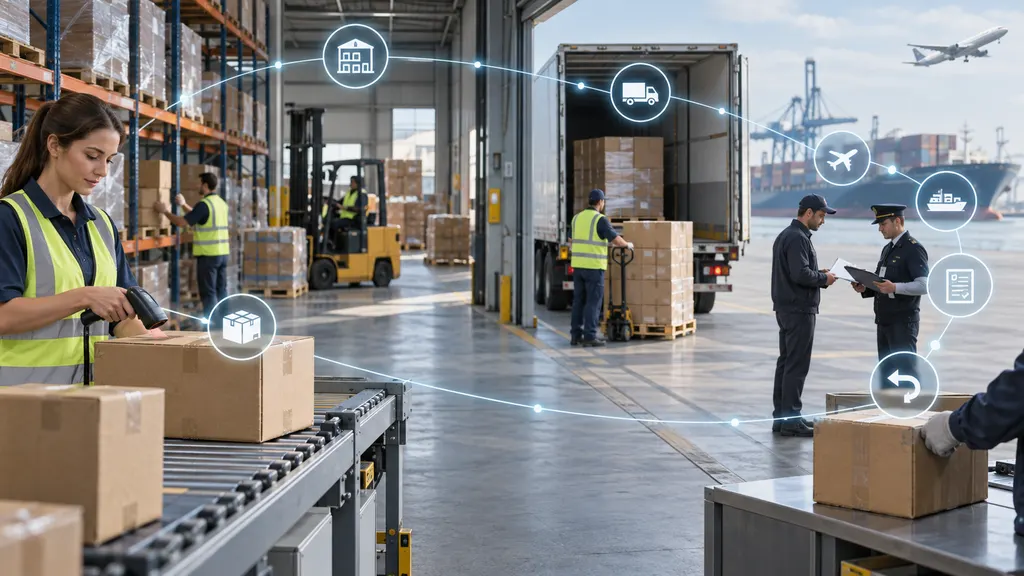
Logistics management is used in manufacturing, wholesale, retail, ecommerce, cross-border trade, warehousing, transportation, and returns operations. Its scope may include inbound logistics, inventory handling, warehousing, order processing, transportation, delivery coordination, and reverse logistics.
The term is related to, but narrower than, supply chain management in many professional frameworks. Supply chain management may cover broader activities such as sourcing, production planning, supplier relationships, demand management, and coordination among multiple organizations. Logistics management focuses more directly on the flow and storage of goods and the information needed to control that flow.
In Logistics
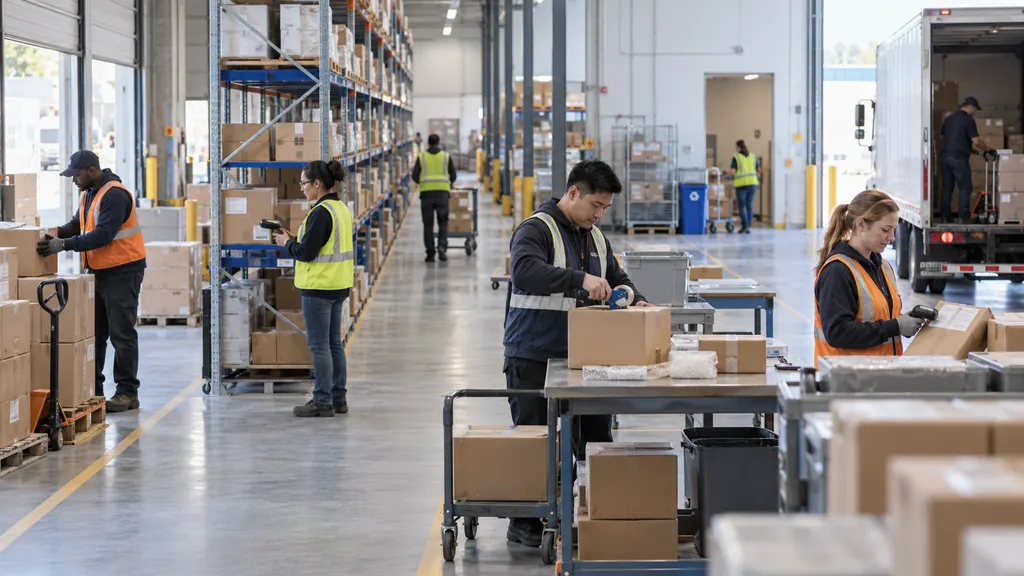
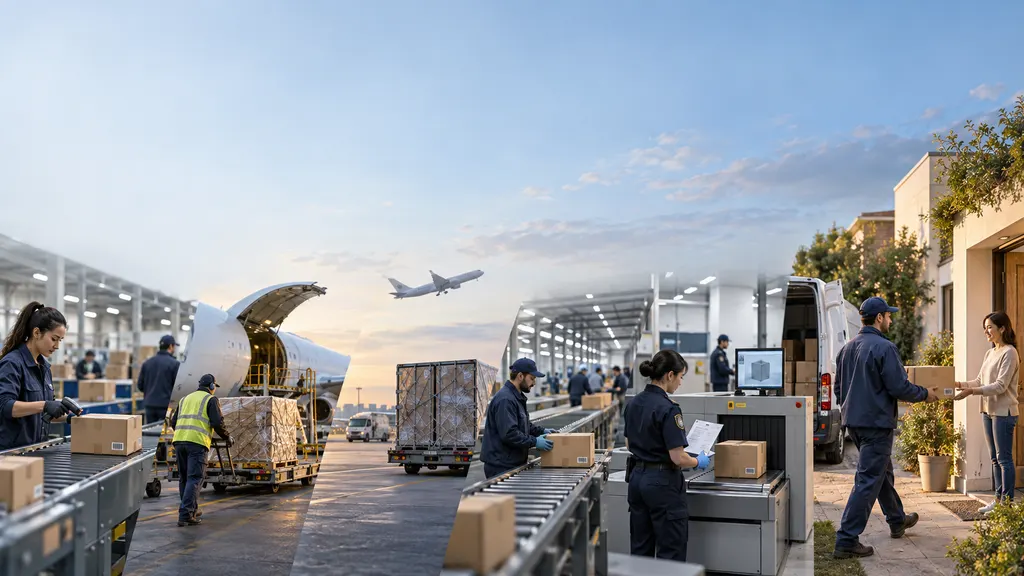
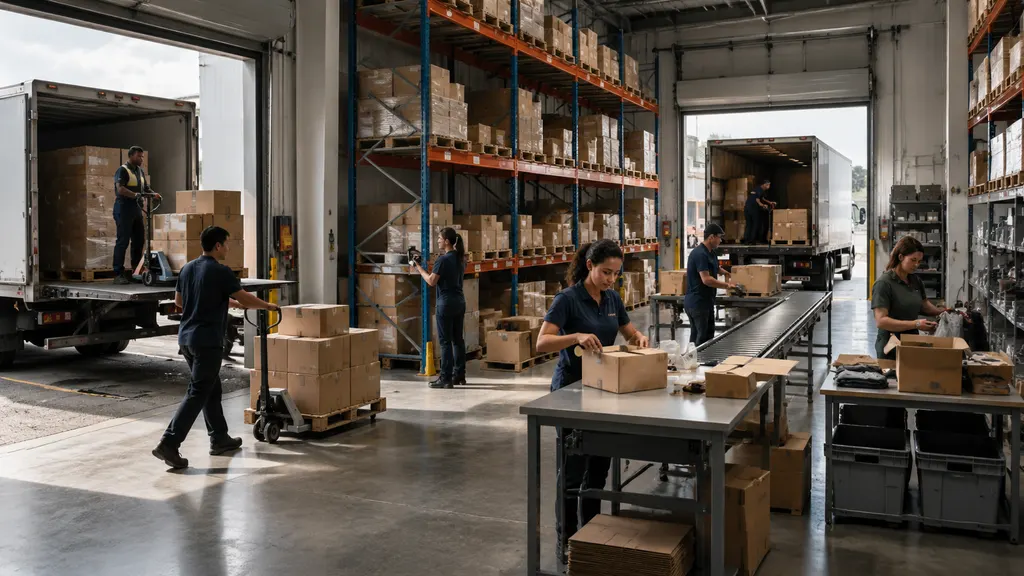
Logistics management connects several operational stages. A logistics manager or logistics team may coordinate the receipt of products from suppliers, movement between facilities, storage in a warehouse, preparation of customer orders, handover to a carrier, delivery, and the handling of returned goods.
The process may involve several parties, including shippers, suppliers, warehouses, carriers, freight forwarders, customs brokers, marketplaces, retailers, and customers. The exact responsibilities depend on the business model and the contractual arrangements between the parties.
Main Operational Areas
| Area | What it involves | Example in commerce |
|---|---|---|
| Inbound logistics | Receiving and moving materials or products into a facility or operating network | A warehouse receives finished products from a supplier. |
| Inventory logistics | Positioning, storing, counting, and replenishing stock | A retailer allocates inventory among fulfillment locations. |
| Order fulfillment | Processing an order, picking items, packing them, and preparing them for shipment | An ecommerce order is picked and packed after payment is confirmed. |
| Transportation logistics | Planning and coordinating the movement of goods by one or more transport modes | A shipment moves from a distribution center to a regional delivery facility. |
| Last-mile logistics | Managing the final movement to the delivery destination | A parcel is delivered from a local facility to a consumer. |
| Reverse logistics | Managing movements from the customer or downstream location back to a seller, warehouse, repair facility, or other destination | A returned product is collected, inspected, and routed for resale or disposal. |
How Logistics Management Works
- Plan requirements: The organization determines what must be moved, where it is needed, when it is needed, and what service or handling conditions apply.
- Organize inventory and facilities: Products are assigned to storage locations, fulfillment sites, or other nodes in the logistics network.
- Process orders and shipments: Orders are verified, inventory is allocated, goods are picked and packed, and shipment information is created.
- Coordinate transportation: A suitable carrier, route, service, or transport mode is selected according to the shipment's requirements and the available operating arrangements.
- Monitor execution: Status information, exceptions, delays, delivery events, and inventory movements are monitored so that operational decisions can be made.
- Manage completion or return: The process ends with delivery, transfer, collection, return, repair, resale, recycling, or another authorized disposition.
Information systems can support these activities through functions such as warehouse management, transportation management, order management, inventory control, shipment tracking, and electronic data exchange. The systems used and the level of automation vary by organization.
Logistics Management in Ecommerce
In ecommerce, logistics management begins before a customer places an order. A seller may decide where inventory should be stored, how orders will be fulfilled, which delivery services can be offered, and how shipment information will be communicated to the customer.
After an order is placed, logistics management may coordinate payment or order release, inventory allocation, picking, packing, label creation, carrier handover, tracking, delivery exceptions, and returns. For cross-border ecommerce, the process may also involve export documentation, import requirements, duties and taxes, customs clearance, international transportation, and local delivery.
Logistics management does not mean that one company must perform every activity itself. A retailer may use its own facilities, a third-party logistics provider, a marketplace fulfillment service, parcel carriers, freight forwarders, or a combination of these arrangements.
Key Characteristics
- Flow coordination: It coordinates the physical movement and storage of goods across connected locations.
- Time sensitivity: Planning often considers order deadlines, dispatch schedules, transit time, delivery commitments, and facility capacity.
- Inventory dependence: Transportation and fulfillment decisions depend on the availability, location, condition, and status of inventory.
- Information dependence: Accurate order, inventory, address, customs, and shipment-status information supports operational control.
- Network orientation: A logistics activity may affect suppliers, warehouses, carriers, customs processes, delivery locations, and returns channels.
- Exception management: Delays, damaged goods, incorrect addresses, stock discrepancies, failed delivery attempts, and customs issues may require corrective action.
Related Terms
| Term | Relationship to logistics management | Important distinction |
|---|---|---|
| Supply chain management | Covers the broader coordination of supply, production, distribution, and related business relationships. | Logistics is commonly treated as a major component or functional area within the wider supply chain. |
| Transportation management | Focuses on planning and controlling the movement of goods. | It is a narrower area that may exclude warehousing, inventory storage, and broader order processes. |
| Warehouse management | Focuses on receiving, storing, locating, picking, packing, and dispatching goods within warehouse operations. | It is one operational component of logistics management. |
| Order fulfillment | Concerns the activities required to complete and dispatch a customer order. | It is usually centered on the order, while logistics management may also cover inbound flows, transfers, inventory, and returns. |
| Shipment tracking | Provides status information about a shipment after or during dispatch. | Tracking supports logistics management but does not by itself plan or execute the entire logistics process. |
| Reverse logistics | Manages goods moving backward through the distribution network. | It is a specialized logistics flow involving returns, repairs, reuse, recycling, or disposal. |
Common Misunderstandings
Logistics management is the same as transportation
Transportation is an important part of logistics management, but logistics also includes storage, inventory coordination, order processing, information flow, and returns where applicable.
Logistics management only starts after an order is placed
Logistics planning can begin with inbound supply, inventory positioning, facility decisions, and service design. Customer-order fulfillment is only one part of the overall process.
Shipment tracking is logistics management
Shipment tracking reports or aggregates movement events. Logistics management is the broader activity of designing, coordinating, executing, and controlling logistics operations.
Logistics management and supply chain management always have identical meanings
The terms overlap, and organizations may define their responsibilities differently. In common professional usage, supply chain management generally has a broader scope, while logistics management focuses more directly on the movement and storage of goods and associated information.
QA
What is logistics management in ecommerce?
It is the coordination of inventory, warehousing, order fulfillment, transportation, delivery, tracking, and returns activities that support ecommerce orders.
What is the difference between logistics management and supply chain management?
Logistics management focuses mainly on the movement and storage of goods and related information. Supply chain management usually covers a broader network that may also include sourcing, production, supplier coordination, and demand-related activities.
Does logistics management include returns?
It can include returns through reverse logistics, which manages the movement and disposition of goods sent back from a customer or another downstream location.
Sources
- Encyclopaedia Britannica: Logistics — background on logistics as the planning and movement of goods and resources.
- Council of Supply Chain Management Professionals: Supply Chain Management Definitions and Glossary — professional terminology and the relationship between logistics and supply chain management.
- European Commission: Logistics and Multimodal Transport — institutional context for logistics and multimodal transport.