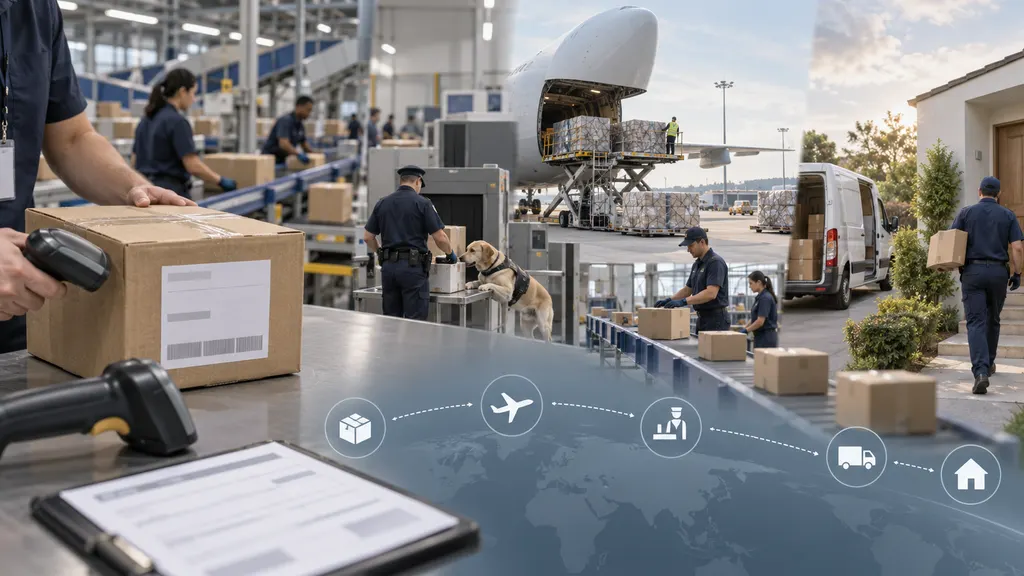
Parcel Tracking for Cross-Border Orders: Key Milestones to Watch
Cross-border parcel tracking is easiest to understand when you read it as a sequence of operational milestones rather than a promise of continuous movement. For most international orders, the important events are label creation, carrier acceptance, export processing, departure, destination-country arrival, customs clearance, handoff to a local carrier, out-for-delivery movement, and final delivery. The exact wording varies by carrier and service, but these milestones help shoppers and merchants identify whether a parcel is progressing normally or needs attention.

Tracking events are not always generated at every physical movement. A shipment may travel between facilities without a new scan, and an international parcel can remain on the same status while it waits for transport, customs processing, or a local delivery handoff. The right response depends on the milestone, the destination, the carrier, and the amount of time since the last meaningful update.
How to read the cross-border tracking journey
An international parcel normally passes through several organizations. The seller or fulfillment provider prepares the shipment, an origin carrier accepts it, postal or express networks move it across borders, customs authorities assess the import where required, and a destination carrier completes the final delivery. A tracking page may show only part of this chain, especially when information systems are not fully synchronized.
Tracking numbers can also be recognized differently at different stages. Some shipments retain one number throughout the journey, while others receive a local reference after import or handoff. The original number may continue to work, but the event history can have gaps during the transition. This is why a lack of frequent scans does not automatically mean that a parcel is lost.
The key milestones to watch
1. Shipment information received or label created
This status usually means that shipping information has been submitted or a label has been generated. It does not necessarily confirm that the parcel is physically in the carrier’s network. A merchant may create a label before the order is packed, or a fulfillment partner may transmit electronic data before the first acceptance scan.
For shoppers, this is a preparation milestone rather than a movement milestone. If the status remains unchanged, contact the seller first and ask whether the parcel has been handed to the carrier. For merchants, the distinction matters because displaying “shipped” immediately after label creation can create expectations that the carrier cannot yet support.
2. Accepted by the origin carrier
An acceptance, collection, or origin-facility scan indicates that the carrier has recorded possession or processed the parcel at an initial location. This is the first stronger sign that the package has entered the delivery network. The scan may occur at a post office, parcel shop, warehouse, consolidation center, or carrier depot.
There may still be a delay between acceptance and the next update. Consolidated cross-border shipments are often grouped before export transport, so the parcel may wait for sorting or dispatch even though the first scan has already appeared.
3. Export processing and departure from the origin country
Statuses such as “presented to export customs,” “export clearance,” “dispatched from outward office,” or “departed from origin facility” relate to the outbound leg. They can indicate customs data processing, security screening, transport preparation, or departure, depending on the carrier’s terminology.
Do not treat every export-related status as proof that the parcel has already left the country. Some systems record the administrative export step before the physical departure. The most useful clue is the combination of the event wording, location, and the next confirmed movement.
4. In transit or moving between countries
“In transit” is a broad status. It may cover line-haul transport, transfer between airports or sorting hubs, waiting for a connection, or movement through an intermediary country. It is not a precise location and does not provide a universal delivery date.
A period without scans is common during international transport. Scanning frequency depends on the service, the number of network partners, data exchange arrangements, weekends and holidays, and whether the parcel is moving in a consolidated dispatch. A merchant should avoid promising that every transit leg will produce a separate event.
5. Arrival in the destination country or territory
An arrival scan confirms that the shipment has reached, or has been recorded at, a facility associated with the destination country or territory. It may still need sorting, security checks, customs review, or transfer to the final-mile operator.
Arrival does not mean that the parcel is ready for delivery. A package can remain at an international gateway while documents are checked or while the destination carrier receives the electronic shipment data. The next meaningful milestone is usually customs clearance, release, or movement to a domestic processing center.
6. Customs processing, duties, or import documentation
Customs events are among the most misunderstood tracking milestones. A parcel may be “under customs review,” “held for payment,” “awaiting documents,” “cleared,” or “released from customs.” These statuses can refer to different steps, and the carrier or customs authority may be responsible for contacting the recipient.
Possible causes of a hold include incomplete or inconsistent commercial information, a request for proof of value, restricted or regulated goods, an import tax or duty assessment, an address issue, or a routine inspection. The tracking page may not explain the reason in detail. If an action is requested, use the carrier’s official website or the contact method stated in the official notice. Do not rely on an unsolicited payment link or share sensitive information with an unverified sender.
Merchants can reduce avoidable friction by using accurate item descriptions, declared values, recipient information, and harmonized or product classification details where required. The exact documentation requirements differ by destination and product category, so sellers should verify them with the carrier and relevant customs authority.
7. Handoff to a destination or last-mile carrier
A handoff status means that another network may now be responsible for the next leg. The original carrier can continue to display events, but updates may arrive less frequently or under a different vocabulary. In some cases, the destination carrier provides a local tracking reference.
This is a useful point to check whether the tracking number is recognized on the destination carrier’s official site. A local result can provide more precise delivery information, but the absence of a result does not by itself prove that the shipment was not handed over. Data synchronization can take time, and some services publish only selected events.
8. Out for delivery
“Out for delivery” generally means that the parcel has been assigned to a delivery route or courier process. It is a much stronger short-term signal than “in transit,” but it is not an absolute guarantee of delivery that day. Delivery attempts can be affected by route capacity, access problems, weather, address quality, recipient availability, or operational exceptions.
Recipients should check delivery instructions, building access details, safe-place preferences, and any carrier message. Merchants should distinguish between an attempted delivery and a final delivery because the next action may be a pickup request, address correction, or second attempt.
9. Delivered, attempted delivery, or exception
A delivered scan should identify the completion of the carrier’s recorded delivery process, but the available detail varies. Some carriers provide a signature, delivery location, image, or recipient name; others provide only a delivery timestamp and location.
An exception is not a single type of problem. It can include an incorrect address, an unsuccessful delivery attempt, transport disruption, a customs issue, damaged packaging, or an event that requires recipient or merchant action. Read the accompanying explanation and compare it with the last location. If the status is unclear, the carrier and seller may have different information, so preserve screenshots and reference the tracking number when requesting help.
What a status means for shoppers and merchants
| Milestone | What it usually confirms | Practical next step |
|---|---|---|
| Label created | Shipping data exists; physical acceptance may not have occurred. | Ask the seller whether the parcel has been handed over. |
| Accepted | The origin network has recorded the shipment. | Monitor export and transport events. |
| Export or in transit | The parcel is being prepared for or moved through international transport. | Allow for scan gaps; check the service terms before escalating. |
| Customs hold | Additional review, information, payment, or release may be required. | Follow only verified carrier or customs instructions. |
| Local handoff | A destination network may control the next movement. | Check the official local carrier site if a reference is available. |
| Out for delivery | The parcel has entered a delivery route or attempt process. | Prepare for receipt and monitor delivery instructions. |
| Exception | A condition may be preventing normal progress. | Identify the requested action and contact the responsible party. |
When should a delayed parcel be escalated?
There is no single number of days that applies to every international shipment. A meaningful escalation decision should consider the promised service level, the last scan, the destination route, the carrier’s published inquiry rules, customs requirements, and whether the status indicates an action is pending.
Escalate sooner when the tracking page requests documents or payment, the address is incorrect, a delivery attempt has failed, the parcel is marked returned, or the status indicates damage or loss. For a quiet “in transit” period, compare the elapsed time with the carrier’s service guidance before declaring the shipment missing. A merchant should also check order commitments and marketplace rules rather than waiting indefinitely for a new scan.
For customer support, a useful message includes the order number, tracking number, destination country, last event and timestamp, any customs notice, and the action already taken. Avoid giving a new delivery date unless the carrier has provided one. Clear uncertainty is more credible than an unsupported promise.
How merchants can improve the tracking experience
- Show the milestone in plain language. “Carrier has received the parcel” is more useful than displaying a raw event code without context.
- Separate preparation from movement. Label creation and carrier acceptance should not be presented as the same event.
- Explain customs responsibility. Tell customers that duties, documents, or local contact may be required, while avoiding claims about charges that have not been assessed.
- Use more than one tracking source when appropriate. A multi-carrier tracking service such as 17TRACK tracking can help consolidate events across participating networks. The underlying carrier remains the authoritative source for a carrier-specific delivery decision, and coverage or event detail can vary by service.
- Design exception messages around actions. State whether the customer should wait, contact the carrier, provide information, pay an assessed charge, correct an address, or contact the merchant.
- Keep a support trail. Record the last scan, customer communication, carrier inquiry, and resolution so repeated contacts do not restart the investigation.
For stores that need to present tracking inside the post-purchase journey, the 17TRACK Shopify app is a relevant option to evaluate. Its suitability should be checked against the store’s platform, carrier mix, notification requirements, and the capabilities documented in the current app listing. For a custom order-management or support workflow, merchants can review the 17TRACK Tracking API and its official documentation rather than assuming that every carrier event or integration behaves identically.
A practical checklist for every international order
- Confirm that the tracking number is copied correctly and that the carrier identity is known.
- Check whether the latest event is a data-creation event or a physical movement event.
- Read the location, timestamp, and event description together.
- Look for a customs request, payment notice, address problem, or delivery attempt.
- Check the destination carrier’s official tracking page when a handoff or local reference is shown.
- Compare the elapsed time with the service commitment and the carrier’s inquiry process.
- Contact the seller for an order-resolution decision when the delivery promise is at risk.
- Use only official carrier or customs channels for payments and personal information.
FAQ
Why has my international parcel not received a new scan?
A parcel may be moving between facilities, waiting for transport, undergoing customs processing, or transferring between carrier systems. Scan frequency is not uniform across services. Check the last location and event, then compare the elapsed time with the carrier’s service guidance before treating the gap as evidence of loss.
Does “in transit” mean the parcel is on an airplane?
Not necessarily. “In transit” is a general network status that can include road, air, facility, consolidation, or transfer activity. It normally does not identify the exact transport mode or current physical location.
Who should I contact when a parcel is stuck at customs?
Follow the instruction shown in the official carrier or customs notice. Depending on the shipment, the carrier, recipient, broker, or seller may need to provide information or arrange payment. Do not use an unverified message or payment link.
Can the original tracking number stop working after a local handoff?
It can continue to work, but event detail may change or become temporarily incomplete. If the tracking record shows a destination carrier or local reference, check that carrier’s official website as well.
Should a merchant promise a delivery date based on tracking alone?
Only when the carrier provides a reliable delivery commitment for the specific service and route. Tracking events are operational updates, not always guaranteed dates. Customs, handoffs, weather, address issues, and delivery attempts can change the outcome.