Lean Logistics
Definition
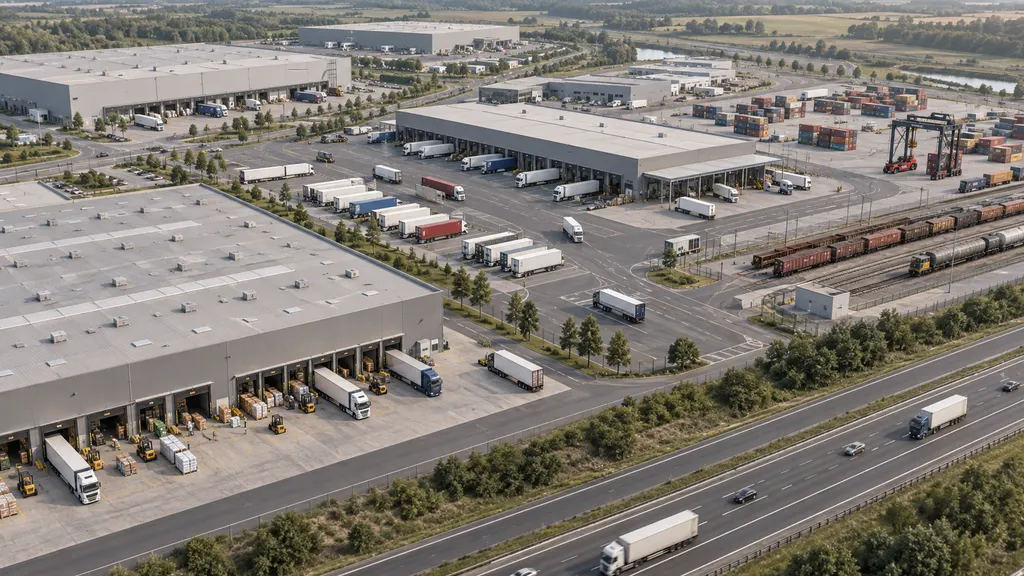
Lean logistics is the application of lean management principles to the movement, storage, handling, and control of goods and related information. Its purpose is to deliver the value required by the customer with fewer activities, resources, delays, errors, and unnecessary movements. In logistics, lean thinking focuses on the end-to-end flow from supplier or fulfillment location to the customer, while also considering returns and supporting information such as orders, inventory records, customs documents, and delivery status.
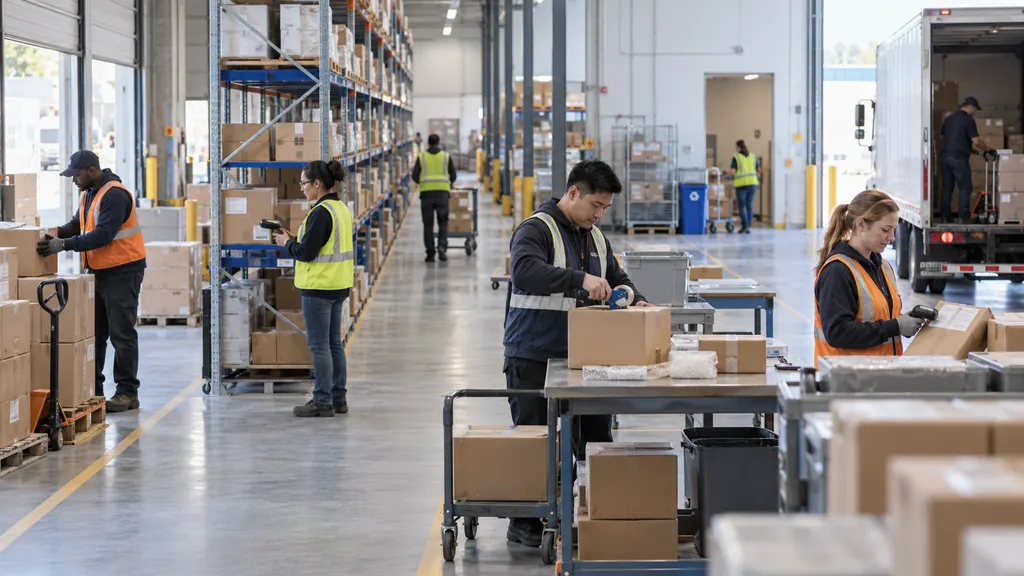
The term is used mainly in supply chain management, warehousing, transportation, ecommerce fulfillment, and manufacturing logistics. It does not describe one legally defined service, transport mode, software product, or universally prescribed operating model. Rather, it describes a management approach. A lean logistics program may use process mapping, standard work, demand-based replenishment, visual controls, root-cause analysis, and continuous improvement.
Lean logistics is related to lean operations and the Toyota Production System, but logistics has its own constraints. Transport networks, customs procedures, supplier reliability, delivery promises, order variability, safety requirements, and geographic distance can affect the practical design of a lean process. Reducing waste therefore does not mean removing every buffer or choosing the lowest-cost option in every situation. A change is lean only when it improves the total flow and preserves the service, compliance, quality, and resilience required by the operation.
Lean Logistics in Supply Chains
Logistics connects purchasing, production, inventory, order fulfillment, transportation, delivery, and reverse logistics. A delay or error in one activity can create additional work elsewhere. For example, inaccurate inventory information may lead to a replenishment order, an urgent shipment, customer service contacts, and a later return or correction. Lean logistics examines these connected activities instead of optimizing one department in isolation.
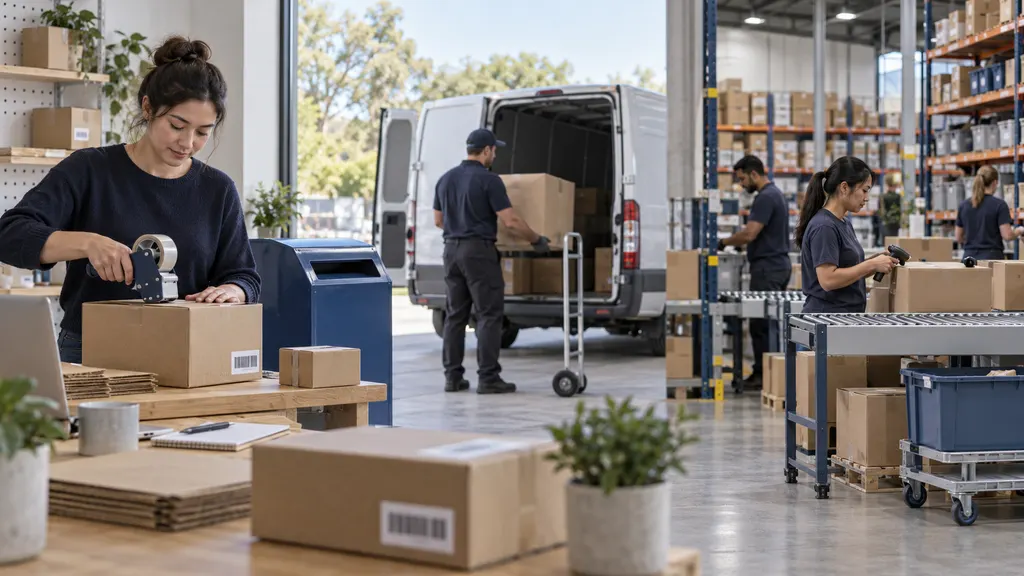
In ecommerce, the approach may cover receiving, put-away, storage, picking, packing, carrier handoff, tracking communication, last-mile delivery, and returns. In cross-border ecommerce, it may also include commercial invoices, product descriptions, duties and taxes, export documentation, import clearance, and handoffs between logistics providers. The objective is not simply to move parcels quickly. It is to make the entire order flow understandable, reliable, and proportionate to the customer requirement.
Value and waste
In lean thinking, an activity is normally evaluated from the perspective of the customer and the process requirement. Picking the correct item and transporting it to the agreed destination contribute directly to fulfillment value. Re-keying the same address into several systems, searching for misplaced stock, waiting for an approval that could be automated, or correcting an avoidable label error may consume resources without increasing the value of the shipment.
Some activities do not add direct customer value but are still necessary. Customs declarations, security checks, inventory counts, regulatory records, and certain quality inspections may be required by law, contract, or risk controls. Lean logistics seeks to make these activities accurate and efficient; it does not treat lawful compliance as disposable waste.
Core Characteristics
- Customer-defined value: The process begins by clarifying what the customer, buyer, consignee, or internal production process actually requires, such as the correct item, an agreed delivery window, usable tracking information, or compliant documentation.
- End-to-end flow: Analysis follows the order and shipment across organizational boundaries, including suppliers, warehouses, carriers, customs intermediaries, and return locations.
- Waste reduction: The operation looks for avoidable waiting, movement, handling, inventory, duplication, errors, and rework rather than assuming that more activity creates more value.
- Pull where practical: Replenishment or work release is linked to actual demand or a defined downstream requirement when the network and demand pattern allow it. Pull does not mean that every operation can run without forecasts or planned stock.
- Standard work: Repeatable tasks, decision rules, data fields, and handoffs are documented so that variation can be observed and improved.
- Continuous improvement: Teams use measured process performance, problem-solving, and controlled changes instead of relying only on one-time cost reduction projects.
- Respect for people: Employees who perform receiving, picking, dispatch, transport coordination, and customer support often have important knowledge about recurring process problems. Lean improvement should use that knowledge rather than treating workers as a source of waste.
Waste in Logistics Processes
Lean literature commonly discusses categories such as transportation, inventory, motion, waiting, overproduction, overprocessing, defects, and unused human capability. These categories are a practical diagnostic framework, not a claim that every logistics organization uses an identical official list. The same event can belong to more than one category depending on the process being examined.
| Waste category | Logistics example | Possible diagnostic question |
|---|---|---|
| Unnecessary transportation | A shipment or tote is moved through an avoidable intermediate location. | Can the network or facility layout remove a handoff without reducing control? |
| Excess inventory | Stock occupies space and capital while demand, shelf life, or product relevance changes. | What service requirement justifies this stock, and how is the target reviewed? |
| Unnecessary motion | A picker repeatedly walks long distances because related items or tools are poorly positioned. | Can slotting, layout, or equipment reduce movement while preserving accuracy and safety? |
| Waiting | An order waits for release, a dock, a document, a carrier collection, or an exception decision. | Where does elapsed time accumulate, and what rule or dependency causes it? |
| Overproduction or premature work | Labels, kits, or shipments are prepared before demand or required information is sufficiently confirmed. | Does early work reduce total lead time, or does it create rework and storage? |
| Overprocessing | The same order data is entered, checked, or reported more times than the process requires. | Which information is necessary, and where can duplicate handling be removed? |
| Defects and rework | An incorrect item, address, quantity, label, or customs description requires correction. | What process condition allowed the error, and can it be prevented at the source? |
| Unused knowledge and capability | Frontline staff repeatedly report a problem but have no effective route to resolve it. | How are operational observations captured, tested, and converted into improvements? |
How Lean Logistics Works
- Define the customer requirement. Specify the required product, quantity, destination, delivery promise, documentation, condition, visibility, and return arrangement. Different customers may value different combinations of speed, cost, predictability, and flexibility.
- Map the current flow. Follow a representative order or shipment through physical steps and information handoffs. Record queues, decision points, rework, inventory locations, carrier handoffs, and dependencies rather than documenting only the ideal procedure.
- Separate value-adding, necessary, and avoidable work. This distinction prevents a compliance or safety activity from being removed merely because it does not directly change the product.
- Identify root causes. A late dispatch may result from inaccurate inventory, incomplete order data, labor planning, dock congestion, a carrier collection schedule, or a customs-document problem. Treating the visible delay alone may leave the underlying cause unchanged.
- Design a controlled improvement. Examples include a clearer replenishment trigger, a revised warehouse layout, standardized packing checks, a single source for shipment data, or a defined escalation path for exceptions.
- Test and measure. Compare the process before and after the change using measures relevant to the objective. A shorter picking time is not an improvement if order accuracy, safety, or customer delivery reliability deteriorates.
- Standardize and continue learning. If the change works, update instructions, training, system rules, and ownership. Continue monitoring because demand, products, carriers, and regulations can change.
Measures and trade-offs
Potential measures include order accuracy, inventory record accuracy, cycle time, queue time, on-time shipment, on-time delivery, first-attempt delivery, damage, return reasons, exception frequency, touches per order, and transport utilization. The appropriate measure depends on the process and the decision being made. A single metric can encourage undesirable behavior: for example, minimizing inventory without considering stockouts, or reducing handling time while increasing damage.
Lean logistics therefore uses a balanced view of flow, quality, cost, service, safety, compliance, and capacity. Measures should be defined carefully. “On-time” may refer to dispatch, carrier collection, arrival at a facility, or delivery to the consignee, and these are not interchangeable events.
Use in Ecommerce and Cross-Border Logistics
An ecommerce retailer may use lean methods to examine the path from order capture to delivery. If an order is held because payment status, address data, stock status, and shipping method are stored in separate systems, the improvement may involve clearer release rules or better information integration rather than faster warehouse labor. If pickers search for products, slotting and location accuracy may be more relevant than increasing the picking target.
In cross-border logistics, lean improvement must account for information quality as well as physical movement. A shipment may be delayed because a description, value, origin statement, tariff classification, or consignee detail is incomplete or inconsistent. A structured document review before handoff can reduce rework, but the precise documents and controls depend on the countries, goods, parties, and applicable trade rules. Lean practice cannot remove a customs obligation by relabeling it as waste.
Inventory decisions also require care. A cross-border seller may hold stock closer to customers to reduce transit distance, or centralize stock to simplify control. Neither choice is automatically lean. The relevant assessment includes demand variability, replenishment lead time, customs exposure, storage cost, service commitments, product characteristics, and the consequences of a stockout. A deliberate buffer can protect flow when supply or transport is variable; an unexplained buffer may conceal a process problem.
| Process area | Lean question | Example of a cautious improvement |
|---|---|---|
| Order release | Are orders released with the information needed for accurate fulfillment? | Use defined release checks and route incomplete orders to an exception queue. |
| Inventory | Does stock placement support demand and efficient picking? | Review item locations using order patterns, handling requirements, and safety constraints. |
| Packing | Are materials and checks proportionate to the item and destination? | Standardize pack instructions while preserving damage prevention and applicable rules. |
| Carrier handoff | Where do shipments wait between packing and collection? | Align cut-off rules, staging areas, labels, and collection information where feasible. |
| Returns | Can returned goods be identified, inspected, and routed without repeated handling? | Use clear return reasons and disposition rules for resale, repair, quarantine, or disposal. |
Lean Logistics Compared with Related Terms
| Term | Meaning | Relationship to lean logistics |
|---|---|---|
| Lean operations | A broader approach to improving processes by focusing on customer value, flow, waste reduction, and continuous improvement. | Lean logistics is the logistics-focused application of this approach. |
| Just-in-time | A method of coordinating supply or production so materials are available when required rather than being held earlier than necessary. | It can support lean logistics, but lean logistics also covers quality, information, layout, transport, and problem-solving. |
| Logistics optimization | The search for improved performance using methods such as network, routing, inventory, or capacity analysis. | Optimization may use mathematical or software-based methods; lean logistics emphasizes flow, waste, standard work, and continuous improvement. The approaches can overlap. |
| Agile logistics | A logistics approach that emphasizes responsiveness to changing or uncertain demand. | Lean and agile methods can complement each other, although their priorities may differ in a particular design. |
| Six Sigma | A quality and process-improvement approach that emphasizes variation and defect reduction using structured analysis. | Lean Six Sigma combines lean flow concerns with Six Sigma quality methods, but the terms are not identical. |
| Cost cutting | A reduction in expenditure, which may or may not improve the process. | Lean logistics is not synonymous with cost cutting because indiscriminate reductions can damage service, quality, safety, or resilience. |
Common Misunderstandings
- Lean means minimum inventory in every situation. Lean asks whether inventory is necessary for the required flow and service. Safety stock, cycle stock, seasonal stock, or customs-related planning stock may have a legitimate purpose.
- Lean means faster work at any cost. Speed without accuracy, safety, compliance, or stable flow can create more rework and delay.
- Lean logistics is only a warehouse technique. Warehouse activities are important, but the approach can also address order data, supplier coordination, transport planning, carrier handoffs, customs information, delivery, and returns.
- Automation automatically makes a process lean. Automation can reproduce an inefficient process at greater scale. The process should be understood and simplified before technology is selected or expanded.
- Lean has one universal logistics checklist. Lean principles are broadly recognizable, but the appropriate practices depend on the product, network, demand, legal obligations, service promise, and risk profile.
QA
What does lean logistics mean in ecommerce?
It means applying lean principles to ecommerce order, inventory, fulfillment, delivery, information, and return flows so that avoidable work and delay are reduced while customer requirements and operational controls are preserved.
Is lean logistics the same as just-in-time?
No. Just-in-time can be one method used within a lean system. Lean logistics also addresses waste, quality, standard work, information flow, problem-solving, and continuous improvement.
Does lean logistics eliminate safety stock?
No. It evaluates the purpose and level of inventory. A buffer may be justified by demand variation, replenishment lead time, service requirements, or other operational risks.
How does lean logistics apply to cross-border shipping?
It can improve the flow of orders, documents, inventory, carrier handoffs, customs information, delivery, and returns. It must still preserve the declarations, records, checks, and other requirements that apply to the shipment.
Sources
- Lean Enterprise Institute, “What Is Lean?” — used for the general principles of value, value stream, flow, pull, and continuous improvement.
- U.S. Environmental Protection Agency, “Lean Thinking and Methods” — used for the relationship between lean methods, process improvement, waste reduction, and environmental performance.
- World Customs Organization, customs and trade facilitation guidance — used to support the boundary that customs and trade-control requirements must be preserved when improving cross-border processes.
- International Organization for Standardization, ISO 9001 overview — used for the relevance of documented processes, customer focus, monitoring, and continual improvement in quality management.