139Express Tracking
Please enter the 139Express tracking number to check the latest shipping status.
About 139Express
139Express is the carrier identity supplied for this tracking guide. Shipment-specific service coverage, operating entity, service catalogue and network relationships should be confirmed from the shipment label and the carrier’s official website before an operational decision is made.
| Field | Verified reference |
|---|---|
| Official website | 139Express official website |
| Carrier role and operating region | Confirm from the shipment documentation and the official carrier site for the specific service. |
Carrier Entity Relationships
| Entity | Relationship to 139Express |
|---|---|
| 139Express | The supplied carrier identity is the starting point for interpreting the shipment record. |
| 17TRACK | 17TRACK aggregates available events and does not transport parcels or decide claims. |
Quick Answer
Enter the shipment’s tracking number on the official 139Express website or in 17TRACK. If no result appears, first check that you entered a tracking number rather than an order number, remove spaces or punctuation, and allow time for the first physical scan. 17TRACK is independent and cannot redirect a parcel, change an address, approve a refund or process a claim.
How to Track 139Express Packages
Use the number printed on the dispatch receipt, parcel label or seller’s shipping notice. An order number identifies a purchase; a reference number identifies a merchant record; a tracking number identifies a transport record.
| Tracking path | Action |
|---|---|
| Official 139Express route | Open the official website, locate its tracking function, enter the shipment identifier, and save the displayed event history. |
| 17TRACK route | Open 17TRACK, enter the identifier, review the detected carrier, and compare the latest event with the seller’s dispatch information. |
| No usable number | Ask the seller or sender for the transport identifier and the actual handoff carrier; do not rely on an ecommerce order number. |
Tracking Number Formats and Examples
A carrier-recognized number is not necessarily issued by 139Express. Cross-border shipments may retain an origin-post number, receive a partner number, or show a last-mile identifier. Do not infer the service solely from a prefix.
Tracking Number Format
| Identifier family | Normalized pattern | ||||||||
|---|---|---|---|---|---|---|---|---|---|
| Carrier-issued identifier | Use the exact alphanumeric string printed by the sender; a confirmed public pattern is required before classifying it. | ||||||||
View all details for carrier-issued identifiers
| |||||||||
| International postal identifier | Possible S10-style structure: two letters, eight or nine digits including a check digit, and a two-letter country code; verify before use. | ||||||||
View all details for international postal identifiers
| |||||||||
| Merchant order or reference ID | Seller-defined text or digits; it may not produce carrier events. | ||||||||
Tracking Statuses and Meanings
| Status | Lifecycle stage | ||||||
|---|---|---|---|---|---|---|---|
| Label created / awaiting item | Pre-shipment: electronic data exists, but physical acceptance may not have occurred. | ||||||
View all details for label created / awaiting item
| |||||||
| In transit | The shipment has a recorded movement between processing points. | ||||||
| Customs or handoff | The parcel is undergoing import or export processing, or is moving between logistics operators. | ||||||
| Out for delivery | A local delivery route has been assigned; address and access issues may still prevent delivery. | ||||||
| Delivered / exception / return | The record indicates completion, an operational problem, or movement back to the sender; review the full event text. | ||||||
Services and Delivery Times
A delivery estimate depends on origin, destination, service selection, handoff timing, address quality, weekends, holidays, weather and customs. A tracking estimate is not automatically a guaranteed delivery commitment.
Service Comparison
| Service | Best for |
|---|---|
| Service shown on the shipping record | Use the named service because coverage, tracking and restrictions depend on the actual product. |
Delivery Time
| Timing measure | Interpretation |
|---|---|
| Estimated delivery window | A planning estimate that can move when scans, customs or last-mile conditions change. |
| Guaranteed date | Only applicable where the purchased service terms expressly provide a guarantee. |
Destination Country Delivery Times
| Destination | Planning guidance |
|---|---|
| Any destination | Use the service-specific estimate shown by the sender or official tracking record; destination-country averages cannot be attributed to 139Express without a verified service lane. |
Common Tracking Problems and Solutions
| Problem/status shown | Immediate action |
|---|---|
| Invalid number | Recheck every character, remove spaces, and ask the sender whether the number is an order or reference ID. |
| No movement or no first scan | Ask the sender to confirm physical handoff; electronic label creation alone does not prove acceptance. |
| Customs or handoff delay | Check destination customs instructions and identify which operator currently holds the parcel. |
| Delivered but not received | Check the delivery location, household members, reception desk and neighbours, then request proof of delivery and contact the sender. |
| Exception, failed delivery or return | Read the exact event, verify the address and follow the official carrier or seller escalation route. |
International Shipping, Customs and Carrier Handoffs
For an international shipment, the latest scan identifies visibility, not always physical custody. Arrival in a destination country is not the same as customs release.
International Flow
| Stage | Typical event and customer action |
|---|---|
| Origin acceptance and export | The origin operator records acceptance, sorting and export processing; the sender should retain the receipt. |
| Line-haul and destination arrival | The shipment travels internationally and may have a visibility gap before destination processing. |
| Customs and partner handoff | Customs, a destination operator or a last-mile partner may process the parcel; the recipient should provide requested import information and taxes where required. |
| Last mile | The local delivery operator performs delivery, pickup or return according to destination rules. |
Delivery Management and Post-shipment Options
Address changes, interception, redirection, pickup and delivery instructions depend on the carrier, service, destination and shipment stage. The sender or merchant commonly has more authority than the recipient.
| Option | Who should check |
|---|---|
| Redelivery, pickup or address correction | Check the official carrier route and destination delivery operator; eligibility is service- and stage-dependent. |
Lost, Damaged, Claims, Insurance and Refunds
| Process | Use when |
|---|---|
| Tracking inquiry | The event history needs clarification or the shipment appears delayed. |
| Loss or damage claim | The sender should follow the applicable carrier or seller process with the tracking number, invoices, value evidence and photographs. |
| Merchant refund | A seller or marketplace decides the commercial refund; 17TRACK cannot approve it. |
Shipping Restrictions and Special Handling
| Category | Practical impact |
|---|---|
| Dangerous goods, batteries, liquids and perishables | Acceptance, packaging, routing and customs treatment can be restricted; consult the current carrier and destination rules before dispatch. |
| Prohibited or controlled goods | A shipment may be refused, detained, returned or delayed if contents or declarations do not meet applicable law. |
Customer Service
| Channel | Best use |
|---|---|
| Official website | Open the official 139Express website for the current tracking and contact route. |
| Seller or sender | Best first escalation for missing labels, dispatch confirmation, commercial refunds and shipment-level claims. |
| Destination delivery operator | Use when the latest event identifies local delivery, pickup, address or proof-of-delivery issues. |
Prepare the tracking number, dispatch date, origin and destination, latest scan, recipient address, contents description, value evidence and photographs before contacting support.
Ecommerce and Business Tracking
Merchants can use the consumer tracking page for individual checks or a multi-carrier tracking platform for normalized events, exception monitoring and customer-service workflows. Any API capability must be verified against current documentation.
Developer/API Comparison
| Option | Provider | ||||||||
|---|---|---|---|---|---|---|---|---|---|
| Multi-carrier API | 17TRACK | ||||||||
View all details for the 17TRACK API
| |||||||||
| Official 139Express API | Use only an official developer route published by 139Express or the shipment contract. | ||||||||
FAQ
Basic FAQs
Enter the transport number on the official 139Express website or in 17TRACK, then review the latest event and its timestamp.
Look on the parcel label, dispatch receipt, shipping email or seller’s order page.
The format depends on the transport product; use the exact identifier supplied by the sender rather than guessing from a prefix.
The first visible event normally follows electronic label creation and physical acceptance or handoff.
A scan gap can occur between processing points or during a partner handoff; ask the sender to confirm dispatch if the gap is material.
Use the service-specific estimate shown by the sender or tracking record; customs and last-mile conditions can change it.
Check the event instructions, verify the address and follow the official redelivery or pickup route where offered.
Check safe places, household members, reception staff and neighbours, then request delivery evidence and contact the sender.
The sender should start the applicable inquiry or claim and provide the tracking record, value evidence, packaging details and photographs.
Use the contact route on the official 139Express website or ask the seller for the correct operating and destination contact.
Expert FAQs
No; label creation records electronic preparation, while acceptance requires a physical handoff or processing event.
Yes; tracking visibility and identifier ownership are separate, especially when an origin carrier or last-mile operator is involved.
No; arrival, customs review, release and handoff are separate lifecycle events.
It can, depending on the participating operators; retain every number supplied by the seller and compare linked events.
Businesses should use a currently documented official carrier interface where available or the 17TRACK API for supported multi-carrier tracking.
Tracking API
// 1. Current public official 139Express tracking API:
 // Current public official tracking API not confirmed.
 //
 // 2. 17TRACK API:
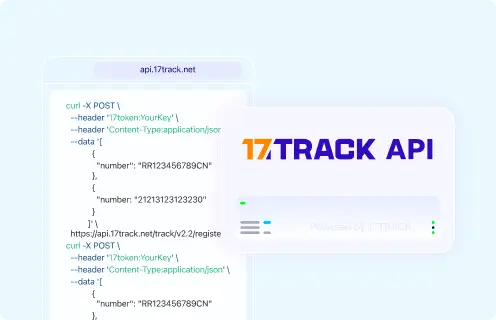
 POST https://api.17track.net/track/v2.4/register
 Headers:
   17token: YourKey
   Content-Type: application/json
 Body:
 [
   {
     "number": "TRACKING_NUMBER",
     "carrier": "CARRIER_CODE"
   }
 ]
 // Confirm the current 17TRACK carrier code before production use.
Sources & References
- 139Express official website. 139Express
- 17TRACK API documentation. 17TRACK
- S10 identification of postal items. Universal Postal Union
17TRACK is an independent tracking platform and is not affiliated with 139Express.
Track your package
Global express parcel tracking service