Third Party Logistics (Tpl, 3Pl)
Definition
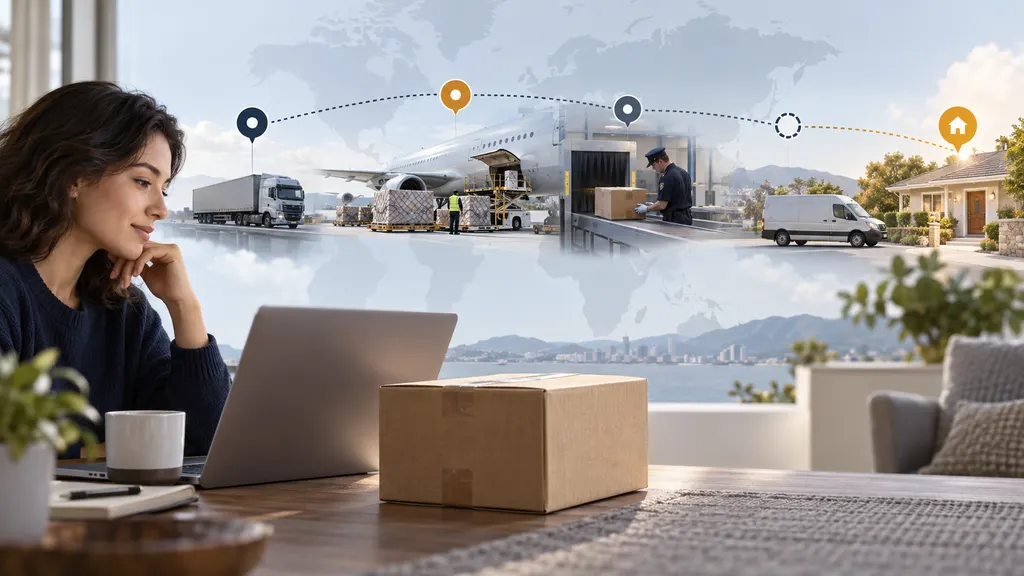
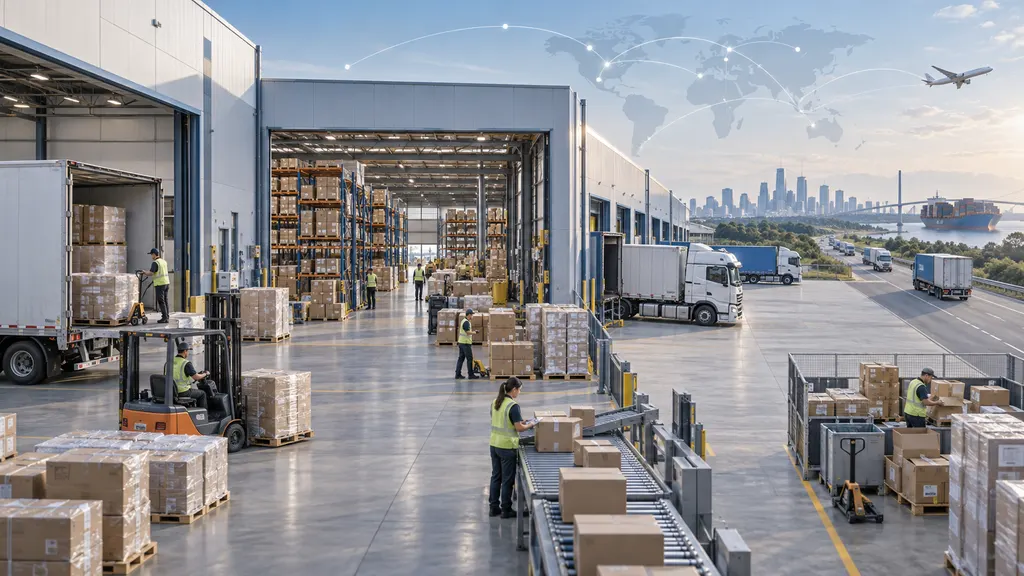
Third-party logistics (3PL), also written as third-party logistics provider or 3PL, is the outsourcing of one or more logistics activities to an external company. In logistics and ecommerce, a 3PL may manage services such as warehousing, inventory handling, order fulfillment, transportation coordination, shipment consolidation, and returns processing on behalf of a shipper or seller.
The abbreviation TPL may also be used, but 3PL is the more common expression in supply chain and ecommerce contexts. The exact services included in a 3PL arrangement depend on the contract and the operational model.
In Logistics
A 3PL sits between a business that owns or sells goods and the logistics activities required to move those goods through the supply chain. The 3PL does not normally own the merchandise being handled. Instead, it performs or coordinates logistics work for the shipper, retailer, manufacturer, marketplace seller, or another business customer.
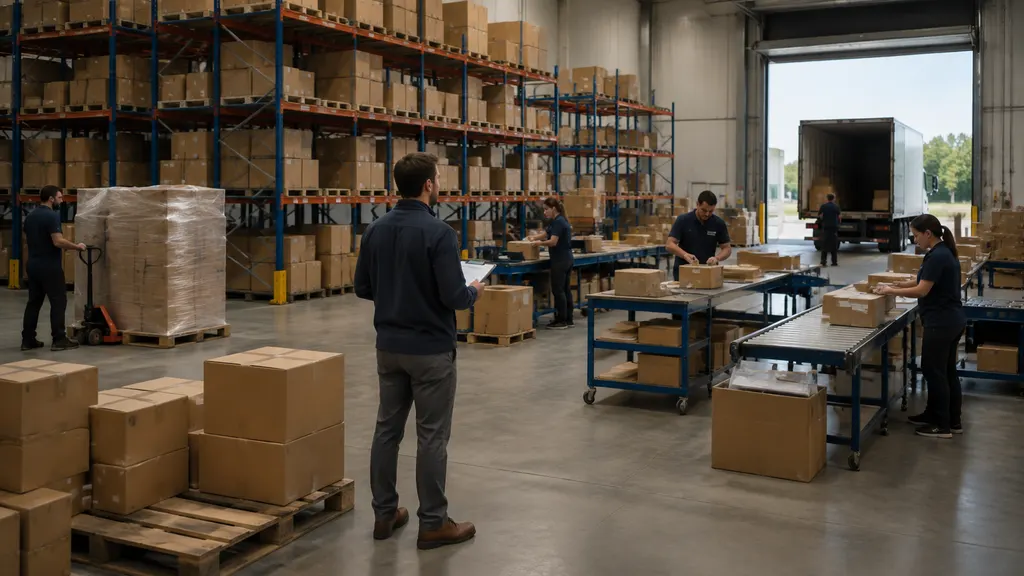
A 3PL relationship can cover a single activity, such as transportation management, or several connected activities. For example, a provider may receive inventory, store it in a fulfillment center, pick and pack customer orders, arrange carrier collection, and process returns. In other arrangements, the provider may mainly coordinate transportation while warehouses and carriers remain separate parties.
Common 3PL Services
| Service | Role in the supply chain | Example |
|---|---|---|
| Warehousing | Stores goods before they are sold or distributed. | A provider holds imported inventory near a major market. |
| Fulfillment | Processes orders and prepares goods for shipment. | A provider picks, packs, and dispatches an online order. |
| Transportation management | Plans or coordinates movement between locations. | A provider arranges line-haul or last-mile transportation with carriers. |
| Inventory handling | Receives, records, moves, and may count stored goods. | A provider updates stock records after receiving a replenishment shipment. |
| Returns processing | Receives and routes goods sent back by customers. | A provider inspects a returned item and sends it to a designated facility. |
| Value-added logistics | Performs additional operational work related to distribution. | A provider may relabel, bundle, or prepare goods for a specified sales channel when the contract includes that work. |
These services are descriptive examples rather than a universal legal classification. A provider may offer some, all, or none of them.
How a 3PL Arrangement Works
- Planning: The business defines the logistics activities to be outsourced, service requirements, systems integration needs, and responsibility boundaries.
- Inbound movement: Goods are sent to a warehouse, fulfillment center, cross-dock location, or another agreed facility.
- Storage and inventory control: The 3PL records and manages the goods according to the agreed operating procedures.
- Order processing: When an order is received, the 3PL may allocate inventory, pick the items, pack them, and prepare shipping documentation.
- Transportation and delivery: The shipment is handed to a carrier or another transportation party for movement to the consignee or customer.
- Returns and reporting: If included in the arrangement, the 3PL processes returns and provides operational information to the business customer.
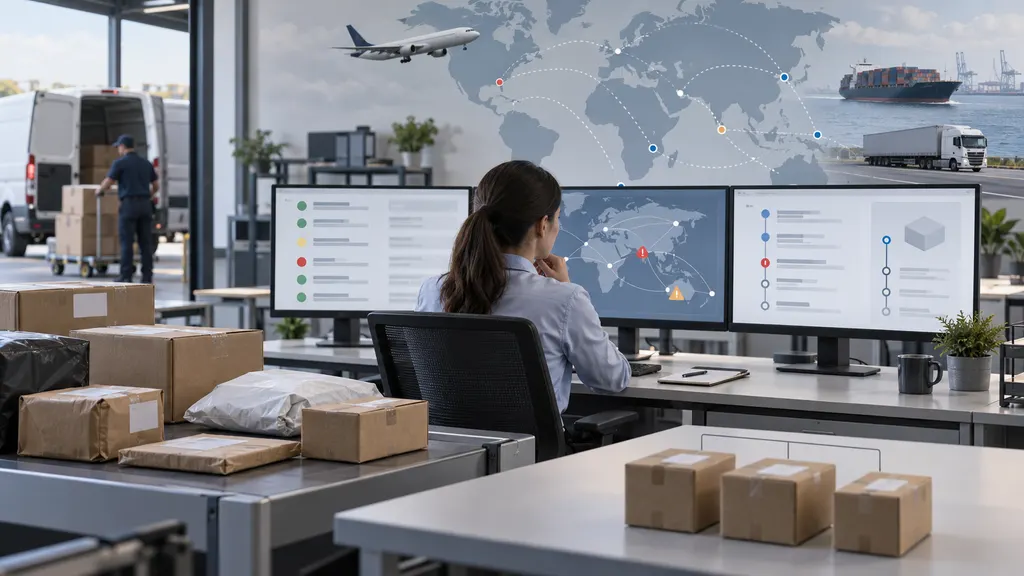
Technology is often used to exchange orders, inventory records, shipment information, and tracking events. The specific systems and data responsibilities vary by provider and contract.
3PL in Ecommerce and Cross-Border Ecommerce
In ecommerce, a 3PL can perform fulfillment for orders placed through a web store, marketplace, or other sales channel. This allows the seller to outsource physical operations while retaining responsibility for products, sales decisions, customer policies, and other business functions defined by its operating model.
In cross-border ecommerce, a 3PL may support international distribution by handling inventory in a destination market, preparing export or import shipments, coordinating carriers, or routing returned goods. A 3PL does not automatically become the importer of record, exporter, customs broker, or seller of the goods. Those responsibilities depend on the transaction structure, applicable rules, and contractual arrangements.
Tracking information may be exchanged between the seller, the 3PL, and the carrier. Shipment tracking shows the movement of a shipment after dispatch; it does not by itself prove that the 3PL owns the goods or controls every stage of transportation.
Types of 3PL Providers
There is no single universally applied classification of 3PL providers. The following descriptions identify common operating models rather than a formal industry taxonomy.
| Descriptive model | Typical focus | Possible role |
|---|---|---|
| Warehouse and fulfillment provider | Storage and order execution | Receives inventory, fulfills orders, and prepares outbound shipments. |
| Transportation-focused provider | Freight movement and coordination | Plans transportation or arranges carrier capacity for a shipper. |
| Integrated logistics provider | Several logistics functions | Combines warehousing, fulfillment, transportation coordination, and related services. |
| Specialized provider | A particular product, channel, or operational requirement | Handles logistics for a defined type of goods or distribution process. |
A 3PL may use its own facilities and equipment, subcontract part of the work, or combine both approaches. The label alone does not establish whether the provider owns assets, sets transportation rates, or assumes a particular legal responsibility.
3PL Compared with Related Terms
| Term | Meaning | Key distinction from 3PL |
|---|---|---|
| In-house logistics | A business performs logistics activities with its own personnel or operations. | It is not outsourced to an external 3PL for the relevant activity. |
| Carrier | A party that transports goods between locations. | A 3PL may arrange transportation and may work with carriers, but it is not automatically the carrier for every shipment. |
| Freight forwarder | A party that arranges or manages transportation, often in international freight. | A freight forwarder may be a 3PL or may provide a narrower transportation function; the terms are not always interchangeable. |
| 4PL | A higher-level logistics integrator or lead logistics arrangement that may coordinate multiple providers and processes. | A 4PL typically emphasizes orchestration and supply chain management, while a 3PL commonly performs or directly manages operational logistics services. |
| Fulfillment center | A facility where inventory and customer orders are processed. | It is a location or operational facility, not necessarily a company or a complete logistics service. |
Common Misunderstandings
<- A 3PL is not necessarily a carrier. It may coordinate a shipment while another company performs the physical transportation.
- A 3PL is not automatically a customs broker. Customs services must be separately provided or arranged where applicable.
- 3PL does not mean that every logistics function is outsourced. A business may outsource fulfillment but retain transportation procurement, customer service, or returns decisions.
- 3PL and fulfillment are related but not identical. Fulfillment is one service that a 3PL may provide; a 3PL arrangement can include additional logistics functions.
Examples
- For example, an online retailer may send inventory to a 3PL warehouse. When a customer places an order, the 3PL may pick and pack the goods and hand the shipment to a selected carrier.
- A manufacturer may use a transportation-focused 3PL to coordinate deliveries from production sites to distribution centers without outsourcing ownership of the products.
- A cross-border seller may use a 3PL in a destination market to store stock and fulfill local orders, while customs and tax responsibilities remain allocated according to the seller's chosen transaction structure.
QA
What does 3PL mean in logistics?
3PL means third-party logistics: the use of an external company to perform or coordinate one or more logistics activities for a business.
What does 3PL mean in ecommerce?
In ecommerce, 3PL commonly refers to outsourced services such as inventory storage, order fulfillment, shipping coordination, and returns processing.
Is a 3PL the same as a carrier?
No. A carrier transports goods, while a 3PL may perform logistics operations or coordinate transportation with one or more carriers.
Is a 3PL the same as a 4PL?
No. A 3PL commonly performs or manages operational logistics services. A 4PL generally refers to a broader coordination or integration role involving logistics processes and providers.
Sources
- Council of Supply Chain Management Professionals, Supply Chain Management Definitions and Glossary — terminology and supply chain context.
- Encyclopaedia Britannica, Logistics — general logistics context and the movement and management of goods.