Enterprise Logistics
What Is Enterprise Logistics?
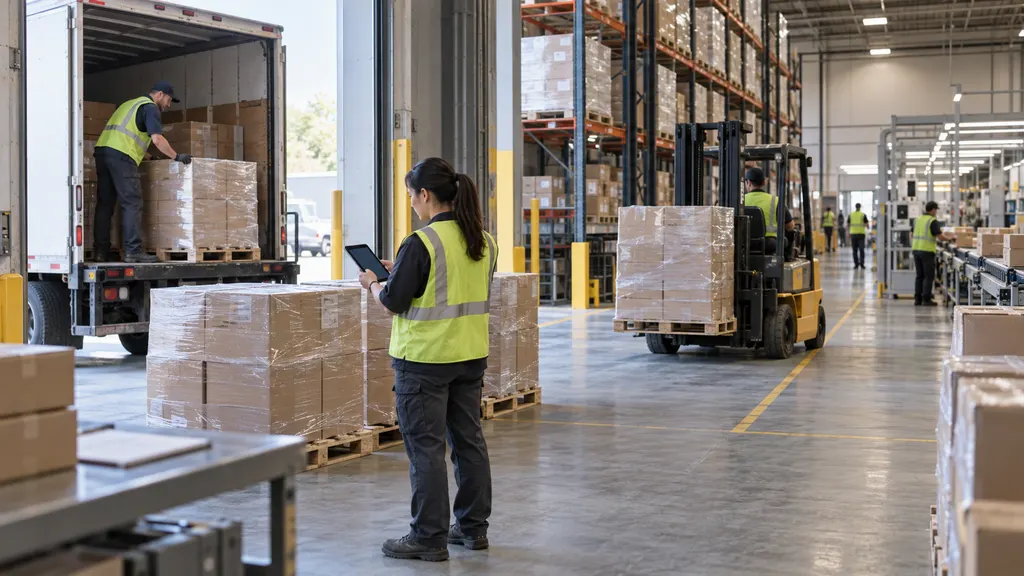
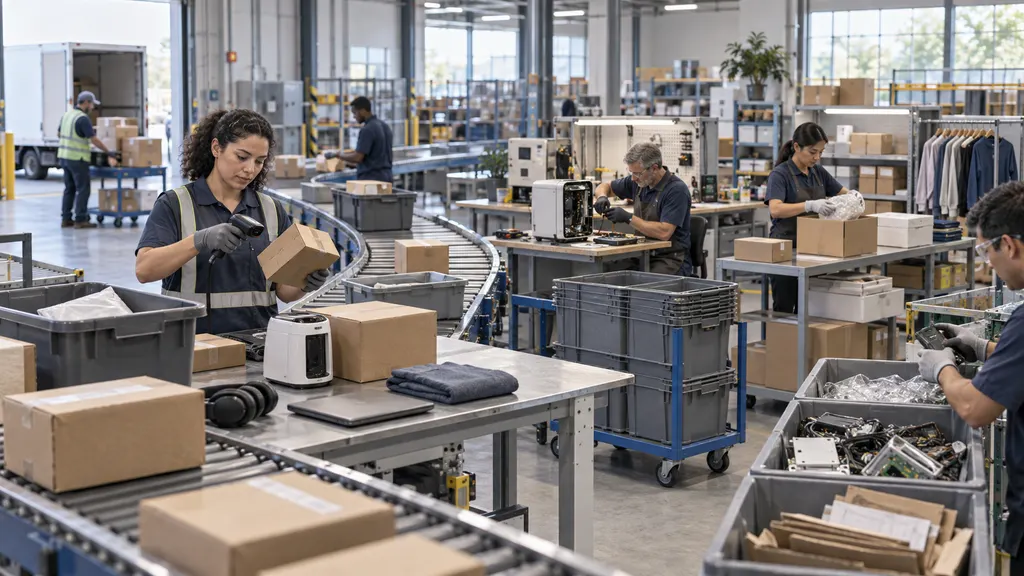
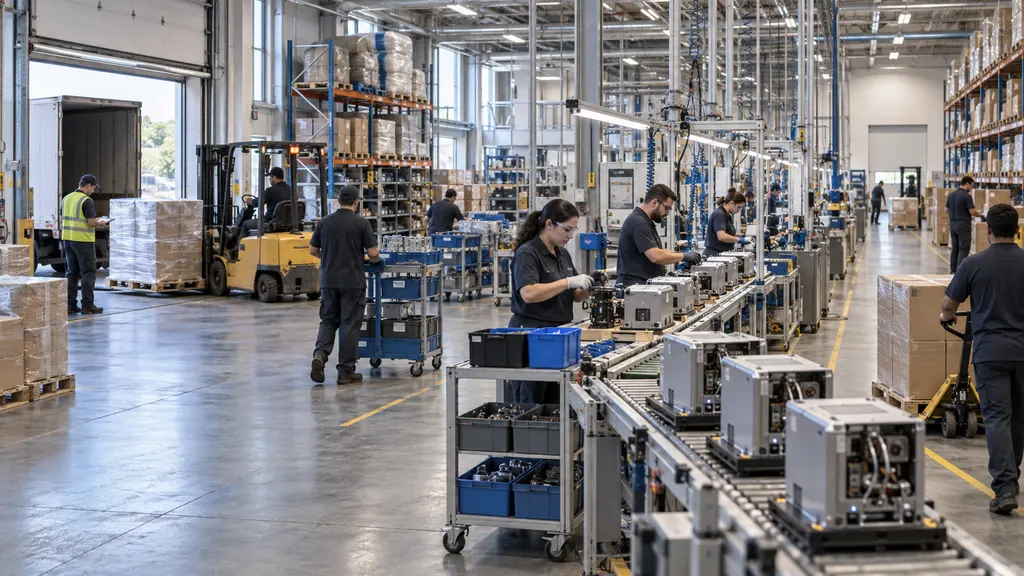
Enterprise logistics is the organization-wide planning, coordination, execution, and control of the movement and storage of goods, materials, inventory, information, and related services. In a business context, it connects sourcing, purchasing, production, warehousing, transportation, order fulfillment, delivery, and returns so that physical flows support the organization’s commercial and operational objectives. The term is used mainly in logistics, supply chain management, manufacturing, retail, ecommerce, and cross-border trade.
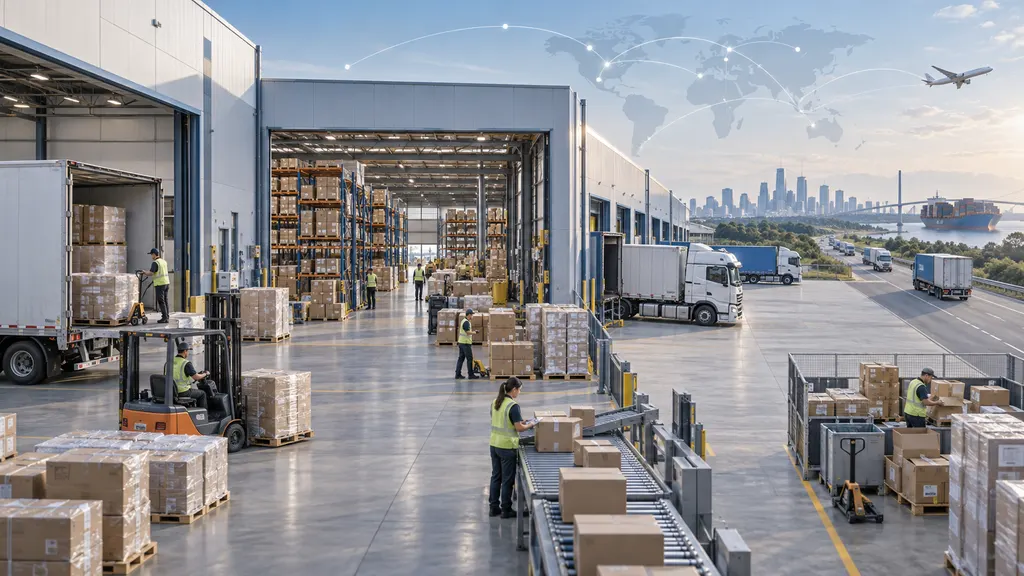
Enterprise logistics is broader than the transportation of individual shipments. It concerns how a company designs and manages its logistics capabilities across departments, facilities, sales channels, suppliers, carriers, customers, and geographic markets. The exact scope varies by organization. In one company it may include inbound materials and manufacturing distribution; in another it may focus on ecommerce fulfillment, parcel delivery, inventory positioning, and returns.
The word enterprise indicates the organizational scope of the activity. It does not necessarily mean a particular software product, carrier, warehouse model, or legal form of business. Enterprise logistics can be managed internally, outsourced to logistics providers, or divided between internal teams and external partners.
Enterprise Logistics in the Supply Chain
Enterprise logistics occupies an operating layer between business strategy and day-to-day shipment execution. Business strategy may determine the markets a company serves, the delivery promise it offers, or the level of inventory risk it accepts. Enterprise logistics translates those decisions into processes, facilities, systems, contracts, and controls.
It also links activities that are sometimes managed separately. Procurement may arrange the purchase of materials, a warehouse team may receive and store them, an order-management system may allocate inventory, a carrier may transport the goods, and a customer-service team may manage delivery inquiries or returns. Enterprise logistics provides the coordination needed to treat these activities as connected flows rather than isolated tasks.
| Supply chain area | Relationship to enterprise logistics | Typical questions |
|---|---|---|
| Procurement and inbound logistics | Moves purchased materials or products into the organization | Where should goods be sourced, consolidated, received, and inspected? |
| Inventory management | Positions and controls stock across facilities and sales channels | What inventory is available, where is it located, and which order may use it? |
| Warehousing and fulfillment | Stores, picks, packs, stages, and dispatches goods | How should an order be processed from release to carrier handoff? |
| Transportation and delivery | Moves shipments between supply chain nodes and recipients | Which service, route, carrier, and handoff sequence fit the shipment? |
| Returns and reverse logistics | Moves goods, information, and decisions back from the customer or downstream channel | Should the item be resold, repaired, recycled, restocked, or refunded? |
Main Characteristics
Cross-functional coordination
Enterprise logistics usually involves more than a logistics department. Purchasing, merchandising, manufacturing, finance, information technology, compliance, customer service, and sales may all create requirements or constraints for the logistics network. For example, a merchandising decision to offer a wider product range can affect inventory locations, storage space, picking complexity, packaging, and returns.
End-to-end visibility
The term commonly implies a need to understand the status and consequences of a flow across multiple stages. Visibility may include purchase orders, inbound receipts, inventory balances, order allocation, shipment status, delivery exceptions, customs events, and return disposition. Visibility does not mean that every organization has one complete system. Data may remain distributed across enterprise resource planning systems, warehouse management systems, transportation management systems, carrier platforms, marketplaces, and customs documentation.
Network-level decision-making
Enterprise logistics considers relationships among facilities and routes rather than evaluating each shipment in isolation. A decision to hold inventory in a regional distribution center can influence delivery distance, customs procedures, replenishment frequency, working capital, and return handling. The appropriate decision depends on the organization’s products, demand patterns, service commitments, regulatory obligations, and risk tolerance.
Service and cost trade-offs
Logistics decisions often involve trade-offs. Faster transport can affect cost and capacity requirements; centralized inventory can simplify stock control but lengthen some delivery routes; additional fulfillment locations can reduce distance to customers but increase operating complexity. Enterprise logistics does not have one universally correct design. Its purpose is to align logistics performance with the organization’s requirements and constraints.
Information and physical flows
Goods cannot be managed reliably without related information. Product identifiers, quantities, addresses, customs data, order instructions, tracking events, invoices, and return reasons may influence what happens physically. An inaccurate product description, for example, can create problems in order processing or customs documentation even when the goods themselves are available.
How Enterprise Logistics Works
Enterprise logistics is implemented through a connected set of planning and execution activities. The sequence differs by industry, but the following model describes a common operating logic.
- Define requirements. The organization identifies product characteristics, customer destinations, sales channels, service commitments, regulatory obligations, and operational constraints.
- Design the logistics network. It determines the roles of suppliers, fulfillment centers, distribution centers, stores, cross-docks, carriers, customs intermediaries, and return locations. These may be owned, leased, or operated by external providers.
- Plan inventory and capacity. Teams decide where stock should be positioned and how storage, labor, transport, packaging, and processing capacity will be made available. These decisions are planning choices, not fixed universal rules.
- Receive and control goods. Inbound products or materials are documented, checked, received, and placed into storage or another operational flow. The organization may also record discrepancies, damage, batch information, or other attributes relevant to later handling.
- Process demand. A purchase order, production requirement, wholesale order, or ecommerce order triggers allocation and fulfillment decisions. The available inventory, destination, promised service, and order restrictions may affect the selected facility or route.
- Execute fulfillment and transport. Goods are picked, packed, labeled, documented, handed to a carrier, and transported through the planned network. In cross-border transactions, the flow may also require export and import information, customs procedures, duties or taxes, and delivery arrangements in the destination market.
- Monitor exceptions. An exception may involve a stock discrepancy, address problem, missed handoff, transport delay, damage, customs hold, failed delivery, or customer-requested change. Enterprise logistics requires decisions about ownership, escalation, communication, and corrective action.
- Complete delivery or return. The process ends for the forward flow when the shipment is delivered or otherwise resolved. For a return, the organization must determine how the item will be received, inspected, credited, repaired, restocked, resold, recycled, or disposed of in accordance with its policies and applicable requirements.
- Review performance. Organizations may compare planned and actual outcomes, investigate recurring failures, and revise processes, network arrangements, inventory policies, or partner responsibilities. Any measure should be defined carefully because a single metric rarely describes the whole logistics result.
Enterprise Logistics in Ecommerce
In ecommerce, enterprise logistics connects digital demand with physical execution. An order placed through a website, marketplace, mobile application, or business-to-business portal must be translated into inventory allocation, fulfillment instructions, transport documentation, delivery updates, and, when necessary, return processing.
The customer-facing promise may depend on decisions made before the order exists. Product data can affect picking and packaging. Inventory availability can depend on whether stock is shared among channels. The delivery destination can determine the applicable carrier service, address format, customs information, and handoff requirements. A return policy can also influence warehouse processes, reverse transportation, inspection, and financial reconciliation.
Enterprise logistics is therefore not identical to ecommerce shipping. Shipping is one part of the broader system. The enterprise view also includes inventory placement, order orchestration, warehouse processes, carrier management, delivery exception handling, customer communication, and reverse logistics.
Enterprise Logistics in Cross-Border Trade
Cross-border operations add legal, documentary, and operational conditions to the logistics flow. A company may need to coordinate commercial invoices, product descriptions, origin information, valuation data, restricted-goods checks, export procedures, import declarations, duties or taxes, and local delivery. The exact requirements depend on the goods, countries, transaction structure, and applicable rules.
In this setting, enterprise logistics must connect commercial data with physical movement. A mismatch between an order and its customs documentation may delay clearance or require corrective action. A delivery plan that works domestically may not work internationally because the shipment crosses jurisdictions, uses different carriers, or requires an importer or other responsible party.
These activities should not be confused with customs classification itself. Enterprise logistics coordinates the business process and its information requirements; customs authorities and applicable laws determine the relevant legal treatment. A logistics team may prepare or transmit information, but that does not by itself determine the legal outcome.
Enterprise Logistics and Outsourcing
An enterprise may perform logistics with its own employees and facilities, use a third-party logistics provider, or combine several operating models. Outsourcing a warehouse or transportation activity does not remove the need for enterprise-level coordination. The organization still needs to define responsibilities, data exchanges, service requirements, exception procedures, inventory ownership, security controls, and return handling.
A carrier primarily transports shipments between designated points. A warehouse operator performs storage and handling activities within an agreed scope. A third-party logistics provider may combine several logistics services. These roles can overlap in practice, but they are not automatically the same as enterprise logistics. Enterprise logistics refers to the organization-wide management perspective, whether execution is internal or external.
Related Terms and Important Distinctions
| Term | Meaning | How it differs from enterprise logistics |
|---|---|---|
| Supply chain management | Coordination of sourcing, production, logistics, demand, information, and related relationships across the supply chain | Usually broader in strategic and interorganizational scope; enterprise logistics is focused on logistics flows and capabilities within an organization’s operating network. |
| Logistics management | Planning and control of the efficient flow and storage of goods, services, and related information | Often used as a near-synonym in practice, but enterprise logistics emphasizes organization-wide integration and governance. |
| Transportation management | Planning, procurement, execution, and monitoring of transportation | A major component of logistics, not the full set of warehousing, inventory, fulfillment, and returns activities. |
| Fulfillment | Processing an order through activities such as allocation, picking, packing, and dispatch | Usually concerns order execution, whereas enterprise logistics also covers inbound flows, network design, and broader controls. |
| Enterprise resource planning | Integrated management of business data and processes such as finance, purchasing, inventory, and operations | An ERP system may support logistics information, but enterprise logistics is an operating function and management approach rather than a specific software category. |
| Reverse logistics | Movement and management of products, packaging, or materials from a downstream point back toward a previous stage | A specialized flow within enterprise logistics, especially relevant to returns, repairs, recycling, and product recovery. |
Common Misunderstandings
- It is not simply another name for shipping. Shipping concerns the movement of a shipment, while enterprise logistics may include procurement, inventory, warehousing, fulfillment, delivery, information, and returns.
- It is not necessarily a software product. Software can support planning, execution, visibility, and reporting, but the term describes a business capability and scope of management.
- It does not require internal operation. An enterprise can outsource selected logistics activities and still retain responsibility for coordination, requirements, controls, and outcomes.
- It is not identical to supply chain management. The two areas overlap. Supply chain management commonly includes a wider set of relationships and decisions, while enterprise logistics concentrates on the movement, storage, handling, and related information flows managed by or for the enterprise.
- It does not guarantee a particular service level. The term describes the management scope, not a promise of speed, cost, coverage, or delivery performance.
Examples
| Business situation | Enterprise logistics question | Relevant activities |
|---|---|---|
| An online retailer sells from several fulfillment locations | Which location should fulfill each order while considering available stock and destination requirements? | Inventory allocation, warehouse processing, transportation, and customer communication. |
| A manufacturer receives components from international suppliers | How should inbound goods be scheduled, documented, received, and delivered to production? | Inbound transport, supplier coordination, customs information, receiving, and materials handling. |
| A brand operates a cross-border returns program | Where should returned goods be sent and how should their condition be assessed? | Return authorization, reverse transport, inspection, disposition, refund coordination, and inventory updates. |
| A wholesaler uses an external warehouse and several carriers | How should orders, stock records, service requirements, and exceptions be coordinated among the parties? | Partner governance, data exchange, fulfillment instructions, carrier management, and reconciliation. |
QA
What does enterprise logistics mean in business?
It means managing an organization’s logistics activities as a connected system, including relevant flows of goods, inventory, information, warehousing, transportation, fulfillment, delivery, and returns.
What is the difference between enterprise logistics and supply chain management?
Supply chain management usually has a broader scope that can include suppliers, production, demand, relationships, and strategic coordination across multiple organizations. Enterprise logistics focuses more specifically on logistics flows and capabilities managed for an enterprise.
Is enterprise logistics the same as ecommerce fulfillment?
No. Ecommerce fulfillment is one part of enterprise logistics. Enterprise logistics may also include inbound supply, inventory positioning, transportation management, delivery exceptions, cross-border processes, and reverse logistics.
Sources
- Council of Supply Chain Management Professionals, Supply Chain Management Definitions and Glossary of Terms — terminology and professional context for logistics and supply chain management.
- Encyclopaedia Britannica, “Logistics” — general reference context for logistics as the planning and movement of resources and goods.
- World Customs Organization, Customs and the International Supply Chain — context for customs-related coordination in international goods flows.
- World Trade Organization, Trade Facilitation — official context for the movement and clearance of goods in international trade.