Integrated Logistics Service
Definition
An integrated logistics service is a coordinated logistics arrangement that combines two or more activities—such as transportation, warehousing, inventory handling, order fulfillment, customs support, shipment tracking, or returns management—within one connected operating model. It is used in logistics, ecommerce, supply chain management, and cross-border trade to reduce fragmentation between separate logistics activities and to provide a more continuous flow of goods and information.
The term describes a service model rather than a single universally defined product. Its scope depends on the provider, contract, shipment profile, destination markets, and operational requirements. An integrated logistics service may be delivered by one logistics provider or coordinated across several providers through a lead logistics provider or technology platform.
In Logistics
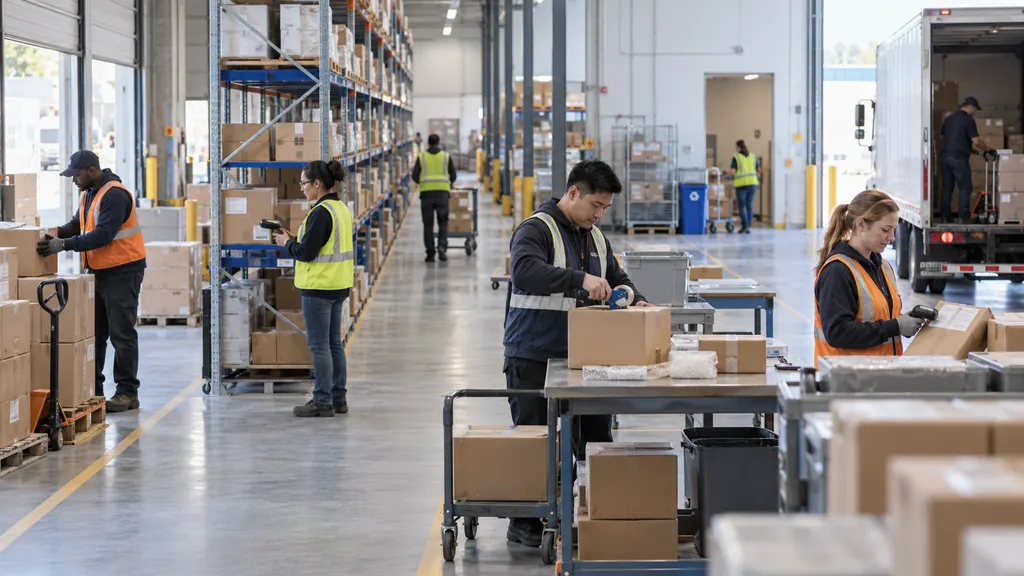
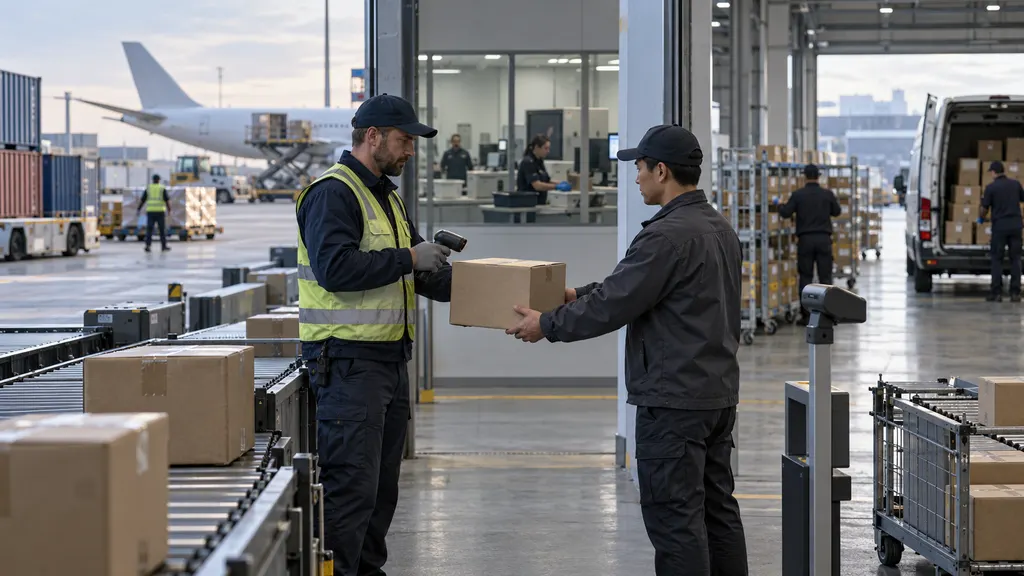
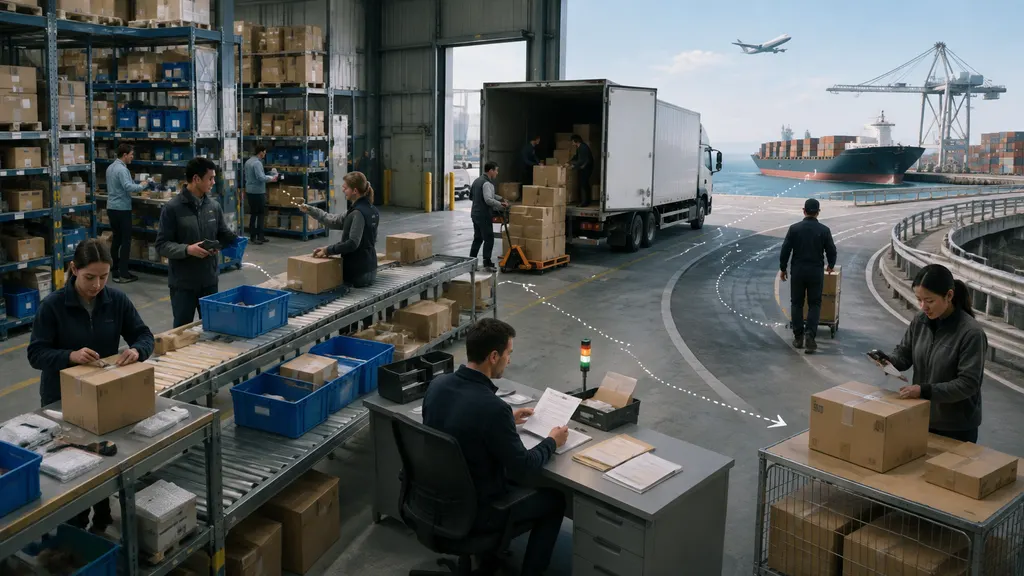
Integrated logistics connects activities that may otherwise be managed separately. A shipment can be planned, stored, transported, delivered, tracked, and returned through coordinated processes rather than through unrelated handoffs. The integration may concern physical operations, information systems, commercial management, or all three.
In a supply chain, the service generally links the movement of products with related information, including order details, inventory status, transport milestones, delivery exceptions, and return instructions. Integration does not necessarily mean that one company performs every activity. It may instead mean that responsibilities, data, and performance controls are coordinated across multiple participants.
Typical activities
| Activity | Role in an integrated service |
|---|---|
| Transportation | Moves goods between suppliers, fulfillment locations, distribution centers, and customers. |
| Warehousing | Stores, receives, organizes, and dispatches inventory. |
| Order fulfillment | Connects customer orders with picking, packing, and shipment creation. |
| Inventory handling | Coordinates stock information with replenishment and fulfillment decisions. |
| Customs support | May assist with documentation and border procedures for international shipments. |
| Shipment visibility | Combines tracking events and exception information from relevant logistics participants. |
| Returns management | Coordinates the movement, inspection, exchange, refurbishment, or disposition of returned goods when included in the agreement. |
How It Works
- Requirement planning: The merchant, manufacturer, or other customer defines the required logistics activities, locations, service levels, and compliance responsibilities.
- Network coordination: The service provider or lead coordinator arranges the relevant warehouses, carriers, customs specialists, fulfillment operations, and technology connections.
- Order and inventory synchronization: Order information is linked with inventory records and fulfillment instructions.
- Execution: Goods are received, stored, picked, packed, transported, and delivered according to the operating plan.
- Visibility and exception handling: Tracking events and operational alerts are collected to help identify delays, failed delivery attempts, damaged goods, or documentation problems.
- Reverse logistics: If returns are included, the service coordinates the movement of goods back to a designated location and the next disposition step.
The degree of integration can range from a bundled set of logistics services to a highly connected operating model with shared systems, standardized processes, and centralized performance management.
Use in Ecommerce and Cross-Border Trade
In ecommerce, an integrated logistics service may connect an online order with inventory allocation, fulfillment, carrier selection, delivery tracking, and customer returns. This can be relevant when a merchant sells through multiple sales channels or ships from more than one fulfillment location.
In cross-border ecommerce, the service may also involve export documentation, customs information, international transportation, destination-country delivery, and the communication of shipment status. The exact responsibilities remain contract-specific. A provider may coordinate these activities without being the carrier, customs authority, or owner of the goods.
For example, a retailer may use an integrated arrangement in which an order is assigned to a fulfillment center, packed there, transferred to an international carrier, monitored through delivery, and routed through a defined return process if the buyer sends the product back.
Characteristics
- Multiple connected activities: The service covers more than one logistics function.
- Process coordination: Handoffs between functions or providers are planned and managed as part of a wider workflow.
- Information sharing: Order, inventory, transport, and exception data may be connected across systems.
- Defined responsibility: Contracts normally specify which party performs or coordinates each activity.
- Scalable scope: The arrangement may be limited to selected locations or expanded across a supply chain.
- Performance management: Service evaluation may consider several linked activities rather than one transport leg alone.
Integration can improve coordination, but it does not by itself guarantee lower costs, faster delivery, or better service. Outcomes depend on network design, demand patterns, data quality, provider capabilities, and contractual controls.
Related Terms and Boundaries
| Term | Relationship to integrated logistics service |
|---|---|
| Third-party logistics (3PL) | A 3PL provider performs logistics activities for another company. A 3PL arrangement may be integrated, but not every 3PL service combines multiple functions. |
| Fourth-party logistics (4PL) | A 4PL model commonly emphasizes the management or coordination of a broader logistics network, potentially involving several 3PL providers. The meaning can vary by contract and industry usage. |
| Freight forwarding | Freight forwarding primarily arranges the movement of freight and related documentation. It may form part of an integrated service but does not necessarily include warehousing, fulfillment, or returns. |
| End-to-end logistics | This phrase emphasizes coverage across multiple stages of a product's movement. It is often used similarly to integrated logistics, although the precise scope must be defined. |
| Shipment tracking | Tracking provides status information about a shipment. It can support an integrated logistics service but is only one information function within the wider arrangement. |
Common Misunderstandings
- It does not always mean one company performs everything. A lead provider may coordinate specialized carriers, warehouses, customs agents, or technology systems.
- It is not identical to shipment tracking. Tracking concerns shipment-status information, whereas integrated logistics may include physical handling, transportation, fulfillment, and returns.
- It is not a fixed legal or technical standard. Providers use the term for arrangements with different combinations of services, so the contract and service description determine its practical meaning.
- Integration is broader than bundling. Simply purchasing several services from the same provider does not necessarily create operational integration if the processes and information remain disconnected.
QA
What does integrated logistics service mean in ecommerce?
It means coordinating activities such as inventory handling, order fulfillment, transportation, delivery tracking, and sometimes returns within one connected logistics model.
Is integrated logistics the same as 3PL?
No. A 3PL is a provider that performs logistics activities for another company. A 3PL service may be integrated, but integrated logistics describes the coordination and scope of activities rather than a specific provider category.
Does integrated logistics include customs clearance?
It may include customs support or coordination in cross-border operations, but customs responsibilities depend on the provider's role, the shipment, and the contract.
Sources
- Council of Supply Chain Management Professionals, Supply Chain Management Definitions and Glossary — terminology and supply-chain context.
- DHL Supply Chain — industry context for coordinated logistics and supply-chain services.
- IBM, Supply Chain Management — background on the coordination of material, information, and operational flows in supply chains.