Supply Chain
Definition
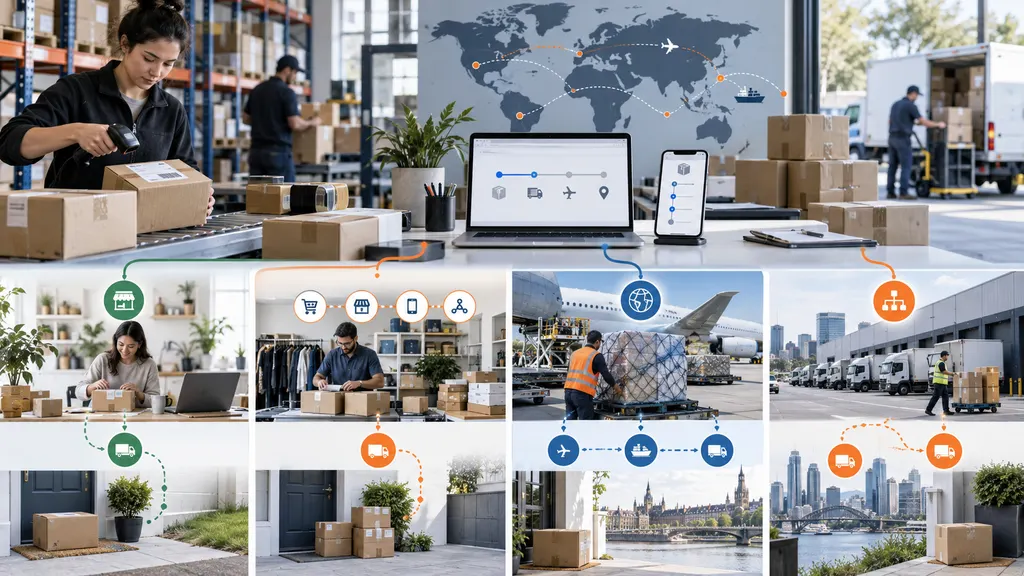
A supply chain is the connected system of organizations, people, activities, information, resources, and processes involved in producing and delivering a good or service to its final user. In logistics, ecommerce, and cross-border trade, the term covers the movement and coordination of materials, inventory, orders, shipments, data, and related financial transactions from suppliers through businesses and logistics operations to customers.
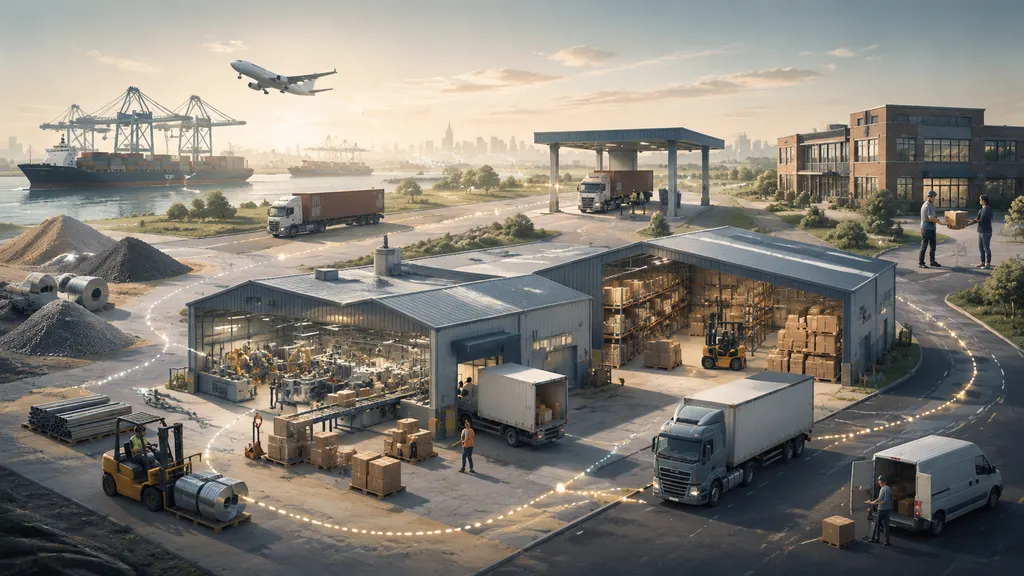
A supply chain is broader than transportation alone. It may include sourcing, manufacturing, procurement, inventory planning, warehousing, order fulfillment, customs processing, transportation, delivery, and returns. The exact participants and stages depend on the product and business model.
In Logistics and Ecommerce
In a supply chain, logistics is primarily concerned with planning and controlling the movement and storage of goods and the information associated with them. Supply chain management has a wider scope because it also includes activities such as supplier selection, production coordination, demand planning, purchasing, and relationships between supply-chain partners.
For an ecommerce order, the supply chain may connect a raw-material supplier, manufacturer, wholesaler or marketplace seller, fulfillment facility, carrier, customs intermediary, last-mile delivery provider, and customer. A return may create a reverse flow from the customer back to a seller, warehouse, repair facility, or other designated destination.
Main Flows in a Supply Chain
| Flow | What It Includes | Example in Ecommerce |
|---|---|---|
| Physical flow | Materials, products, inventory, and shipments | A product moves from a fulfillment center to a customer. |
| Information flow | Orders, forecasts, inventory records, tracking events, and customs data | A seller receives an order and shares shipment information with a carrier. |
| Financial flow | Payments, invoices, duties, taxes, and other commercial settlements | A buyer pays for an order while the seller accounts for applicable charges. |
Key Characteristics
- Multiple participants: A supply chain commonly involves more than one company, although its structure can range from relatively simple to highly complex.
- Interdependence: Decisions made by one participant can affect inventory, lead times, costs, service levels, and risks elsewhere in the chain.
- Connected processes: Sourcing, production, storage, transportation, fulfillment, and returns are linked rather than isolated activities.
- Two-way movement: Products usually move toward the customer, while returns, repairs, reusable packaging, and disposal may create reverse flows.
- Information dependence: Planning and execution rely on information such as purchase orders, stock records, shipment data, and delivery confirmations.
Supply Chain Compared with Related Terms
| Term | Meaning | Relationship to Supply Chain |
|---|---|---|
| Supply chain | The broader network and set of processes involved in supplying and delivering goods or services. | Includes logistics and may also include sourcing, production, planning, and commercial coordination. |
| Logistics | The planning and control of the movement and storage of goods and related information. | Usually treated as a major function within supply chain management. |
| Shipping | The dispatch or transportation of goods, often from a seller or sender to a destination. | Represents one activity or stage within a supply chain. |
| Delivery | The process or event of bringing a shipment to its intended recipient or destination. | Usually occurs near the customer-facing end of a supply chain. |
| Order | A customer or buyer's request to purchase specified goods or services. | May trigger procurement, fulfillment, shipment, payment, and delivery activities. |
| Shipment | Goods dispatched together under a transport arrangement or shipping record. | Is a physical movement created or supported by supply-chain processes; one order may produce multiple shipments. |
How a Supply Chain Works
- Planning: A business estimates demand, determines required materials or stock, and sets purchasing or fulfillment plans.
- Sourcing and procurement: Materials, components, finished goods, or services are obtained from suppliers.
- Production or preparation: Products may be manufactured, assembled, inspected, labeled, or packaged.
- Storage and inventory management: Goods are held and recorded at facilities such as warehouses, fulfillment centers, or distribution centers.
- Order fulfillment: An order is processed, items are picked and packed, and shipping information is created.
- Transportation and delivery: A carrier or other logistics provider moves the shipment through one or more transport stages to the recipient.
- Returns and recovery: Where applicable, returned goods are received, assessed, restocked, repaired, recycled, resold, or disposed of according to the business process.
These stages do not always occur in the same order or through separate organizations. For example, a digital retailer may sell products supplied by a manufacturer and use a third-party fulfillment provider, while another retailer may manufacture, store, and deliver its own products.
Supply Chains in Cross-Border Ecommerce
In cross-border ecommerce, the supply chain crosses at least one national border and may involve export procedures, import customs formalities, duties or taxes, international transportation, local delivery, and country-specific product or labeling requirements. The exact obligations depend on the goods, countries involved, transaction structure, and applicable law.
Cross-border supply-chain records may include commercial invoices, packing information, transport documents, order data, customs declarations, and tracking events. Accurate and consistent information helps the participants coordinate fulfillment and border procedures, but the presence of tracking data does not by itself prove that customs clearance, delivery, or payment of import charges has been completed.
Common Misunderstandings
Supply Chain Is Not the Same as Shipping
Shipping refers to the dispatch or transportation of goods. A supply chain includes shipping but also covers activities before and after transportation, such as sourcing, inventory management, order processing, customs coordination, and returns.
Supply Chain Is Not Limited to Physical Goods
The term is most often used for networks that supply physical products, but supply-chain management can also involve services, information, and the resources needed to provide them. In ecommerce and logistics discussions, however, the physical movement and storage of goods are usually central.
A Supply Chain Is Not Always a Straight Line
The word “chain” is a convenient description, but actual supply networks may have several suppliers, distribution paths, facilities, intermediaries, and return routes. “Supply network” is sometimes used to emphasize this structure.
QA
What is a supply chain in logistics?
It is the connected network of organizations and processes used to source, store, move, and deliver goods, together with the information and financial activities that support those processes.
What is the difference between a supply chain and logistics?
Logistics focuses mainly on the movement and storage of goods and related information. Supply chain management has a broader scope that can include sourcing, production, procurement, planning, logistics, fulfillment, and returns.
Can one order be divided into multiple shipments?
Yes. A single order may be fulfilled from different locations or at different times, resulting in multiple shipments.
Sources
- Council of Supply Chain Management Professionals, Supply Chain Management Definitions and Glossary — terminology and the relationship between supply chain management and logistics.
- World Trade Organization, World Trade Report 2021 — international trade and cross-border supply-chain context.
- World Customs Organization, WCO Data Model — the role of standardized data in customs and international supply-chain processes.