Just-In-Time Logistics
What Is Just-In-Time Logistics?
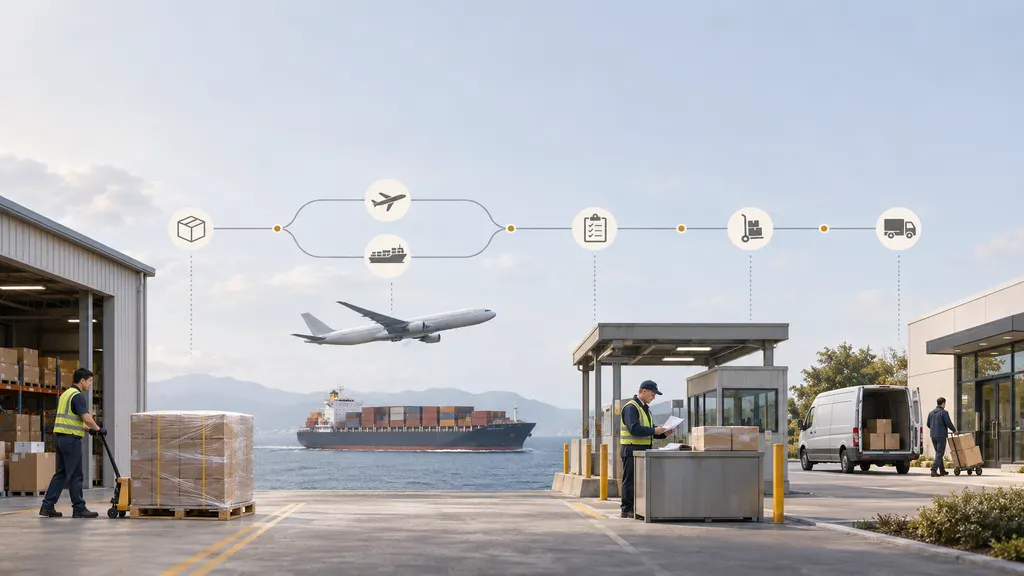
Just-in-time logistics is an approach to coordinating the movement and replenishment of goods so that they arrive when needed for production, fulfillment, or sale, in the quantities required. Its purpose is to reduce unnecessary inventory and waiting while maintaining the availability of materials or products. In logistics, the term describes the transport, receiving, storage, and information flows that support a broader just-in-time (JIT) operating system.

JIT does not mean that every shipment must arrive at the last possible moment or that a business must hold no inventory. It means aligning supply with actual requirements rather than accumulating stock without a clear operational need. The appropriate arrival window depends on consumption, replenishment lead time, service requirements, and the consequences of disruption.
The concept is closely associated with manufacturing, but its logistics principles also apply to retail replenishment and ecommerce fulfillment. In these settings, the central question is how to make goods available where they are needed without carrying more stock than the operation requires.
How Just-In-Time Logistics Works
JIT logistics connects the use of goods with the activities needed to replace them. The Lean Enterprise Institute describes just-in-time production through three supporting elements: a pull system, takt time, and continuous flow. Logistics supports these principles by coordinating replenishment quantities, delivery timing, and material movement.
A pull system authorizes replenishment in response to downstream consumption or a defined requirement. This does not eliminate forecasting: forecasts can still inform supplier capacity, purchasing commitments, and transport planning. The distinction is that forecasts and replenishment signals serve different purposes rather than automatically triggering the same inventory movement.
- Identify the requirement. A production operation, warehouse picking area, or other receiving point establishes what goods it needs and when it needs them.
- Generate a replenishment signal. Consumption, an inventory threshold, or a scheduled requirement triggers an instruction to supply a defined quantity.
- Coordinate preparation and dispatch. The supplier or upstream warehouse prepares the goods, while the transport operation schedules collection and delivery against the receiving requirement.
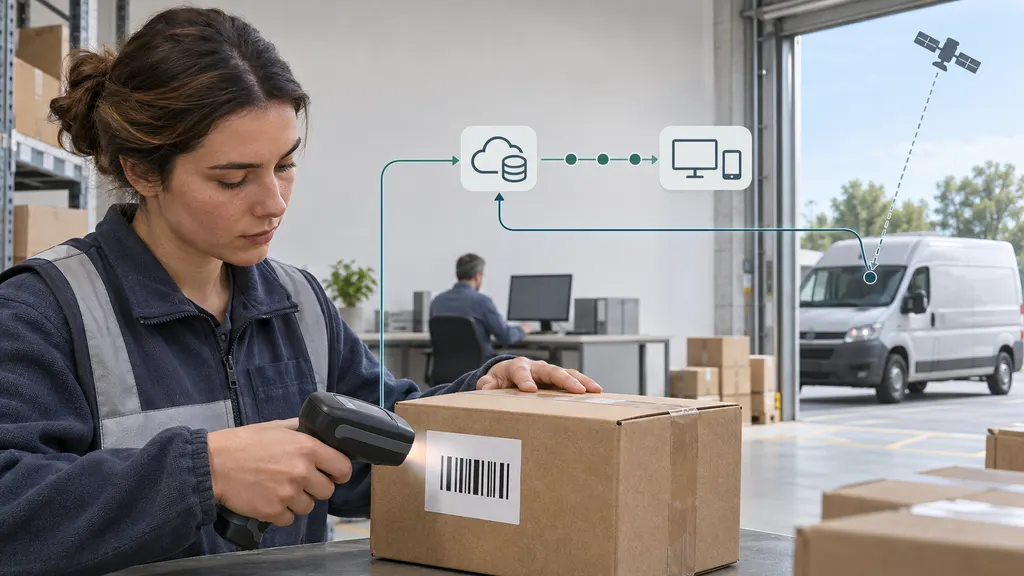
- Receive and verify the goods. The receiving site checks quantity, identity, condition, and any required documentation before making the goods available.
- Monitor performance and exceptions. Actual consumption, delivery timing, shortages, and quality problems feed back into replenishment settings and operational planning.
This sequence requires agreement about what counts as available inventory. A shipment that has reached a warehouse gate is not necessarily ready for use: unloading, inspection, system updates, and internal movement may still be required. Delivery planning therefore needs to account for the time between physical arrival and operational availability.
Operating Requirements
Reducing inventory buffers increases the importance of reliable execution. A JIT arrangement should be assessed across the complete replenishment process, not only the carrier's transit time.
- Supplier reliability: Goods must be ready in the agreed quantity and condition. Transport punctuality cannot compensate for missing or unusable products.
- Lead-time consistency: Both the expected replenishment time and its variability matter. An inconsistent short route can be harder to plan around than a longer, predictable one.
- Inventory accuracy: Replenishment decisions depend on trustworthy stock records, including allocations, damaged goods, and stock that is not yet available for use.
- Receiving capacity: Delivery appointments, unloading resources, inspection capacity, and put-away arrangements must support the planned flow.
- Information exchange: Order changes, dispatch confirmations, consumption signals, and exceptions need to reach the parties responsible for acting on them.
- Contingency arrangements: The operation needs a defined response to late deliveries, quality failures, demand changes, or interruptions at a supplier.
These are practical assessment dimensions, not a formal classification of JIT systems. Their importance varies with the goods, the route, and the cost of an interruption.
Uses in Ecommerce and Cross-Border Logistics
Ecommerce replenishment
In ecommerce, JIT principles can guide replenishment into a fulfillment center or the movement of goods from reserve storage to a picking location. The aim is to supply the next stage without filling every location with excess stock. Supplier replenishment and internal warehouse replenishment operate over different distances and lead times, so they should not be treated as identical processes.
For example, an online retailer may replenish a picking area after recorded withdrawals reach a defined trigger. The reserve stock remains elsewhere in the warehouse, while the picking location receives only the quantity needed for its replenishment cycle. This illustrates JIT-style material flow without implying that the retailer holds no inventory overall.
Applying the same approach to incoming supplier deliveries requires a separate assessment. Promotion-driven sales, uncertain demand, supplier minimum order quantities, and delivery promises can make very lean replenishment unsuitable for particular products. An operation may use JIT principles for selected flows while retaining larger buffers elsewhere.
Cross-border replenishment
Cross-border JIT logistics must account for international transport, border procedures, and the handoffs between them. Customs release is not guaranteed simply because a shipment has a scheduled delivery appointment. Documentation issues, inspections, or other clearance requirements can affect when goods become available.
A business considering an international JIT arrangement should therefore evaluate the complete route from supplier readiness to usable stock. Relevant factors include export preparation, main transport, import clearance, onward delivery, and receiving. A predictable factory dispatch time alone does not establish a predictable replenishment lead time.
One possible arrangement is to retain a buffer near the destination market and replenish the final receiving point in smaller quantities. This can support a JIT flow at the receiving point while inventory remains upstream. It is important to state that boundary clearly: inventory has been positioned differently, not necessarily eliminated from the supply chain.
Benefits, Trade-Offs, and Risks
When replenishment is reliable and aligned with consumption, JIT logistics can reduce average inventory, storage requirements, and the time goods spend waiting between activities. It can also make process problems more visible because excess stock is no longer available to conceal every interruption. These are potential outcomes, not guarantees.
The trade-off is greater exposure to disruptions that inventory previously absorbed. A missing component may interrupt production; an unavailable retail item may prevent an order from being fulfilled as promised. The effect depends on whether substitutes, alternative suppliers, or recovery options exist.
Smaller replenishment quantities can also change transport economics. More frequent dispatches may increase handling effort or reduce vehicle utilization unless loads and routes are coordinated. A reduction in warehouse inventory therefore does not automatically mean a reduction in total logistics cost or environmental impact.
Evaluation should consider inventory carrying costs alongside transport, ordering, receiving, quality, stockout, and recovery costs. It should also distinguish local improvements from system-wide improvements: lowering stock at one warehouse may simply shift inventory, expense, or operational risk to another participant.
Related Terms and Important Distinctions
| Term | Relationship to JIT Logistics | Important Distinction |
|---|---|---|
| Just-in-time production | A production approach supported by synchronized material supply. | It concerns the production system; JIT logistics concerns the supporting movement and replenishment of goods. |
| Lean logistics | Applies waste-reduction and flow principles to logistics activities. | It is broader than delivery timing or inventory reduction alone. |
| Kanban | A signaling method that can authorize production or withdrawal in a pull system. | It is a control mechanism, not another name for the entire JIT approach. |
| Just-in-sequence delivery | Coordinates supply with a required order of use, such as an assembly sequence. | Correct sequence is an additional requirement beyond having the right goods available at the right time. |
| Safety stock | Inventory maintained to help absorb uncertainty. | Using a deliberate buffer does not automatically conflict with JIT principles. |
| Cross-docking | Transfers incoming goods toward outbound movement with limited storage. | It is a handling arrangement that may support JIT, but neither approach requires the other. |
Assessing Whether a Flow Is Suitable
JIT suitability is better assessed for a specific product and replenishment route than declared for an entire business. A useful review asks:
- How stable is consumption, and how quickly can an unexpected requirement arise?
- What is the actual replenishment lead time, including preparation, transport, receiving, and inspection?
- How much does that lead time vary, and which stages cause the variation?
- What happens if a delivery misses its required availability window?
- Can suppliers and receiving sites support the proposed quantities and frequency?
- Where will inventory remain, and who will bear the resulting costs and risks?
- Which exception requires intervention, and who has authority to arrange recovery?
Useful measures include on-time delivery against agreed windows, quantity completeness, stock availability, inventory accuracy, and the frequency of emergency replenishment. Measures need explicit definitions. For example, dispatching on time is not equivalent to delivering on time, and delivering on time is not equivalent to making inspected goods available for use.
QA
Does just-in-time logistics mean zero inventory?
No. JIT seeks to align inventory and replenishment with operational needs. Deliberate buffers may remain where uncertainty or interruption risk makes them necessary.
Is just-in-time logistics the same as fast shipping?
No. Fast shipping emphasizes transit speed. JIT logistics emphasizes supplying the required quantity at the required time, which also depends on preparation, receiving, and replenishment control.
Can JIT be used for cross-border ecommerce?
It can support selected replenishment flows, but international transport and customs-related uncertainty must be considered. A destination-market buffer may support a JIT receiving arrangement without removing inventory from the wider supply chain.
What is the difference between JIT and kanban?
JIT is the broader approach to supplying and producing what is needed when it is needed. Kanban is a signaling method that can control production or material withdrawal within a pull system.
Sources
- Lean Enterprise Institute: Just-in-Time Production — Definition and the relationship between JIT, pull systems, takt time, and continuous flow.
- Lean Enterprise Institute: Kanban — Definition of kanban and its role in authorizing production or withdrawal.
- Toyota: Toyota Production System — Primary explanation of just-in-time principles and the coordination of material supply with production requirements.