Shipping from China to the Usa: Methods, Transit Times, Customs, and Tracking
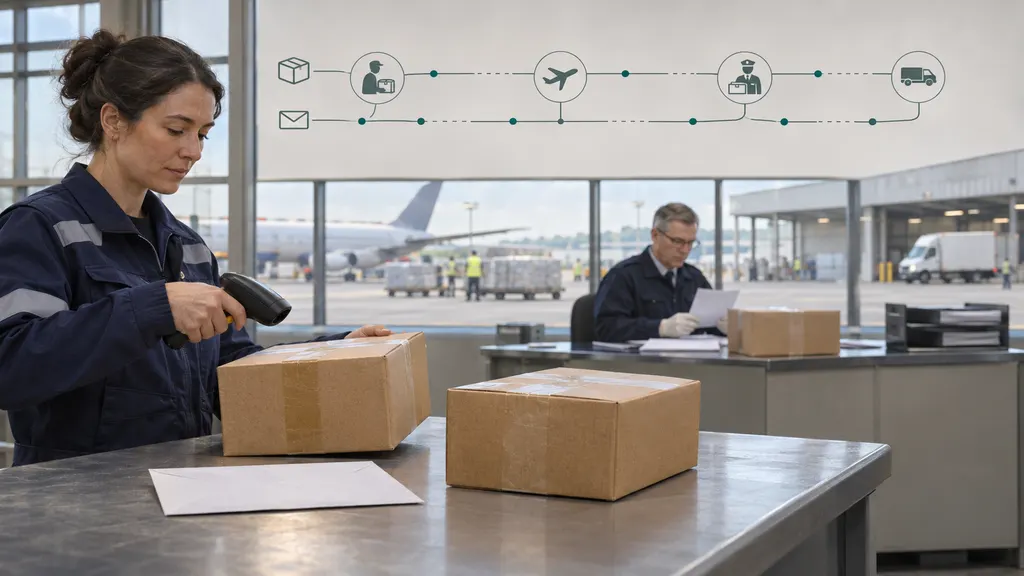
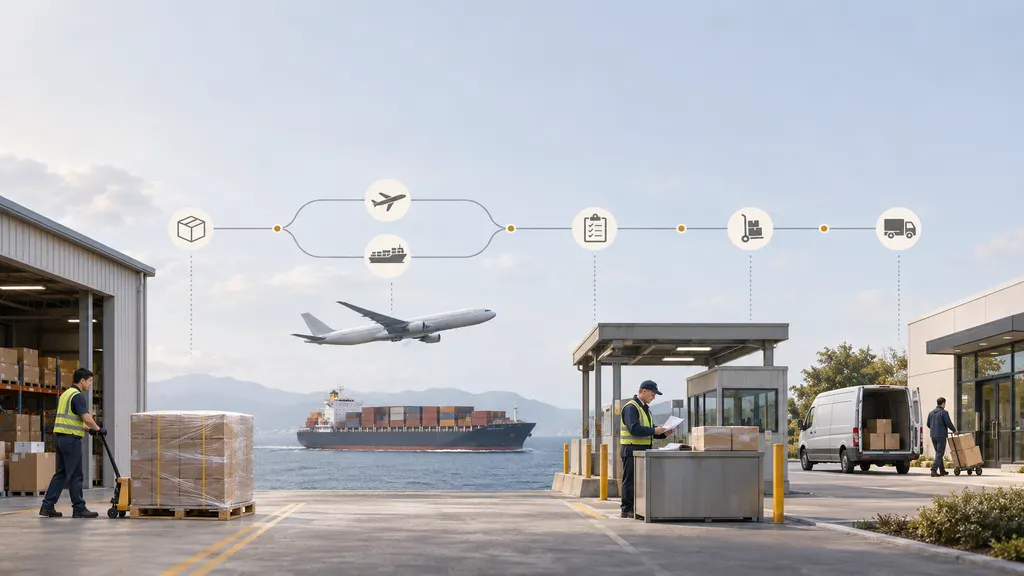
Shipping from China to the USA usually involves express courier, air freight, ocean freight, or a postal or consolidated parcel service. Choose the method around your delivery deadline, shipment size, product restrictions, and total landed cost—not the transport quote alone. Express and air services generally suit urgent shipments; ocean freight suits larger, less time-sensitive orders. Customs clearance and domestic delivery must be included in your schedule, while tracking visibility depends on the service and each carrier handoff.
For an importer or ecommerce seller, the practical goal is to get goods to the correct destination with clear responsibility for paperwork, charges, and delays. For a shopper waiting for one order, the priority is usually understanding its tracking status and knowing whom to contact. This guide covers both, with the shipping decisions addressed first.
Choose the shipping method around the shipment
The first distinction is between a parcel service and a freight service. A parcel booking may combine collection, international transport, clearance arrangements, and delivery. A freight quote may cover only one part of that journey unless additional services are explicitly included.
| Method | Practical fit | What to check |
|---|---|---|
| Express courier | Urgent samples, replacement parts, and smaller shipments | Chargeable weight, clearance arrangements, delivery area, and excluded fees |
| Air freight | Time-sensitive commercial cargo that needs a freight solution | Airport handling, customs brokerage, collection, and final delivery |
| Ocean freight, full container load | Larger orders that justify a dedicated container | Sailing schedule, destination charges, free time, and inland transport |
| Ocean freight, less than container load | Cargo that does not require a whole container | Consolidation, deconsolidation, minimum charges, and destination handling |
| Postal or consolidated parcel service | Smaller orders where delivery speed is less critical | Route eligibility, delivery estimate, tracking continuity, and claims process |
When paying for speed makes sense
Choose express when the cost of waiting outweighs the transport premium and the goods qualify for the service. Air freight is worth quoting for larger urgent shipments, but compare complete door-to-door costs. An attractive airport-to-airport rate is not equivalent to a courier price that includes collection and delivery.
For inventory replenishment, splitting an order can be more practical than expediting everything: send the quantity needed to cover an immediate shortage by air and move the balance by ocean. This is an operational option, not a guaranteed saving; separate shipments can create additional handling and clearance costs.
When ocean freight makes sense
Ocean freight is generally better suited to substantial shipments with flexible delivery dates. Full container load, or FCL, gives the shipment a dedicated container, although the container need not be completely full. Less than container load, or LCL, shares container space with other cargo and normally involves consolidation and deconsolidation steps.
Do not choose LCL solely because the goods occupy less than a container. Ask for comparable all-in LCL and FCL quotations. Minimum charges, handling requirements, cargo characteristics, and destination fees can change the result.
Transit times: measure the whole journey
There is no single reliable China-to-USA transit time. Express and air shipments are generally planned on a days-scale, while ocean shipments are planned on a weeks-scale. Postal and consolidated parcel services vary substantially by route and service level. These are broad planning distinctions, not delivery commitments.
A useful estimate must identify its starting and ending points. A flight duration is not an air-freight delivery time, and a port-to-port sailing estimate is not the date inventory will reach your warehouse.
- Before departure: production completion, collection, export preparation, cargo acceptance, and waiting for the booked departure.
- International transport: the flight or sailing, including any connection or transshipment.
- Arrival and clearance: unloading, cargo availability, customs processing, and any required examination.
- Domestic delivery: terminal collection, inland transport, delivery appointments, and receiving availability.
Ask the provider for a route-specific estimate that states whether it uses business days or calendar days, whether customs clearance is included, and whether the service has a contractual delivery commitment. Also ask what happens if cargo misses its planned departure.
Build your inventory deadline backward from the date goods must be available for sale—not merely delivered to a port. A warehouse appointment, labeling correction, or receiving backlog can matter even after international transport is complete.
Compare total landed cost, not just freight
The lowest transport rate may not produce the lowest delivered cost. Request a written quotation using the same cargo details and scope for every provider: collection address, destination, carton count, dimensions, gross weight, commodity description, and readiness date.
Check whether the quote includes:
- Origin collection, export handling, and documentation.
- International freight and applicable surcharges.
- Destination terminal or handling charges.
- Customs brokerage and any applicable bond charges.
- Duties, taxes, and other government charges.
- Final delivery, appointments, and special unloading services.
- Storage, examinations, redelivery, and other contingent expenses.
- Cargo insurance, if requested, and its exclusions.
For parcel and air services, ask how chargeable weight is calculated. Bulky, lightweight cartons may be billed using dimensional weight rather than actual scale weight. Obtain the provider's calculation method instead of assuming that every service uses the same divisor.
For ocean freight, ask about free time and the circumstances that can trigger storage, demurrage, or detention charges. Confirm who monitors deadlines and arranges collection after release.
Put delivery terms in writing
Trade terms help allocate transport obligations, costs, and risk between buyer and seller. Specify the agreed rule, named place, and applicable Incoterms edition in the contract. A term without a precise location leaves room for disagreement.
If a supplier offers delivered duty paid, or DDP, do not treat the label as proof that every import issue is resolved. Ask who will act as importer of record, how duties will be handled, and which charges remain excluded. A delivery arrangement does not remove applicable U.S. import requirements.
U.S. customs: settle responsibility before shipping
U.S. Customs and Border Protection explains that importers are responsible for exercising reasonable care when entering merchandise. A broker can assist with clearance, but using one does not eliminate the importer's responsibilities. Begin with CBP's Basic Importing and Exporting guidance and resolve product-specific questions before cargo leaves China.
Confirm classification, value, and origin
Tariff treatment depends on the goods, their classification, customs value, origin, and applicable measures. The Harmonized Tariff Schedule maintained by the U.S. International Trade Commission is a starting point for classification and tariff research. Additional provisions may apply beyond a product's ordinary tariff line.
Do not rely on a blanket duty percentage for all Chinese goods. Likewise, do not assume a low-value parcel will qualify for duty-free treatment based on an older threshold or an outdated article. Low-value shipment rules and China-related trade measures can change; confirm the treatment applicable to your goods and entry date with CBP or a qualified customs broker.
The place a parcel ships from is not necessarily its legal country of origin. Provide accurate manufacturing and product information rather than treating the dispatch address as sufficient evidence.
Prepare documents that agree with each other
The exact requirements depend on the commodity and shipping arrangement, but a commercial shipment commonly needs a commercial invoice, packing list, and transport document, such as an air waybill or bill of lading. Other permits, declarations, or supporting documents may be necessary.
- Commercial invoice: use a specific product description, accurate quantities and values, currency, and relevant seller and buyer details.
- Packing list: show how goods are packed, including carton or pallet counts, weights, and dimensions.
- Transport document: check consignee details and shipment references against the booking.
- Product records: retain information needed to support classification, origin, valuation, and regulatory compliance.
Descriptions such as “accessories” or “samples” may not explain what the goods actually are. Describe the item, its material, and its function where relevant. Never understate the value or label a commercial purchase as a gift to seek different treatment.
Check requirements beyond customs duties
Some products are subject to requirements administered by agencies other than CBP. Food, medical products, radio-frequency equipment, children's products, and plant or animal materials can require additional review. Batteries and other dangerous goods also raise transport-acceptance questions separate from import admissibility.
For vessel cargo subject to Importer Security Filing requirements, arrange the filing with the responsible party before shipment. CBP's Importer Security Filing guidance explains the program. Do not assume that the supplier, forwarder, and broker have automatically agreed who will handle it.
Tracking a shipment from China to the USA
Tracking works differently for parcels and freight. Parcel services typically use a tracking number. Air freight may be followed using an air waybill reference, while ocean visibility may use a booking number, bill of lading, or container number. A purchase order number is not necessarily a transport tracking reference.
For parcel shipments, 17TRACK's tracking page provides a place to check tracking information. Use it alongside the seller's shipment details and the carrier's own records when investigating an exception. A tracking service displays shipment information; it does not perform customs clearance or physically move the package.
Read milestones without overinterpreting them
- Label created or information received: shipment data exists, but this alone does not prove physical carrier acceptance.
- Accepted or collected: a handling event indicates receipt into the transport network.
- Departed or in transit: movement is recorded, but the wording may refer to a facility rather than an international departure.
- Customs processing: the shipment is undergoing a clearance-related step; the status alone does not explain whether action is required.
- Transferred to a delivery partner: another operator may perform the final leg, sometimes under a different reference.
- Delivered: check the delivery details and available proof before concluding that the intended recipient personally received it.
For China tracking, keep both the original reference and any destination-carrier number. A handoff can create a gap between one operator's final scan and another's first scan. No update does not, by itself, prove the shipment is lost or held by customs.
Who should act when progress stops?
If you are the buyer, contact the seller when tracking has not shown physical acceptance or when the order is beyond its promised delivery window. The seller or shipping account holder is often best placed to request a formal investigation.
If you are the importer and the shipment needs clearance information, contact the broker or provider managing the entry. If cargo has cleared but is not moving, ask the forwarder about cargo availability, release status, outstanding charges, and delivery arrangements. A carrier trace cannot resolve missing import documents on your behalf.
A practical pre-shipment checklist
- Define the deadline. State when goods must be received and ready for use, not just when they should arrive in the USA.
- Verify the cargo. Confirm dimensions, weight, packaging, product composition, and any batteries or restricted materials.
- Agree on the delivery scope. Record collection and delivery locations, trade terms, exclusions, and responsible contacts.
- Resolve import requirements. Confirm importer-of-record arrangements, classification, valuation, origin, and product-specific obligations.
- Compare complete quotations. Separate predictable charges from contingent costs and identify who pays each one.
- Review documents before departure. Correct inconsistencies before they become clearance problems.
- Set up milestone monitoring. Save transport references and decide who follows up on missed departures, clearance requests, and delivery exceptions.
FAQ
What is the cheapest way to ship from China to the USA?
For larger, nonurgent commercial shipments, ocean freight is usually the first method worth quoting. For a small parcel, a postal or consolidated service may be more practical. Compare the complete delivered cost: freight minimums, destination handling, duties, and final delivery can change which option is cheapest.
How long will my shipment take to arrive?
Obtain an estimate for the actual route and service. Express and air generally operate on a days-scale, while ocean transport operates on a weeks-scale, but neither description is a door-to-door promise. Confirm cargo readiness, departure availability, clearance assumptions, and the delivery endpoint before setting a deadline.
Do I need a customs broker?
The answer depends on the shipment and entry requirements. A broker is particularly useful for commercial imports, unfamiliar classifications, and regulated products. Ask the shipping provider whether brokerage is included and what information you must supply. The importer remains responsible for accurate entry information.
Why has tracking stopped after the shipment left China?
Possible explanations include transport between scanning points, a carrier handoff, delayed data transmission, or a clearance-related step. The last scan alone may not establish the cause. Check for a second tracking number and ask the seller or forwarder to investigate when progress falls outside the service's expected window.
Does “customs cleared” mean delivery is next?
Not necessarily. The shipment may still need unloading, terminal release, collection, sorting, inland transport, or a delivery appointment. For freight, confirm both customs release and physical cargo availability with the forwarder.
Sources
- U.S. Customs and Border Protection: Basic Importing and Exporting — importer guidance and responsibilities.
- U.S. International Trade Commission: Harmonized Tariff Schedule — tariff classification and schedule references.
- U.S. Customs and Border Protection: Importer Security Filing — vessel-cargo security filing guidance.
- 17TRACK: Package Tracking — parcel tracking entry point.