How Ecommerce Businesses Can Reduce Shipping Costs at Scale?
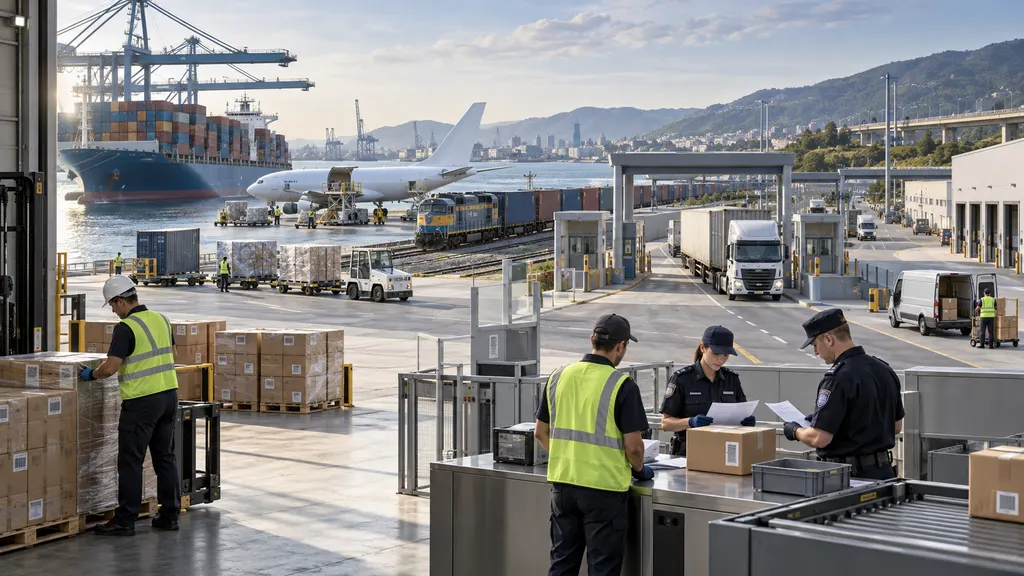
Ecommerce businesses reduce shipping costs at scale by managing the full cost of each order—not just negotiating a lower carrier rate. The biggest opportunities usually come from better packaging, smarter fulfillment location, accurate service selection, stronger shipping data, and fewer avoidable delivery and return costs.
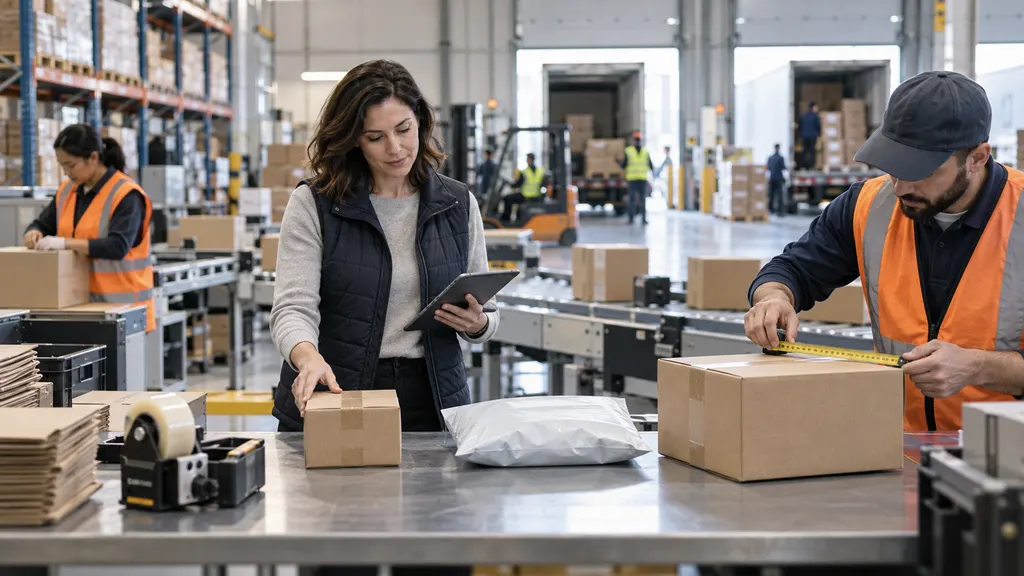
The right approach depends on your order profile, product dimensions, destinations, delivery promises, and carrier mix. A shipping program that works for small parcels in one region may be inefficient for bulky products, international orders, or time-sensitive deliveries.
Start with the cost of a delivered order
Before changing carriers or negotiating a contract, create a baseline for the total cost of fulfilling and delivering an order. A useful model includes more than the label price:
- Transportation and parcel charges
- Residential, fuel, remote-area, and other accessorial charges
- Packaging materials and warehouse labor
- Pick-and-pack costs
- Storage and inventory transfer costs
- Customer service contacts related to delivery
- Reshipments caused by loss, damage, or address errors
- Return transportation and processing
- Refund, replacement, and delivery-failure costs
Calculate these costs by meaningful segments, such as destination zone, package size, weight band, product category, service level, and carrier. An average shipping cost can conceal the orders that are creating most of the leakage.
Reduce dimensional weight before negotiating rates
For many parcel shipments, the space a package occupies can affect its billable weight. Carriers commonly compare actual weight with dimensional weight and charge according to their applicable rules. FedEx explains its dimensional-weight calculation and packaging considerations in its official guidance.
This makes packaging one of the most controllable cost levers. Review:
- Carton sizes that leave excessive empty space
- Products that can be shipped in flexible mailers or smaller boxes
- Unnecessary inserts, void fill, or secondary packaging
- Orders that could be consolidated without increasing dimensional weight
- Packaging that causes damage, because cheaper packaging can become expensive after a claim, replacement, or return
Use product-specific packaging rules rather than one standard box for every order. Test packaging with actual products and shipping conditions, then monitor both transportation cost and damage rates. A smaller box is not automatically better if it increases product damage.
Packaging changes should also be evaluated against warehouse productivity. A package that saves material cost but adds several handling steps may not reduce the total cost per order.
For carrier-specific dimensional-weight rules, consult the relevant carrier documentation. For example, see FedEx dimensional weight guidance.
Match the fulfillment location to customer demand
Shipping distance affects cost, delivery time, and the likelihood that an order needs an expedited service. If most customers are concentrated in a few regions, placing inventory closer to those demand centers may reduce transportation distance and improve service options.
This does not mean that adding warehouses always lowers costs. Additional locations can increase storage, labor, technology, inventory balancing, and transfer expenses. Compare the total fulfillment cost of each network design, including:
- Orders and revenue by destination region
- Inventory placement and replenishment requirements
- Average parcel distance and service level
- Split shipments and partial fulfillment
- Warehouse fees and minimum volume commitments
- Returns routing and processing
A practical starting point is to model whether a new warehouse, 3PL location, or regional fulfillment partner would reduce the delivered cost of a defined order segment. Use actual order history rather than a national average.
Use service levels more selectively
Many businesses pay for faster delivery than customers require. Review the service selected at checkout and the service actually used by destination, product type, and promised delivery date.
A lower-cost ground or economy service may be suitable when the promised date can still be met. Expedited shipping remains appropriate for urgent orders, high-value products, replacement shipments, or customer commitments that justify the premium.
The objective is not to make every order slower. It is to align the service level with the delivery promise. A lower-priced service that routinely misses the promise can create support contacts, refunds, cancellations, and reshipments that outweigh the label savings.
Build shipping rules around destination, order value, product characteristics, inventory availability, and the customer-selected promise. Review exceptions separately rather than allowing them to become the default.
Compare carriers using your own shipment profile
Carrier pricing is highly dependent on shipment characteristics and contract terms. A carrier that is inexpensive for lightweight residential parcels may not be the most economical choice for oversized cartons, commercial deliveries, remote destinations, or international shipments.
When comparing carriers, request quotes using representative shipment data. Include the following dimensions:
- Origin and destination distribution
- Actual and dimensional weight
- Package dimensions
- Residential versus commercial delivery share
- Delivery service and promised transit time
- Fuel and other variable charges
- Pickup requirements and minimums
- Claims, surcharge, and adjustment policies
- International duties, taxes, and clearance responsibilities where applicable
Compare the all-in cost of the same shipment profile. Do not compare only the base transportation rate. Contract discounts may also be subject to volume assumptions, service commitments, exclusions, or annual changes, so have the final terms reviewed before implementation.
Build a multi-carrier strategy without adding unnecessary complexity
Using more than one carrier can improve resilience and provide access to different service strengths. It can also create operational complexity, including multiple labels, pickup schedules, tracking formats, billing files, claims processes, and customer-service workflows.
A multi-carrier program is most useful when each carrier has a defined role. For example, one may serve a particular geographic region, package profile, delivery speed, or international lane. Set routing rules that can be measured and changed when cost, capacity, or service performance changes.
Do not switch carriers solely because a rate table appears lower. Run a controlled test using real shipments and compare delivered cost, on-time performance, damage, adjustment charges, and customer contacts.
Improve address quality and delivery visibility
Address errors, missed deliveries, unclear tracking events, and avoidable reshipments can increase the cost of an order after it leaves the warehouse. Address validation at checkout and before label creation can reduce preventable exceptions, although no validation process eliminates every delivery problem.
Clear tracking information also helps customers understand where an order is and what action may be required. This does not directly reduce the carrier's transportation charge, but it can help an operation identify delays earlier, manage exceptions, and reduce repetitive delivery-status questions.
For stores that need a multi-carrier tracking layer, 17TRACK's tracking service can be considered as part of the post-purchase workflow. For Shopify merchants, the 17TRACK Shopify app provides an official product entry point. The suitability of any tracking tool should be tested against the carriers, markets, notification requirements, and order systems actually used by the business.
Control returns as a separate logistics cost
Returns affect transportation, labor, inspection, restocking, refurbishment, replacement, and customer-service costs. Treating returns as only a policy issue makes it difficult to see which products, channels, or delivery problems are creating the expense.
Track return costs by reason and product. Common operational categories include size or fit, damage, wrong item, late delivery, customer preference, and merchant error. The appropriate response differs by category:
- Improve product information or sizing guidance when customers order the wrong variant.
- Review packaging and warehouse controls when damage or wrong-item returns increase.
- Investigate carrier and fulfillment performance when late delivery is a recurring reason.
- Use a consistent return-routing rule so products are not sent to unnecessarily expensive locations.
A returns management workflow can help standardize authorization, routing, status updates, and disposition. 17TRACK's official 17RETURNS product page is relevant for businesses evaluating return-management software, but any expected savings should be validated with the merchant's own return volume and process.
Automate shipping decisions, not just label printing
Automation is valuable when it applies consistent rules to a large number of orders. Useful rules may consider package dimensions, destination, inventory location, delivery promise, carrier availability, and customer-selected service.
Before automating, define the data required for each decision. Inaccurate product dimensions, incomplete addresses, outdated carrier services, or incorrect inventory availability can make an automated rule consistently choose the wrong option.
Businesses with internal engineering resources may also evaluate a tracking integration or API. The 17TRACK Tracking API and its official documentation are relevant to shipment-visibility integrations, but tracking integration should be treated as an operational capability rather than proof of lower postage. The cost case depends on the workflow being improved and the implementation effort required.
Measure the program with operational metrics
A shipping-cost program needs a dashboard that separates rate improvements from process improvements. Useful metrics include:
- Total delivered cost per order
- Transportation cost per parcel and per unit shipped
- Average actual and dimensional weight
- Cost by destination, carrier, service, and product category
- Accessorial charges as a share of transportation cost
- Damage, loss, address-error, and reshipment rates
- On-time delivery against the customer promise
- Return transportation and processing cost
- Customer contacts related to delivery
Review results after changes have had enough time to produce a representative shipment sample. Seasonal peaks, promotions, product launches, and carrier surcharges can distort short-term comparisons.
A practical implementation sequence
- Establish a baseline. Use several months of shipment, order, return, and support data where available.
- Find the largest cost segments. Prioritize dimensional weight, accessorial charges, expensive lanes, and high-return products.
- Test packaging changes. Measure transportation cost, material cost, labor, damage, and customer experience together.
- Model fulfillment alternatives. Compare the full network cost before adding a warehouse or 3PL location.
- Request carrier proposals. Give each carrier the same representative shipment profile and review all applicable charges.
- Pilot routing rules. Start with a defined segment and compare results against a control period or comparable group.
- Automate after validation. Document exceptions, approval rules, and rollback procedures.
- Review quarterly and after major changes. Recheck product mix, destination mix, carrier performance, and contract assumptions.
What not to do
- Do not choose a carrier using only the headline rate.
- Do not reduce packaging quality without monitoring damage and replacement costs.
- Do not add fulfillment locations without modeling inventory and labor costs.
- Do not promise faster delivery than the selected service can reliably support.
- Do not assume a tracking tool will lower postage directly.
- Do not use historical averages that hide oversized, remote, international, or exception shipments.
FAQ
What is usually the fastest way to reduce shipping costs?
Start by identifying the largest cost segments in your own shipment data. Packaging inefficiency, unnecessary expedited services, accessorial charges, and poorly routed inventory are common areas to investigate, but the best first action depends on the business's order profile.
Does using multiple carriers always lower costs?
No. Multiple carriers can improve routing flexibility, but they also add operational and integration work. The approach is worthwhile only when the savings, service improvement, or resilience justify that complexity.
Should an ecommerce business use a regional warehouse?
Possibly, if demand is concentrated and the reduction in transportation and service costs exceeds additional storage, labor, inventory, transfer, and returns expenses. Model the decision with actual destination and inventory data.
Can package tracking reduce shipping spend?
Tracking does not normally reduce the carrier's label price by itself. It can support exception management, customer communication, and delivery operations, which may reduce avoidable support work or reshipments when the workflow is well designed.
How should carrier quotes be compared?
Provide each carrier with the same representative shipment profile and compare the all-in cost, including dimensional weight, fuel, accessorial charges, service requirements, claims, and operational conditions. Confirm the final contract terms before relying on the quoted result.