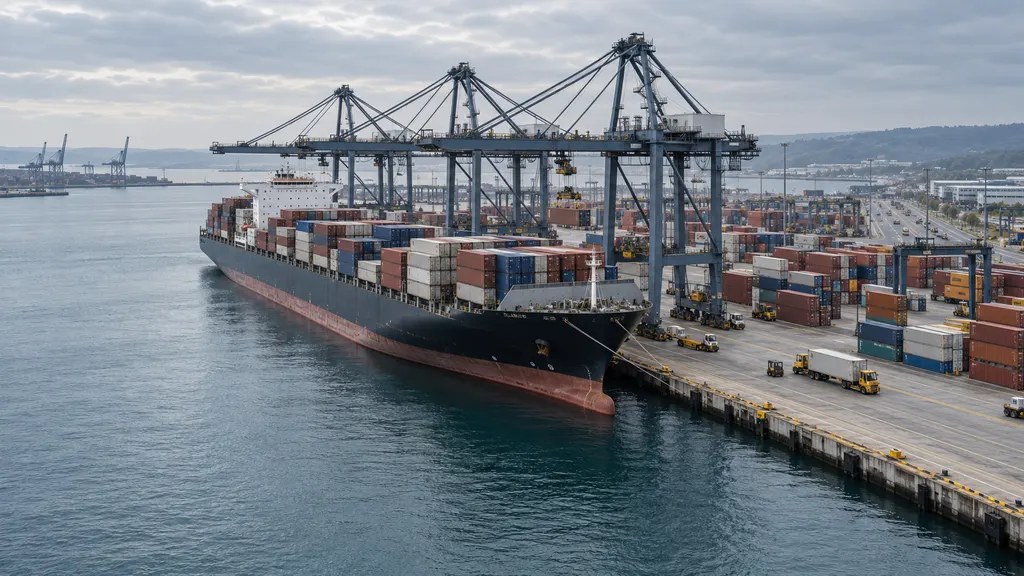
Shipping Agency
What Is a Shipping Agency?
A shipping agency is a business that represents a shipowner, ship operator, or another authorized principal in arranging services and handling matters connected with a vessel or its cargo. In maritime logistics, the term most often refers to an organization that coordinates a ship’s visit to a port, communicates with local service providers and authorities, and carries out agreed administrative or commercial tasks on the principal’s behalf.

The business is the shipping agency; the representative performing the work is a ship agent or shipping agent. These terms are sometimes used interchangeably in commercial communication. An agency may also represent a shipping line in a particular territory, handling agreed activities such as bookings, cargo documentation, and customer communication.
Outside precise maritime usage, businesses sometimes use “shipping agency” loosely to describe a company that arranges freight transport. The name alone does not establish whether that business acts as a ship agent, freight forwarder, carrier, or intermediary. Its contract, appointment, and actual services determine its role.
Role in Maritime Logistics
A vessel calling at a port requires coordination among organizations that perform different functions. Port authorities oversee port-related requirements; terminals handle cargo operations; service providers may supply pilotage, towage, provisions, or repairs; and public authorities administer applicable border and vessel formalities. A shipping agency connects the principal with these local participants without necessarily performing their work itself.
The agency’s authority comes from its appointment. That appointment should identify whom it represents, which services it may arrange, and which decisions require further approval. A shipowner, operator, or charterer may be involved in appointing an agent, depending on the commercial arrangements. Identifying the principal is therefore more informative than assuming that every agency acts for the cargo owner.
A shipping agency can be important to a cargo movement even when the importer or exporter has no direct contract with it. For example, an importer’s freight forwarder may communicate with a shipping line’s local agent about arrival information or document requirements. The agent’s participation does not automatically make it responsible for the entire movement from the seller’s warehouse to the buyer’s premises.
Services a Shipping Agency May Provide
The following are common areas of agency work, not a universal service package. The tasks included depend on the appointment, the vessel, the port, and applicable requirements.
| Service area | Possible activities | Important boundary |
|---|---|---|
| Port-call coordination | Communicating arrival estimates, requesting services, and coordinating with terminals and local authorities. | The agency coordinates activities but does not control every operational decision. |
| Vessel formalities | Preparing or transmitting required arrival and departure information within its authorized role. | Authorities determine compliance requirements and grant relevant permissions. |
| Vessel support | Arranging supplies, crew-related assistance, repairs, or other requested services. | Specialist providers perform the underlying services unless the agency separately undertakes them. |
| Cargo and commercial administration | Handling bookings, notices, documentation, or cargo-release communication for a represented shipping line. | Authority to issue documents or release instructions must come from the relevant appointment. |
| Financial administration | Estimating port-call expenses, coordinating payments, and accounting for authorized expenditure. | Third-party costs and the agency’s own remuneration are different items. |
International maritime facilitation provides an important background to this work. The International Maritime Organization’s Convention on Facilitation of International Maritime Traffic addresses formalities associated with ships’ arrival, stay, and departure. A shipping agency may help submit required information, but appointing an agent does not remove the responsibilities assigned to other parties under applicable rules.
How a Port Agency Appointment Works
1. Appointment and instructions
The principal appoints the agency and defines the work. Instructions may identify the vessel, the intended port call, cargo operations, required services, reporting contacts, and spending authority. Where another party nominates the agent, the parties should still establish who is contracting with the agency and who is responsible for payment.
2. Pre-arrival preparation
The agent gathers information needed for the call and communicates with relevant local organizations. This may include the vessel’s estimated arrival, particulars, cargo information, and service requests. Information requirements differ between jurisdictions and operations, so there is no single document list that applies to every port call.
3. Coordination during the call
While the vessel is in port, the agency relays operational updates and arranges authorized services. It may communicate changes affecting berthing, cargo handling, crew movements, or departure readiness. The agent can facilitate coordination, but weather, terminal capacity, vessel condition, and decisions by authorities remain outside its unilateral control.
4. Departure and reporting
The agency helps coordinate departure formalities within its scope and reports relevant operational information to the principal. Records may include service confirmations, event times, and supporting documents. Their content depends on the assignment rather than on a single mandatory agency reporting format.
5. Expense reconciliation
For a port call, an agent may prepare a pro forma disbursement account: an estimate of anticipated expenses used to request advance funding. After the call, a final disbursement account records actual charges and reconciles them against funds received. An estimate is not necessarily a fixed-price quotation, and supporting invoices should distinguish supplier charges from agency fees.
Shipping Agency and Related Terms
Several logistics roles can exist within the same business, but they should not be treated as equivalent. The following distinctions describe functions rather than mutually exclusive company categories.
| Term | Main function | Relationship to a shipping agency |
|---|---|---|
| Ship agent | Acts for an appointed principal in vessel-related or shipping-line matters. | The representative carrying out the agency function; the term may also refer to the agency business. |
| Carrier | Undertakes carriage under the relevant transport contract. | An agency may represent the carrier without itself undertaking carriage. |
| Freight forwarder | Arranges transport and related logistics services for a customer. | A forwarder commonly coordinates a cargo movement; a ship agent represents its principal within an agreed shipping assignment. |
| Customs broker | Handles customs representation or clearance services where permitted by local rules. | Ship agency status alone does not establish authorization to provide customs brokerage. |
| Terminal operator | Operates facilities where vessels and cargo are handled. | The agency coordinates with the terminal but does not necessarily operate it. |
A freight forwarder’s responsibilities can also vary. It may act as an intermediary for some services and undertake contractual responsibilities for others. Similarly, a company offering both forwarding and ship agency services may act in different capacities on different transactions. The relevant question is not simply what the company calls itself, but what it has agreed to do for the particular shipment or vessel.
Use in Cross-Border Ecommerce
Shipping agencies are particularly relevant when ecommerce inventory moves by sea before entering a distribution or fulfillment network. Their role concerns the maritime stage and associated local administration, rather than the online order itself.
For example, a retailer may arrange a container shipment of inventory through a freight forwarder. At the destination, the shipping line’s agent may communicate arrival information or handle authorized documentation. A customs representative handles import procedures where appointed, a terminal handles the container, and a road carrier transports released cargo to a warehouse. These are connected activities, but they do not become a single agency responsibility merely because they concern the same goods.
A shipping agency’s name may appear on an arrival notice, local invoice, delivery-order communication, or shipping-line contact page. A merchant encountering that name should establish whether the agency represents the ocean carrier, provides a separately contracted service, or serves another principal.
For an individual consumer parcel, “shipping agency” is less precise than terms such as carrier or delivery provider. A seller’s use of the phrase does not establish who physically holds the parcel or who is responsible for final delivery. Shipment documents and the actual transport arrangements provide a clearer answer.
Understanding Authority, Charges, and Responsibility
Agency arrangements require a distinction between acting for a principal and undertaking a service in one’s own name. An agent may communicate instructions or arrange a service without becoming the contractual provider of that service. Conversely, an agency business may accept separate obligations under another contract. Responsibility depends on the facts, contractual terms, and applicable law.
Likewise, receiving an invoice from an agency does not mean that every amount is an agency fee. An invoice or disbursement account may include authorized third-party charges alongside the agency’s remuneration. The identity of the invoice issuer, the supplier, and the party responsible for payment should be considered separately.
Before relying on an agency’s instruction or quotation, the following checks help clarify its scope:
- Principal: Which shipowner, operator, shipping line, or other party does the agency represent?
- Capacity: Is it acting as an agent, a carrier, a forwarder, or another service provider for this transaction?
- Authority: Can it confirm bookings, issue documents, collect payments, or authorize release?
- Service scope: Does the assignment concern the vessel, cargo administration, inland transport, or a combination?
- Charges: Which amounts are estimates, agency fees, or third-party expenses?
- Outstanding conditions: Are carrier release, customs release, terminal requirements, or other conditions still unresolved?
These checks do not replace contractual or legal review. They identify the information needed to avoid confusing commercial coordination with physical custody, regulatory approval, or responsibility for the complete shipment.
QA
Is a shipping agency the same as a shipping company?
Not necessarily. A shipping agency represents a principal within an agreed scope. “Shipping company” is a broader commercial expression that may refer to a carrier, ship operator, or another transport business.
Does a shipping agency clear goods through customs?
It may arrange customs-related assistance or provide customs services if appropriately authorized. However, acting as a ship agent does not automatically make a business a customs broker or complete the importer’s clearance obligations.
What is the difference between a shipping agency and a freight forwarder?
A shipping agency represents an appointed principal in vessel or shipping-line matters. A freight forwarder arranges transport and related services for its customer. One business can perform both functions under different appointments.
Does an agency’s cargo-release instruction mean the goods are ready for collection?
Not by itself. Customs release, terminal requirements, payment conditions, or other applicable controls may still need to be satisfied. Carrier-related release and permission to collect the goods should not be assumed to be identical.
Sources
- Federation of National Associations of Ship Brokers and Agents (FONASBA) — Professional reference for ship agency roles, agency practice, and the distinction between principals and agents.
- International Maritime Organization: Facilitation — Official background on maritime arrival, stay, and departure formalities and the international facilitation framework.
- FIATA: About Freight Forwarding — Industry reference for the scope of freight forwarding and its distinction from ship agency work.