Base Port
What Is a Base Port?
A base port is a port used by a shipping line or freight tariff as a reference point for standard ocean freight rates. In liner shipping, the term can also refer to a principal port included in a carrier's regular service network. The precise meaning depends on the tariff, quotation, or service description: a base port designation does not, by itself, guarantee a direct sailing or an all-inclusive transport price.
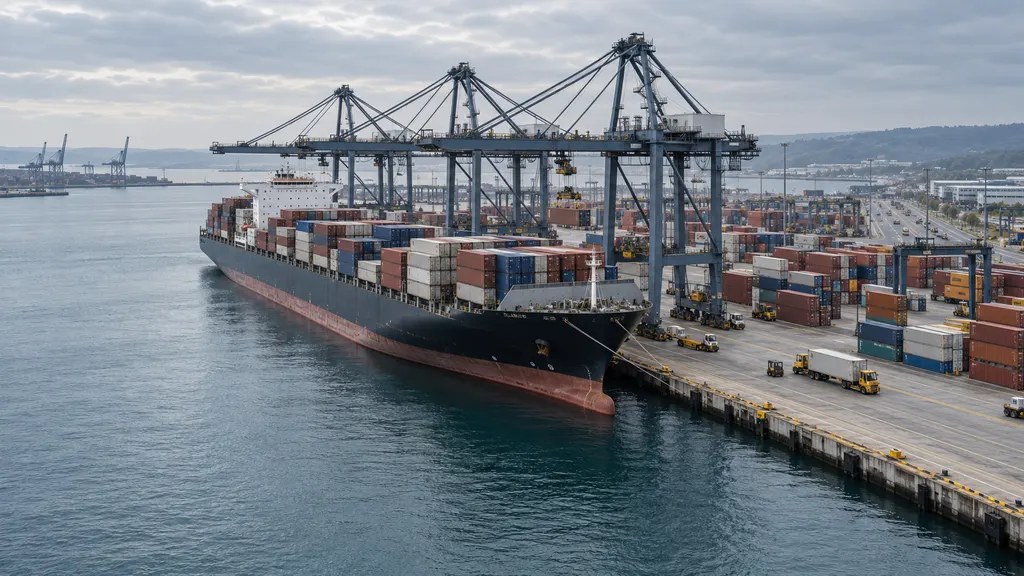
The term is primarily relevant to ocean freight, freight forwarding, and international trade. Importers, exporters, and cross-border ecommerce businesses may encounter it when comparing port-to-port quotations or arranging the ocean leg of an inventory shipment. It describes a port's role within a particular commercial or service arrangement, rather than a universal legal classification of the port.
How the Term Is Used in Ocean Shipping
In a freight quotation, a base port can function as the location to which a stated ocean freight rate applies. Transport to another destination may require a different rate, an additional charge, or a separately arranged connecting movement. The applicable quotation or tariff determines how those movements are priced.
In a service description, the same expression may emphasize a port's place in a shipping line's regular network. These pricing and operational meanings can overlap, but they answer different questions. A pricing reference identifies where a rate applies; a service description identifies how the carrier serves a location.
For that reason, a shipper should not infer the complete route from the words base port. The shipment's origin, destination, routing, transport mode, and included charges need to be checked separately. A port may be a base port for one carrier or trade lane without having that designation in another carrier's quotation.
Where the Term May Appear
- Ocean freight quotations: to identify the ports covered by a quoted rate.
- Tariffs and rate schedules: to establish the geographical application of rates and associated rules.
- Forwarder correspondence: to distinguish a reference port from a destination requiring additional arrangements.
- Service information: to describe principal ports within a shipping network.
A quotation may name several ports under one rate heading. That grouping should be read as a commercial statement subject to its conditions, not as proof that every listed port has the same sailing schedule, terminal charges, or inland connections.
Base Port and Related Terms
Several terms describe different aspects of a port or shipment. They should not be treated as interchangeable simply because they refer to the same physical location.
| Term | What It Describes | Distinction from Base Port |
|---|---|---|
| Port of loading | The port where cargo is loaded onto a vessel for the relevant transport leg. | Identifies an operational location, not its status in a rate structure. |
| Port of discharge | The port where cargo is unloaded from the vessel for the relevant transport leg. | May be a base port, but discharge alone does not establish that designation. |
| Transshipment port | A port where cargo is transferred between vessels during its journey. | Describes a routing function rather than a pricing reference. |
| Outport or non-base port | A port treated separately from the base ports in a particular commercial arrangement. | May require a different rate or additional transport; the applicable terms control. |
| Place of delivery | The location identified for delivery under the transport arrangement. | Can be an inland location rather than a seaport. |
| Home port | A vessel's operational base or a location associated with its registration, depending on context. | Concerns the vessel rather than the geographical application of cargo freight rates. |
A large port is not automatically a base port for every service. Likewise, a transshipment hub and a base port are not mutually exclusive categories: the same port can perform both roles, depending on the shipment and the carrier's arrangements.
How Base Port Pricing Fits into a Shipment
The practical purpose of identifying a base port is to establish a clear geographical boundary for a rate or service. It is only one part of interpreting a freight offer. A usable quotation also needs to explain what is being transported, which movements are covered, and which conditions apply.
- Identify the shipment endpoints. Establish the actual pickup location, intended loading port, discharge port, and final delivery location. These may represent four different places.
- Read the rate's geographical scope. Determine whether the price applies between named ports, between terminals, or across a wider transport movement.
- Confirm the base port designation. Check which locations the quotation treats as base ports and whether the term affects pricing, service coverage, or both.
- Check connecting transport. If the required destination is outside that scope, establish whether a feeder service, inland movement, or separate booking is needed.
- Review additional charges and conditions. Identify separately stated charges, exclusions, validity conditions, and shipment-specific requirements.
- Compare the complete movement. Evaluate alternatives against the same origin, destination, cargo details, and service scope.
For ocean transportation subject to United States Federal Maritime Commission tariff requirements, the applicable regulations address tariff publication and content, including rates, charges, classifications, rules, and practices. This illustrates why a headline rate should be read together with its governing conditions. Those regulations do not establish a universal base port classification for worldwide shipping.
Example in Cross-Border Ecommerce
For example, a retailer may arrange an ocean shipment of inventory from an overseas supplier to a warehouse in its destination market. A forwarder's quotation identifies Port A as the destination base port, while the warehouse is located inland.
The retailer should first establish whether the offer ends at Port A or includes transport beyond it. If inland delivery is excluded, the retailer needs a separate price or an expanded quotation covering that movement. Customs clearance, terminal-related charges, and other destination services also need to be checked against the stated inclusions rather than assumed to be covered.
If the retailer instead requests delivery through Port B, the original base port rate may not apply. The forwarder might offer a different routing or rate, but the term alone does not establish which option is available. Written confirmation is needed before comparing the two arrangements.
This example concerns the international movement of inventory. It does not describe the later delivery of individual ecommerce orders to consumers. A base port reference in an inbound freight quotation therefore should not be interpreted as a promise about parcel delivery times or last-mile coverage.
Checks Before Accepting a Base Port Quotation
The following checks help turn an abbreviated freight offer into an understandable transport arrangement. They are practical review questions, not a standardized definition of the term.
| Check | Question to Ask | Why It Matters |
|---|---|---|
| Location identity | What exact port, terminal, or delivery location is intended? | A city name alone may not identify the operational endpoint precisely. |
| Rate scope | Where does the quoted transport begin and end? | Prevents a port-to-port offer from being mistaken for door delivery. |
| Routing | Is the proposed service direct or does it involve transshipment? | Base port status does not answer this question. |
| Charge inclusions | Which origin, ocean, destination, and inland charges are included? | Separates the stated freight rate from the complete shipment budget. |
| Cargo conditions | Does the offer apply to the declared cargo and equipment? | A rate should not be extended to different shipment conditions without confirmation. |
| Applicable documents | Which quotation, tariff, service terms, and booking confirmation govern? | Provides the evidence needed to interpret the commercial arrangement. |
Standardized location identifiers can help clarify the place being discussed. The United Nations Code for Trade and Transport Locations, or UN/LOCODE, identifies locations used in trade and transport. A location code is useful for identification, but it does not establish that a location is a base port, confirm a particular terminal, or prove that a carrier serves it.
Common Misunderstandings
A Base Port Rate Is Not Necessarily an All-Inclusive Price
The expression identifies a pricing reference or service designation, not a complete list of included services. Whether terminal handling, documentation, customs-related services, or inland transport is included must be established from the offer and applicable conditions.
Base Port Status Does Not Guarantee a Direct Sailing
A commercial port designation and a vessel itinerary are different kinds of information. Confirm direct service, transshipment points, and scheduling through the proposed routing and booking details.
Base Port Is Not a Customs Status
The designation does not establish that goods are cleared, exempt from duties, or eligible for a particular customs procedure. Customs treatment depends on the goods, transaction, jurisdiction, and applicable rules, not on the port's description in a freight quotation.
QA
What Does Base Port Mean in a Freight Quote?
It usually identifies a port to which a stated ocean freight rate applies. Check the quotation's definition, geographical scope, and conditions to determine exactly what is covered.
Is a Base Port the Same as a Port of Discharge?
No. A port of discharge identifies where cargo is unloaded from a vessel. A base port identifies a role within a pricing or service arrangement. One port can be both.
Does Shipping to a Non-Base Port Always Cost More?
Not necessarily. A different rate or additional movement may apply, but the actual price depends on the relevant quotation, routing, and included services. The label alone does not establish the cost difference.
How Can a Shipper Confirm Whether a Port Is a Base Port?
Check the carrier's or forwarder's applicable quotation, tariff, or service information. If the designation is unclear, request written confirmation for the specific route and shipment.
Sources
- OOCL: Shipping Glossary — Industry terminology, including base port usage and related ocean shipping concepts.
- Electronic Code of Federal Regulations: 46 CFR Part 520, Carrier Automated Tariffs — United States regulatory context for tariff publication, contents, rates, charges, and governing rules; not a worldwide base port classification.
- UNECE: UN/LOCODE Code List by Country and Territory — Standardized identification of trade and transport locations, distinct from carrier pricing designations.