Logistics Service
Definition
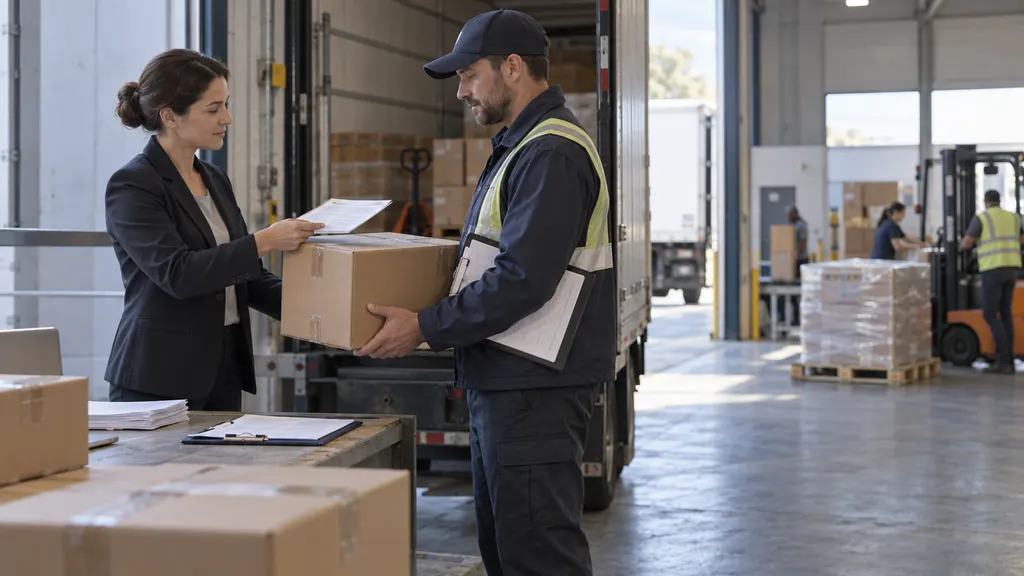
A logistics service is a business activity that plans, coordinates, performs, or supports the movement and storage of goods, together with the related flow of information. The term is used in logistics, supply chain management, shipping, warehousing, and ecommerce. Depending on the context, it may refer to a single activity, such as transportation, or to an integrated set of activities provided by a logistics company.
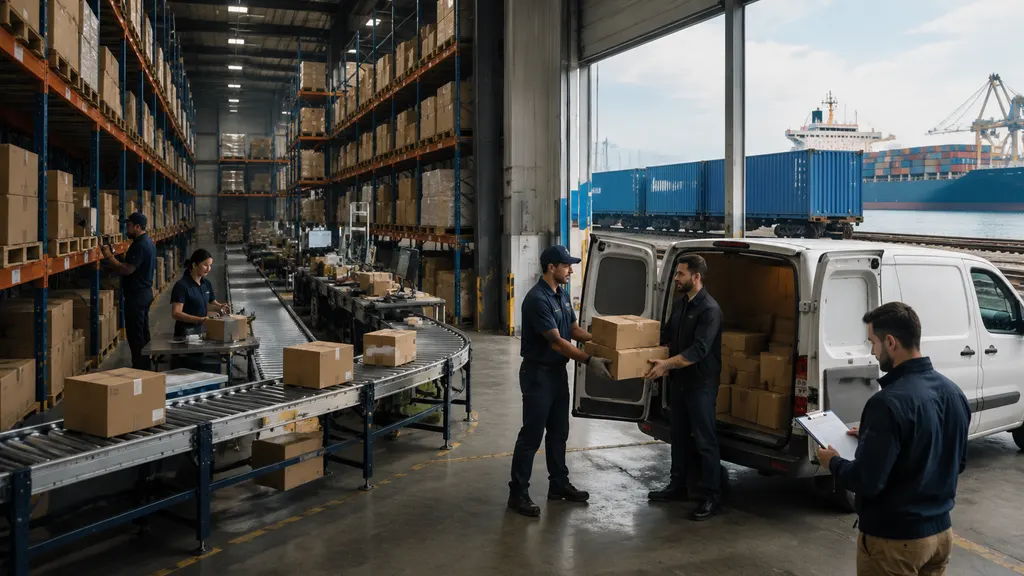
Logistics services help connect suppliers, warehouses, carriers, businesses, customs processes, and final recipients. They may be purchased by manufacturers, retailers, ecommerce merchants, marketplaces, or other organizations that need goods to be handled and delivered.
In Logistics and Supply Chains
Within a supply chain, a logistics service supports one or more operational stages between the source of goods and their destination. The service may begin with order or shipment planning and continue through inventory handling, transportation, delivery, tracking, and, where applicable, returns.
A logistics service does not necessarily own the goods being handled. It is usually an activity performed for a customer under agreed operational, commercial, or contractual terms. The exact scope depends on the provider and the customer’s requirements.
Common Types of Logistics Services
The following are descriptive categories commonly used to explain logistics activities. They are not a single universal legal or regulatory classification.
| Type | Primary function | Typical activities |
|---|---|---|
| Transportation | Moves goods between locations | Road, rail, air, sea, or multimodal transport |
| Warehousing | Stores and handles goods | Receiving, put-away, storage, picking, packing, and dispatch |
| Fulfillment | Processes orders for shipment | Inventory allocation, order picking, packing, and handover to a carrier |
| Freight forwarding | Coordinates transport and shipment documentation | Carrier arrangements, routing, consolidation, and transport paperwork |
| Customs support | Assists with customs-related procedures | Document preparation, information management, and coordination with customs brokers or authorities |
| Tracking and visibility | Provides information about shipment progress | Tracking events, status updates, exception monitoring, and delivery information |
| Reverse logistics | Manages the movement of goods back from the recipient | Returns, exchanges, repair flows, refurbishment, and recovery of goods |
Logistics Services in Ecommerce
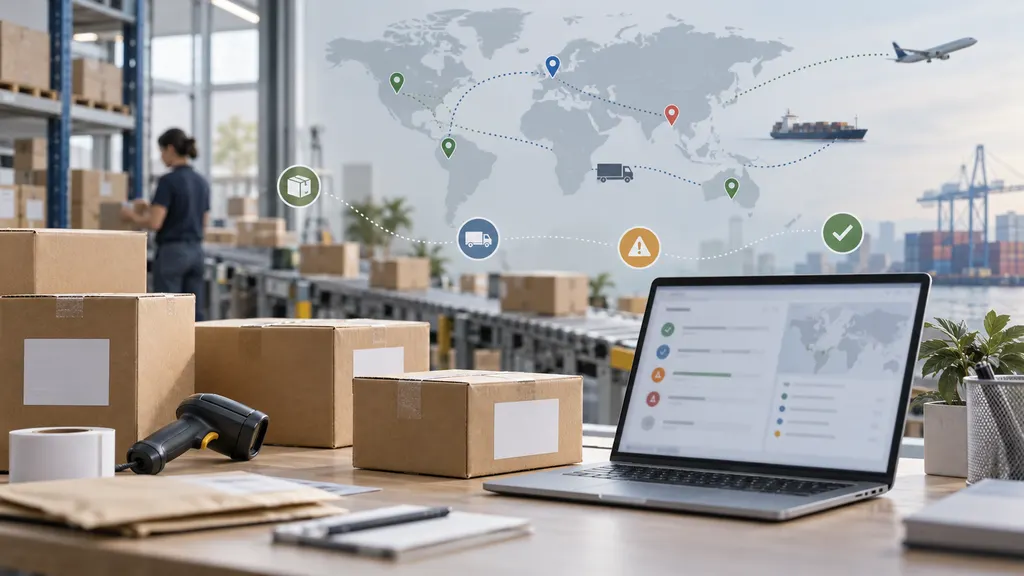
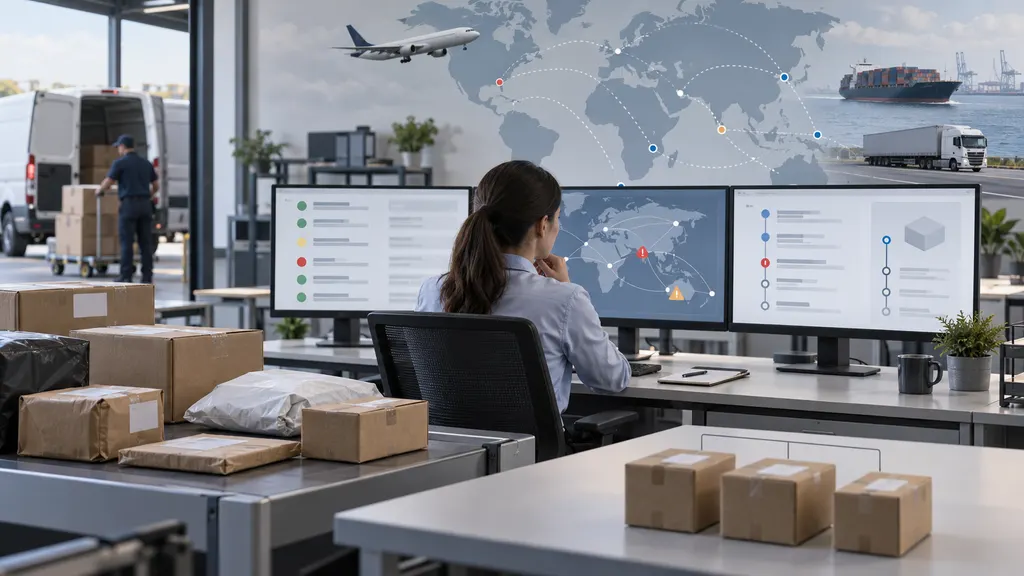
In ecommerce, logistics services connect an online order with the physical processes required to fulfill and deliver it. A merchant may use separate providers for warehousing, order fulfillment, transportation, shipment tracking, and returns, or may purchase several of these functions as one coordinated service.
For cross-border ecommerce, the service may also involve international transport coordination, shipment documentation, customs-related information, destination-country delivery, and communication of delivery status. The responsibilities of each party should be identified clearly because a logistics service does not automatically include customs clearance, duties, taxes, or final-mile delivery.
Example
For example, an ecommerce merchant may store inventory in a fulfillment warehouse, send an order to the warehouse for picking and packing, transfer the parcel to a carrier, provide tracking information to the buyer, and use a separate return service if the buyer sends the item back. Together, these activities form a logistics arrangement, although each activity may be supplied by a different provider.
Logistics Service Compared With Related Terms
| Term | Meaning | Relationship to logistics service |
|---|---|---|
| Logistics provider | A company or organization that performs or coordinates logistics activities | The provider supplies the service; the service is the activity or bundle of activities supplied |
| Shipping | The sending or transportation of goods from one location to another | Shipping can be one component of a broader logistics service |
| Delivery | The transfer of goods to the intended recipient or destination | Delivery is usually one stage of a logistics process, especially its final stage |
| Freight forwarding | The arrangement and coordination of freight movement, often across multiple parties | Freight forwarding is a specialized type of logistics service |
| Third-party logistics | The outsourcing of logistics activities to an external provider | A third-party logistics provider may offer warehousing, fulfillment, transportation, or related services |
| Supply chain management | The broader coordination of sourcing, production, inventory, logistics, and related business processes | Logistics services support supply chain management but do not cover every supply chain function |
How the Term Is Used
The phrase “logistics service” may describe either a specific operational service or a bundled offering. A contract may therefore refer to transportation as a logistics service, while another contract may use the same phrase for a wider package that includes storage, fulfillment, tracking, and returns.
In international trade and services regulation, logistics-related activities may be discussed under more specific categories, such as transport, warehousing, cargo handling, or business services. The applicable meaning can depend on the contract, jurisdiction, industry standard, or classification system being used.
Common Misunderstandings
- Logistics service is not limited to transportation. It can include storage, handling, information management, fulfillment, and returns.
- Shipping and logistics service are not always synonyms. Shipping usually describes the sending or movement of goods, while logistics service may cover a wider operational process.
- A logistics service does not automatically include every cross-border obligation. Customs procedures, duties, taxes, insurance, and delivery arrangements may be separate responsibilities.
- A logistics service is not the same as a physical shipment. A shipment is the goods being moved; the logistics service is the work used to plan, handle, coordinate, or monitor that movement.
QA
What does logistics service mean in ecommerce?
It means the activities used to store, fulfill, transport, track, deliver, or return ecommerce orders and goods.
What is included in a logistics service?
Possible components include transportation, warehousing, fulfillment, freight forwarding, tracking, customs support, delivery, and reverse logistics. The actual scope depends on the provider and agreement.
Is logistics service the same as delivery service?
No. Delivery is one possible part of a logistics service. A logistics service may also include storage, order processing, transportation coordination, tracking, and returns.
Sources
- Council of Supply Chain Management Professionals, Supply Chain Management Definitions and Glossary — terminology and the relationship between logistics and supply chain management.
- World Trade Organization, Services Sectors — context for transport and other service-sector classifications in international trade.