Logistics Cost
Definition
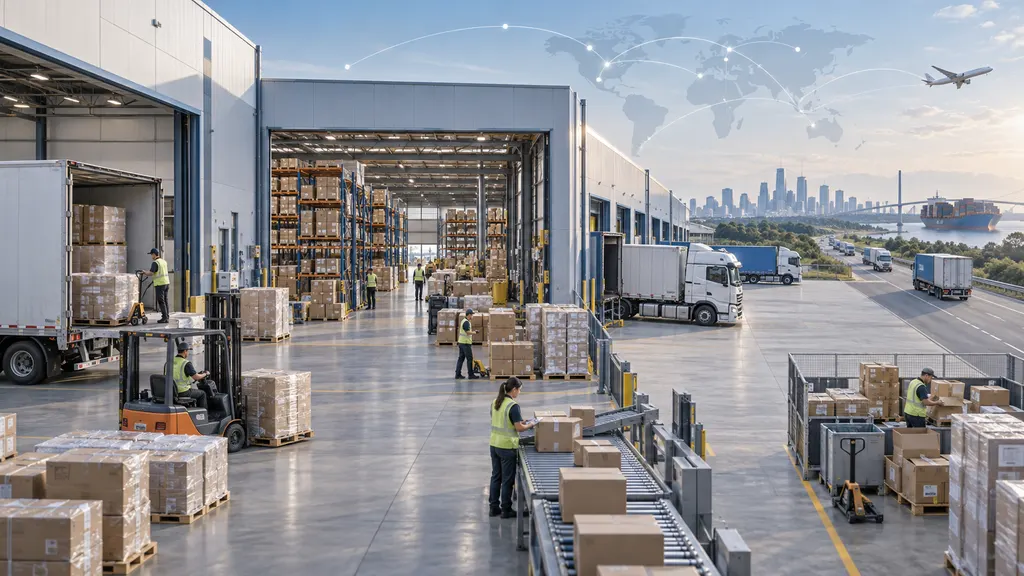
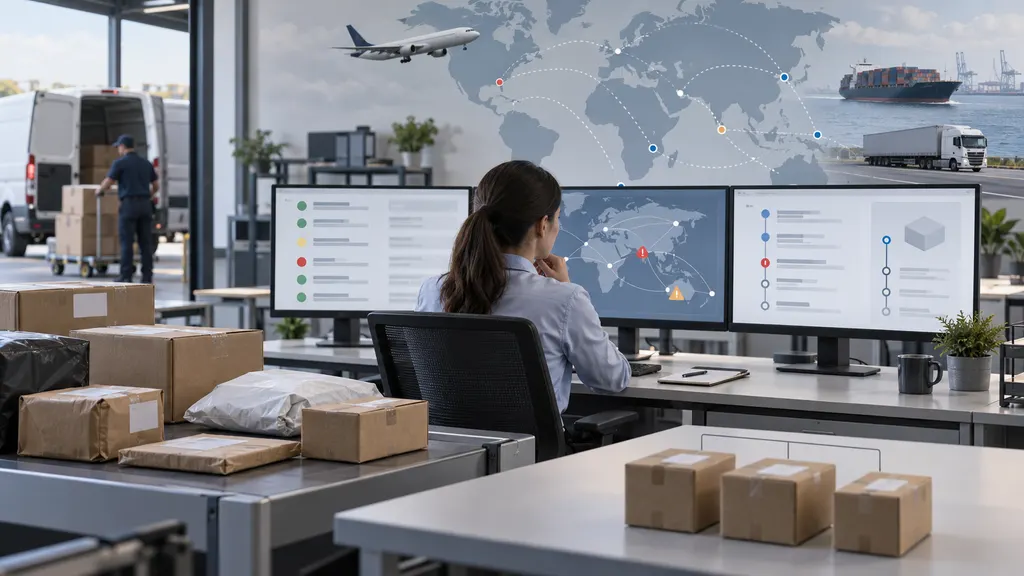
Logistics cost is the total expense associated with planning, obtaining, storing, handling, transporting, delivering, and sometimes returning goods within a supply chain. In logistics and ecommerce, the term usually describes the resources required to move products from a supplier or fulfillment location to the customer or another business location. It may include both direct expenses, such as transportation charges, and indirect or internal expenses, such as inventory carrying and order-processing costs.
There is no single formula that applies to every company or supply chain. The costs included depend on the purpose of the analysis, the stage of the supply chain, the accounting method, and whether the calculation covers a single shipment, an order, a product, or an entire logistics operation.
Logistics Cost in the Supply Chain
Logistics cost connects physical product flows with the activities required to manage them. It can arise before an order is placed, while inventory is stored, during order fulfillment and transportation, at customs or delivery, and after a return is initiated.
In ecommerce, logistics cost is often evaluated at order level or shipment level. A retailer may compare the cost of picking an item, packing it, handing it to a carrier, delivering it to the customer, and processing a possible return. In cross-border ecommerce, the calculation may also include export handling, international transportation, customs-related services, duties and taxes where applicable, destination delivery, and reverse logistics.
Main Cost Components
The following components are commonly considered when analyzing logistics cost. Not every calculation includes every component.
| Component | What it covers | Example in ecommerce or logistics |
|---|---|---|
| Transportation | Moving goods between suppliers, warehouses, fulfillment centers, hubs, and delivery locations. | A carrier charge for transporting an order from a fulfillment center to the buyer. |
| Warehousing | Space, utilities, equipment, labor, security, and other expenses related to holding goods. | The operating cost of storing inventory before it is sold. |
| Inventory carrying | Costs associated with holding inventory over time, including capital tied up in stock, insurance, and exposure to loss or obsolescence. | The financial effect of keeping unsold products in a warehouse. |
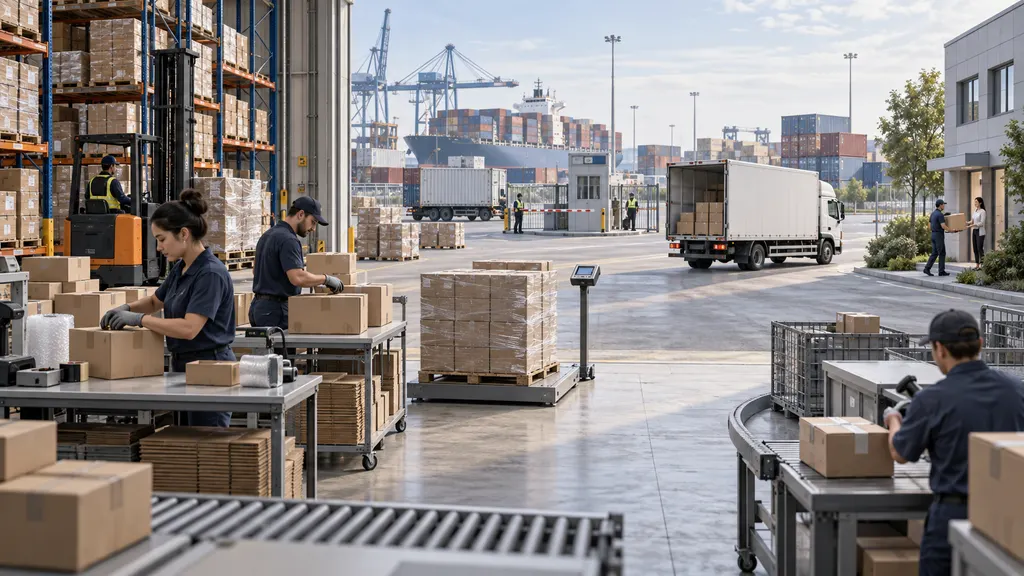
| Handling and fulfillment | Receiving, put-away, picking, packing, sorting, labeling, and dispatch activities. | Labor and materials used to pick and pack an online order. |
| Order and information processing | Systems and administrative work used to receive, verify, allocate, and manage orders and shipments. | Processing an order in an ecommerce or warehouse management system. |
| Customs and border-related services | Costs connected with documentation, brokerage, inspections, compliance support, and other border procedures. | A brokerage fee associated with an international shipment. |
| Returns and reverse logistics | Transportation, inspection, restocking, repair, disposal, refund administration, and other return-related activities. | Moving a returned product from the customer to a processing facility. |
Taxes, duties, insurance, packaging materials, and customer-service costs may be included or excluded depending on the company’s accounting policy and the purpose of the calculation. A clear cost definition should state what is included.
How Logistics Cost Is Measured
Businesses may measure logistics cost in several ways. Common bases include cost per order, cost per shipment, cost per parcel, cost per unit, cost per kilogram, cost per delivery, or logistics cost as a proportion of sales. These measures are not interchangeable because they use different denominators and may cover different activities.
A useful calculation normally defines:
- the geographic scope, such as domestic or cross-border operations;
- the supply-chain stages included;
- the period being analyzed;
- the cost categories included;
- the allocation method for shared warehouse, technology, labor, and management costs; and
- whether duties, taxes, returns, and customer-paid shipping charges are included.
For example, a retailer may calculate the logistics cost of an order by adding the allocated fulfillment, packaging, transportation, and return-related expenses. This is an analytical example rather than a universal accounting rule.
Logistics Cost in Cross-Border Ecommerce
Cross-border orders can involve more logistics activities and more cost categories than comparable domestic orders. Products may pass through export facilities, international transport networks, import procedures, destination warehouses, and local delivery networks.
When analyzing a cross-border shipment, a business should distinguish logistics cost from other parts of the customer’s total purchase cost. Customs duties, import taxes, product price, payment fees, and foreign-exchange effects may be relevant to the total transaction, but they are not automatically logistics costs. Their treatment depends on the calculation’s purpose and the applicable commercial and accounting arrangements.
The term is also related to trade costs, but the two concepts are not identical. Trade costs are a broader economic concept that can include barriers and expenses involved in exchanging goods across borders, whereas logistics cost focuses more directly on the physical movement, storage, handling, and administration of goods.
Logistics Cost and Related Terms
| Term | Meaning | Relationship to logistics cost |
|---|---|---|
| Freight cost | The charge for transporting goods, often paid to a carrier or freight service provider. | Usually one component of logistics cost, not the complete amount. |
| Shipping cost | A commercial term for the charge associated with sending an order or shipment. | May refer mainly to transportation, or may include additional fulfillment charges depending on the business. |
| Fulfillment cost | The cost of processing an order, including activities such as picking, packing, and dispatch. | Usually a subset of logistics cost. |
| Landed cost | The total cost of acquiring and bringing a product to a specified location, under a defined calculation method. | May include logistics cost together with product cost, duties, taxes, insurance, and other acquisition-related items. |
| Total cost to serve | The broader cost of serving a customer, order, channel, or product. | Can include logistics cost plus sales, customer-service, payment, and other operating costs. |
| Trade cost | A broader economic concept covering costs that affect exchange between markets or countries. | Overlaps with cross-border logistics cost but is not limited to physical logistics activities. |
Examples
- Domestic ecommerce: A retailer may add warehouse handling, packaging, and carrier charges to estimate the logistics cost of delivering an order.
- Cross-border ecommerce: A seller may analyze export handling, international transport, customs brokerage, destination delivery, and possible return transportation as separate cost categories.
- Business-to-business distribution: A manufacturer may evaluate inbound transport, storage, internal handling, and outbound delivery when comparing distribution options.
Common Misunderstandings
- Logistics cost is not always the same as shipping cost. Shipping cost often refers to the transportation charge shown to a customer or paid to a carrier. Logistics cost may also include warehousing, fulfillment, inventory carrying, information processing, and returns.
- Logistics cost is not automatically the same as landed cost. Landed cost may include the purchase price, duties, taxes, and other acquisition-related items in addition to logistics expenses.
- There is no universal cost boundary. A company may include packaging, insurance, customs charges, or returns in its logistics-cost calculation, while another company may report them separately.
- Lower transportation cost does not necessarily mean lower total logistics cost. A change in transport mode or delivery arrangement can affect inventory, warehousing, handling, service, and return costs. Any comparison should use a clearly defined scope.
QA
What is logistics cost in ecommerce?
It is the cost of activities required to store, process, move, deliver, and sometimes return products associated with ecommerce orders. The exact components depend on the company’s calculation method.
Is freight cost the same as logistics cost?
No. Freight cost generally refers to transportation charges, while logistics cost can include transportation plus warehousing, handling, inventory carrying, order processing, and other related expenses.
Does logistics cost include customs duties and taxes?
Not necessarily. Duties and taxes may be included in some landed-cost calculations, but they should not be assumed to be part of logistics cost without checking the defined scope.
Sources
- European Commission, Logistics and Multimodal Transport — official context for logistics activities and supply-chain transport.
- OECD, Trade Costs — distinction between broader trade costs and the expenses involved in international exchange.
- World Bank, Logistics Performance Index — reference context for logistics systems, transport, customs, infrastructure, and supply-chain performance.