Supply Logistics
Definition
Supply logistics is the planning and control of the flow of materials, goods, information, and related resources needed to supply a business, facility, production process, or customer-facing operation. In logistics and supply chain management, the term usually refers to activities such as sourcing support, inbound transportation, receiving, inventory replenishment, storage, and the movement of supplies to the point where they are needed. The expression is used descriptively in business and logistics contexts, but its exact scope can vary by organization; it is not always a formally standardized term with one universally accepted definition.
Supply logistics is closely related to inbound logistics and to the supply side of supply chain management. It focuses on making sure that the required items are available in the required condition and quantity, at an appropriate location and time. It does not necessarily include every activity in a supply chain. For example, outbound transportation to the final customer is normally a distribution or delivery activity, although the same company may manage it as part of its broader logistics function.
The term can apply to raw materials, components, packaging, finished goods purchased for resale, maintenance supplies, equipment, and other operational inputs. In an ecommerce business, supply logistics may include moving products from suppliers to a fulfillment center, replenishing warehouse inventory, and coordinating the information needed to receive and make those products available for sale.
Supply Logistics in the Supply Chain
Supply logistics occupies the upstream and internal movement portions of a supply chain. A typical sequence may begin with a requirement from a business unit, warehouse, store, production site, or ecommerce fulfillment operation. That requirement is converted into a purchasing or replenishment decision. A supplier then prepares the goods, a carrier transports them, and the receiving organization checks, records, stores, and allocates them.
The process connects several supply chain objects and decisions:
- Demand or requirement: the need for a product, component, packaging item, or operational supply.
- Order or purchase order: the commercial instruction used to request goods from a supplier.
- Shipment: the physical movement of the ordered goods through one or more transport stages.
- Inventory: the stock held before use, sale, production, or further distribution.
- Carrier: the party that performs or arranges transportation.
- Receiving: the activities used to accept, inspect, count, and record incoming goods.
- Information flow: order confirmations, dispatch notices, tracking events, invoices, customs documents, and inventory records.
Supply logistics therefore involves more than transportation. A shipment can arrive on time and still create an operational problem if the quantity is incorrect, the goods are damaged, the documents are incomplete, or the warehouse has no capacity to receive them. Effective control requires coordination between purchasing, suppliers, carriers, warehouse teams, finance, inventory management, and, where relevant, customs or trade-compliance personnel.
How Supply Logistics Works
Although organizations use different systems and procedures, supply logistics commonly follows a connected sequence. The boundaries between stages may overlap, particularly when a business uses a third-party logistics provider or an integrated enterprise system.
| Stage | Purpose | Typical information or activity |
|---|---|---|
| Requirement planning | Identify what is needed and when it may be required. | Sales forecasts, production plans, stock levels, reorder rules, or internal requests. |
| Supply decision | Determine the source and commercial arrangement for obtaining the goods. | Supplier selection, purchase order, delivery terms, quantity, and required date. |
| Preparation and dispatch | Make the goods ready for collection or delivery. | Packing, labeling, documents, dispatch confirmation, and carrier booking. |
| Transportation | Move the shipment from the supplier or origin point to the receiving location. | Mode selection, routing, tracking, consolidation, and delivery appointments. |
| Border and document handling | Support lawful movement across an international border when applicable. | Commercial documents, customs declarations, duties or taxes, permits, and inspections. |
| Receiving and inventory update | Confirm what arrived and make the stock available for its intended use. | Counting, inspection, discrepancy reporting, put-away, and system updates. |
| Replenishment review | Use current stock and supply information to plan the next requirement. | Lead-time review, exception management, safety-stock assessment, and follow-up. |
This sequence is not a mandatory industry standard. It is a practical description of activities that often occur in supply logistics. Some organizations combine purchasing and logistics, while others assign them to separate teams. In a cross-border transaction, customs activities may occur before or during transportation and may be handled by the importer, exporter, customs broker, carrier, or another authorized party, depending on the transaction and applicable rules.
Main Characteristics
Availability and timing
The central operational concern is availability: supplies should reach the point of use before they are needed, without creating unnecessary stock. Timing depends on supplier preparation, transport, border procedures, receiving capacity, and the accuracy of the information exchanged between parties. A promised delivery date is not the same as a guaranteed arrival time unless the relevant commercial and transport arrangements provide such a commitment.
Coordination across parties
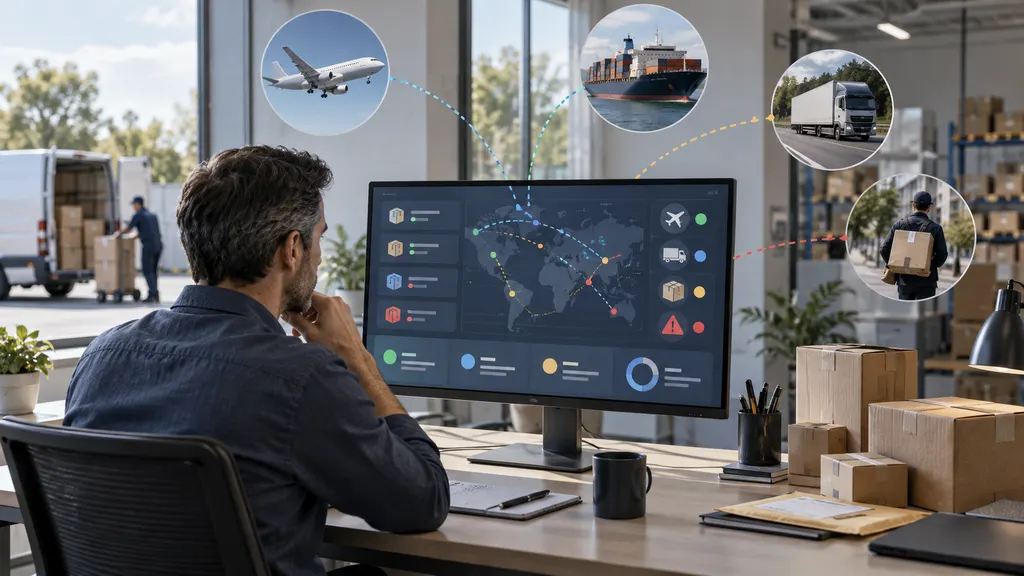
Supply logistics is usually a multi-party process. A supplier may prepare the goods, a freight forwarder may arrange transport, a carrier may perform a transport leg, a customs broker may submit information, and a warehouse may receive the shipment. Responsibility for each activity should be clear because a delay or data error at one stage can affect later stages.
Inventory connection
Supply logistics directly affects inventory. Early or excessive deliveries can increase storage requirements and holding costs, while late or incomplete deliveries can cause stockouts, production interruptions, or delayed order fulfillment. Inventory records are only useful when receipts, discrepancies, damage, and movements are recorded consistently.
Information visibility
Order and shipment information allows an organization to compare planned supply with actual progress. Useful records may include the purchase order, supplier confirmation, dispatch notice, tracking reference, packing list, receiving record, and discrepancy report. Tracking shows transport events; it does not by itself confirm that the correct quantity or condition was received.
Exception management
Supply logistics must address exceptions such as late dispatch, partial shipment, damaged packaging, incorrect documentation, customs holds, delivery to the wrong facility, or a mismatch between the physical goods and the order. An exception process normally identifies the issue, assigns responsibility, protects affected inventory or orders, and records the resolution.
Supply Logistics in Ecommerce
In ecommerce, supply logistics commonly supports the movement of sellable inventory from manufacturers, wholesalers, or other suppliers to fulfillment centers, stores, or other stocking locations. The goods may later be picked and packed for individual customer orders. This makes supply logistics an upstream activity in relation to order fulfillment.
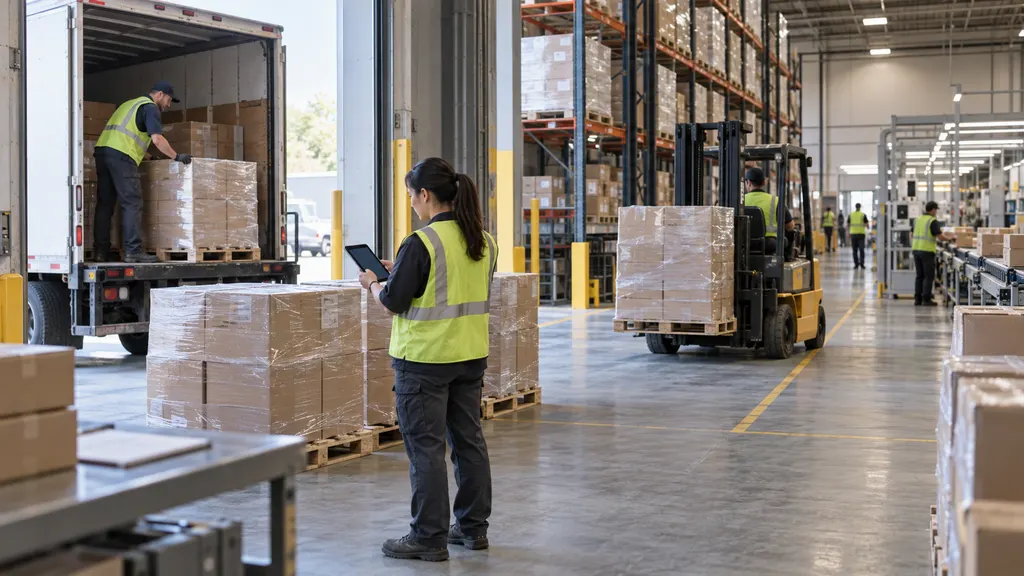
For example, an online retailer may use sales information and current stock records to request another quantity of a product from a supplier. The supplier may ship cartons or pallets to a fulfillment center. The receiving team checks the shipment against the purchase order and packing information, records any shortage or damage, and places accepted units into storage. Only after the inventory is recorded as available can the ecommerce operation reliably allocate it to customer orders.
Cross-border ecommerce adds additional considerations. The parties may need to establish the importer of record, prepare an accurate commercial description, determine the applicable tariff classification, provide a value and origin statement where required, and meet the destination country's import rules. The exact requirements depend on the goods, countries, transaction structure, and applicable law. Supply logistics does not replace customs compliance; it provides the operational coordination needed to move and receive the goods while those requirements are addressed.
Supply Logistics and Related Terms
| Term | Relationship to supply logistics | Important distinction |
|---|---|---|
| Supply chain management | The broader management framework covering supply, transformation, logistics, relationships, information, and related activities. | Supply logistics is one operational area within, or connected to, the broader supply chain. |
| Inbound logistics | The movement and handling of goods coming into a facility or organization. | Inbound logistics is often used as a near-synonym in operational contexts, while supply logistics may also emphasize the planning and sourcing requirement. |
| Procurement | The process of obtaining goods or services, including commercial and supplier decisions. | Procurement may create the order, but supply logistics manages or supports the physical and informational flow associated with supply. |
| Materials management | The planning, control, storage, and use of materials within an operation. | Materials management may focus more on internal availability and usage, whereas supply logistics often includes external transport and receipt. |
| Outbound logistics | The movement of goods from a business or fulfillment site toward a customer, store, or downstream location. | Outbound logistics concerns distribution after supply has reached the organization; it is not normally the same activity as supply logistics. |
| Freight forwarding | The arrangement and coordination of transport, often across multiple carriers or modes. | A freight forwarder may support supply logistics, but forwarding is a service function rather than the complete supply process. |
These boundaries are practical rather than universal. Companies may define department names differently, and a single team or logistics provider may perform several of these functions.
Examples
| Scenario | Supply logistics activity | Potential control point |
|---|---|---|
| Retail inventory replenishment | Move cartons from a supplier to a distribution center for later store or customer orders. | Compare the purchase order, dispatch information, received quantity, and inventory record. |
| Manufacturing inputs | Deliver components or raw materials to a production site. | Coordinate delivery timing, quality checks, storage conditions, and production requirements. |
| Ecommerce packaging supply | Replenish cartons, labels, or protective materials used in fulfillment. | Monitor stock availability and distinguish packaging supplies from sellable inventory. |
| Cross-border replenishment | Move goods from an overseas supplier to a warehouse in the destination market. | Check transport documents, customs information, import responsibilities, and receipt status. |
| Spare-parts supply | Provide replacement components to a service location or maintenance facility. | Verify part identity, quantity, urgency, storage requirements, and final allocation. |
Common Misunderstandings
- Supply logistics is not simply shipping. Shipping is the movement of goods, while supply logistics can include planning, ordering support, receiving, inventory control, documentation, and exception management.
- Supply logistics is not the same as supply chain management. Supply chain management is a broader discipline. Supply logistics normally describes a set of logistics activities within that broader system.
- Tracking does not prove receipt. A carrier event may show that a shipment was delivered to a location, but the receiving organization may still need to count, inspect, and record the goods.
- Inbound does not always mean international. Inbound logistics can take place within one city, one country, or across borders. The word describes the direction toward a facility or organization, not necessarily the geographic distance.
- A supply shipment is not automatically customer fulfillment. A supplier-to-warehouse shipment may support customer orders, but it is different from shipping an individual customer order to its final recipient.
QA
What does supply logistics mean in logistics?
It means planning and controlling the flow of supplies, materials, goods, information, and related activities from a source to the facility or operation that needs them.
Is supply logistics the same as inbound logistics?
They often overlap. Inbound logistics emphasizes goods entering a facility, while supply logistics may also emphasize the requirement, replenishment, supplier coordination, and inventory availability behind that movement.
What is the role of supply logistics in ecommerce?
It moves and receives inventory and operational supplies from suppliers to fulfillment or stocking locations so that products can be recorded, stored, and later allocated to customer orders.
Does supply logistics include customs?
It may include the operational coordination of customs information and documents in a cross-border movement, but it does not replace the legal responsibilities and procedures established by the applicable customs authorities.
Sources
- Council of Supply Chain Management Professionals, Supply Chain Management Definitions and Glossary — reference for the relationship between logistics and broader supply chain management terminology.
- ASCM, Supply Chain Management — reference for the broader supply chain context in which supply and logistics activities operate.
- Encyclopaedia Britannica, Logistics — general reference for logistics as the planning and movement of goods and resources.
- World Customs Organization, Customs Procedures and Facilitation — reference for the customs and facilitation context of international goods movements.