Logistics Technology
Definition
Logistics technology is the use of software, data systems, connected devices, automation, and other technical tools to plan, execute, monitor, and improve the movement and storage of goods. It is used across transportation, warehousing, inventory management, order fulfillment, delivery, returns, and related customs or trade processes.
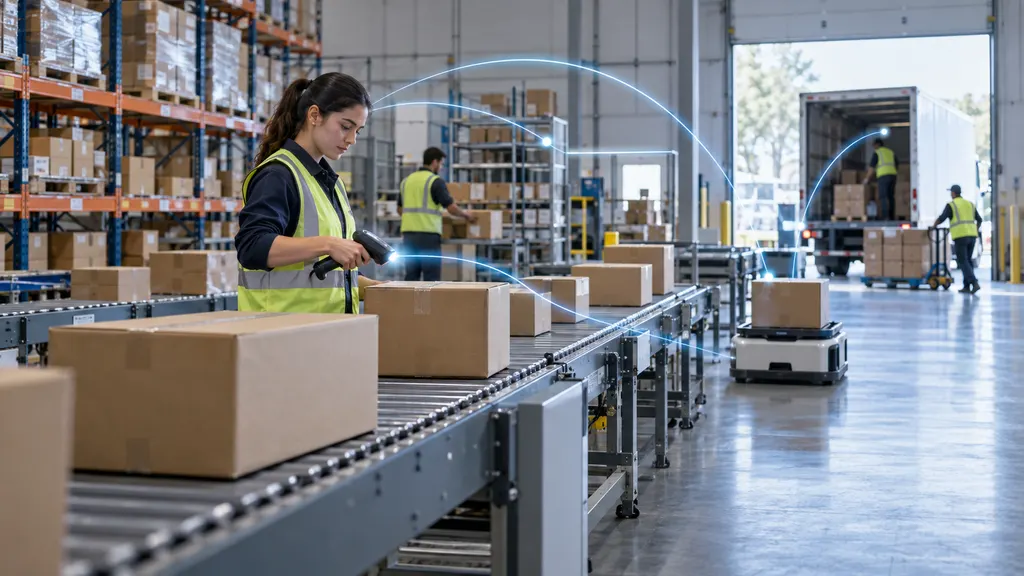
The term describes a broad group of technologies rather than one specific product or universally fixed classification. In logistics and ecommerce, it may refer to a single tool, such as a barcode scanner, or to an integrated system that connects orders, inventory, warehouses, carriers, and tracking information.
In Logistics and Ecommerce
Logistics technology connects physical operations with information flows. A customer order can generate inventory instructions, warehouse tasks, shipping documentation, carrier information, and tracking events. The exact process depends on the company, product, transport method, and destination.
In ecommerce, logistics technology commonly supports the period from order placement to delivery and, where applicable, return processing. In cross-border ecommerce, it may also support the exchange of shipment, product, consignee, and customs-related data. Technology can organize and transmit information, but it does not by itself determine whether a shipment complies with the laws or requirements of a particular country.
Main Areas of Logistics Technology
The following are descriptive areas used to explain common applications. They are not a single official industry classification, and one system may cover several areas.
| Area | Typical Function | Example |
|---|---|---|
| Planning and management systems | Coordinate orders, inventory, transportation, warehouses, or multiple logistics activities. | A system assigns orders to available fulfillment locations. |
| Identification and data capture | Record the identity, location, status, or movement of products, parcels, assets, or handling units. | A barcode is scanned when a parcel enters a warehouse. |
| Warehouse technology | Support receiving, storage, picking, packing, counting, and dispatch. | Warehouse software directs a worker to a picking location. |
| Transportation and delivery technology | Support carrier selection, dispatch, routing, delivery status, and proof of delivery. | A platform sends shipment details to a carrier and receives tracking events. |
| Automation and robotics | Perform or assist with physical handling and repetitive operational tasks. | An automated conveyor moves cartons between processing stations. |
| Analytics and visibility | Combine operational data to show performance, exceptions, capacity, or shipment status. | A dashboard highlights orders that have not received an expected scan. |
| Trade and customs data technology | Prepare, validate, transmit, or organize information used in international shipments. | A system maps product and shipment data into a customs-related data exchange. |
How Logistics Technology Works
- Data is created. An order, product, parcel, inventory movement, or transport event produces information.
- Data is captured. Information may be entered manually or collected through barcodes, RFID, sensors, application programming interfaces, mobile devices, or other connected systems.
- Data is processed. Software applies business rules to allocate inventory, create tasks, select or communicate with a carrier, or identify an exception.
- Work is performed. People, vehicles, warehouse equipment, or automated systems carry out the physical or administrative activity.
- Status is updated. New events are sent to internal users, trading partners, or customers when the relevant systems are connected and the information is available.
These steps do not always occur in a single system. A retailer may use one platform for orders, another for warehouse operations, and a carrier system for transport events. Data integration is therefore an important practical part of logistics technology.
Common Technologies
- Warehouse management systems: Software used to coordinate warehouse inventory and activities.
- Transportation management systems: Software used to plan, execute, and monitor transportation activities.
- Order management systems: Software used to manage orders and their fulfillment across available inventory and channels.
- Barcodes and RFID: Identification technologies that allow products, packages, or handling units to be recorded during operations. Their capabilities and implementation requirements differ.
- Application programming interfaces: Technical interfaces that allow systems to exchange data.
- Internet of Things devices: Connected devices that can collect or transmit information about assets, locations, conditions, or events.
- Automation and robotics: Equipment or software that performs, supports, or coordinates repetitive logistics tasks.
- Analytics and artificial intelligence: Methods that can help organize operational data, detect patterns, support forecasts, or assist with decisions. Their output depends on data quality, system design, and human oversight.
Examples in Real-World Operations
| Scenario | Possible Technology Use | Information or Activity Involved |
|---|---|---|
| Online order fulfillment | An order management system communicates with inventory and warehouse systems. | Order status, available stock, fulfillment location, and picking instructions. |
| Parcel dispatch | A shipping system creates or transmits shipment information to a carrier. | Destination details, service selection, label data, and shipment reference. |
| Cross-border shipment | Trade-related software organizes information required for an international shipment. | Product descriptions, quantities, parties to the transaction, and other applicable data. |
| Delivery monitoring | A visibility system collects carrier events and displays shipment progress. | Accepted, in-transit, exception, or delivered events when provided by the relevant source. |
| Return processing | A returns system issues instructions and records the movement of a returned item. | Return authorization, parcel status, inspection result, and disposition. |
Benefits and Limitations
Logistics technology can improve information availability, reduce repeated data entry, support coordination, and make exceptions easier to identify. Automation may also reduce manual handling for suitable tasks. These outcomes are not automatic: they depend on process design, implementation, data quality, system integration, staff training, and the reliability of the underlying operational information.
Technology also has limitations. A tracking system may show only events received from a carrier or logistics partner. A planning model may produce weak results when its input data is incomplete or inaccurate. Systems can create additional security, privacy, interoperability, maintenance, and operational risks. Technology does not replace the need for appropriate inventory controls, transport planning, customs compliance, or human judgment.
Logistics Technology vs. Related Terms
| Term | Meaning | Relationship to Logistics Technology |
|---|---|---|
| Logistics software | Software designed to support logistics activities. | It is one part of the broader technology field, which also includes hardware, devices, networks, and automation. |
| Supply chain technology | Technology used across a wider network that may include sourcing, production, logistics, distribution, and demand-related activities. | It can include logistics technology, although the two terms do not have identical scope. |
| Warehouse automation | Equipment and software used to automate or assist warehouse tasks. | It is a specific application area within logistics technology. |
| Shipment tracking | The monitoring of shipment events or status information. | It is one function that logistics technology can support, not a synonym for the entire field. |
| Logistics service | A business activity such as transportation, warehousing, fulfillment, or delivery performed for a customer or organization. | Technology may support the service, but the technology and the service are different concepts. |
Common Misunderstandings
- It does not mean only automation. Logistics technology includes information systems, identification tools, data exchange, analytics, and other technologies in addition to robots and automated equipment.
- It is not the same as tracking. Tracking is one possible function. Planning, inventory control, warehouse execution, transport coordination, and returns management may also use logistics technology.
- More technology does not automatically mean better logistics. A system must fit the operation and use reliable data to provide useful results.
- A tracking event is not necessarily proof of physical condition. A status update can indicate that an event was recorded, but it may not establish the condition of the goods unless the relevant process specifically records that information.
QA
What is logistics technology?
Logistics technology is the use of software, connected devices, data systems, automation, and related tools to manage or support the movement and storage of goods.
What is an example of logistics technology in ecommerce?
An ecommerce operation may use connected order, inventory, warehouse, and carrier systems to process an order and provide shipment status.
Is logistics technology the same as warehouse automation?
No. Warehouse automation is one area of logistics technology. The broader term also includes planning systems, identification tools, transport systems, analytics, and trade-related data technology.
How is logistics technology used in cross-border ecommerce?
It can organize orders and shipment data, connect sellers with logistics providers, provide available tracking events, and support the preparation or exchange of information used in international shipping. Applicable customs and trade requirements still depend on the relevant authorities and transaction.
Sources
- Encyclopaedia Britannica: Logistics — general background on logistics as the management of the movement and supply of goods.
- GS1: Barcodes — identification and data-capture context for products and logistics units.
- World Customs Organization: WCO Data Model — customs and cross-border data-exchange context.