Distribution Logistics
What Is Distribution Logistics?
Distribution logistics is the planning, coordination, and control of activities required to move finished goods from a producer, supplier, or fulfillment location to the next point in the supply chain, such as a distribution center, retailer, business customer, or final consumer. It includes the physical movement of goods, temporary storage, inventory handling, order processing, transportation coordination, and delivery-related information flows. In logistics and ecommerce, the term usually refers to the outbound side of supply chain operations: getting the right products to the right destination in the required condition and within the agreed service parameters.
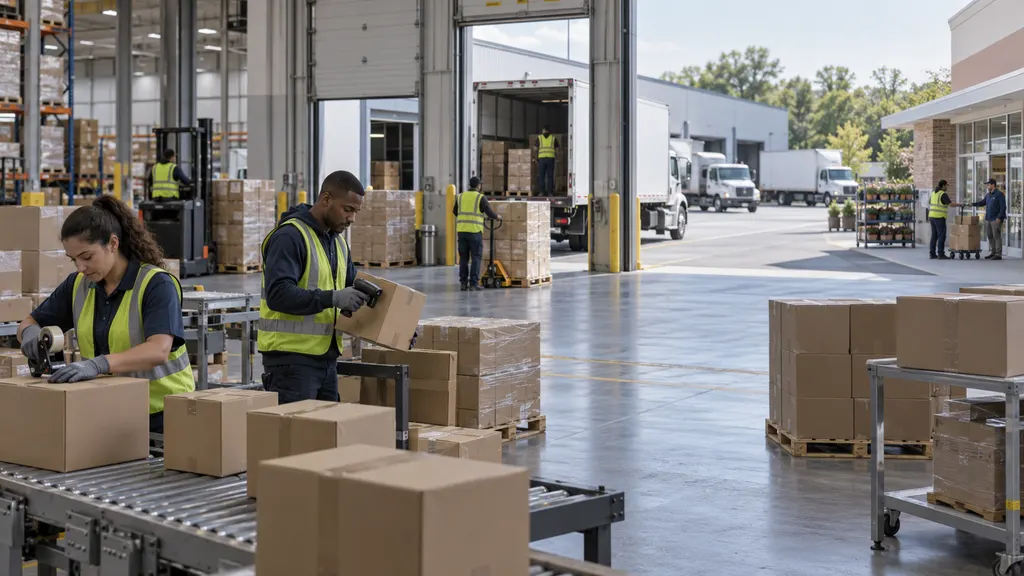
Distribution logistics is broader than transportation alone. Transportation moves goods between locations, while distribution logistics also addresses how orders are received, picked, packed, consolidated, dispatched, tracked, and delivered. Depending on the organization and the source being used, the term may cover activities inside a distribution center as well as the movement between facilities. It may also include coordination with carriers, customs intermediaries, retailers, marketplaces, and returns operations when those activities affect outbound product flow.
In a wider supply chain context, distribution is one part of logistics. Logistics can include inbound flows of materials, internal movement, outbound distribution, reverse logistics, and the information needed to coordinate these flows. The exact boundary varies by company, industry, and operating model, so distribution logistics should not automatically be treated as a single standardized process or a synonym for parcel delivery.
Distribution Logistics in the Supply Chain
Distribution logistics connects production or procurement with demand. A typical flow may begin when finished inventory becomes available at a factory, supplier, warehouse, or fulfillment center. An order is then received and verified, inventory is allocated, the goods are picked and packed, and a transportation method is selected. The shipment moves through one or more network nodes before reaching its destination. Delivery confirmation, exception handling, and post-delivery information may complete the outbound process.
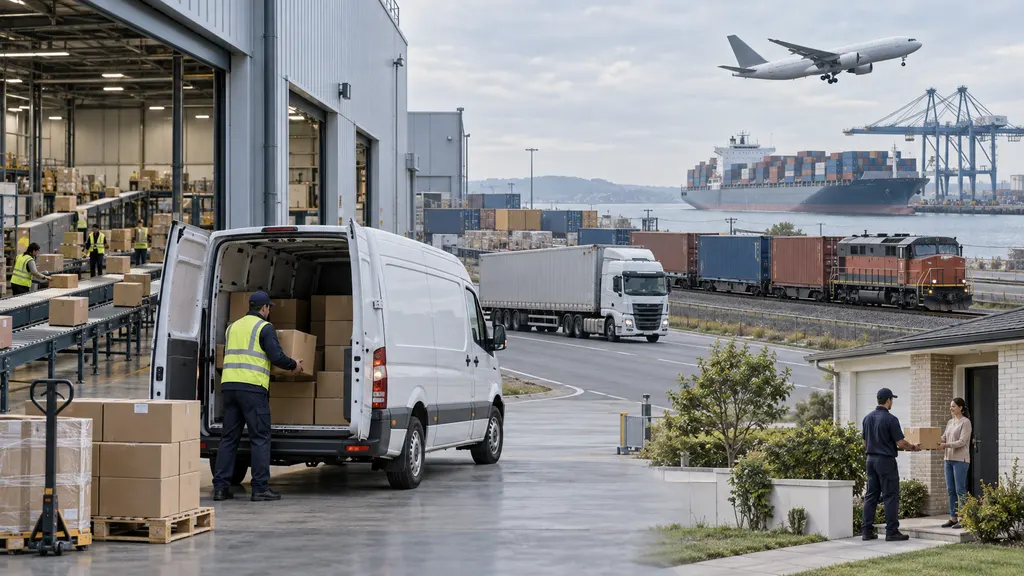
The position of distribution logistics depends on the network design. A manufacturer may ship pallets to a regional distribution center. A retailer may replenish stores from a central warehouse. An ecommerce merchant may send individual parcels directly to consumers. A cross-border seller may use a fulfillment center in one country, an international line-haul service, an import process, and a local last-mile carrier in the destination country.
| Supply Chain Element | Relationship to Distribution Logistics | Typical Question |
|---|---|---|
| Inventory | Provides the goods that can be allocated to orders and replenishment requests. | Is the required stock available at the appropriate location? |
| Order processing | Converts a customer, retailer, or business request into an executable fulfillment task. | What products, quantities, and delivery requirements apply? |
| Warehousing | Stores, organizes, and prepares goods before dispatch. | Where should the goods be held, picked, packed, or consolidated? |
| Transportation | Moves goods between facilities or to the delivery destination. | Which mode, route, carrier, and service are appropriate? |
| Customs | May be required when goods cross an international border. | Are the shipment data, documents, duties, and restrictions addressed? |
| Delivery | Represents the transfer of the shipment to the intended recipient or delivery location. | Was the shipment delivered, refused, delayed, or returned? |
How Distribution Logistics Works
Although processes differ by industry, distribution logistics commonly involves the following connected activities.
- Demand and order information: A sales order, replenishment instruction, forecast, or allocation decision creates a requirement to move goods. The information may come from an ecommerce store, retailer, marketplace, enterprise resource planning system, or internal planning process.
- Inventory allocation: Available stock is matched with the order and a fulfillment location. Allocation may consider product availability, destination, promised service level, inventory ownership, handling requirements, and applicable restrictions.
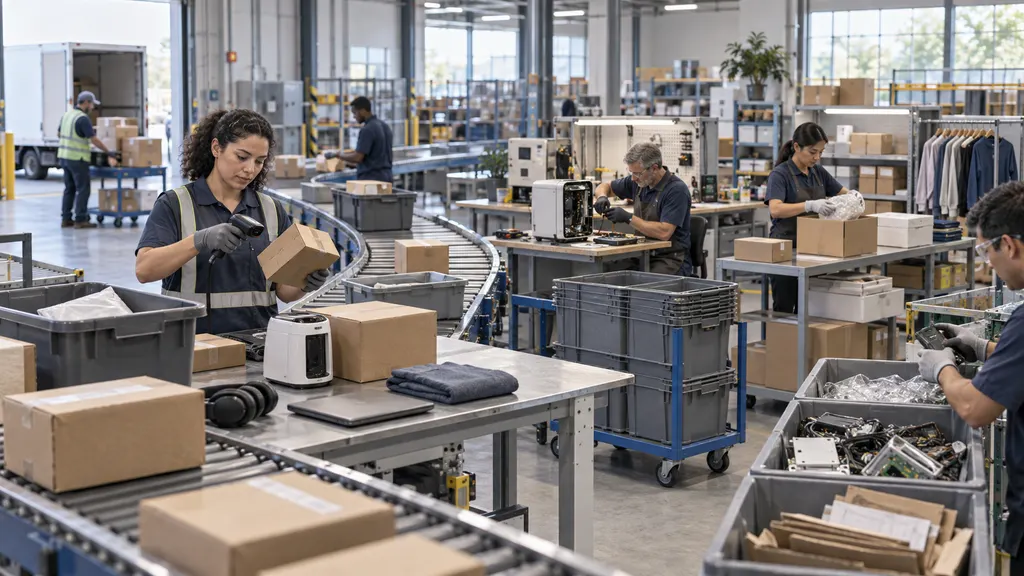
- Warehouse execution: Workers or warehouse systems locate the goods, pick the required quantities, verify the order, and prepare the items for dispatch. Packaging can affect protection, handling, dimensional weight, labeling, and the number of transport units.
- Shipment preparation: The order is converted into one or more shipment units, such as a carton, pallet, container, or parcel. Shipping labels, commercial documents, packing information, and transport instructions may be created at this stage.
- Consolidation and dispatch: Compatible orders may be grouped to improve handling or transport efficiency. The goods are handed to a carrier, freight forwarder, or another transport provider under the applicable service arrangement.
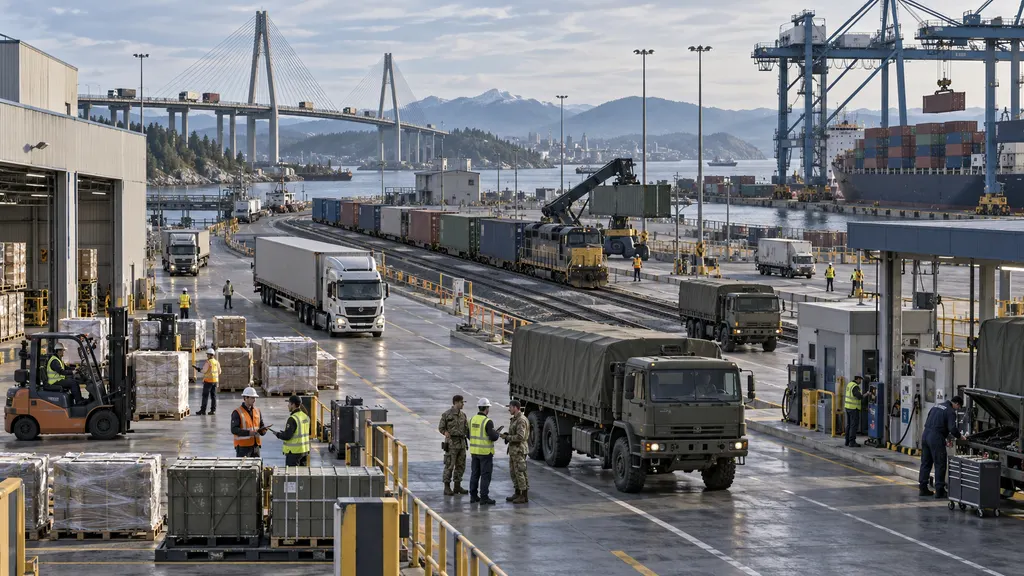
- Line-haul and delivery movement: The shipment moves between origin and destination facilities. Depending on the network, this may include road, rail, air, sea, parcel, or multimodal transport. Cross-border movements may also involve export and import procedures.
- Visibility and exception management: Status events can show that an order was created, packed, handed over, transported, held, delivered, refused, or returned. When an event is delayed or abnormal, the distributor may investigate the cause and determine a corrective action.
- Delivery completion: The process ends operationally when the goods reach the intended delivery point, are accepted by the recipient, or enter an alternative process such as a failed-delivery or returns workflow.
These activities are not always linear. An inventory shortage can trigger an allocation change, a customs issue can interrupt transport, and an address problem can send a parcel into exception handling. Distribution logistics therefore involves both planned movement and decisions made when the original plan cannot be followed.
Main Characteristics
Network Coordination
Distribution often involves several locations and organizations rather than one direct movement. A shipment may pass from a supplier to a consolidation facility, then to a regional warehouse and a local delivery operation. Each handoff creates requirements for identification, documentation, inventory status, and responsibility.
Order and Inventory Linkage
Distribution logistics links physical stock to specific demand. A product cannot be distributed effectively merely because it exists somewhere in the network. The operation must also determine whether the stock is available, correctly identified, suitable for the destination, and assigned to the correct order or replenishment request.
Service and Cost Trade-offs
Decisions about facility location, shipment frequency, transport mode, packaging, consolidation, and carrier selection can affect both service and cost. A faster transport option may reduce transit time but increase expense. Consolidating orders may improve transport utilization but delay dispatch if the operation waits for additional goods. These are operational trade-offs, not universal rules.
Information Dependence
Accurate product identifiers, quantities, addresses, shipping instructions, customs data, and status events are important to distribution execution. Information errors can cause mis-picks, incorrect labels, failed delivery attempts, inventory discrepancies, or border delays. For this reason, distribution logistics includes information management as well as physical handling.
Multiple Unit Levels
Distribution may operate at different physical levels. A manufacturer may manage bulk shipments, pallets, and cases, while an ecommerce fulfillment operation may manage individual items and parcels. The same product can change handling units as it moves through the network, which affects storage, picking, loading, tracking, and delivery procedures.
Distribution Logistics in Ecommerce
In ecommerce, distribution logistics supports the movement from available inventory to the online buyer. It normally interacts with the order management system, warehouse or fulfillment operation, packaging process, carrier allocation, tracking interface, customer support, and returns process. The buyer may see only a few status messages, but those messages represent multiple operational events.
An ecommerce order can be fulfilled from a merchant warehouse, a third-party logistics facility, a marketplace-related fulfillment location, or another inventory node. If the order contains multiple products, the operation may ship it from one location or split it into several shipments. A shipment is the physical movement created to fulfill an order; an order can therefore produce more than one shipment, and one shipment can sometimes contain items associated with more than one order when the operation permits consolidation.
Distribution logistics also affects the customer experience. Packaging condition, delivery address accuracy, tracking updates, delivery attempts, and the handling of damaged or undeliverable parcels all influence what happens after checkout. However, distribution logistics should not be confused with customer service or delivery experience. Those areas may use distribution information, but they describe different business functions.
Distribution Logistics in Cross-Border Ecommerce
Cross-border distribution adds international transport and border-related requirements to the outbound flow. The operation may need to coordinate export information, destination-country import requirements, product descriptions, values, country-of-origin information, duties or taxes where applicable, and the responsibilities of the parties involved. The precise requirements depend on the goods, countries, transaction structure, and applicable rules.
A cross-border distribution plan may use an international carrier, freight forwarder, postal operator, customs broker, local delivery carrier, or a combination of providers. The physical route and the commercial transaction are related but not identical: a seller may use one provider for international movement and another for final delivery. Tracking events may also be generated by multiple systems and may not appear in one consistent format.
Distribution logistics does not itself determine whether a product is legally admissible or which customs treatment applies. Those questions belong to the relevant customs, trade, tax, and product regulations. Distribution planning must account for them, but an operational glossary definition should not be treated as legal or customs advice.
Distribution Logistics Compared with Related Terms
| Term | Meaning | How It Differs from Distribution Logistics |
|---|---|---|
| Transportation | The movement of people or goods between locations. | It is a core component of distribution logistics but does not by itself cover order processing, inventory allocation, or warehouse execution. |
| Warehousing | The storage and handling of goods in a facility. | It may support distribution logistics, but distribution also includes movement and coordination beyond the warehouse. |
| Fulfillment | The process of receiving, processing, and completing an order. | Fulfillment is often order-centered; distribution logistics may also cover replenishment, network transfers, and broader outbound flows. |
| Delivery | The transfer of goods to the intended recipient or destination. | Delivery is usually the final part of a distribution movement, not the entire distribution process. |
| Freight | Goods transported as cargo, or the charge for transporting them, depending on context. | Freight may be an object or transport charge within a distribution operation rather than the whole operating system. |
| Reverse logistics | The movement or management of goods away from the customer or downstream location for return, repair, reuse, recycling, or disposal. | It addresses reverse flows, whereas distribution logistics usually emphasizes outbound flows to the customer or next supply-chain point. |
| Distribution center | A facility used to receive, store, sort, consolidate, and dispatch goods. | It is a physical node in a distribution network, not the complete set of planning and movement activities. |
Examples
For example, a retailer may receive finished products from a supplier, store them in a regional distribution center, allocate stock to store replenishment orders, prepare pallets, and arrange carrier pickup. Those coordinated activities are distribution logistics.
For instance, an online seller may receive an order for a household item, allocate the item to a fulfillment center, pick and pack it, create a parcel label, hand the parcel to a carrier, and monitor delivery events. The sequence illustrates ecommerce distribution logistics even if the seller does not own the warehouse or transport equipment.
In a cross-border example, a merchant may dispatch an order from a warehouse in the exporting country, provide the required shipment information, use an international transport service, complete the applicable border process, and transfer the parcel to a destination-country delivery network. The example describes a possible operating flow, not a universal legal or commercial procedure.
Common Misunderstandings
- Distribution logistics is only delivery. Delivery is one stage. Distribution logistics can also include allocation, picking, packing, consolidation, transport planning, and exception management.
- Distribution means the same thing as transportation. Transportation is the movement function. Distribution logistics includes transportation but also coordinates inventory, orders, facilities, information, and handoffs.
- A distribution center is the same as distribution logistics. A distribution center is a facility. Distribution logistics is the wider process and network that may use one or more facilities.
- Every order creates exactly one shipment. An order may be split into multiple shipments, while consolidation may combine compatible items or orders into a shared transport unit.
- Distribution logistics guarantees a delivery date. It supports planned service performance, but actual delivery can be affected by inventory availability, transport disruption, address problems, weather, customs processing, or other exceptions.
- Distribution logistics determines customs law. It must account for applicable border requirements, but the legal classification and treatment of goods depend on the relevant authorities and regulations.
QA
What does distribution logistics mean in ecommerce?
It means coordinating the movement of ordered goods from available inventory through fulfillment and transportation to the online customer or delivery destination.
What is the difference between distribution logistics and transportation?
Transportation is the movement of goods. Distribution logistics is broader and also includes order processing, inventory allocation, warehouse handling, shipment preparation, information flows, and exception management.
Does distribution logistics include warehousing?
It may include warehouse activities that support outbound distribution, such as storage, picking, packing, and dispatch. The exact boundary depends on the organization’s terminology.
How does cross-border distribution differ from domestic distribution?
It may require additional coordination for international transport, shipment information, customs procedures, and destination-country delivery operations. The applicable requirements vary by shipment and jurisdiction.
Sources
- Encyclopaedia Britannica, “Logistics” — background on logistics as the organization and movement of resources.
- World Trade Organization, World Trade Report 2024, Chapter 3 — trade and logistics context relevant to cross-border movement.
- World Customs Organization, Customs and International Trade — customs context for international goods movement.
- Council of Supply Chain Management Professionals, Supply Chain Management Definitions and Glossary — professional terminology for logistics and supply chain relationships.