Logistics Enterprise
Definition
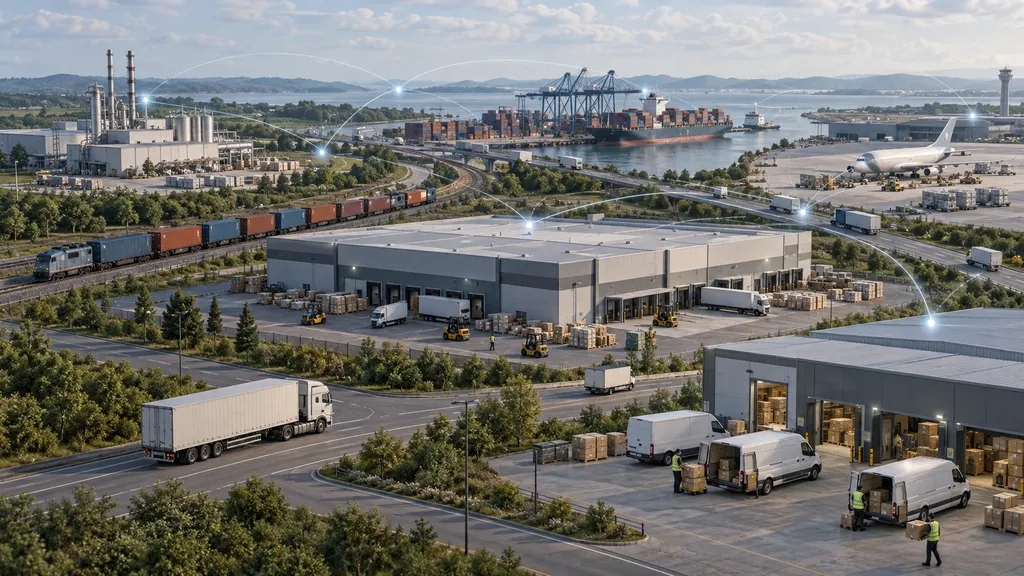
A logistics enterprise is an organization that plans, coordinates, manages, or performs activities involved in the movement and storage of goods. In logistics, ecommerce, and cross-border trade, the term commonly refers to a business whose principal activities may include transportation, warehousing, fulfillment, freight forwarding, inventory handling, delivery coordination, or related supply chain services.
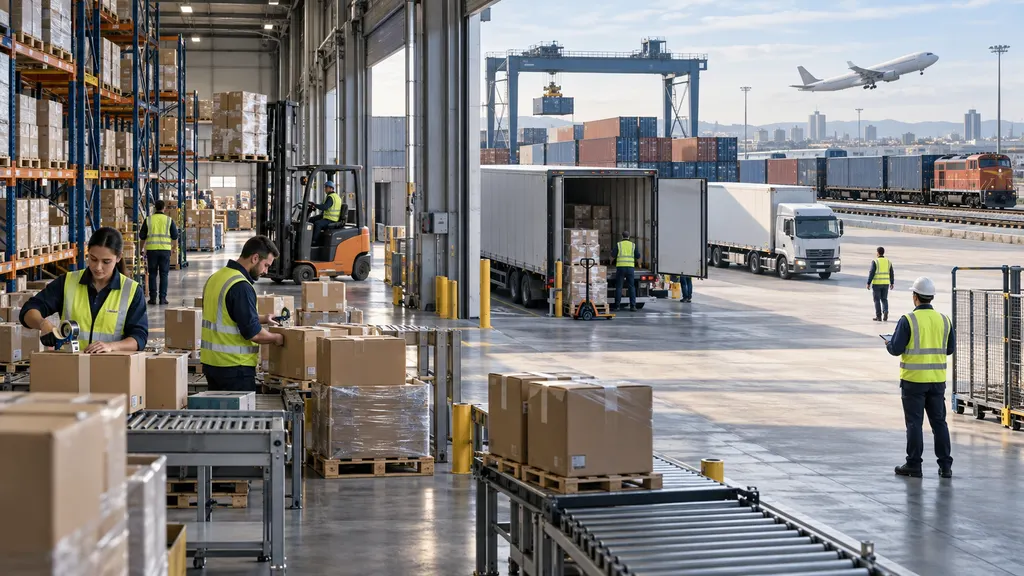
Logistics enterprise is a descriptive business term rather than a universally defined legal or regulatory category. Its meaning can therefore vary by context. It may describe a specialized logistics service provider, such as a carrier or third-party logistics provider, or an organization that manages logistics as part of its own commercial operations.
In Logistics
A logistics enterprise connects one or more stages of the supply chain. Depending on its role, it may arrange transportation, operate warehouses, consolidate shipments, prepare orders, manage inventory, coordinate customs documentation, or organize final delivery. Some enterprises perform these activities with their own assets, while others coordinate services supplied by carriers, warehouse operators, customs brokers, or other contractors.
The term describes the organization, not a single shipment or individual logistics activity. An order is a request to buy goods, a shipment is a consignment moving through the supply chain, and a logistics enterprise is the organization that may manage one or more processes associated with those goods or shipments.
Common Types of Logistics Enterprise
The following are descriptive categories based on the main activity an organization performs. They are not a single universal legal classification, and one enterprise may fit more than one category.
| Type | Primary role | Typical activities |
|---|---|---|
| Carrier | Moves goods between locations | Road, rail, air, sea, or parcel transportation |
| Warehouse operator | Stores and handles goods | Receiving, storage, picking, packing, and dispatch |
| Freight forwarder | Arranges transportation and shipment coordination | Routing, booking, documentation, consolidation, and carrier coordination |
| Third-party logistics provider | Performs outsourced logistics functions | Transportation management, warehousing, fulfillment, or integrated logistics services |
| In-house logistics organization | Manages logistics for its own business | Internal distribution, inventory movement, order fulfillment, and delivery coordination |
Role in Ecommerce and Cross-Border Trade
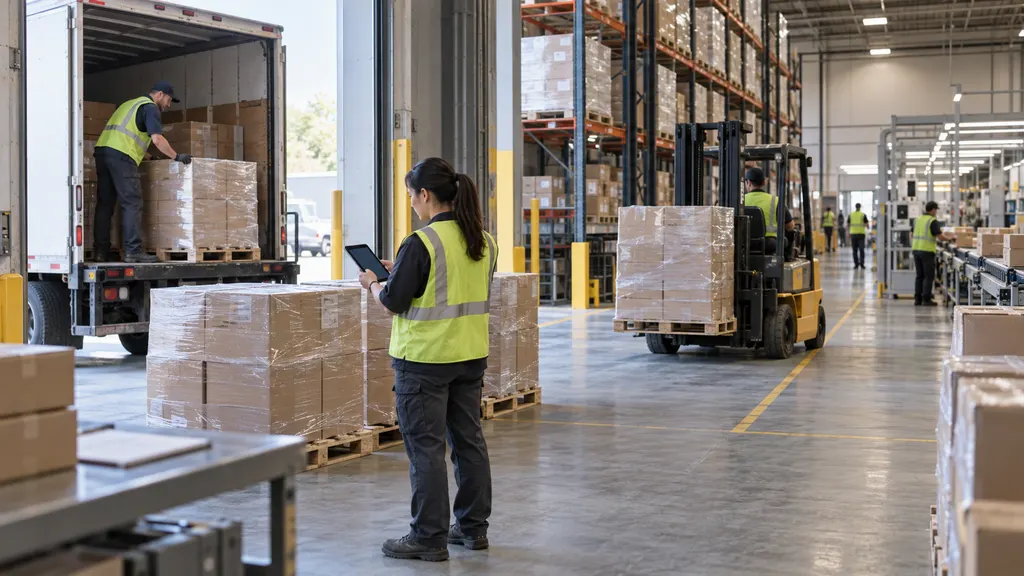
In ecommerce, a logistics enterprise may support the process from inventory storage through order fulfillment and delivery. For example, a retailer may use an external logistics enterprise to store products, pick and pack customer orders, hand shipments to a carrier, and process returned goods.
In cross-border ecommerce, the organization may also coordinate international transportation, export and import documentation, customs information, duties and taxes workflows, and delivery by a destination-country carrier. The precise responsibilities depend on the service agreement and the applicable trade and customs arrangements. A logistics enterprise does not automatically act as the importer of record, customs declarant, or carrier; those roles must be determined separately.
Logistics Enterprise vs. Related Terms
| Term | Meaning | Relationship to logistics enterprise |
|---|---|---|
| Logistics company | A common business term for a company providing or managing logistics activities | Often used interchangeably in ordinary business communication |
| Logistics service provider | An organization that supplies logistics services to another party | Usually emphasizes the customer-facing service relationship |
| Carrier | An organization that transports goods | A carrier may be one type of logistics enterprise, but not every logistics enterprise is a carrier |
| Freight forwarder | An intermediary that arranges transportation and related shipment services | A freight forwarder may be a logistics enterprise without operating the transporting vehicle or vessel |
| 3PL | A third-party provider that performs outsourced logistics functions | A 3PL is a particular type of logistics enterprise defined by its outsourced role |
| Supply chain enterprise | A broader organization involved in producing, sourcing, distributing, or selling goods | A supply chain enterprise may include logistics activities without being primarily a logistics enterprise |
Common Misunderstandings
- It is not limited to transportation. Logistics can also include storage, order fulfillment, inventory handling, documentation, and coordination.
- It does not always mean a carrier. A logistics enterprise may arrange transportation or manage warehousing without directly transporting goods.
- It is not necessarily the same as a 3PL. A 3PL provides outsourced logistics services, whereas logistics enterprise is a broader descriptive expression.
- It does not identify a legal status by itself. The term does not determine licensing, customs responsibility, liability, or the contractual role of an organization.
Examples
- A parcel delivery business that transports ecommerce shipments can be described as a logistics enterprise.
- A warehouse operator that stores imported products and fulfills online orders may function as a logistics enterprise.
- A freight forwarder that arranges an international shipment across several carriers may be described as a logistics enterprise.
- A retailer that manages its own distribution centers and delivery operations may have an in-house logistics enterprise or logistics organization within the broader business.
QA
What is a logistics enterprise in logistics?
It is an organization that manages or performs logistics activities such as transportation, warehousing, fulfillment, inventory handling, or shipment coordination.
Is a logistics enterprise the same as a logistics company?
In ordinary business usage, the terms are often interchangeable. However, logistics enterprise can be used more broadly to describe an organization and its logistics activities.
Is a carrier a logistics enterprise?
A carrier may be a logistics enterprise because it transports goods, but logistics enterprises can also perform forwarding, warehousing, fulfillment, or coordination without acting as carriers.
Sources
- Encyclopaedia Britannica: Logistics — background on logistics as the planning and control of the movement and storage of goods.
- Council of Supply Chain Management Professionals: Supply Chain Management Definitions and Glossary — terminology for logistics, supply chain management, carriers, and third-party logistics services.