Logistics Center
Definition
A logistics center is a facility or coordinated operating location where logistics activities are organized and performed, such as receiving goods, storing inventory, sorting shipments, consolidating or deconsolidating loads, preparing orders, and dispatching goods for transportation. The term is used mainly in logistics, warehousing, supply chain management, ecommerce fulfillment, and cross-border trade.
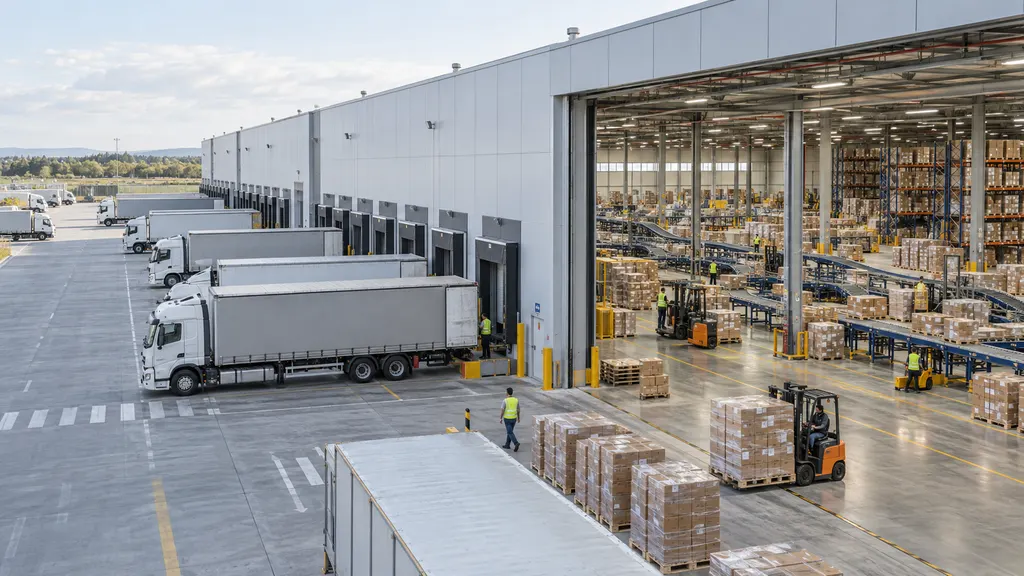
“Logistics center” is a broad operational term rather than a single universally standardized facility type. Its exact meaning depends on the activities performed at the site. Some logistics centers function mainly as warehouses, while others emphasize order fulfillment, freight transfer, shipment consolidation, or distribution.
In Logistics
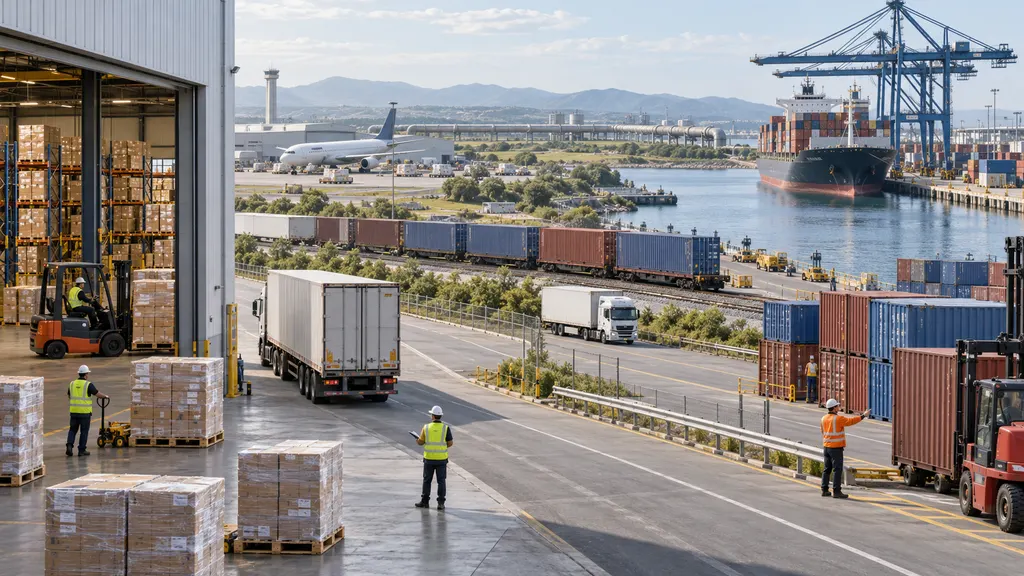
A logistics center occupies a point in the supply chain between suppliers, manufacturers, sellers, carriers, and final recipients. Goods may enter the center from a factory, supplier, port, airport, or another warehouse. They may then be stored temporarily, processed, combined with other goods, or transferred to a carrier for onward movement.
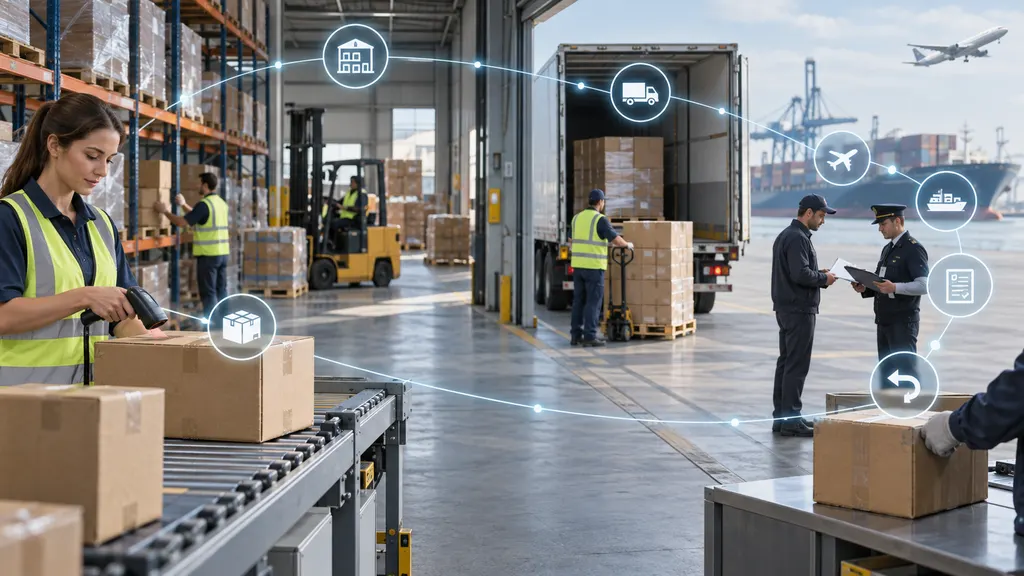
In ecommerce, a logistics center may support inventory storage, order picking, packing, labeling, shipment handover, and returns processing. In cross-border ecommerce, it may also be associated with export preparation, import processing, customs-related documentation, or the transfer of shipments between international and domestic transport networks. The exact customs responsibilities depend on the facility’s role, the parties involved, and the applicable regulations.
Typical Activities
| Activity | Meaning | Supply Chain Relationship |
|---|---|---|
| Receiving | Accepting goods from suppliers, manufacturers, carriers, or other facilities. | Creates an inbound connection to inventory or onward transportation. |
| Storage | Holding goods until they are needed for production, sale, transfer, or delivery. | Connects inventory planning with customer or business demand. |
| Sorting | Separating goods or shipments according to destination, service, order, product, or handling requirement. | Prepares items for consolidation, fulfillment, or dispatch. |
| Order fulfillment | Picking, checking, packing, and preparing goods in response to an order. | Connects an ecommerce order with a shipment. |
| Consolidation | Combining multiple goods or shipments into a larger movement. | Can support transport planning and movement between network locations. |
| Dispatch | Releasing goods to a carrier or the next supply chain stage. | Marks the transition from facility processing to transportation. |
| Returns processing | Receiving and assessing goods sent back by a customer or business partner. | Connects reverse logistics with inventory, resale, repair, recycling, or disposal decisions. |
Logistics Center Compared with Related Facilities
These terms overlap in everyday business use, but they can describe different operational emphases. A company may use one building for several of these functions, so the name alone does not establish the facility’s exact capabilities.
| Term | Typical Meaning | Primary Emphasis |
|---|---|---|
| Warehouse | A facility used mainly to receive and hold goods. | Inventory storage and handling. |
| Distribution center | A facility designed to receive, process, and distribute goods to downstream locations or customers. | Outbound distribution and inventory flow. |
| Fulfillment center | A facility that processes customer orders, commonly including picking, packing, and shipment preparation. | Order fulfillment, especially for ecommerce. |
| Cross-dock facility | A facility where incoming goods are sorted and transferred to outgoing transport with limited or no long-term storage. | Rapid transfer between inbound and outbound movements. |
| Logistics center | A broad term for a facility or operating location that coordinates one or more logistics functions. | Integrated or coordinated logistics operations. |
How a Logistics Center Fits into Ecommerce
In an ecommerce supply chain, a logistics center can connect the seller’s inventory with the customer’s shipment. A typical process may involve receiving inventory, recording or verifying the goods, storing them, receiving an order, picking the ordered items, packing and labeling the shipment, handing it to a carrier, and processing tracking or return information.
This sequence is descriptive rather than a mandatory operating model. Some logistics centers do not store inventory, while others do not process individual customer orders. For example, a cross-border transfer facility may sort and consolidate shipments before sending them to another country or a domestic delivery network.
Logistics Centers in Cross-Border Trade
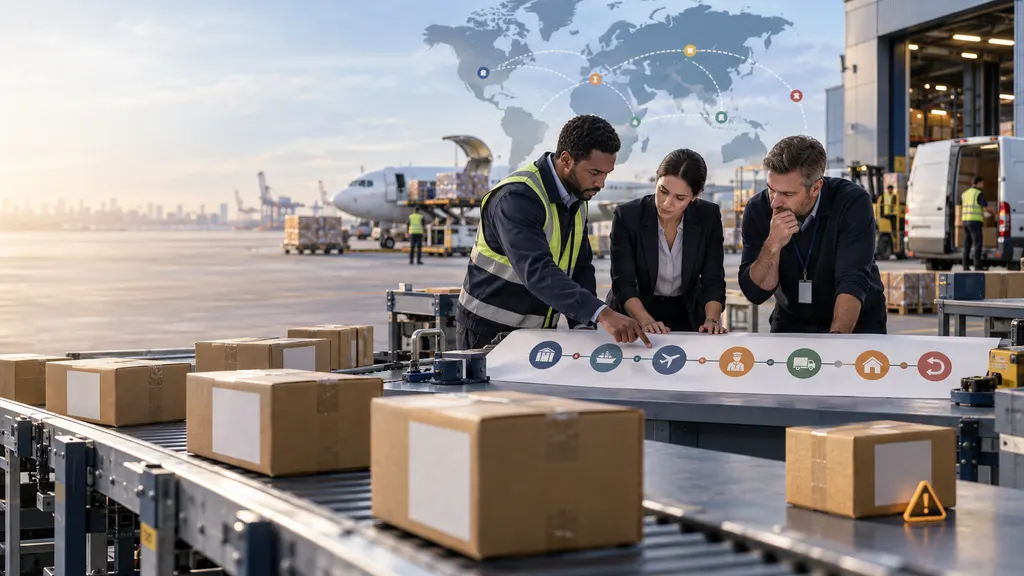
Cross-border shipments may pass through several logistics centers because international transport often involves different carriers, transport modes, countries, and delivery networks. A center may support consolidation before export, transfer between transport providers, import-side sorting, or domestic distribution after customs procedures.
A logistics center is not automatically a customs office or a customs-controlled facility. Customs clearance, bonded storage, and other customs arrangements depend on the facility’s legal status, the goods, the country involved, and the applicable customs rules. The commercial term “logistics center” should therefore not be treated as proof of a particular customs procedure.
Common Misunderstandings
- A logistics center is always a warehouse. Not necessarily. It may focus on sorting, consolidation, transfer, fulfillment, or several activities in combination.
- A logistics center and a fulfillment center are identical. A fulfillment center is a more specific term that emphasizes processing orders for shipment. A logistics center may perform fulfillment but can also have other functions.
- Every logistics center performs customs clearance. Customs activity depends on the facility’s authorization, role, and jurisdiction. The term itself does not establish customs status.
- A logistics center is the same as a shipment. A logistics center is a facility or operating location. A shipment is a consignment of goods moving from an origin to a destination.
Related Terms
- Distribution center: A facility focused on receiving, processing, and distributing goods.
- Fulfillment center: A facility that prepares customer orders for shipment.
- Warehouse: A facility used primarily for storing and handling goods.
- Cross-docking: The transfer of incoming goods to outbound transport with limited storage.
- Third-party logistics provider: An external company that performs logistics services for another organization.
- Shipment: Goods or packages being transported to a destination.
QA
What is a logistics center?
A logistics center is a facility or coordinated location where activities such as receiving, storage, sorting, fulfillment, consolidation, and dispatch are performed.
Is a logistics center the same as a distribution center?
Not always. “Logistics center” is broader, while “distribution center” usually emphasizes the processing and movement of goods to downstream locations or customers.
What does a logistics center do in ecommerce?
It may store inventory, process orders, pick and pack products, prepare shipments, hand them to carriers, and handle returns.
Does a logistics center handle customs?
It may support customs-related operations, but the term alone does not mean that the facility performs customs clearance or has a particular customs status.
Sources
- Encyclopaedia Britannica: Warehouse — background on warehouses and storage facilities.
- Council of Supply Chain Management Professionals: Supply Chain Management Definitions and Glossary — supply chain and logistics terminology.
- World Customs Organization: Trade Facilitation — customs and international trade facilitation context.