International through Railway Transport
What Is International through Railway Transport?
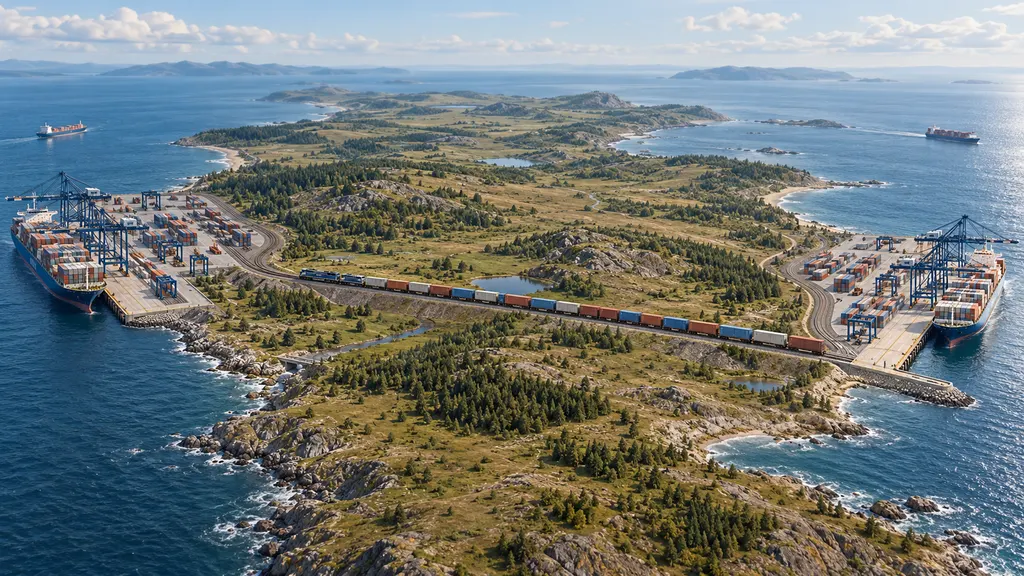
International through railway transport is the movement of goods by rail between countries under a coordinated through-carriage arrangement connecting the place of acceptance with the agreed destination. In freight forwarding and international trade, the expression emphasizes the continuity of the shipment across railway networks and borders, rather than a series of unrelated domestic rail movements. Several railway undertakings may participate, and a through consignment note may document the carriage, subject to the applicable legal framework and transport contract.
The wording is not a universally standardized English legal term. Related expressions include international rail freight transport and international through rail carriage. The precise contractual meaning should therefore be checked against the transport documents, participating carriers, and governing rules. The word through does not by itself guarantee a single train, an unchanged wagon, one carrier, or door-to-door delivery.
Scope and Main Characteristics
The defining feature is an organized international rail movement linking origin and destination. Railway undertakings may hand the shipment over at designated interchange points, while terminals, freight forwarders, customs representatives, and road carriers perform supporting activities. Commercial coordination and physical continuity are related but separate: cargo can remain within a through transport arrangement even when its wagon, train, or operating carrier changes.
- Cross-border movement: The rail journey connects places in different countries and may pass through additional transit countries.
- Coordinated carriage: The transport arrangement connects the relevant rail sections rather than leaving the shipper to arrange every section independently.
- Transport documentation: A consignment note records information relevant to the carriage. Its form and legal effect depend on the applicable regime.
- Operational handovers: Railway undertakings may exchange responsibility for the physical movement at agreed locations.
- Separate regulatory obligations: Through carriage does not remove customs, security, dangerous-goods, or other applicable requirements.
A shipment described as a through rail service should therefore be assessed on both its operational scope and its contractual scope. A quotation covering an international route does not, without further detail, establish who is responsible for every terminal activity or inland delivery leg.
How the Transport Process Works
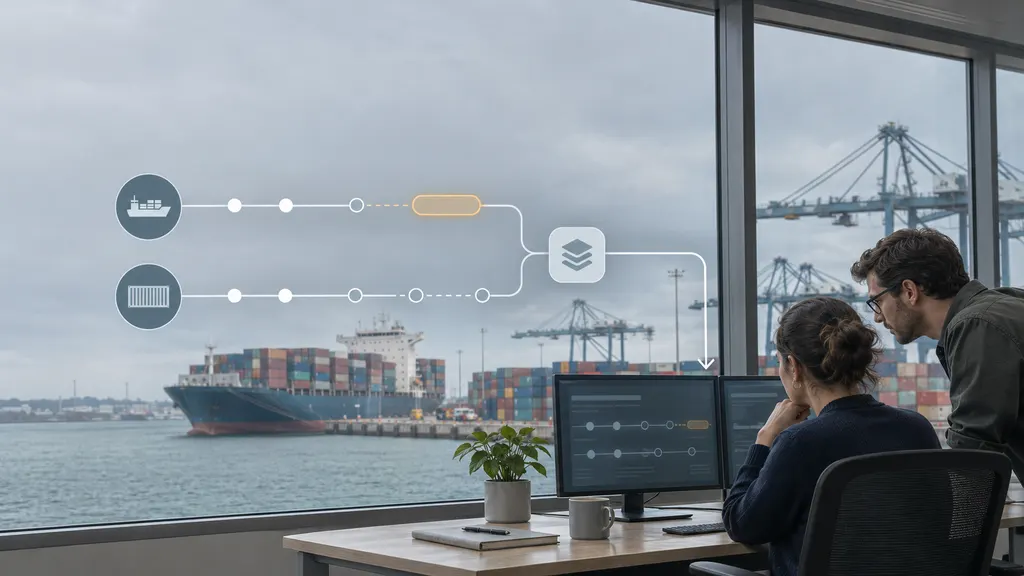
The following sequence describes a possible freight movement, not a mandatory procedure for every route. The order of customs formalities, terminal processing, and document submission varies with the countries, cargo, service, and applicable transit arrangements.
| Stage | Main activity | What needs clarification |
|---|---|---|
| Transport planning | The shipper or forwarder identifies a route, service, equipment, and delivery scope. | Accepted cargo, departure and destination terminals, participating parties, and excluded services. |
| Booking and documentation | Shipment particulars are supplied and the relevant carriage documents are prepared. | Consignor, consignee, goods description, weight, equipment details, and applicable carriage rules. |
| Origin handling | Goods are loaded or a loaded transport unit is received at the railway terminal. | Loading responsibility, cargo securing, terminal acceptance, and export requirements. |
| International rail movement | The shipment travels over the agreed railway route with operational handovers where necessary. | Interchange arrangements, border procedures, and any equipment or gauge-related handling. |
| Destination processing | The shipment undergoes the required arrival, customs, and terminal procedures. | Release conditions, consignee instructions, and collection arrangements. |
| Collection or onward delivery | The consignee collects the goods or a separate or included delivery service completes the movement. | Whether final road delivery, unloading, and empty-equipment return are included. |
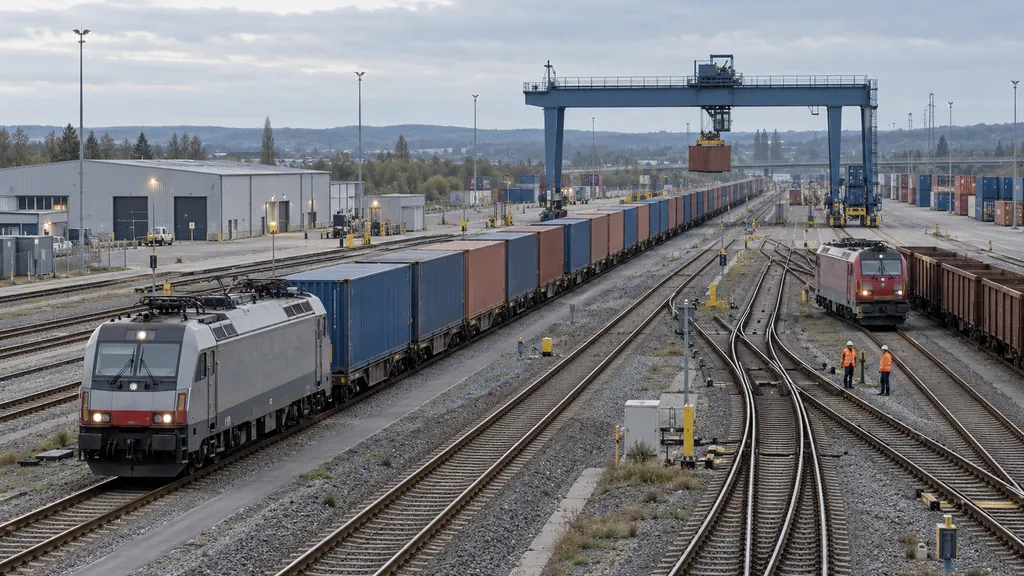
At a border, a change of locomotive or crew does not necessarily require cargo unloading. Where railway gauges differ, the operating arrangement may involve transferring containers or goods, exchanging suitable running equipment, or using another technical solution. The actual method depends on the infrastructure, rolling stock, terminal capabilities, and service design. It should not be inferred solely from the phrase through transport.
Legal Frameworks and Transport Documents
International rail freight does not operate under one universal legal system. Two important frameworks are the CIM Uniform Rules, which form Appendix B to the Convention concerning International Carriage by Rail (COTIF), and the Agreement on International Goods Transport by Rail (SMGS). Their application depends on their respective scope and the circumstances of the carriage. A route description alone is not a sufficient basis for deciding which rules govern a particular contract.
Under CIM, the consignment note confirms the contract of carriage; its absence or irregularity does not, by itself, invalidate that contract. This distinction matters because the transport document is evidence of an arrangement, not a substitute for examining the applicable rules and agreed responsibilities.
For traffic connecting CIM and SMGS systems, a common CIM/SMGS consignment note can support documentation across the two legal environments where the relevant arrangements apply. The International Rail Transport Committee publishes guidance and documentation for this purpose. Using a common document does not merge the two legal systems into one or make their liability provisions identical.
Rail consignment notes should also be distinguished from commercial and regulatory documents. An invoice describes the commercial transaction; a packing list identifies package contents and quantities; a customs declaration supplies information for a customs procedure. These documents may contain overlapping data, but they have different functions. A rail consignment note is not automatically a negotiable document of title and should not be treated as the equivalent of a negotiable ocean bill of lading.
Customs and Border Controls
Through railway transport and customs transit are separate concepts. The first concerns the organization of carriage; the second concerns the customs procedure under which goods move. An international rail shipment may require export, transit, and import formalities, depending on its route and customs status.
A customs transit arrangement may allow goods to move under customs control before final import clearance. Its availability, documentary requirements, guarantees, and discharge conditions depend on the applicable customs system. A through booking does not establish that those requirements have been met.
Responsibility should be identified for submitting declarations, supplying accurate goods descriptions, arranging any required guarantees, and responding to customs inquiries. The railway undertaking, forwarder, shipper, consignee, and customs representative may have different roles. Transport acceptance, customs release, and commercial delivery are distinct events and should not be treated as interchangeable shipment milestones.
Use in Ecommerce and Supply Chains
For an ecommerce business, international through railway transport may form part of an inventory replenishment chain rather than the delivery of individual consumer parcels. For example, a retailer may arrange for containerized merchandise to move from an origin terminal in one country to a destination terminal in another, followed by road transport to a fulfillment warehouse.
In this hypothetical example, the rail movement transports a consolidated stock shipment. Individual customer orders are picked, packed, and dispatched after the goods enter the destination inventory. The retailer's purchase order, the international freight shipment, and the later consumer parcels are separate operational records, even if they concern the same products.
Rail may also be one component of a wider multimodal movement. A forwarder might coordinate factory collection, international rail carriage, and warehouse delivery. Whether these activities fall under one contract or several contracts must be established from the booking terms. The inclusion of road legs does not mean that every part of the journey is governed by rail carriage rules.
Service suitability depends on practical factors such as terminal access, cargo acceptance, shipment size, handling requirements, scheduling, border procedures, and inventory needs. No universal claim about cost or speed follows from the term itself. Comparisons with other transport modes require a defined origin, destination, cargo profile, and service scope.
Related Terms and Important Distinctions
| Term | Meaning | Distinction from through railway transport |
|---|---|---|
| International rail freight | Goods transport by rail between countries. | A broader description that does not necessarily specify a through contractual or service arrangement. |
| Rail transit traffic | Rail traffic passing through a country between places outside that country. | Describes the geographical role of a country in the journey, not the entire carriage arrangement. |
| Intermodal transport | Movement using successive transport modes while goods remain in the same loading unit or road vehicle. | Concerns how modes are combined; an international through rail service may be part of such a movement. |
| Multimodal transport | Carriage using two or more transport modes. | Includes a broader modal combination than rail alone; contractual details still require separate examination. |
| Block train | A train operated as a unit between designated points without intermediate wagon sorting. | Describes train operation, not whether the cargo is covered by through international carriage. |
| Door-to-door service | A service connecting the agreed collection and delivery premises. | Defines service endpoints; through rail carriage may instead begin and end at terminals. |
These terms describe different dimensions: geography, contractual coordination, transport mode, train operation, and service coverage. They can overlap within one shipment and should not be presented as mutually exclusive categories.
Practical Checks When Reading a Through Rail Quotation
To understand a proposed service, the shipper should establish what is actually included rather than relying on the word through. Useful checks include:
- Endpoints: Does the quotation cover railway terminals, private sidings, warehouses, or another agreed location?
- Contracting parties: Who contracts with the shipper, and who performs the individual transport sections?
- Applicable rules: Which carriage framework and contractual conditions apply, including at any transition between legal regimes?
- Handling: Will containers, wagons, or goods require transfer, and who arranges that work?
- Documentation: Who prepares the consignment note and checks consistency with commercial and customs information?
- Charges: Are terminal handling, border services, storage, customs representation, and final delivery included or separately payable?
- Visibility: Do status updates describe a train, wagon, container, or individual consignment, and which milestones confirm availability for collection?
- Exceptions and claims: Who receives notices of delay, loss, or damage, and what procedures apply under the governing contract and rules?
These checks do not define a separate class of rail service. They help determine the actual meaning of a commercial description and prevent assumptions about uninterrupted movement, inclusive pricing, or end-to-end responsibility.
QA
Does international through railway transport use the same train throughout?
Not necessarily. The shipment may change trains, railway undertakings, wagons, or transport units while remaining within a coordinated through-carriage arrangement.
Does a through consignment note replace customs clearance?
No. Transport documentation and customs formalities have different functions. A consignment note may support procedures under an applicable arrangement, but it does not automatically satisfy every customs requirement.
Is international through railway transport always door-to-door?
No. It may cover terminal-to-terminal carriage only. Collection, final delivery, unloading, and related services must be confirmed in the agreed scope.
Do CIM and SMGS provide one worldwide rail freight contract?
No. They are separate legal frameworks. A common CIM/SMGS consignment note can facilitate documentation for relevant traffic without eliminating the distinction between the regimes.
Sources
- Intergovernmental Organisation for International Carriage by Rail (OTIF) — COTIF and the CIM Uniform Rules: international rail carriage contracts, consignment notes, and the applicable legal framework.
- International Rail Transport Committee (CIT): Freight Traffic — Rail freight documentation, CIM guidance, and the common CIM/SMGS consignment note.
- Organisation for Co-operation between Railways (OSJD) — SMGS and the framework for international railway goods traffic.
- United Nations Economic Commission for Europe: Intermodal Transport — Context for intermodal and combined transport and the relationship between rail and other transport modes.