Swiship (DE) Tracking
Please enter the Swiship (DE) tracking number to check the latest shipping status.
About Swiship DE
Swiship DE is the carrier identity supplied for this tracking page. The official starting point is the Swiship DE website. Shipment-specific service names, operating entities, network facilities, and delivery commitments should be taken from the shipment record or the official carrier interface rather than inferred from a tracking-number prefix.
| Field | Verified information |
|---|---|
| Official website | https://www.swiship.de/ |
| Carrier identity | Swiship DE is the display name used for this carrier entry. |
| Tracking role | Available tracking events are presented by the carrier source and may also be aggregated by 17TRACK. |
Carrier Entity Relationships
| Entity | Relationship summary |
|---|---|
| Swiship DE | Swiship DE is the carrier label associated with the shipment record used for this page. |
| 17TRACK | 17TRACK aggregates available carrier events; 17TRACK does not transport parcels or decide carrier claims. |
Quick Answer
Enter the shipment tracking number shown in the seller’s dispatch message, label, receipt, or carrier notification on the official Swiship DE website or in 17TRACK. If no result appears, check the number character by character, remove spaces or hyphens, and allow the sender or carrier time to create the first scan.
How to Track Swiship DE Packages
| Route | Steps |
|---|---|
| Official route | Open the official website, locate its tracking function, enter the tracking identifier, and compare the latest event with the shipment date and destination. |
| 17TRACK route | Open 17TRACK, paste the identifier, let automatic carrier detection run, and review event history, handoffs, and available delivery estimates. |
| No result | Confirm that the value is a tracking number rather than an order, reference, invoice, or notice number. Ask the seller to confirm the carrier and resend the identifier if necessary. |
Tracking Number Formats and Examples
A tracking identifier is issued by the carrier, origin postal operator, logistics partner, marketplace, or merchant depending on the shipment. The available evidence does not establish a public Swiship DE numbering specification, so a prefix alone should not be used to identify a service or issuing entity.
Tracking Number Format
| Identifier family | Normalized pattern | ||||||||||
|---|---|---|---|---|---|---|---|---|---|---|---|
| Carrier-issued shipment identifier | Use the exact alphanumeric value supplied by the merchant or carrier; a masked example is XXXX XXXX XXXX. | ||||||||||
View all details for carrier-issued shipment identifiers
| |||||||||||
| Partner or last-mile identifier | Use the partner value supplied after handoff; a masked example is PARTNER-XXXXXX. | ||||||||||
View all details for partner or last-mile identifiers
| |||||||||||
Tracking Statuses and Meanings
Tracking events describe the latest reported scan, not necessarily the physical location at every moment. “Label created” is different from carrier acceptance, and arrival at a customs facility is different from customs release.
Status Quick Lookup
| Status | Lifecycle stage | ||||||||
|---|---|---|---|---|---|---|---|---|---|
| Label created / awaiting item | Pre-shipment | ||||||||
View all details for label created / awaiting item
| |||||||||
| In transit | Movement between processing points | ||||||||
View all details for in transit
| |||||||||
| Out for delivery | Final-mile delivery | ||||||||
View all details for out for delivery
| |||||||||
| Delivered / exception / returned | Completion or disruption | ||||||||
View all details for delivered, exception, or returned
| |||||||||
Services and Delivery Times
A carrier-specific service catalogue and published delivery standard should be read from the shipment documentation. 17TRACK delivery estimates are based on available events and should not be treated as a carrier guarantee.
Service Comparison
| Service record | Best use |
|---|---|
| The service named on the label or dispatch record | Use this value to interpret coverage, scans, and delivery terms. |
Delivery Time
| Timing basis | How to use it |
|---|---|
| Merchant or carrier delivery estimate | Check the applicable origin, destination, service, cutoff time, weekends, holidays, customs, and partner handoffs. |
| 17TRACK estimate | Treat it as an event-based estimate, not a guaranteed delivery date. |
Destination Country Delivery Times
| Destination region | Evidence-based timing guidance |
|---|---|
| Any destination | Use the service-specific estimate supplied with the shipment; customs, local processing, remote-area delivery, weather, and scan gaps can extend the journey. |
Common Tracking Problems and Solutions
Problem & Solution
| Problem/status shown | Check first |
|---|---|
| Invalid number | Remove spaces and hyphens, compare every character, and ask the seller whether the value is an order or reference number. |
| No movement | Check the last event, dispatch date, weekends, handoff points, and the carrier named by the seller before escalating. |
| Delivered but not received | Check the delivery location, household members, reception desk, neighbors, local depot, and proof of delivery; then contact the seller or responsible delivery party. |
| Customs or delivery exception | Read the event wording, check for requested documents or payment, and contact the importer, seller, or local delivery operator as applicable. |
International Shipping, Customs and Carrier Handoffs
For an international shipment, the physical custodian can change several times. An electronic pre-advice, arrival at an exchange facility, and customs release are separate events; the tracking number may remain the same or a partner identifier may be added.
International Flow
| Stage | Typical event |
|---|---|
| Origin processing | The sender or origin logistics party creates the shipment and presents it for transport. |
| Export and line-haul | Security, export processing, and international movement may create visibility gaps between scans. |
| Destination customs | The shipment is assessed under destination-country rules; arrival does not mean release. |
| Partner handoff and last mile | A destination operator may receive the parcel, scan it locally, and perform delivery or collection. |
Delivery Management and Post-shipment Options
Address changes, interception, redirection, collection, and delivery instructions are controlled by the responsible carrier or local delivery operator. A recipient should use the official shipment channel when such an option is shown and should not assume that 17TRACK can perform the action.
Lost, Damaged, Claims, Insurance and Refunds
A tracking inquiry, carrier investigation, insurance claim, postage refund, and marketplace refund are different processes. The sender should preserve the label, packaging, contents, invoice, value evidence, photographs, and event history, then follow the applicable carrier or merchant procedure.
Claims and Refunds
| Process | Use when |
|---|---|
| Carrier inquiry or investigation | Use when events stop, delivery is disputed, or the shipment appears lost; filing rules depend on the responsible transport provider. |
| Merchant or marketplace remedy | Use when an order has not arrived or arrived damaged; provide the tracking history and supporting evidence. |
Shipping Restrictions and Special Handling
Before sending goods, consult the current rules for the actual origin, destination, transport mode, and service. Batteries, liquids, aerosols, medicines, perishables, valuables, and dangerous goods can require special packaging or may be excluded.
Shipping Restrictions
| Category | Operational guidance |
|---|---|
| Dangerous or restricted goods | Confirm acceptance, declaration, packaging, and destination restrictions before tender; non-compliance can cause refusal, delay, return, or disposal. |
| Customs-controlled goods | Use accurate descriptions, values, documents, and importer information to reduce clearance problems. |
Customer Service
| Channel | Verified contact or link |
|---|---|
| Official website | Swiship DE official website; use the current contact or tracking route shown there. |
| Seller or merchant | Contact the seller when the shipment was purchased through a marketplace or when the sender controls the claim. |
Prepare the tracking number, order number, dispatch date, destination address, latest event, service name, item description, value evidence, and photographs where relevant.
Ecommerce and Business Tracking
Merchants can use the seller portal, the carrier’s documented business interface, or a multi-carrier platform according to the shipment workflow. Standardized events and exception monitoring can help customer-support teams investigate WISMO requests, but the underlying event remains dependent on carrier data.
Developer/API Comparison
| Option | Provider | ||||||||||
|---|---|---|---|---|---|---|---|---|---|---|---|
| Multi-carrier tracking API | 17TRACK | ||||||||||
View all details for the 17TRACK tracking API
| |||||||||||
FAQ
Basic FAQs
Enter the tracking number on the official Swiship DE website or use 17TRACK to view available shipment events.
Look in the seller’s dispatch email, order page, shipping label, receipt, or carrier notification.
The public evidence used for this page does not establish one universal format, so use the exact identifier supplied with the shipment.
The first event appears after shipment data is created and an acceptance or processing event is reported; label creation alone does not prove physical receipt.
A scan gap can occur during pickup, sorting, line-haul, customs, or partner handoff; check the latest event and ask the seller to investigate when the delivery window passes.
Delivery depends on the origin, destination, service, customs, weekends, holidays, and final-mile operator; use the shipment-specific estimate rather than a universal number.
Read the exception message, check for collection or redelivery instructions, and contact the responsible delivery operator or seller.
Check the delivery location, household members, reception desk, neighbors, local depot, and proof of delivery before asking the seller to open an inquiry.
Preserve the packaging and evidence, then follow the claim route of the responsible carrier or ask the seller to initiate the applicable process.
Start at the official Swiship DE website and use the current contact route shown for the shipment or region.
Expert FAQs
Usually the transport lookup requires the shipment tracking identifier rather than the merchant order number; ask the seller to distinguish the two values.
No conclusion should be drawn from display capability alone because an origin carrier, partner, or last-mile operator may issue the identifier.
No; arrival indicates processing at a customs-related location, while release requires a separate clearance decision or event.
A partner may add or associate a local identifier, while some shipments continue displaying the original number; retain both values when provided.
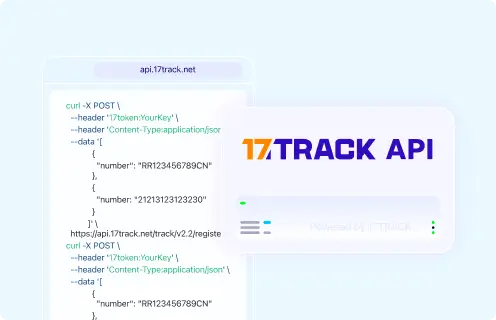
Businesses can use the documented 17TRACK API for multi-carrier workflows; a separate current public Swiship DE API should be established from official developer documentation before implementation.
Tracking API
// Carrier official API: Current public official tracking API not confirmed.
// 17TRACK API: use the current documentation for authentication and carrier-code validation.
POST https://api.17track.net/track/v2.4/register
Headers:
  17token: YourKey
  Content-Type: application/json
Body:
[
  {
    "number": "TRACKING_NUMBER",
    "carrier": "CARRIER_CODE"
  }
]
Sources & References
- Swiship DE — Official website. Swiship DE
- 17TRACK API Documentation. 17TRACK
17TRACK is an independent tracking platform and is not affiliated with Swiship DE.
Track your package
Global express parcel tracking service