Pakajo Tracking
Please enter the Pakajo tracking number to check the latest shipping status.
About Pakajo
Pakajo is a Germany-based shipping and fulfillment platform for online retailers. Pakajo describes itself as an intermediary in worldwide postal, goods and parcel shipping: businesses compare rates and services from multiple logistics providers, create labels, manage shipments and use Pakajo tracking through one platform. Pakajo is therefore not the physical carrier for every shipment; the selected postal or parcel provider remains responsible for the relevant transport stage.
| Fact | Verified information |
|---|---|
| Official name | Pakajo GmbH |
| Official website | https://pakajo.world/ |
| Carrier type | Multi-carrier shipping comparison, shipping-management and fulfillment platform. |
| Primary region | International e-commerce shipping, including national and cross-border services selected through the platform. |
| Tracking page | Pakajo international shipment tracking |
| Business audience | Online retailers, marketplace sellers and B2B e-commerce businesses. |
Carrier Entity Relationships
| Entity | Relationship and tracking meaning |
|---|---|
| Pakajo | Pakajo provides the comparison, booking, label, shipment-management and tracking platform; Pakajo does not physically carry every parcel. |
| Selected postal or parcel provider | The selected provider accepts, transports, scans and delivers the shipment under its own service rules. |
| Pakajo tracking tool | The tracking tool searches available events from more than 1,500 shipping services according to Pakajo’s tracking page. |
| Shop and marketplace integrations | Pakajo connects shipment workflows with e-commerce platforms and also offers a REST API for system integration. |
| 17TRACK | 17TRACK is an independent multi-carrier tracking platform. A 17TRACK result may identify the underlying carrier rather than Pakajo. |
Quick Answer
Enter the shipment tracking number shown in the Pakajo dashboard, shipping label or dispatch message on the official Pakajo tracking page or in 17TRACK. If there is no result, first check that you entered a tracking number rather than an order number, remove accidental spaces, and confirm that the label has been handed to the selected shipping provider. Pakajo and 17TRACK can display available events, but neither platform can change an address, approve a refund or decide a carrier claim.
How to Track Pakajo Packages
Pakajo tracking is designed for shipments booked through the Pakajo platform. The most reliable identifier is the shipment number printed on the label or shown in the Pakajo dashboard, while the actual event source may be the selected postal or parcel provider.
| Route | Steps and checks |
|---|---|
| Official Pakajo tracking | Open Pakajo tracking, enter the shipment tracking number, submit the search and read the latest event and available carrier information. |
| 17TRACK | Open 17TRACK, enter the number, allow automatic carrier detection, and compare the event history with the Pakajo dashboard. |
| No result | Check the number character by character, distinguish it from the order or reference number, and ask the seller or Pakajo account owner which transport provider was selected. |
| Label created | A label or electronic shipment record may exist before the physical parcel receives its first acceptance scan. The sender should verify handover or collection. |
Tracking Number Formats and Examples
Pakajo’s official pages describe a multi-carrier tracking tool rather than one universal Pakajo numbering system. The identifier is normally created by the selected shipping provider or shown in the Pakajo shipment record. A number that Pakajo can search is not necessarily issued by Pakajo.
Tracking Number Format
| Identifier family | Normalized pattern and use |
|---|---|
| Provider-issued parcel number | Format varies by the selected postal or parcel provider. Use the exact number printed on the label or displayed in the Pakajo dashboard. |
| International postal identifier | Some international postal services use an S10-style structure such as two letters, nine digits and a two-letter country code. The issuing postal operator, not Pakajo, defines the number. |
| Pakajo shipment record | The dashboard may associate a shipment with a tracking number, order reference, label record and selected logistics provider. These identifiers should not be substituted without checking the field label. |
| Order or marketplace reference | An order number identifies a commercial transaction and is not automatically a transport tracking number. |
Tracking Statuses and Meanings
Status wording depends on the selected provider. The lifecycle below separates an electronic label event from physical acceptance and separates arrival in a country from customs release.
Status Quick Lookup
| Status | Meaning and next action |
|---|---|
| Label created / pre-shipment | Shipment data or a label exists; physical acceptance may not have occurred. The sender should confirm collection or drop-off. |
| Accepted / received | A transport provider has recorded receipt. The parcel normally moves to sorting or line-haul processing. |
| In transit | The shipment is moving between facilities or transport legs. Scans can be intermittent during line-haul. |
| Customs or handover | The shipment is being presented to customs or another provider. Arrival at an exchange facility does not itself prove customs release. |
| Out for delivery | The local delivery provider has assigned the shipment to a delivery route. The recipient should monitor the address and delivery instructions. |
| Delivered | A delivery scan was recorded. If the parcel is missing, check the stated location, household members, reception desk and local provider proof of delivery. |
| Exception or return | An address, access, customs, damage or transport issue requires intervention. The sender should contact the responsible provider or Pakajo support with the shipment record. |
Services and Delivery Times
Pakajo’s FAQ gives indicative categories rather than a single guaranteed Pakajo delivery standard. The chosen provider, origin, destination, service level, customs process and shipment data determine the applicable result.
Service Comparison
| Service type | Best use and tracking position |
|---|---|
| EU Priority | For faster EU shipping selected through Pakajo; the official FAQ gives an indicative 3–5 day range. |
| EU Standard | For standard EU shipping; the official FAQ gives an indicative 7–10 day range. |
| Non-EU Priority | For faster shipments outside the EU; the official FAQ gives an indicative 5–7 day range. |
| Non-EU Standard | For standard shipments outside the EU; the official FAQ gives an indicative 9–12 day range. |
| US Post / US Parcel | Pakajo’s USA page describes trackable, insured options with DDP customs handling; product limits and terms differ by option. |
Delivery Time
| Service category | Published indicative time |
|---|---|
| EU Priority | 3–5 days; an indicative estimate, not a universal delivery guarantee. |
| EU Standard | 7–10 days; actual performance depends on the selected provider and route. |
| Non-EU Priority | 5–7 days; customs and destination processing can extend the journey. |
| Non-EU Standard | 9–12 days; the estimate does not replace the selected provider’s terms. |
Destination Country Delivery Times
Pakajo’s published FAQ provides EU and non-EU service categories rather than a country-by-country schedule. Destination timing should therefore be read from the selected quote and provider record. Customs, weekends, incomplete addresses, seasonal volume and partner handoffs can change the estimate.
Common Tracking Problems and Solutions
Problem & Solution
| Problem or status | Immediate action |
|---|---|
| Invalid number | Recheck the label number, distinguish it from the order number, and ask the sender which provider issued it. |
| No tracking event | A label may have been created before handover. The sender should confirm collection or drop-off with the selected provider. |
| Long gap in transit | Compare the Pakajo dashboard with the provider’s tracking page and allow for transport, customs or handover scan gaps. |
| Address problem or failed delivery | The recipient should follow the local provider’s notice; the sender should contact Pakajo or the selected provider about correction or return options. |
| Delivered but missing | Check the delivery location, household members, neighbours, reception desk and proof of delivery, then contact the destination provider and sender. |
| Customs delay | Check whether the destination authority or provider requested documents, duties or a value declaration. Do not treat arrival at customs as release. |
| Lost or damaged | Keep the packaging and evidence, then ask the sender to open the transport inquiry or claim with the selected provider under that service’s terms. |
International Shipping, Customs and Carrier Handoffs
For international shipments, Pakajo can arrange shipping through different providers and supports automated customs-document workflows. The physical custodian changes according to the booked service. A destination scan, exchange-office scan or customs presentation does not by itself prove final delivery or customs release.
International Flow
| Stage | What happens and what to do |
|---|---|
| Booking and label | Pakajo creates or records the shipment through the selected provider. Electronic data is not the same as physical acceptance. |
| Origin acceptance and export | The selected provider receives, sorts and moves the parcel toward export processing. |
| Export customs and line-haul | Customs and transport authorities process the shipment; scans may pause between facilities. |
| Destination customs | The destination authority or its appointed clearance provider assesses declarations, duties and restrictions. The sender or recipient must provide requested information. |
| Partner handoff and last mile | A destination postal or parcel provider may receive the physical shipment and issue further scans. The original number may continue, or a linked local identifier may appear. |
Ecommerce and Business Tracking
Pakajo is primarily designed for business shipping workflows. Its platform connects shops, marketplaces and ERP systems, supports shipment management and provides a REST API for connecting a company’s own system. Businesses should distinguish Pakajo’s integration API from the tracking API of the underlying transport provider.
Developer/API Comparison
| Option | Provider | ||||||
|---|---|---|---|---|---|---|---|
| Shipping-platform integration | Pakajo | ||||||
View all details for Pakajo platform integration
| |||||||
| Multi-carrier tracking | 17TRACK | ||||||
View all details for 17TRACK tracking
| |||||||
FAQ
Basic FAQs
Enter the shipment tracking number on the official Pakajo tracking page or use 17TRACK to search available events.
Look in the Pakajo dashboard, shipping label or dispatch message supplied by the seller.
There is no single universal Pakajo format because the selected transport provider may issue the number.
The first event normally appears after the selected provider receives or scans the shipment; label creation can occur earlier.
A transport leg, customs process or carrier handoff can create a visibility gap; compare the dashboard with the underlying provider’s tracking page.
Pakajo’s FAQ gives indicative ranges of 3–5 days for EU Priority, 7–10 days for EU Standard, 5–7 days for Non-EU Priority and 9–12 days for Non-EU Standard.
Follow the notice from the local delivery provider and ask the sender or Pakajo account owner about redelivery, correction or return options.
Check the delivery location, household members, neighbours and reception desk, then request proof of delivery from the responsible local provider.
The sender should preserve evidence and open the appropriate inquiry or claim with the selected transport provider under the booked service terms.
Pakajo lists service@pakajo.world, a contact form and telephone support at +49 (0) 40 853 763 73 from Monday to Friday, 08:00–17:00.
Expert FAQs
No. Pakajo publishes indicative service ranges, while the selected provider’s conditions determine any applicable standard or guarantee.
No. Pakajo acts as a shipping and fulfillment platform; the booked postal or parcel provider performs the relevant physical transport.
Pakajo compares and books services from multiple logistics providers, so tracking events may be generated by the provider selected for that shipment.
Yes. Pakajo describes automated customs-document support, and its FAQ explains that international shipments commonly require a commercial or pro-forma invoice.
Yes. Pakajo lists integrations for shops, marketplaces and ERP systems and also describes a REST API for custom connections.
No. 17TRACK can aggregate available tracking events, but shipment changes, claims, billing and account matters must be handled by Pakajo, the seller or the responsible transport provider.
Tracking API
// 1. Pakajo official platform API:
// Pakajo publishes a REST API for integrations, but a current public
// tracking endpoint, authentication scheme and request schema are not
// established by the cited public pages. Contact Pakajo for access details.

// 2. 17TRACK API
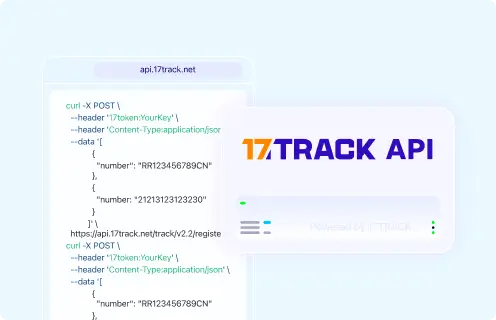
POST https://api.17track.net/track/v2.4/register
17token: YourKey
Content-Type: application/json

[
  {
    "number": "TRACKING_NUMBER",
    "carrier": "CARRIER_CODE"
  }
]
Sources & References
- Pakajo — Official shipping and fulfillment platform. Pakajo GmbH
- About Pakajo GmbH. Pakajo GmbH
- Pakajo shipment tracking. Pakajo GmbH
- FAQ & Help. Pakajo GmbH
- Shop Integration & Multichannel Software. Pakajo GmbH
- Shipping to the USA. Pakajo GmbH
- 17TRACK API documentation. 17TRACK
17TRACK is an independent tracking platform and is not affiliated with Pakajo.
Track your package
Global express parcel tracking service