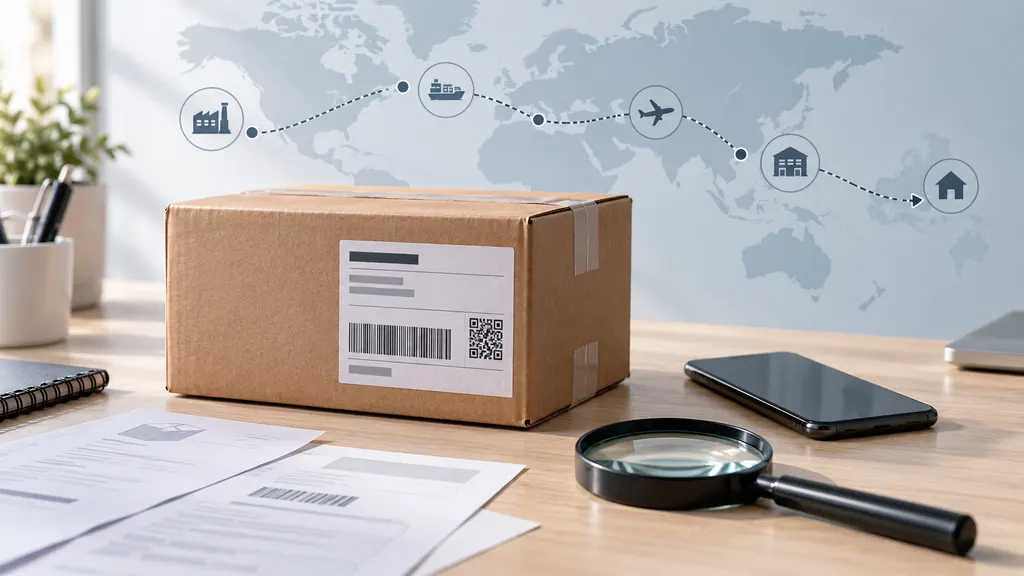
Uk Mail Companies and Parcel Market in 2026: Key Players and Trends
The UK mail and parcel market includes postal services, domestic parcel networks and international express carriers. For businesses planning deliveries in 2026, established names to assess include Royal Mail, Parcelforce Worldwide, DPD, Evri, DHL, UPS and FedEx. The practical choice depends on what you ship, where it goes and the delivery promise you need to keep—not simply which company offers the lowest headline rate.

This guide explains the main service categories, how to build a carrier shortlist and which operational trends deserve attention. It is not a 2026 market-share ranking or a live tariff comparison. Service availability, commercial terms and delivery estimates should be confirmed for the specific product and destination before booking.
Understand what “UK mail companies” actually covers
The phrase can describe several different services. A business sending invoices has different requirements from a retailer dispatching shoes or a manufacturer shipping replacement parts overseas. Treating them as one market makes comparisons less useful.
- Letters and postal services: Correspondence, documents and smaller items sent through postal products. Tracking, delivery evidence and delivery aims depend on the service purchased.
- Domestic parcel delivery: Goods moving within the UK through home-delivery, business-delivery and out-of-home networks.
- International parcel and express services: Cross-border shipments involving destination-country delivery, customs requirements and potentially several operational handoffs.
- Shipping intermediaries: Platforms or resellers through which a business buys carriage. The booking provider and the company physically transporting the parcel may be different.
Also distinguish a Post Office branch from the carrier named on a shipping label. A counter can be an acceptance point without being the delivery operator. For tracking, service restrictions and claims, identify both the underlying carrier and the business from which you purchased the service.
Established operators to consider
The following companies are included because their established service portfolios represent different parts of UK postal, parcel and international shipping. Their inclusion is not a recommendation for every shipment, and the order does not indicate market share or performance.
| Operator | Service area to investigate | Checks before selection |
|---|---|---|
| Royal Mail | Letters, parcels and international postal products | Product dimensions, tracking level, delivery evidence and compensation conditions |
| Parcelforce Worldwide | UK and international parcel services | Selected service commitment, collection arrangements and destination restrictions |
| DPD | Domestic and international parcel delivery | Recipient options, postcode availability and integration requirements |
| Evri | Consumer and business parcel shipping | Parcel eligibility, collection or drop-off arrangements and delivery evidence |
| DHL | Domestic parcel or international express requirements, depending on the business unit | Exact operating division, service product and applicable terms |
| UPS | UK and international parcel and express shipping | Time commitment, chargeable weight and customs responsibilities |
| FedEx | Express and international shipping requirements | Origin-to-destination availability, transit commitment and clearance conditions |
Postal services and parcel services are not interchangeable
Royal Mail is a relevant starting point when a business needs letter services as well as parcels. However, a letter product, a tracked parcel product and a time-sensitive service should be evaluated separately. Do not assume that buying from the same operator gives every item identical tracking or delivery protection.
For parcel-focused requirements, assess Parcelforce Worldwide, DPD and Evri against the actual shipment profile. A merchant sending compact clothing orders should not use the same assumptions as one dispatching bulky equipment. Package dimensions, collection cutoffs and recipient options can change which service is suitable.
International shipping requires a route-level decision
DHL, UPS and FedEx are relevant names when assessing international express requirements. Postal and other parcel operators also offer international products, so the decision should not begin with the assumption that one network category is always preferable.
Compare an actual route and shipment: for example, a replacement component going from Birmingham to a business address overseas. Check the booking cutoff, customs paperwork, delivery commitment and recipient charges. A general description such as “international delivery” does not establish that two services offer equivalent outcomes.
2026 planning priorities: what matters beyond parcel volume
Market-size and growth figures are useful only when their period and scope are clear. A published report may cover a financial year rather than calendar 2026, and its parcel definition may differ from another report. Use Ofcom’s postal monitoring publications for regulatory context, but do not treat historical totals as confirmed full-year 2026 results.
For operating decisions, the following themes are more actionable than an unsupported growth forecast.
Out-of-home delivery needs a customer-fit test
Parcel shops, collection points and lockers can provide an alternative to waiting at home. Their usefulness depends on location, opening hours, parcel eligibility and customer preference. A large network headline does not tell you whether a convenient location exists near your buyers.
Before adding an out-of-home checkout option, test representative customer postcodes and review collection instructions. Establish what happens when a location cannot accept the parcel, how customers receive collection details and how uncollected items are handled. These operational details determine whether the option improves the delivery experience.
Delivery visibility should support action
Carrier tracking is most useful when customers and support teams can distinguish normal movement from an exception. A label-created event does not necessarily mean the carrier has received the parcel. Likewise, a delivery estimate is not automatically a contractual guarantee.
For businesses using multiple carriers, a consolidated tracking interface can reduce the need to check separate websites. 17TRACK’s tracking page is one option for checking parcel progress. Tracking visibility remains separate from carriage: a tracking platform cannot release a customs hold, change a carrier’s service commitment or decide a compensation claim.
Cross-border data belongs upstream
Cross-border shipping should be planned before labels are printed. Product descriptions, values, commodity classification and origin information may be needed for customs processing. Requirements vary by route and goods, while the treatment of shipments involving Northern Ireland needs its own check.
Build the required information into your product catalogue and order workflow. Confirm who handles import charges and how that arrangement is communicated to the buyer. A fast transport service cannot make missing documentation irrelevant, and an unexpected payment request can undermine an otherwise successful delivery.
Sustainability claims need comparable boundaries
When evaluating environmental claims, ask what is being measured: a delivery leg, a domestic network, an individual service or the wider company. Vehicle initiatives do not by themselves establish the emissions of a particular shipment. Compare methodologies and reporting periods before using carrier claims in your own customer-facing messaging.
How to choose logistics services for an ecommerce business
A useful shortlist starts with shipment data rather than brand familiarity. Export a representative sample of orders and group them by destination, packed dimensions, weight, item value and urgency. Include returns and failed deliveries, not just successful outbound shipments.
- Define the delivery promise. Separate economy, tracked, time-sensitive and international requirements. Avoid offering a stronger checkout promise than the purchased service supports.
- Check shipment eligibility. Review prohibited and restricted goods, packaging requirements, size limits and compensation exclusions. Acceptance for transport does not necessarily mean an item is covered against loss or damage.
- Request comparable quotations. Give each provider the same shipment sample, collection address and expected volume. Ask which charges are included and which may be added.
- Test operational compatibility. Confirm label production, manifesting, collection procedures, order-system connections and exception handling. An integration should be checked against your actual workflow.
- Run a controlled pilot. Include representative destinations and package types. Measure collection reliability, delivery outcomes, tracking clarity, support contacts and invoice accuracy.
- Set escalation ownership. Document who contacts the carrier, who updates the customer and who submits claims. Check evidence requirements and submission deadlines in the purchased service’s terms.
For a straightforward domestic operation, one primary carrier may be easier to manage. A second service becomes useful when it solves a defined gap, such as an unsuitable parcel format, a different international requirement or a collection contingency. Adding carriers without routing rules can create extra administration rather than resilience.
Compare total cost, not the label alone
The relevant commercial measure is the cost of fulfilling the delivery promise. Depending on the service, charges may involve dimensional weight, remote locations, additional handling, collections, returns or customs-related services. Do not assume that every carrier applies the same charges or definitions.
Add internal costs where you can measure them: manual label corrections, customer enquiries, replacement shipments and claim administration. A lower initial rate can be less attractive if it creates more work, but that conclusion should come from your own invoices and operational results—not an unsupported generalisation about a carrier.
What to measure after launch
Use consistent definitions across services. “On time” should refer to the delivery promise attached to that shipment, not one universal target imposed on both economy and express products.
- Collection performance: Were parcels collected or accepted when expected?
- Delivery performance: Did delivery meet the relevant service promise?
- Exception rate: How often did address issues, damage, customs queries or other interruptions occur?
- Customer contact rate: How many orders generated delivery-related support requests?
- Invoice accuracy: Did billed charges match the agreed tariff and shipment characteristics?
- Returns completion: How reliably did returned goods reach the correct processing point?
Review these results by route, product and parcel type. An overall average can hide a recurring problem affecting a particular destination or package format. Change routing where the evidence supports it, rather than replacing an entire carrier relationship because of isolated incidents.
FAQ
Which UK parcel company is the best for a small business?
There is no defensible universal winner without a shipment profile. Start with package eligibility, collection or drop-off access, delivery requirements and total charges. For a small operation, a service that fits the daily dispatch workflow may be more useful than a complex contract designed for a different shipping pattern.
Are tracking and proof of delivery the same thing?
No. Tracking reports shipment events. Proof of delivery is evidence associated with a delivery event and can vary by product. Check whether the purchased service provides the evidence your business needs; do not assume every tracked shipment includes a signature or photograph.
Who should a customer contact when a parcel is delayed?
Check the tracking information first, then contact the retailer or sender when the delivery promise has been missed or action is required. The sender or booking account holder may need to open the carrier enquiry. If carriage was purchased through an intermediary, follow that provider’s support and claims process.
Can one carrier handle domestic and international orders?
It may be possible, but confirm each destination and service separately. One commercial relationship can simplify administration without making every route equally suitable. Compare international documentation, delivery commitments, recipient charges and returns arrangements before consolidating.
Where should businesses check UK parcel-market statistics?
Ofcom is a useful starting point for postal-market monitoring. Check the publication date, reporting period and definitions before quoting a figure. Company reports can add context, but a company’s own volume or revenue is not automatically a measure of the whole UK market.
Sources
Official reference points for the service categories, shipping requirements and market-monitoring context discussed above. Consult the applicable product pages and contractual terms for a shipment-specific decision.
- Ofcom: postal services regulation and market information
- Royal Mail: postal and parcel services
- Parcelforce Worldwide: parcel services
- DPD UK: parcel delivery services
- Evri: parcel shipping services
- DHL UK: shipping divisions and services
- UPS UK: shipping services and tools
- FedEx UK: shipping services
- GOV.UK: exporting goods from the UK
- 17TRACK: parcel tracking