Reverse Logistics
Definition
Reverse logistics is the planning and management of the movement of products, components, packaging, and related information from the customer or another downstream point back to a seller, manufacturer, repair facility, recovery operator, or other designated location. In logistics and ecommerce, the term most often describes return flows and the activities used to inspect, transport, repair, refurbish, resell, recycle, reuse, or dispose of items after the original outbound shipment.
Reverse logistics is not limited to consumer returns. It can also include product recalls, warranty claims, reusable packaging, rental or lease returns, excess inventory sent back to a supplier, and materials recovered from a supply chain. The appropriate process depends on the reason for the movement, the condition of the item, contractual responsibilities, product regulations, and the possible recovery value.
Reverse Logistics in the Supply Chain
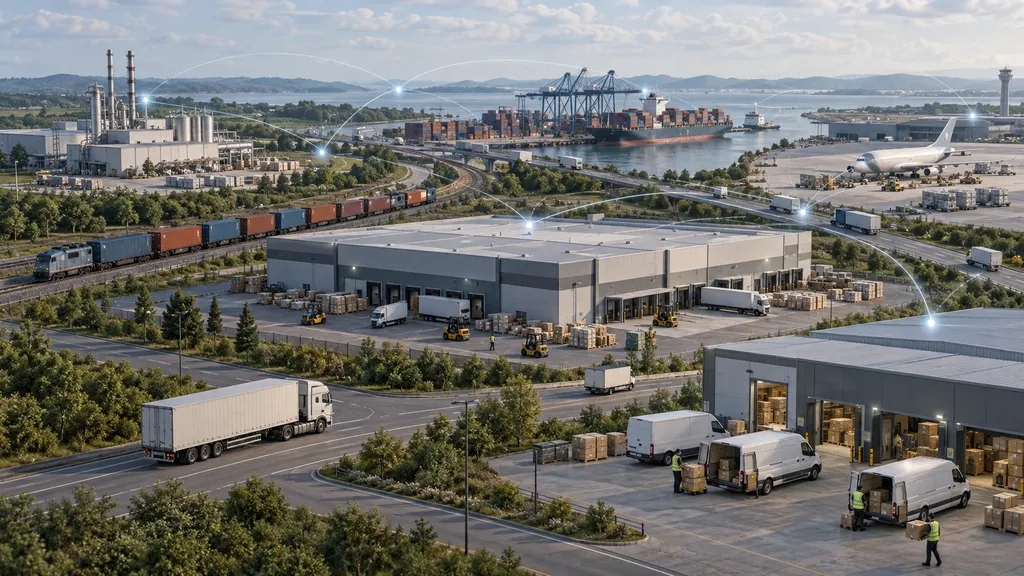
In a conventional forward supply chain, goods move from a supplier through manufacturing, warehousing, and transportation to a customer. Reverse logistics manages a movement in the opposite commercial direction, although the physical route does not always simply retrace the original shipment. A returned item may go to a retailer, a centralized returns center, a third-party logistics provider, a repair partner, a manufacturer, a recycling facility, or a disposal site.
The reverse flow may begin when a customer requests a return, when a carrier reports a damaged parcel, when a seller identifies a product defect, or when a business decides to recover packaging or excess inventory. Information about the order, product, serial number, condition, reason for return, and authorization status is usually important because it determines how the item should be handled.
Reverse logistics therefore connects several operational areas:
- Customer service: Return instructions, eligibility decisions, return authorization, and communication with the buyer.
- Transportation: Collection, parcel shipping, freight movement, consolidation, and delivery to the next processing location.
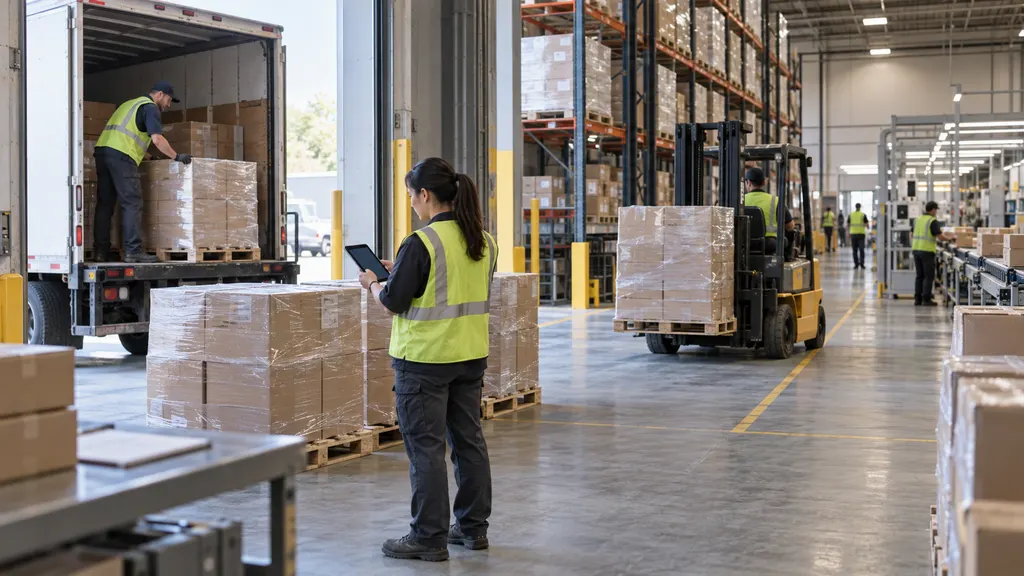
- Warehousing: Receipt, identification, temporary storage, inspection, sorting, and inventory updates.
- Product operations: Testing, repair, refurbishment, repackaging, relabeling, and quality assessment.
- Finance: Refunds, credits, warranty obligations, supplier claims, and recovery-value accounting.
- Compliance and sustainability: Recall controls, data protection, hazardous-material handling, recycling, and disposal requirements where applicable.
How Reverse Logistics Works
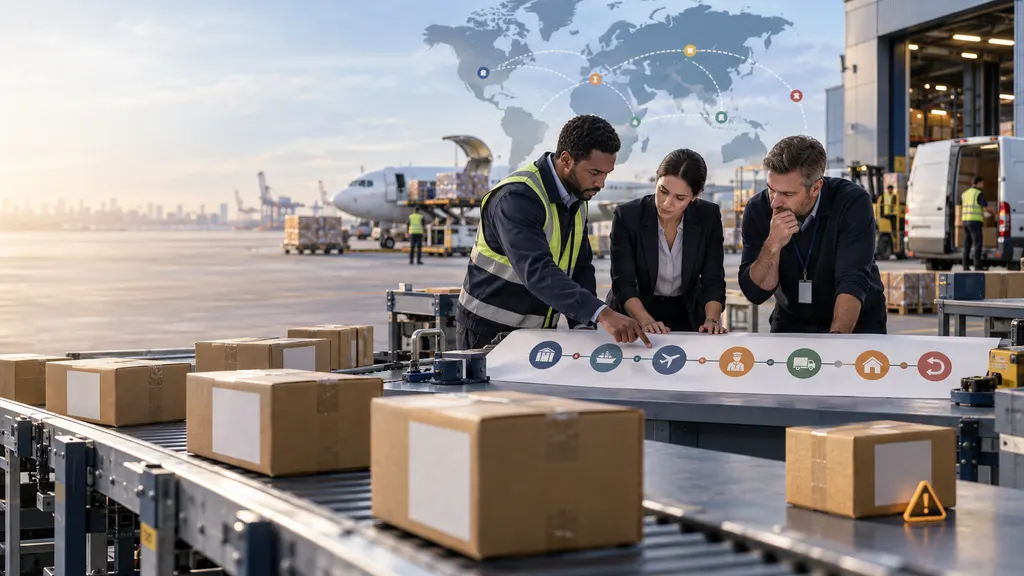
There is no single process that applies to every return. A practical reverse-logistics workflow commonly includes the following stages, but the sequence and level of control vary by product and business model.
- Return initiation: The customer, retailer, carrier, service center, or internal team identifies a reason for the reverse movement. The reason may include a change of mind, incorrect item, transport damage, defect, warranty request, recall, or end-of-use recovery.
- Authorization and instructions: The seller or responsible party determines whether the item can be returned and provides a return address, label, routing instruction, or collection method. In business-to-business operations, a return authorization may link the physical item to an order or contract.
- Transportation: The item moves through a parcel, freight, pickup, or consolidation network. International returns may require additional documentation, customs treatment, and decisions about whether the goods are being returned, repaired, replaced, or re-exported.
- Receipt and identification: The receiving facility records the item and matches it with available order, shipment, serial-number, or authorization information. Exceptions may occur when the item is incomplete, mislabeled, or received without the expected documentation.
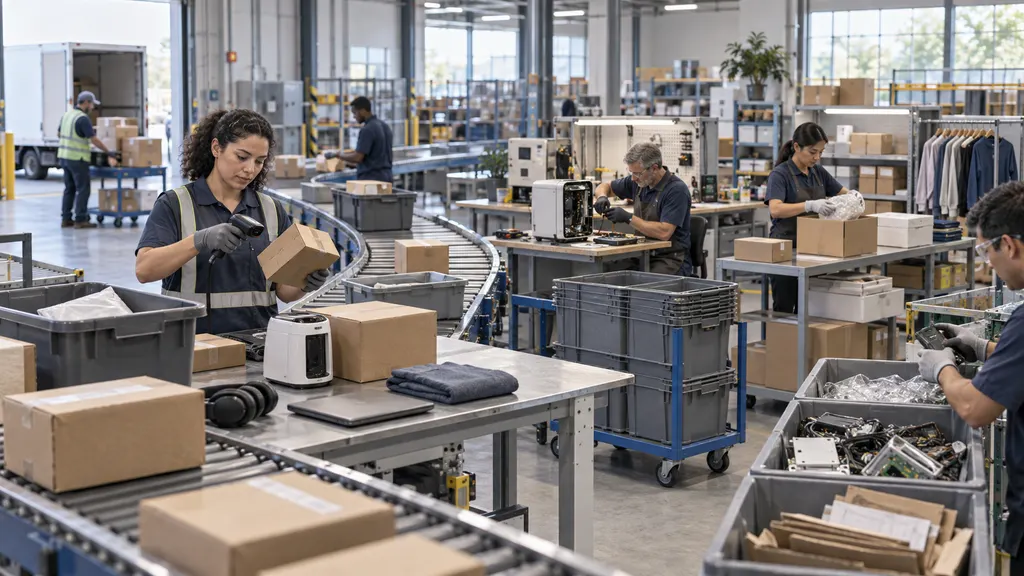
- Inspection and grading: Staff or automated systems assess quantity, identity, packaging, functionality, cosmetic condition, safety, and resale suitability. The result may be expressed through an internal condition grade, but grading systems are not universal across the industry.
- Disposition: The business selects an outcome. Possible outcomes include returning the item to sellable inventory, repackaging, repairing, refurbishing, exchanging, returning it to a supplier, selling it through a secondary channel, recycling, or disposing of it in accordance with applicable requirements.
- Financial and inventory completion: The organization updates inventory records and completes any refund, credit, replacement, warranty, supplier recovery, or loss process. The physical movement is not fully closed until the operational and financial records agree.
Tracking information can support visibility during the transport stages, but tracking alone does not describe the item’s condition or final disposition. A parcel can be delivered to a returns facility while the reverse-logistics process remains open because inspection, grading, and disposition have not yet been completed.
Types of Reverse Logistics Flows
The following categories are descriptive business categories rather than a single universal industry classification. They identify the main reason or operational purpose of the reverse movement.
| Flow | Primary purpose | Typical operational question | Possible outcome |
|---|---|---|---|
| Customer returns | Handle goods sent back by a consumer or business buyer | Is the return eligible, and what condition is the item in? | Refund, exchange, resale, repair, or another disposition |
| Warranty and repair | Provide service for a defective or malfunctioning product | Can the product be repaired, replaced, or returned to the customer? | Repair, replacement, refurbishment, or authorized disposal |
| Product recalls | Remove or control products identified as unsafe, defective, or non-compliant | Which units are affected, and where are they located? | Quarantine, correction, replacement, return, or disposal |
| Supplier returns | Send goods, components, packaging, or excess stock back to a supplier | Who is responsible for the goods and associated cost? | Supplier credit, replacement, rework, or restocking |
| Asset recovery | Recover value from used, leased, rented, or reusable assets | Can the asset be reused, refurbished, resold, or harvested for parts? | Reuse, refurbishment, resale, parts recovery, or recycling |
| Packaging recovery | Bring reusable containers, pallets, totes, or other transport packaging back into a network | Can the packaging be inspected, cleaned, and reused? | Reuse, repair, recycling, or disposal |
| End-of-life recovery | Manage products or materials that are no longer suitable for their original use | What materials or components can be recovered safely? | Material recovery, recycling, treatment, or disposal |
Reverse Logistics in Ecommerce
In ecommerce, reverse logistics is closely connected to the post-purchase experience. A return policy may establish eligibility and deadlines, but reverse logistics concerns the physical and information processes that occur after a return is approved or otherwise initiated. These processes include generating a label, selecting a carrier, receiving the parcel, matching it to the order, inspecting the product, and deciding what happens next.
Online sellers may use a centralized returns center, a store-based return location, a marketplace process, a manufacturer service network, or a third-party logistics provider. The suitable arrangement depends on product characteristics, order geography, sales channels, processing requirements, and the seller’s control over inventory. A return may be consolidated with other items before being transported to a processing facility, especially when individual shipments would be inefficient; whether that is appropriate is an operational decision rather than a universal rule.
Cross-border ecommerce adds further complexity. The parties may need to determine the customs status of returned goods, provide accurate descriptions and values, identify the reason for the movement, and comply with the rules of the relevant jurisdictions. Duties, taxes, import procedures, restricted goods rules, and documentation requirements can vary by country and transaction structure. A replacement shipment and a returned shipment may also be treated as separate customs events. Businesses should verify the applicable requirements with the relevant customs authorities or qualified trade professionals rather than assuming that a return automatically reverses the original import process.
Why Reverse Logistics Matters
Reverse logistics affects cost, inventory accuracy, customer service, product recovery, and regulatory control. A returned product can represent recoverable value, but it can also require transport, handling, inspection, repackaging, repair, storage, and administrative work. The economic result depends on the item’s condition, selling channel, processing cost, time, demand, and any contractual or legal obligations.
It also provides operational information. Return reasons may reveal problems with product descriptions, sizing, packaging, fulfillment accuracy, manufacturing quality, or customer expectations. However, return data must be interpreted carefully. A return reason recorded by a customer may be incomplete or may not identify the underlying operational cause. Businesses may therefore compare customer-selected reasons with inspection results, order data, and product records before changing a process.
From a resource-management perspective, recovery decisions can keep usable products, components, or packaging in circulation. Recycling and disposal are different outcomes: recycling processes materials for another use, while disposal removes material from the organization’s recovery flow. The environmental effect of a particular reverse process depends on transport, energy use, product condition, processing method, and local waste-management rules; reverse logistics should not automatically be described as environmentally beneficial in every case.
Reverse Logistics Compared with Related Terms
| Term | Meaning | Relationship to reverse logistics |
|---|---|---|
| Forward logistics | Movement and coordination of goods from supply sources toward the customer or downstream user | Reverse logistics manages flows in the opposite commercial direction or manages recovery after the forward flow |
| Return | The act or event of sending a product back to a seller, supplier, or other responsible party | A return can be one activity within a broader reverse-logistics process |
| Refund | Repayment of money or another financial adjustment after a purchase or return | A refund is a financial outcome, not the physical movement of goods |
| Return management | The policies, customer interactions, authorizations, and operational controls used to manage returns | Return management is often part of reverse logistics, but reverse logistics also covers recalls, packaging, repairs, and recovery flows |
| Product recovery | Recovering use, components, materials, or value from a product | Product recovery is one possible objective or disposition within reverse logistics |
| Reverse supply chain | The network and activities used to move products or materials from downstream points toward earlier supply-chain stages or recovery destinations | The term often emphasizes the network and flow, while reverse logistics emphasizes planning and execution of those movements |
Common Misunderstandings
- Reverse logistics means only customer returns. Customer returns are important, but recalls, warranty repairs, reusable packaging, supplier returns, and end-of-life recovery can also be reverse-logistics activities.
- Reverse logistics is the same as a refund. A refund is a financial transaction. The reverse-logistics process may continue before, during, or after the refund and can exist without a consumer refund, such as in a supplier return or packaging recovery program.
- A delivered return is a completed return. Delivery to a warehouse or service facility confirms a transport event. Inspection, inventory updates, financial settlement, and final disposition may still be pending.
- Every returned item should go back into sellable inventory. An item may be incomplete, damaged, unsafe, used, recalled, or otherwise unsuitable for resale. Its disposition must be based on applicable policies, product requirements, and inspection results.
- Reverse logistics always follows the original route backward. Returned goods may be routed to a specialized facility, supplier, repair partner, recovery operator, or other location instead of the original warehouse.
Examples
| Scenario | Reverse-logistics activity | Key decision |
|---|---|---|
| An online buyer sends back an unused item | The seller receives, identifies, inspects, and restocks or repackages the item | Does its condition meet the seller’s requirements for resale? |
| A device fails during its warranty period | The device moves to a service center for diagnosis and repair or replacement | Should it be repaired, replaced, or directed to another disposition? |
| A retailer has excess seasonal inventory | Goods move back to a supplier or centralized facility | Can the inventory be resold, redistributed, credited, or reworked? |
| A company uses reusable transport containers | Empty containers are collected, inspected, cleaned, and returned to circulation | Are they fit for reuse or do they require repair or recycling? |
| A product is subject to a recall | Affected units are identified, collected, segregated, and controlled | How should the units be corrected, replaced, returned, or disposed of? |
QA
What is reverse logistics in ecommerce?
It is the management of products, packaging, information, and related activities after an outbound sale or delivery, including returns, inspection, repair, resale, recovery, recycling, or disposal.
Is reverse logistics the same as a product return?
No. A product return is one possible reverse-logistics flow. Reverse logistics also includes recalls, warranty service, supplier returns, packaging recovery, and other downstream-to-upstream or recovery movements.
What is the difference between reverse logistics and a refund?
Reverse logistics concerns the physical and operational handling of goods and related information. A refund is a financial adjustment and may be completed before the physical return process is finished.
Why are cross-border returns more complex?
They may involve customs declarations, duties and taxes, transport documentation, restricted-goods requirements, and different rules for returned, repaired, replaced, or re-exported products.
Sources
- Council of Supply Chain Management Professionals, Supply Chain Management Definitions and Glossary — reference for supply-chain terminology and the logistics context of reverse flows.
- Reverse Logistics Association, Reverse Logistics — industry reference for return, recovery, repair, refurbishment, recycling, and disposition activities.
- European Commission, Waste Framework Directive — reference for the distinction between reuse, recycling, recovery, and disposal in the waste-management context.
- World Customs Organization, Revised Kyoto Convention materials — reference for the customs and trade-facilitation context relevant to international movements of goods.