Production Logistics
Definition
Production logistics is the planning, coordination, movement, storage, and control of materials, components, work-in-process, information, and related resources within a production system. Its main purpose is to ensure that the correct inputs reach the correct production activity in the required condition, quantity, sequence, and time, while completed items move efficiently toward storage, fulfillment, or distribution.
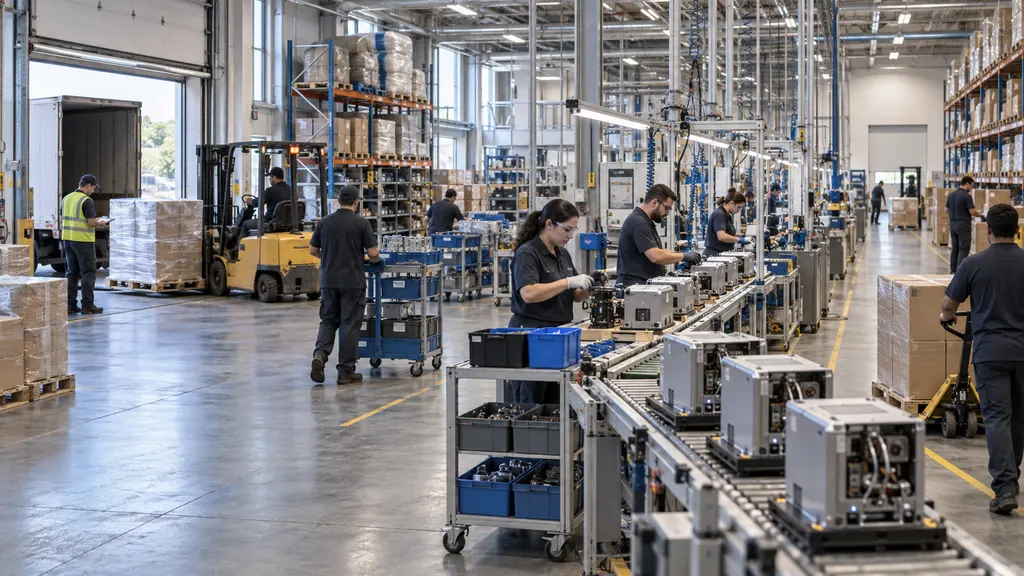
The term is used mainly in manufacturing, assembly, processing, and product-customization environments. It covers the logistical activities that connect material supply with production operations. Depending on the organization, its scope may begin when purchased materials arrive at a factory or production site and end when finished goods are transferred to a warehouse, fulfillment center, or outbound shipping operation. Some organizations use a broader definition that also includes coordination with suppliers and downstream distribution.
Production logistics is not a single transport service or software category. It is a functional area that combines material handling, inventory control, production planning, internal transportation, storage, replenishment, packaging, and information management. The precise organizational boundaries vary because companies may assign these activities to logistics, manufacturing, operations, procurement, or supply chain teams.
Role in the Supply Chain
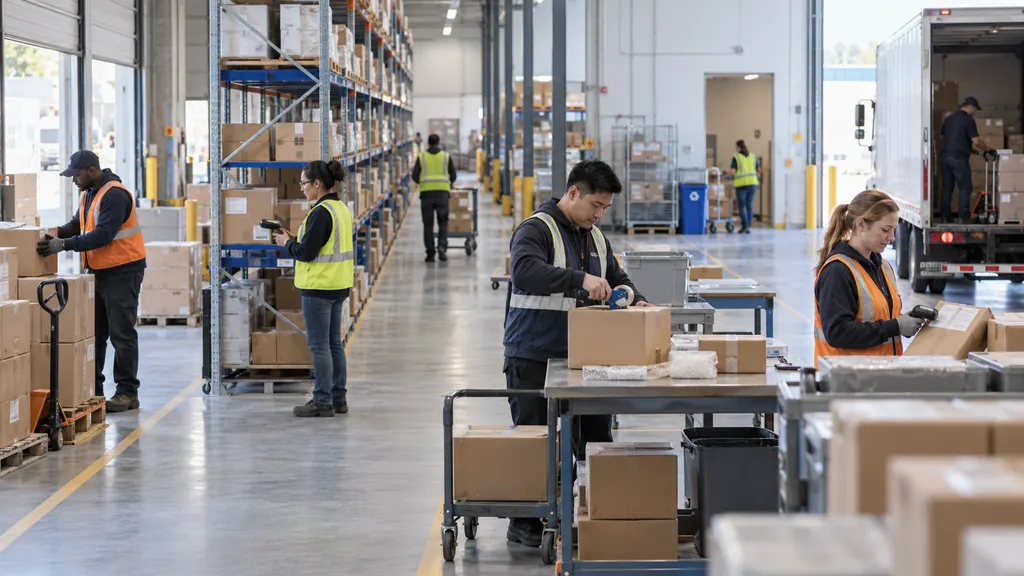
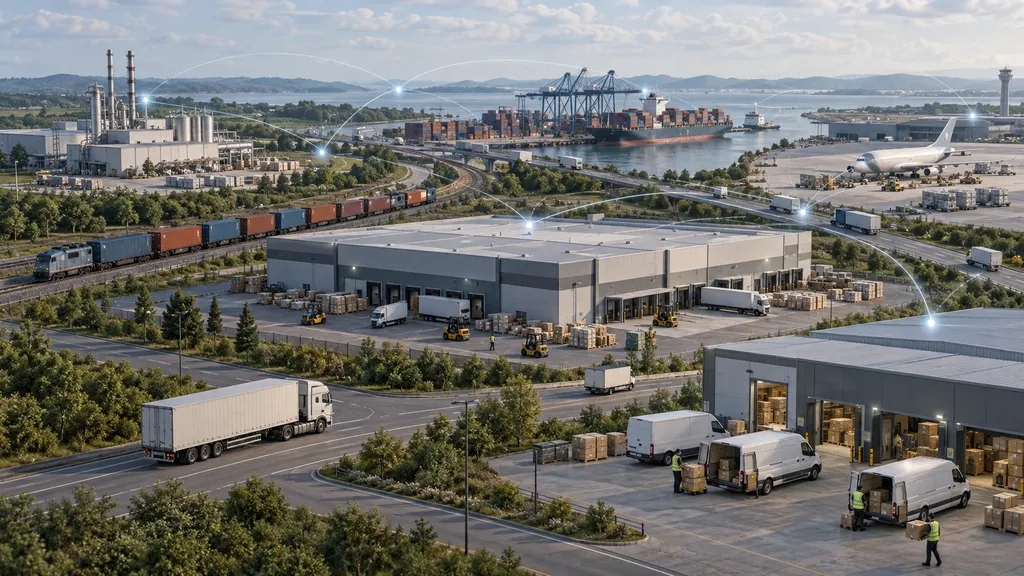
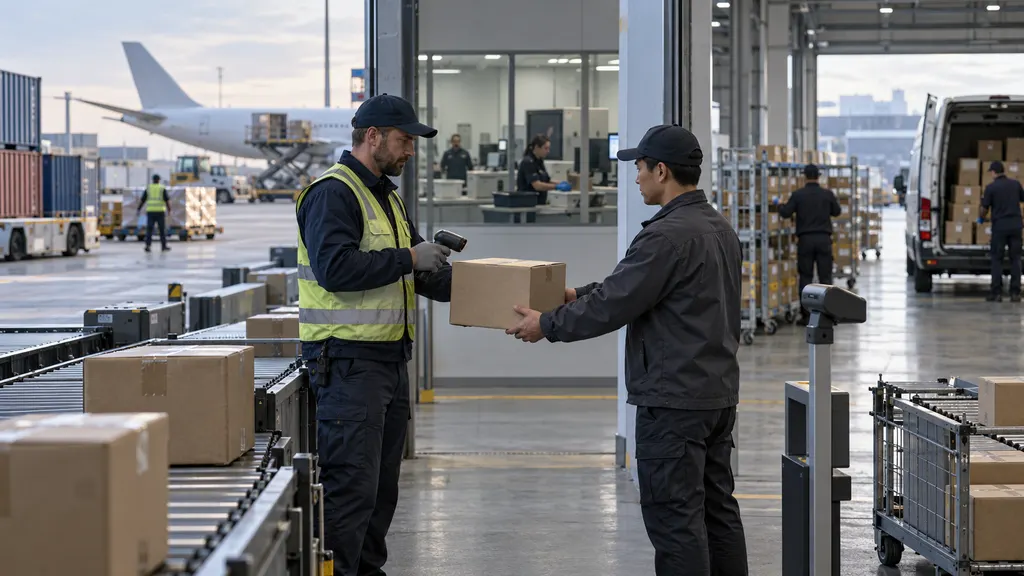
Production logistics sits between inbound supply and the availability of finished goods. Inbound logistics brings raw materials, parts, packaging, and other production inputs to a facility. Production logistics then manages how those inputs are received, staged, stored, issued, moved, and consumed during production. After production, finished goods may pass to finished-goods warehousing, order fulfillment, or outbound logistics.
| Supply Chain Area | Primary Focus | Typical Activities | Relationship to Production Logistics |
|---|---|---|---|
| Inbound logistics | Moving inputs from suppliers to the receiving location | Transportation, receiving, unloading, and inbound inspection | Provides the materials that production logistics must store, stage, or deliver to production |
| Production logistics | Supporting the physical and informational flow of production | Material staging, line replenishment, work-in-process movement, internal handling, and finished-goods handoff | Connects available inputs with production activities and output |
| Outbound logistics | Moving completed goods toward customers or distribution points | Order preparation, loading, transportation, and distribution | Receives finished output after production and any required storage or packaging |
| Reverse logistics | Managing products or materials moving back through the supply chain | Returns, repair flows, recovery, recycling, and disposal | May return reusable materials, repaired units, or recoverable components to production |
These boundaries are descriptive rather than universal. For example, receiving may belong to inbound logistics in one facility but to production logistics in another. What matters operationally is that ownership, inventory status, locations, and handoff conditions are clearly defined.
Core Activities
Material Planning
Material planning determines what inputs are needed and when they should be available. It may use production schedules, bills of materials, inventory records, lead-time assumptions, and demand information. Material requirements planning, commonly called MRP, is one established method for calculating time-phased material needs from production requirements and product structures.
A material plan is only useful when its underlying records are sufficiently accurate. Incorrect bills of materials, outdated lead times, unrecorded scrap, or inaccurate inventory balances can create shortages or unnecessary inventory even when the planning calculation itself is performed correctly.
Receiving and Storage
Production inputs are normally identified and assigned an inventory status after receipt. Depending on the operation, they may be inspected, quarantined, placed in bulk storage, sent to a temperature-controlled area, or moved directly to a production staging location. Storage decisions may reflect safety, traceability, shelf-life, contamination, handling, or space requirements.
Staging and Line Replenishment
Staging places materials near the operation where they will be used. Line replenishment replaces consumed stock so that production can continue without holding excessive material at the workstation. Replenishment may be triggered by a schedule, a minimum stock level, a kanban signal, an empty container, or a real-time request from production.
Different items may require different replenishment rules. Frequently used, low-risk components may be supplied in standard containers, while expensive, regulated, fragile, or sequence-sensitive parts may require more controlled delivery.
Work-in-Process Movement
Work-in-process, or WIP, consists of materials and units that have entered production but are not yet finished goods. Production logistics controls their movement between work centers, assembly stations, inspection points, temporary buffers, and rework areas. Clear status identification is important because physically similar items may be awaiting processing, inspection, approval, repair, or disposal.
Finished-Goods Handoff
After production, goods may require inspection, labeling, packing, palletization, documentation, or system confirmation before they become available for sale or distribution. Production completion does not always mean immediate availability for customer orders. A finished unit may remain unavailable until required quality, inventory, or regulatory controls have been completed.
How Production Logistics Works
A typical production-logistics flow can be described as a sequence of connected controls. The exact sequence depends on the product and facility, but the following model illustrates the main stages:
- Demand or production requirements are established. Customer orders, forecasts, replenishment targets, or project requirements may create the need for production.
- Material requirements are calculated. Planners identify the parts, raw materials, packaging, tools, or consumables needed for the planned output.
- Availability is checked. Inventory records, open purchase orders, allocated stock, and expected receipts are reviewed to identify shortages or timing risks.
- Materials are received and controlled. Incoming items are identified, recorded, inspected when required, and directed to storage or production.
- Materials are staged or replenished. Inputs are moved to the point of use according to the production sequence and handling rules.
- Work-in-process is tracked. Units and materials move through production while their quantity, status, and location are recorded.
- Output is confirmed. Completed goods, scrap, by-products, and unused materials are recorded as appropriate to the operation.
- Finished goods are transferred. Available output moves to storage, fulfillment, distribution, or another production stage.
Information flow accompanies each physical movement. Inventory transactions, production orders, scanning events, batch or serial records, and quality-status updates help indicate what an item is, where it is, whether it is available, and what should happen next. A physical move without a corresponding record can make system inventory differ from actual inventory.
Planning and Control Approaches
Production logistics can support different manufacturing and inventory strategies. These approaches are not mutually exclusive; a facility may use different methods for different product families or process stages.
| Approach | Basic Logic | Production-Logistics Implication |
|---|---|---|
| Schedule-based supply | Materials are delivered according to planned production times | Requires coordination between schedules, material availability, and internal transport |
| Pull replenishment | Consumption or a downstream signal triggers replacement | Requires visible or electronic replenishment signals and defined container or stock quantities |
| Just-in-time production | Items are produced and delivered in response to need, with an emphasis on reducing excess inventory and delay | Places greater importance on stable processes, reliable supply, short response times, and accurate signals |
| Batch supply | Materials or WIP move in defined groups | Requires decisions about batch size, buffer locations, identification, and queue management |
| Sequence-based delivery | Components arrive in the order in which production expects to use them | Requires close synchronization and careful prevention of sequence errors |
These descriptions identify operating logic rather than a formal universal classification. In practice, planners select controls according to demand variability, process design, supplier reliability, handling constraints, product value, production volume, and the consequences of a shortage.
Production Logistics in Ecommerce
Production logistics is relevant to ecommerce when a seller manufactures, assembles, prints, configures, bundles, or personalizes products before fulfillment. It is less central to a retailer that only purchases finished goods and resells them without modification; that operation is more likely to emphasize inventory management, warehousing, and order fulfillment.
For example, an online seller offering personalized products may receive a customer order before production begins. The order can create requirements for a base item, packaging, labels, and customization materials. Production logistics coordinates the release and movement of those inputs, while order management preserves the connection between the customer order and the finished unit. The product can enter fulfillment only after the required production and status checks are complete.
In a make-to-stock ecommerce model, production may occur before a particular customer order exists. Finished goods are placed into inventory and later allocated during fulfillment. In a make-to-order model, an order may initiate or authorize production. The distinction affects where inventory is held, how availability is presented, and when an order can be promised for shipment.
| Scenario | Production-Logistics Requirement | Downstream Connection |
|---|---|---|
| Personalized item | Link the correct base product and customization materials to the relevant production instruction | The finished unit must remain associated with the correct customer order |
| Product bundle assembled after ordering | Bring all bundle components and packaging to the assembly point | The completed bundle becomes a fulfillable inventory unit |
| Made-to-stock product | Supply production according to planned replenishment needs | Finished inventory becomes available for later order allocation |
| Returned item sent for repair | Control the item's identity, condition, parts, and movement through repair | The repaired item may return to inventory or be sent back to the customer |
In cross-border ecommerce, the manufacturing location and the fulfillment location may be in different countries. Production logistics governs the flow inside and around production, while international shipping and customs processes govern the subsequent cross-border movement. Product classification, origin, valuation, and import requirements belong to trade and customs compliance; they should not be treated as interchangeable with production-logistics controls.
Operational Information and Traceability
Production logistics relies on records that connect materials with locations, production instructions, and inventory status. Relevant identifiers can include item numbers, storage locations, production-order numbers, lots, batches, serial numbers, handling units, or container identifiers. Not every operation requires every identifier.
Traceability and tracking are related but not identical. Tracking commonly answers where an item is or what status it currently has. Traceability concerns the ability to reconstruct relevant relationships and history, such as which material batch was used in a production batch. The required level depends on the product, process, contractual obligations, and applicable regulation.
Useful operational checks include comparing recorded inventory with physical stock, confirming that materials are released before use, separating conforming and nonconforming items, recording production consumption, and verifying the status of completed goods. These controls help prevent an item from being used, promised, or shipped while its condition or identity remains unresolved.
Performance Considerations
Organizations may evaluate production logistics through measures related to material availability, inventory accuracy, internal movement, WIP, schedule support, shortages, handling damage, and completion status. No single metric is sufficient for every operation. A reduction in inventory, for example, is not automatically beneficial if it causes avoidable production interruptions or reduces the ability to respond to normal variability.
Measurement definitions should specify the event, time window, unit, and data source. A material-shortage measure might count affected production orders, missing item lines, delay duration, or lost output; these are different measures and should not be reported as though they were equivalent.
Related Terms and Distinctions
| Term | Meaning | Difference from Production Logistics |
|---|---|---|
| Manufacturing | The physical or chemical transformation, assembly, or processing used to create products | Production logistics supplies and moves the resources that support manufacturing; it is not the transformation process itself |
| Production planning | Deciding what, how much, and when to produce | Production logistics executes and controls many material flows required by the plan |
| Materials management | A broad function involving planning, purchasing, storing, and controlling materials | It overlaps with production logistics but may include procurement responsibilities beyond internal production flows |
| Warehouse logistics | Managing receiving, storage, picking, and movement within a warehouse | It may support production, but its scope is organized around warehouse operations rather than the complete production flow |
| Order fulfillment | Processing customer orders through allocation, picking, packing, and shipment | It normally begins with available inventory, while production logistics may be responsible for making goods available |
| Intralogistics | Material and information flows within a facility or organizational site | It can include production logistics as well as internal warehouse and distribution movements |
Common Misunderstandings
- Production logistics is not the same as production. Production changes or assembles materials; production logistics positions and controls the resources and items involved.
- It is not limited to transporting parts to an assembly line. It can also include planning, storage, WIP control, status management, packaging, and finished-goods transfer.
- It does not end at the same point in every organization. Responsibility may end at production completion, finished-goods storage, or another defined handoff.
- Lower inventory is not the only objective. Inventory, capacity, service requirements, reliability, and operational risk must be considered together.
- Production completion does not always equal shipment readiness. Inspection, release, labeling, packaging, or inventory posting may still be required.
QA
What does production logistics mean in supply chain management?
It means coordinating the materials, work-in-process, finished output, and information needed to support production and connect inbound supply with downstream storage or distribution.
What is the difference between production logistics and inbound logistics?
Inbound logistics focuses on moving inputs from suppliers to a receiving location. Production logistics focuses on controlling those inputs and related flows as they support production inside or around the production facility.
Is production logistics relevant to ecommerce?
Yes, when an ecommerce business manufactures, assembles, bundles, repairs, prints, configures, or personalizes products. A reseller handling only finished goods may rely more heavily on warehousing and order fulfillment.
Is production logistics the same as warehouse logistics?
No. They may overlap, particularly in material storage and handling, but production logistics is organized around production requirements, whereas warehouse logistics is organized around warehouse receiving, storage, picking, and movement.
Sources
- Council of Supply Chain Management Professionals: Supply Chain Management Definitions and Glossary — used for the broader logistics and supply chain context.
- Encyclopaedia Britannica: Production Management — used for the relationship among production planning, control, materials, and manufacturing operations.
- IBM: Material Requirements Planning — used for the description of MRP inputs and material-planning functions.
- Lean Enterprise Institute: Just-in-Time Production — used for the explanation of just-in-time flow and production in response to need.