Bonded Factory
What Is a Bonded Factory?
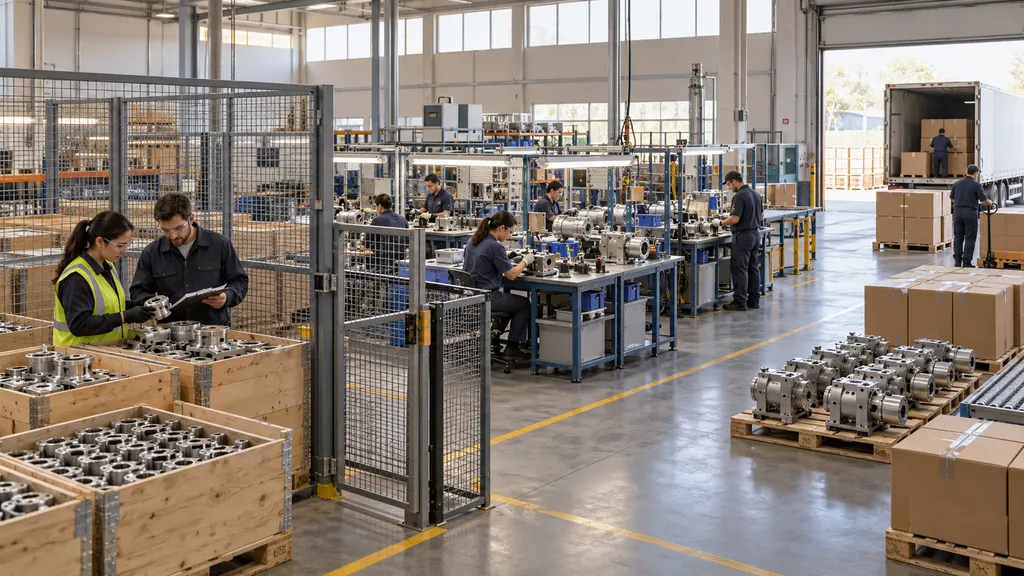
A bonded factory is a manufacturing facility authorized by customs to receive and process specified imported materials under customs control, with import duties suspended or otherwise relieved subject to the applicable customs procedure. It is used in international trade to manufacture, assemble, or process goods, often for export, without treating the imported materials as goods already released into the domestic market.
The term does not describe one universally standardized legal category. Depending on the jurisdiction, a comparable operation may be authorized as a manufacturing bonded warehouse, an inward processing facility, or another customs-controlled manufacturing arrangement. These arrangements can serve similar purposes, but their eligibility rules, tax treatment, permitted activities, and requirements for completing the procedure are not necessarily identical.
The defining feature is the combination of authorized production and customs control. An ordinary factory does not become a bonded factory merely because it uses imported components, exports finished products, or operates near a port.
Position in the Supply Chain
A bonded factory sits between the importation of production inputs and the customs-approved disposition of those inputs and the resulting products. Its role concerns manufacturing and customs status rather than the transport of individual parcels. Materials may arrive through a port, airport, or land border and move to the authorized premises under the procedures required by the relevant customs authority.
Within the facility, imported materials may be stored, issued to production, incorporated into finished goods, or processed into other products. Customs records must connect these activities with the goods admitted under the authorization. Finished products may then be exported or placed under another permitted customs procedure. Domestic sale, where allowed, requires the appropriate customs treatment rather than an ordinary inventory transfer.
In cross-border ecommerce, the connection is usually upstream of consumer fulfillment. For example, an online seller may source products from a manufacturer operating under a bonded arrangement. That arrangement affects the manufacturer's materials, production records, and export procedures; it does not by itself determine the consumer's import charges, delivery service, or returns rights in the destination country.
How a Bonded Factory Works
The following sequence describes common operational elements, not a universal legal procedure. The actual requirements depend on the country, the goods, and the authorization.
- Authorization: The operator obtains permission for the premises, activities, and goods covered by the arrangement. Customs may require financial security, suitable records, and controls that allow supervision.
- Admission of inputs: Imported materials are declared under the relevant procedure. Their identity, quantity, and customs status must be established rather than inferred from a supplier invoice alone.
- Controlled storage and production: Materials are received, stored, and used in authorized manufacturing activities. Records connect receipts and production issues with finished output, unused inputs, and production residues.
- Inventory reconciliation: The operator accounts for what happened to the materials. Depending on the procedure, this may involve approved input-output relationships, production records, stock accounts, and explanations of losses or discrepancies.
- Approved disposition: Finished goods and remaining materials are exported, transferred, released domestically where permitted, destroyed under approved conditions, or otherwise dealt with according to customs requirements.
- Discharge or settlement: The operator provides the evidence needed to complete the customs procedure and resolve any duty liability or security associated with it.
Physical departure alone may not complete the customs obligations. Export declarations, confirmation of exit, transfer documentation, and inventory records may also be needed. Conversely, a commercial sale does not necessarily change the customs status of goods: ownership and customs release are separate questions.
Customs Treatment and Legal Boundaries
Duty Suspension Is Conditional
Bonded manufacturing should not be understood as an unconditional exemption from taxation. The applicable procedure determines whether duties are suspended, relieved, or become payable following a particular event. The treatment of other import taxes, domestic taxes, and charges must be checked separately. The word bonded alone is not enough to establish that every tax is waived.
The World Customs Organization's Revised Kyoto Convention describes inward processing as a procedure under which certain goods can enter a customs territory with conditional relief from import duties and taxes for manufacturing, processing, or repair and subsequent exportation. This provides an international reference for the underlying concept, but it does not make every national bonded factory regime legally identical.
Domestic Release Requires a Separate Decision
If products are to enter the domestic market, the operator must establish whether that disposition is permitted and which declaration, payments, and other requirements apply. The basis for calculating duties can differ between legal regimes. It should not be assumed that duties are always assessed only on imported inputs or always on the finished product.
Similarly, authorization for customs-controlled manufacturing does not automatically remove product safety requirements, licensing obligations, trade restrictions, or applicable origin rules. Those matters require their own assessment.
A National Example
United States customs regulations recognize a class of bonded warehouse for manufacturing articles wholly or partly from imported materials for exportation. The provisions in 19 CFR 19.1 and 19.13 illustrate how a national system can place manufacturing within a bonded warehouse framework. They should not be treated as the definition of bonded factories in every country or as a complete statement of all United States manufacturing-related customs options.
Bonded Factory and Related Terms
| Term | Primary Meaning | Relationship to a Bonded Factory |
|---|---|---|
| Bonded warehouse | Premises where goods are held under a customs warehousing arrangement. | Storage authorization does not automatically permit manufacturing. Some legal systems separately authorize manufacturing bonded warehouses. |
| Inward processing | A customs procedure allowing specified processing with conditional relief from import duties and taxes. | It describes a procedure rather than necessarily a particular type of building. It can provide the legal framework for customs-controlled production. |
| Free zone | A designated area subject to a particular customs framework. | It is an area-based arrangement. Manufacturing permissions and customs treatment depend on the applicable zone rules. |
| Ordinary factory | A facility that manufactures or processes goods. | Manufacturing alone does not establish bonded status or conditional import-duty relief. |
| Duty drawback | A mechanism for repayment of eligible import duties following qualifying events, such as exportation. | It differs from an arrangement that suspends collection when goods enter the procedure. Eligibility depends on the relevant drawback rules. |
These terms can overlap in practice. A facility may be located in a free zone and also operate under specific manufacturing controls. The correct description comes from its authorization and governing law, not simply the name used in a supplier presentation.
Inventory and Production Controls
A practical challenge in bonded manufacturing is preserving an auditable relationship between imported inputs and their eventual disposition. A finished item may contain several imported components, locally sourced materials, and packaging. Production can also generate unused materials, scrap, or losses. Customs accounting must address these outcomes under the applicable rules rather than treating every received unit as an exported unit.
Records that may be relevant include:
- Import declarations and documents identifying goods admitted to the procedure.
- Receiving records, stock movements, and the customs status of inventory.
- Production orders, bills of materials, and input-output calculations where required.
- Records of finished goods, unused inputs, scrap, and production losses.
- Export, transfer, domestic-release, or approved destruction documentation.
- Reconciliations explaining differences between recorded receipts and accounted-for dispositions.
The precise record set is jurisdiction-specific. Physical separation of inventory may be necessary in some circumstances, while other arrangements may allow approved accounting or identification methods. An operator should not assume that interchangeable materials can be mixed freely simply because they have the same commercial specification.
Illustrative Cross-Border Ecommerce Scenario
For example, a manufacturer may import fabric under an authorized bonded manufacturing arrangement and use it to make bags ordered by an overseas online retailer. The manufacturer records the imported fabric, the quantities issued to production, the finished bags, and any remaining fabric or cutting waste. When the bags are exported, the relevant export evidence supports completion of the customs procedure.
If the manufacturer instead proposes selling some bags locally, it must first determine whether domestic release is allowed and what customs requirements apply. The overseas retailer's order cancellation would not, by itself, authorize that local sale. Likewise, leftover fabric and production waste do not automatically become unrestricted domestic inventory.
After export, a separate customs process applies when the bags enter their destination market. The fact that production occurred in a bonded factory does not automatically make the destination import duty-free or establish eligibility for preferential origin treatment.
What Buyers and Logistics Teams Should Verify
When the term appears in a supplier agreement, sourcing questionnaire, or shipping instruction, useful checks include:
- Legal basis: What is the official name of the customs authorization, and which authority issued it?
- Scope: Does it cover the relevant premises, materials, products, and manufacturing operations?
- Movement conditions: What documents and approvals are needed to move materials in or finished goods out?
- Domestic sales: Are local releases permitted, and who is responsible for the declaration and resulting charges?
- Production exceptions: How are shortages, scrap, subcontracted operations, and unused materials handled?
- Evidence: Which party retains export and reconciliation records needed to complete the procedure?
These checks help distinguish a verified customs arrangement from an informal commercial description. They also identify responsibilities that a carrier, freight forwarder, buyer, and manufacturer should not leave implicit.
QA
Is a bonded factory the same as a bonded warehouse?
Not necessarily. Customs warehousing primarily concerns storage, while a bonded factory involves authorized manufacturing or processing. Some jurisdictions recognize manufacturing bonded warehouses, so the permitted activities must be checked against the specific authorization.
Can a bonded factory sell goods in the domestic market?
It depends on the applicable regime. Where domestic release is permitted, customs formalities, duties, taxes, and other conditions may apply. Bonded status does not create an automatic right to sell locally.
Are products made in a bonded factory duty-free for overseas customers?
Not automatically. The manufacturing arrangement concerns customs treatment in the production country. Import duties and taxes in the destination country are determined separately.
Does a bonded factory need to account for production waste?
Production waste and unused materials must be addressed under the applicable customs procedure. Their treatment cannot be assumed to be the same as that of exported finished goods.
Sources
- World Customs Organization: Revised Kyoto Convention, Specific Annex F — International customs framework for inward processing and drawback, including conditional relief and the accounting for processed goods.
- Electronic Code of Federal Regulations: 19 CFR 19.1 — United States bonded warehouse classes, including manufacturing bonded warehouses.
- Electronic Code of Federal Regulations: 19 CFR 19.13 — United States regulatory example covering requirements for manufacturing warehouses.