Bonded Area
What Is a Bonded Area?
A bonded area is a designated place under customs supervision where goods can be stored or handled without immediate payment of the import duties and taxes that would otherwise become payable upon release into the domestic market. In logistics and international trade, it allows goods to remain under an authorized customs arrangement while their next destination or customs treatment is determined.
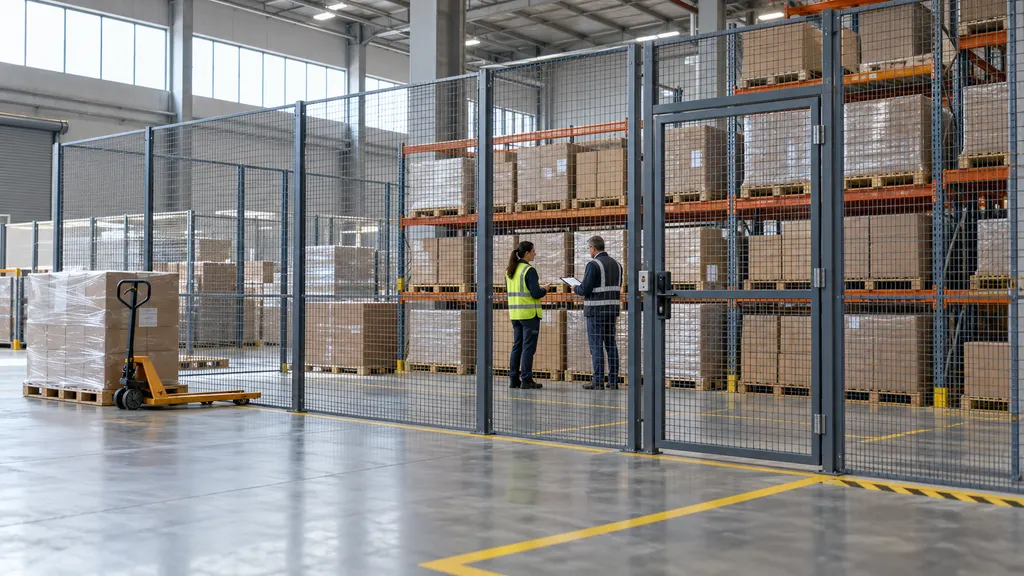
The term is not a single, universally standardized legal category. Depending on the jurisdiction and context, it may describe a customs warehouse, a controlled section of a facility, or a larger designated area operating under a particular customs regime. Its precise meaning therefore depends on the applicable law and the facility's authorization. A location described commercially as a bonded area should not automatically be treated as a free zone or assumed to permit manufacturing.
Role in Logistics and Cross-Border Trade
A bonded area sits between the physical arrival of goods and their release under a subsequent customs procedure. Goods may already have entered a country's territory without having been released for domestic consumption. This distinction between physical location and customs status is central to understanding the term.
For an importer, a bonded arrangement can separate the timing of inventory arrival from the timing of import-duty payment. For a distributor serving several markets, it can provide a controlled location from which goods are later released domestically or re-exported. Any duty or tax treatment depends on the relevant procedure, the goods involved, and compliance with its conditions.
In cross-border ecommerce, a retailer may use an authorized bonded facility to hold imported inventory before individual orders are assigned to a domestic or overseas destination. However, placing stock in such a facility does not, by itself, authorize direct consumer delivery. Domestic release, order-level declarations, product controls, and tax treatment must follow the applicable local rules.
The expression may appear in warehouse contracts, freight-forwarding instructions, customs authorizations, inventory records, or shipment documentation. When it appears in a logistics status message, it describes a customs-related location or stage rather than confirming that goods are ready for final delivery.
Main Characteristics
- Customs supervision: Goods remain subject to customs controls, even when a private business operates the premises.
- Conditional suspension: Import duties and relevant taxes may be suspended under the authorized procedure, rather than permanently eliminated.
- Defined premises and responsibilities: The authorization determines the approved location, responsible operator, and operating conditions.
- Controlled inventory movements: Receipts, storage, permitted handling, and removals require records sufficient to account for the goods.
- Restricted activities: Storage approval does not necessarily permit processing, manufacturing, retail sales, or unrestricted order fulfillment.
- Formal discharge: Goods must leave the arrangement through an accepted customs procedure, such as domestic release, re-export, or an authorized transfer.
The word bonded is associated with arrangements in which financial security may protect the customs authority against unpaid obligations. Nevertheless, the type of guarantee, the party providing it, and any exemptions are jurisdiction-specific. The name alone does not establish the applicable security requirements.
How Goods Move Through a Bonded Area
The following sequence describes a possible operating flow, not a universal customs procedure. Individual steps and the documents required vary by jurisdiction and authorization.
- Confirm eligibility and authorization. The importer and operator establish whether the goods can enter the arrangement and whether the intended activities are permitted. Restricted goods may require additional approvals.
- Arrange controlled arrival. Goods are transported to the approved premises under the required customs formalities. If they move from a port or another facility, an appropriate transit or transfer procedure may be necessary.
- Enter and identify the goods. The relevant declaration or admission process places the goods under the authorized arrangement. Warehouse records connect the physical stock to customs references, quantities, and identifying information.
- Store or carry out permitted handling. Goods remain under control while the operator performs only activities allowed by the authorization. Repacking, examination, or other handling should not be assumed permissible without checking the rules.
- Select the next customs treatment. Goods may be prepared for domestic release, re-export, or another authorized procedure. Commercial demand determines the intended destination, but customs requirements determine how the movement can occur.
- Complete release and reconcile records. Required declarations, payments, guarantees, or approvals are completed. The operator updates inventory records so that the physical removal is matched to the customs discharge.
An ecommerce order and a customs release are separate events. A seller may receive payment and allocate inventory before customs permits the goods to leave. Similarly, a carrier's collection booking does not replace customs authorization for removal.
Bonded Area and Related Terms
| Term | Core meaning | Important distinction |
|---|---|---|
| Bonded area | A descriptive term for premises or an area operating under a customs-controlled arrangement. | Its legal scope must be established from the local regime and authorization. |
| Customs warehouse or bonded warehouse | An authorized facility for storing goods under a customs warehousing procedure. | These terms often overlap in commercial usage, but official terminology and permitted activities differ by jurisdiction. |
| Free zone | A designated area governed by a specific customs framework for goods introduced into it. | It is not automatically equivalent to a customs warehouse; its legal treatment and activities require separate examination. |
| Temporary storage | A customs-controlled status for goods awaiting placement under a customs procedure or another permitted destination. | It should not be treated as interchangeable with customs warehousing; separate conditions and time limits may apply. |
| Ordinary warehouse | A facility used for commercial storage without the relevant bonded authorization. | Storage space alone does not provide duty suspension or permission to hold goods under a customs warehousing procedure. |
| Customs transit | A procedure allowing controlled movement of goods between customs locations. | It concerns movement rather than simply the status of goods stored at a location. |
The World Customs Organization's Revised Kyoto Convention addresses customs warehouses and free zones separately in Specific Annex D. This distinction helps explain why similar commercial labels should not be taken as evidence that two facilities operate under identical rules.
Practical Ecommerce and Distribution Examples
Inventory awaiting domestic demand
For example, a retailer may place an imported consignment in an authorized customs warehouse and release portions as domestic demand develops, where the procedure permits partial removals. Duty payment may then be associated with the quantities released rather than the entire consignment on arrival. The business must still maintain the records and complete the declarations required for each removal.
Stock serving more than one destination
A distributor may hold goods while deciding whether they will be sold domestically or sent to another country. Goods re-exported in accordance with the applicable procedure may avoid the domestic import duties that would arise on release for local consumption. This does not remove obligations in the destination country or eliminate transport, storage, and compliance costs.
Returned ecommerce goods
A seller considering a bonded facility for returned goods must first establish whether the goods qualify for admission and what customs status applies. A customer return does not automatically regain a previous suspended-duty status. Inspection, repacking, repair, destruction, or domestic resale may each require different permissions or procedures.
Operational Checks and Limitations
Before relying on a bonded area, the parties should verify the actual authorization rather than relying on a warehouse's name or marketing description. Useful checks include:
- Legal regime: Identify whether the premises operate as a customs warehouse, free zone, or another authorized facility.
- Goods eligibility: Confirm whether the product category is permitted and whether licensing, safety, sanitary, or other controls apply.
- Allowed handling: Check whether picking, labeling, repacking, inspection, or processing is authorized before planning fulfillment operations.
- Responsible parties: Establish who makes declarations, maintains records, provides any required security, and accounts for discrepancies.
- Time conditions: Verify any storage deadlines, authorization conditions, and procedures for extensions where available.
- Exit requirements: Determine what evidence supports domestic release, re-export, or transfer, and when goods may physically leave.
- Total costs: Consider storage, handling, administration, transport, and guarantee-related costs separately from any duty-payment timing benefit.
Bonded storage does not guarantee faster delivery, lower total costs, or exemption from product restrictions. It can introduce additional inventory controls and release steps. Its suitability depends on the trading pattern, the goods, the destination, and the operating conditions of the facility.
Common Misunderstandings
“Bonded means tax-free.” The more accurate starting point is conditional suspension or a specific customs treatment. Duties and taxes may become payable when goods enter the domestic market. Re-export treatment depends on proper completion of the relevant procedure.
“Goods in a bonded area are outside the country.” They are physically located within a territory. Any special treatment for customs purposes is a legal mechanism, not a change in geographic location or a general exemption from national law.
“All bonded facilities permit the same activities.” Different regimes and authorizations can permit different operations. Permission to store goods is not necessarily permission to manufacture them or dispatch individual consumer orders.
QA
Is a bonded area the same as a bonded warehouse?
Not necessarily. A bonded warehouse is a particular type of authorized facility, while bonded area can be a broader or less precise description. The applicable customs authorization establishes the actual arrangement.
When are duties paid on goods in a bonded area?
Under a duty-suspension arrangement, duties generally become payable when goods are released for domestic consumption, subject to local rules. Proper re-export or another authorized procedure may produce a different outcome.
Can ecommerce orders ship directly from a bonded area?
Only when the facility's authorization and the applicable customs procedures permit the operation. An order confirmation does not replace the declarations, release requirements, or other controls needed before dispatch.
Does bonded status mean a shipment has cleared customs?
Not necessarily. Goods may have completed the formalities needed to enter bonded storage while remaining under customs control. That is different from release for domestic consumption.
Sources
- World Customs Organization — Revised Kyoto Convention, Specific Annex D: International customs framework distinguishing customs warehouses and free zones, including storage, permitted operations, and discharge.
- HM Revenue & Customs — Customs warehousing: A jurisdiction-specific explanation of customs warehousing, duty suspension, authorization, and operating requirements.
- Electronic Code of Federal Regulations — Title 19, Part 19: United States rules illustrating the authorization, security, records, and operational controls associated with customs bonded warehouses.